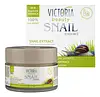
This barrier-repair moisturizer is formulated around Snail Secretion Filtrate and Urea to strengthen the skin barrier and hydrate skin.
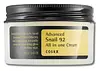
This barrier-repair moisturizer is formulated around Snail Secretion Filtrate and Allantoin to strengthen the skin barrier and hydrate skin.


What's inside
What's inside
 Key Ingredients
Benefits
Concerns
Ingredients Side-by-side
Water
Skin ConditioningSnail Secretion Filtrate
Skin Conditioning





Glycerin
Humectant
Cetearyl Alcohol
Emollient






Paraffinum Liquidum
Emollient

Caprylic/Capric Triglyceride
Masking
PEG-100 Stearate
Surfactant
Glyceryl Stearate
Emollient
Chamomilla Recutita Flower Extract
Masking
Helianthus Annuus Seed Oil
Emollient
Urea
Buffering

Dimethicone
Emollient
Panthenol
Skin Conditioning
Lanolin
Emollient
Petrolatum
Emollient
Ceteareth-20
Cleansing
Parfum
Masking

Allantoin
Skin Conditioning
Phenoxyethanol
Preservative
Ethylhexylglycerin
Skin ConditioningBHT
Antioxidant
EDTA
ChelatingWater, Snail Secretion Filtrate, Glycerin, Cetearyl Alcohol, Paraffinum Liquidum, Caprylic/Capric Triglyceride, PEG-100 Stearate, Glyceryl Stearate, Chamomilla Recutita Flower Extract, Helianthus Annuus Seed Oil, Urea, Dimethicone, Panthenol, Lanolin, Petrolatum, Ceteareth-20, Parfum, Allantoin, Phenoxyethanol, Ethylhexylglycerin, BHT, EDTA
Snail Secretion Filtrate
Skin Conditioning
Betaine
Humectant
Caprylic/Capric Triglyceride
Masking
Butylene Glycol
Humectant
Cetearyl Olivate
Sorbitan Olivate
Emulsifying
Cetearyl Alcohol
Emollient
Carbomer
Emulsion StabilisingEthyl Hexanediol
SolventPhenoxyethanol
Preservative
Arginine
Masking
Dimethicone
Emollient
Sodium Polyacrylate
Absorbent
Sodium Hyaluronate
Humectant

Allantoin
Skin Conditioning
Palmitic Acid
Emollient
Panthenol
Skin Conditioning
Xanthan Gum
EmulsifyingStearic Acid
Cleansing
Adenosine
Skin Conditioning
Water
Skin ConditioningMyristic Acid
Cleansing
Snail Secretion Filtrate, Betaine, Caprylic/Capric Triglyceride, Butylene Glycol, Cetearyl Olivate, Sorbitan Olivate, Cetearyl Alcohol, Carbomer, Ethyl Hexanediol, Phenoxyethanol, Arginine, Dimethicone, Sodium Polyacrylate, Sodium Hyaluronate, Allantoin, Palmitic Acid, Panthenol, Xanthan Gum, Stearic Acid, Adenosine, Water, Myristic Acid
Reviews
Ingredients Explained
These ingredients are found in both products.
Ingredients higher up in an ingredient list are typically present in a larger amount.
Allantoin is a soothing ingredient known for its protective and moisturizing properties; it's basically a quiet workhorse ingredient you can find in a huge range of cosmetics.
Though it can be derived from the comfrey plant, allantoin is produced synthetically for cosmetic products to ensure purity.
Research shows it can encourage your skin cells to turn over and renew by stimulating keratinocyte and fibroblast proliferation.
It also has mild keratolytic properties to help loosen and shed dead skin cells without being harsh.
Studies also suggest allantoin can help calm inflammation by dialing down some of the chemical signals your skin sends out when it is irritated.
This ingredient is typically used in the 0.1-0.5% range, and the FDA recognizes it as a skin protectant in OTC products up to 2%.
Overall, allantoin is a wonderful addition to most routines; it is stable across a wide pH range (~4-8), works well with other ingredients, and is considered non-sensitizing/non-irritating.
Fun fact: Allantoin is naturally occurring in comfrey root, beets, chamomile, and wheat sprouts. Our bodies even produce it as a byproduct of uric acid metabolism.
Learn more about AllantoinCaprylic/Capric Triglyceride (aka MCT Oil) is a lightweight emollient, solvent, and texture enhancer. It is considered a skin-softener by helping to prevent moisture loss.
Though it behaves like an oil, it is not technically one due to its chemical composition. One perk of this ingredient is that it is very stable, resistant to oxidation, and unlikely to go rancid.
In practice, that translates to a long shelf life and a consistently elegant skin feel.
While there is an assumption Caprylic Triglyceride can clog pores due to it being derived from coconut oil, there is no research supporting this. Just patch test if you have concerns.
Fractionated coconut oil and MCT Oil are both listed as Caprylic/Capric Triglyceride according to INCI. This is because INCI names are based on the ingredient’s final chemical composition and not its marketing name or source.
This ingredient is treated as the gold standard fungal acne safe oil. Even though it is coconut derived, the problematic lauric acid is stripped out.
This leaves just caprylic (C8) and capric (C10) acid. These chain lengths actually trend antifungal; a 2020 study found caprylic acid was enough to disrupt Malassezia furfur cell membrane, with a caprylic acid derivative damaging membrane structures at concentrations as low as 0.2%.
Learn more about Caprylic/Capric TriglycerideCetearyl alcohol is a waxy mixture of two fatty alcohols: cetyl alcohol and stearyl alcohol. It is an emollient and emulsifier.
Despite having "alcohol" in its name, it has nothing to do with drying solvent alcohols; the FDA also allows "alcohol-free" products to contain fatty alcohols like this ingredient.
It plays several roles in a formula:
Typical use levels for this ingredient sit around 1-10% and the Cosmetic Ingredient Review Expert Panel has affirmed safety at concentrations up to 25% in leave-on products.
Multiple assessments have found it to be non-irritating and non-sensitizing to most people.
However, there have been some cases of allergic contact dermatitis in patients with chronically compromised skin barriers.
Cetearyl alcohol has a comedogenic rating of 2 and irritancy rating of 1. Both of these numbers come from the 1989 study that used rabbit ears; a "2" means mildly comedogenic and a "1" means low irritancy.
Here's the catch: rabbit skin is more sensitive than human skin and throws a lot of false positives. A 1996 reappraisal found that ingredients rated 1-2 in the rabbit ear tests are generally safe for humans.
Remember comedogenic ratings are unable to assess the entire formula of a product or how it will react on your skin. Just be sure to patch test if you are unsure about certain ingredients.
This ingredient is not fungal acne safe. Cetearyl alcohol is a fatty alcohol with chain lengths that fall within the range that Malassezia can metabolize.
A 2019 study has also observed Malassezia growth in the presence of this ingredient, confirming it to be not-fungal acne safe.
Learn more about Cetearyl AlcoholDimethicone is a type of synthetic silicone created from natural materials such as quartz. It is also known as polydimethylsiloxane.
What it does:
Dimethicone comes in different viscosities:
Depending on the viscosity, dimethicone has different properties.
Ingredients lists don't always show which type is used, so we recommend reaching out to the brand if you have questions about the viscosity.
This ingredient is unlikely to cause irritation because it does not get absorbed into skin. However, people with silicone allergies should be careful about using this ingredient.
Note: Dimethicone may contribute to pilling. This is because it is not oil or water soluble, so pilling may occur when layered with products. When mixed with heavy oils in a formula, the outcome is also quite greasy.
Learn more about DimethiconePanthenol is a common ingredient that helps hydrate and soothe the skin. It is found naturally in our skin and hair.
There are two forms of panthenol: D and L.
D-panthenol is also known as dexpanthenol. Most cosmetics use dexpanthenol or a mixture of D and L-panthenol.
Panthenol is famous due to its ability to go deeper into the skin's layers. Using this ingredient has numerous pros (and no cons):
Like hyaluronic acid, panthenol is a humectant. Humectants are able to bind and hold large amounts of water to keep skin hydrated.
This ingredient works well for wound healing. It works by increasing tissue in the wound and helps close open wounds.
Once oxidized, panthenol converts to pantothenic acid. Panthothenic acid is found in all living cells.
This ingredient is also referred to as pro-vitamin B5.
Learn more about PanthenolPhenoxyethanol is one of the most widely used preservatives in skincare (and for good reason!).
It has a large spectrum of antimicrobial activity and especially effective bacteria, yeast, and mold while only having a weak effect on your skin's natural microbiome.
On a cellular level, it disrupts the cell membranes of microbes by poking holes that make the cell leak. This shuts down the chemical reactions the microbe needs to make energy so it can no longer survive.
Another perk of this ingredient is that it stays functional across a wide pH range (3-10).
You'll often see it paired with boosters like Ethylhexylglycerin; one study showed that a 1:9 ratio of Ethylhexylglycerin to Phenoxyethanol damages bacterial membranes as effectively as doubling the Phenoxyethanol concentration on its own.
Typical use concentrations range from 0.3-1% depending on the formula, and this ingredient is capped at 1% int the EU.
Safety-wise, the fear mongering does not hold up to the evidence. The EU's Scientific Committee on Consumer Safety and FDA consider it safe as a preservative at up to 1%, including for children of all ages.
Adverse systemic effects only showed up in animal studies at exposures roughly 200x higher than what people get from cosmetics. And despite its very widespread use, this ingredient is a rare sensitizer and allergic reactions are uncommon.
Learn more about PhenoxyethanolSnail Secretion Filtrate (the slimy mucus that garden snails produce) is a multitasking ingredient that shows up in "skin repair" formulas.
This ingredient works because it's a grab bag of skin-friendly stuff like:
In a formula, it acts as a humectant and barrier-supporting soother and the research backs this up as well.
A 2025 systematic review of human clinical trials found that snail-derived ingredients improved signs of aging, increased skin hydration, decreased transepidermal water loss, and improved healing after radiation therapy/fractional laser treatment.
Lab studies have also shown the secretion promotes the proliferation, migration, and survival of the cells that rebuild skin (keratinocytes and dermal fibroblasts).
There's also a placebo-controlled study where a serum containing it helped with mask-related acne.
Overall, this is a gentle, water-based multitasker that works great for hydrating and supporting the skin barrier. However, please see the section below if you have dust mite or shellfish allergies.
You'll see snail filtrate listed at very different percentages depending on the product. Some Korean serums list it near the top of the ingredients at 90% or more while other products use just a few percent.
This doesn't mean the high-percentage ones are far stronger. Raw snail filtrate is mostly water to begin with so using a lot of it isn't the same thing as using a lot of the active ingredients.
Other products use a concentrated version so a small amount goes a long way. Either approach can work well. Just know the percentage on the label isn't a reliable way to judge how effective a snail product will be.
Being cruelty-free means a brand does not experiment on animals. If you're worried about the well-being of the snails, we recommend looking more into the company of the product. Many brands claim to have developed humane methods to collect snail mucin.
There is much debate on this subject. On one hand, this ingredient comes from an animal. On the other hand, many will argue the ingredient is naturally secreted (like a natural by-product) and therefore vegan. If you have reservations, you can look into Galactomyces Ferment Filtrate or Centella Asiatica Extract as alternatives.
This ingredient is fungal acne safe. Its core composition lacks the fatty acid/ester triggers that Malassezia depends on.
True allergy to Snail Secretion Filtrate is uncommon and most documented cases are linked to a dust mite allergy.
Snail proteins (including Tropomyosin) are similar enough to dust mite proteins that the immune system can confuse them.
In most documented cases, the dust mite was the original trigger and tropomyosin turned out to be only a minor player in some studies (so this has not been fully confirmed).
Another thing to know is that nearly all the evidence comes from eating snails or inhaling the protein and not from cosmetics.
However, the allergenic proteins can survive filtration into a finished product; a topical reaction is biologically plausible but there's little published evidence of it actually happening.
People who are allergic to dust mites (or sometimes shellfish) are the most likely to react.
Learn more about Snail Secretion FiltrateWater. It's the most common cosmetic ingredient of all. You'll usually see it at the top of ingredient lists, meaning that it makes up the largest part of the product.
So why is it so popular? Water most often acts as a solvent - this means that it helps dissolve other ingredients into the formulation.
You'll also recognize water as that liquid we all need to stay alive. If you see this, drink a glass of water. Remember to stay hydrated!
Learn more about Water

