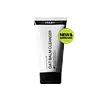
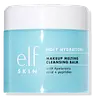
The INKEY List Oat Balm Cleanser Versus e.l.f. cosmetics Holy Hydration! Makeup Melting Cleansing Balm
This oil-based makeup remover is made to dissolve makeup, sunscreen, and daily buildup.
This oil-based makeup remover is made to dissolve makeup, sunscreen, and daily buildup.


What's inside
What's inside
 Key Ingredients
Benefits
Concerns
Ingredients Side-by-side
Prunus Amygdalus Dulcis Oil
Skin Conditioning





PEG-20 Glyceryl Triisostearate
Emollient
Avena Sativa Kernel Oil
Skin Conditioning


Cera Microcristallina
Emulsion StabilisingHelianthus Annuus Seed Wax
Skin Conditioning
Sorbitan Olivate
Emulsifying
Polyglyceryl-10 Stearate
Skin Conditioning
Polyglyceryl-6 Caprylate
EmulsifyingPolyglyceryl-4 Caprate
EmulsifyingJojoba Esters
Emollient
Phenoxyethanol
Preservative
Water
Skin ConditioningHippophae Rhamnoides Fruit Oil
Skin Protecting
Tocopherol
Antioxidant




Polyglycerin-3
Humectant
Acacia Decurrens Flower Wax
Emollient
Helianthus Annuus Seed Oil
Emollient
Ascorbyl Palmitate
Antioxidant

Prunus Amygdalus Dulcis Oil, PEG-20 Glyceryl Triisostearate, Avena Sativa Kernel Oil, Cera Microcristallina, Helianthus Annuus Seed Wax, Sorbitan Olivate, Polyglyceryl-10 Stearate, Polyglyceryl-6 Caprylate, Polyglyceryl-4 Caprate, Jojoba Esters, Phenoxyethanol, Water, Hippophae Rhamnoides Fruit Oil, Tocopherol, Polyglycerin-3, Acacia Decurrens Flower Wax, Helianthus Annuus Seed Oil, Ascorbyl Palmitate
Cetyl Ethylhexanoate
EmollientCaprylic/Capric Triglyceride
Masking
Hydrogenated Polydecene
EmollientPEG-20 Glyceryl Triisostearate
Emollient
Polyethylene
Abrasive
PEG-10 Isostearate
Emulsifying
Helianthus Annuus Seed Oil
Emollient
Hydrogenated Sunflower Seed Oil
Skin Conditioning
Palmitoyl Tripeptide-1
Skin Conditioning

Palmitoyl Tetrapeptide-7
Skin Conditioning
Ceramide NP
Skin Conditioning
Ceramide AP
Skin Conditioning
Ceramide EOP
Skin Conditioning
Hydrolyzed Sodium Hyaluronate
Skin Conditioning
Phytosphingosine
Skin Conditioning
Glycerin
Humectant
Butylene Glycol
Humectant
Water
Skin ConditioningPolysorbate 20
Emulsifying
Carbomer
Emulsion StabilisingXanthan Gum
EmulsifyingCholesterol
Emollient
Sodium Lauroyl Lactylate
EmulsifyingPhenoxyethanol
Preservative
Ethylhexylglycerin
Skin ConditioningCaprylyl Glycol
Emollient
Geraniol
Perfuming


Linalool
Perfuming
Parfum
Masking
Cetyl Ethylhexanoate, Caprylic/Capric Triglyceride, Hydrogenated Polydecene, PEG-20 Glyceryl Triisostearate, Polyethylene, PEG-10 Isostearate, Helianthus Annuus Seed Oil, Hydrogenated Sunflower Seed Oil, Palmitoyl Tripeptide-1, Palmitoyl Tetrapeptide-7, Ceramide NP, Ceramide AP, Ceramide EOP, Hydrolyzed Sodium Hyaluronate, Phytosphingosine, Glycerin, Butylene Glycol, Water, Polysorbate 20, Carbomer, Xanthan Gum, Cholesterol, Sodium Lauroyl Lactylate, Phenoxyethanol, Ethylhexylglycerin, Caprylyl Glycol, Geraniol, Linalool, Parfum
Reviews
Ingredients Explained
These ingredients are found in both products.
Ingredients higher up in an ingredient list are typically present in a larger amount.
Helianthus Annuus Seed Oil is a plant oil derived from the seeds of a sunflower.
It is rich in fatty acids, primarily linoleic acid and oleic acid. This gives it emollient and skin conditioning properties.
The reason this ingredient is so effective is because it forms a thin film on the skin that reduces transepidermal water loss (TEWL) while supplying linoleic acid to the stratum corneum to improve barrier strength.
The high linoleic acid content is particularly noteworthy for acne-prone skin.
Research suggests that acne-prone skin tends to be deficient in linoleic acid in sebum. Topical application may help replenish this to support a healthier follicular environment and less comedone-promoting sebum.
One randomized study found sunflower seed oil preserved skin barrier integrity in adult volunteers with and without atopic dermatitis (outperforming olive oil).
This ingredient is well-studied, gentle, and an effective emollient suitable for most skin types.
On fungal acne: This ingredient may not be Fungal acne (Malassezia folliculitis) safe. This is because it contains fatty acids with carbon chain lengths in the C11-C24 range.
Learn more about Helianthus Annuus Seed OilPEG-20 Glyceryl Triisostearate is a synthetic, oil-loving helper ingredient that does two jobs:
This ingredient is made by joining three building blocks: PEG, Isostearic Acid and glycerin. The PEG gives it the oil-and-water blending power.
This ingredient has been found safe for use in cosmetics and broader PEG family testing shows minimal irritation/sensitization. The molecule's large size also means it isn't expected to penetrate skin to any meaningful degree.
Fungal acne note: This ingredient may not be fungal acne safe due to isostearic acid (C18). Isostearic acid falls into the C11-24 range that Malassezia can feed on.
Learn more about PEG-20 Glyceryl TriisostearatePhenoxyethanol is one of the most widely used preservatives in skincare (and for good reason!).
It has a large spectrum of antimicrobial activity and especially effective bacteria, yeast, and mold while only having a weak effect on your skin's natural microbiome.
On a cellular level, it disrupts the cell membranes of microbes by poking holes that make the cell leak. This shuts down the chemical reactions the microbe needs to make energy so it can no longer survive.
Another perk of this ingredient is that it stays functional across a wide pH range (3-10).
You'll often see it paired with boosters like Ethylhexylglycerin; one study showed that a 1:9 ratio of Ethylhexylglycerin to Phenoxyethanol damages bacterial membranes as effectively as doubling the Phenoxyethanol concentration on its own.
Typical use concentrations range from 0.3-1% depending on the formula, and this ingredient is capped at 1% int the EU.
Safety-wise, the fear mongering does not hold up to the evidence. The EU's Scientific Committee on Consumer Safety and FDA consider it safe as a preservative at up to 1%, including for children of all ages.
Adverse systemic effects only showed up in animal studies at exposures roughly 200x higher than what people get from cosmetics. And despite its very widespread use, this ingredient is a rare sensitizer and allergic reactions are uncommon.
Learn more about PhenoxyethanolWater. It's the most common cosmetic ingredient of all. You'll usually see it at the top of ingredient lists, meaning that it makes up the largest part of the product.
So why is it so popular? Water most often acts as a solvent - this means that it helps dissolve other ingredients into the formulation.
You'll also recognize water as that liquid we all need to stay alive. If you see this, drink a glass of water. Remember to stay hydrated!
Learn more about Water

