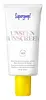
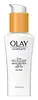
Supergoop! Unseen Sunscreen SPF 40 PA+++ Versus Olay Complete UV365 Daily Moisturizer with Broad Spectrum SPF 30
This chemical sunscreen covers most of the UV range, lighter on the deep UVA that drives aging.
This barrier-repair day moisturizer is formulated around Niacinamide and Panthenol to strengthen the skin barrier and hydrate skin.

What's inside
What's inside
 Key Ingredients
Benefits
Concerns
Ingredients Side-by-side
Butyl Methoxydibenzoylmethane 3%
UV Absorber
Homosalate 8%
Skin Conditioning
Ethylhexyl Salicylate 5%
UV Absorber
Octocrylene 4%
UV Absorber

Isododecane
EmollientDimethicone Crosspolymer
Emulsion Stabilising
Dimethicone/Bis-Isobutyl PPG-20 Crosspolymer
Emollient
Polymethylsilsesquioxane
Isohexadecane
EmollientDicaprylyl Carbonate
EmollientMeadowfoam Estolide
Skin ConditioningCaprylic/Capric Triglyceride
Masking


Polyester-7
Skin ConditioningNeopentyl Glycol Diheptanoate
EmollientLithothamnion Calcareum Extract
Skin ConditioningCaprylyl Glycol
Emollient
Butyrospermum Parkii Butter
Skin Conditioning



Jojoba Esters
Emollient
Mannitol
Humectant
Boswellia Serrata Resin Extract
SmoothingLecithin
Emollient
Microcrystalline Cellulose
AbsorbentDiatomaceous Earth
Abrasive

Zinc Sulfate
Antimicrobial
Silica
Abrasive
Tocopherol
Antioxidant





Butyl Methoxydibenzoylmethane 3%, Homosalate 8%, Ethylhexyl Salicylate 5%, Octocrylene 4%, Isododecane, Dimethicone Crosspolymer, Dimethicone/Bis-Isobutyl PPG-20 Crosspolymer, Polymethylsilsesquioxane, Isohexadecane, Dicaprylyl Carbonate, Meadowfoam Estolide, Caprylic/Capric Triglyceride, Polyester-7, Neopentyl Glycol Diheptanoate, Lithothamnion Calcareum Extract, Caprylyl Glycol, Butyrospermum Parkii Butter, Jojoba Esters, Mannitol, Boswellia Serrata Resin Extract, Lecithin, Microcrystalline Cellulose, Diatomaceous Earth, Zinc Sulfate, Silica, Tocopherol
Ethylhexyl Methoxycinnamate 7.5%
UV Absorber
Ethylhexyl Salicylate 2.5%
UV Absorber
Octocrylene 2.5%
UV Absorber
Zinc Oxide 7%
Cosmetic Colorant
Water
Skin ConditioningIsohexadecane
EmollientGlycerin
Humectant
Niacinamide
Smoothing



Panthenol
Skin Conditioning
Camellia Sinensis Leaf Extract
Antimicrobial
Tocopheryl Acetate
Antioxidant
Aloe Barbadensis Leaf Extract
Emollient
Steareth-21
CleansingCyclopentasiloxane
Emollient
Polyacrylamide
Stearyl Alcohol
Emollient
Polymethylsilsesquioxane
Polyethylene
Abrasive
C13-14 Isoparaffin
Emollient
Behenyl Alcohol
Emollient
DMDM Hydantoin
Preservative
Cetyl Alcohol
Emollient
Triethoxycaprylylsilane
PEG/PPG-20/20 Dimethicone
Emulsifying
Laureth-7
EmulsifyingSteareth-2
EmulsifyingOleth-3 Phosphate
SurfactantDisodium EDTA
ChelatingIodopropynyl Butylcarbamate
Preservative
Ethylhexyl Methoxycinnamate 7.5%, Ethylhexyl Salicylate 2.5%, Octocrylene 2.5%, Zinc Oxide 7%, Water, Isohexadecane, Glycerin, Niacinamide, Panthenol, Camellia Sinensis Leaf Extract, Tocopheryl Acetate, Aloe Barbadensis Leaf Extract, Steareth-21, Cyclopentasiloxane, Polyacrylamide, Stearyl Alcohol, Polymethylsilsesquioxane, Polyethylene, C13-14 Isoparaffin, Behenyl Alcohol, DMDM Hydantoin, Cetyl Alcohol, Triethoxycaprylylsilane, PEG/PPG-20/20 Dimethicone, Laureth-7, Steareth-2, Oleth-3 Phosphate, Disodium EDTA, Iodopropynyl Butylcarbamate
Reviews
Ingredients Explained
These ingredients are found in both products.
Ingredients higher up in an ingredient list are typically present in a larger amount.
Ethylhexyl Salicylate (also called Octisalate or Octyl Salicylate) is an oil-soluble organic UV filter that's been used in sunscreen since the 1950's.
It absorbs UVB light in the 280-320 nm range with a peak absorbance around 306 nm.
You'll often see it paired with other UV filters to boost overall SPF because octisalate is a fairly week filter on its own.
The reason you'll see it so often is because it can help solubilize and stabilize the trickier filters like oxybenzone and avobenzone.
Unlike these filters, octisalate has pretty good photostability and doesn't create skin-damaging free radicals when exposed to sunlight.
The fatty-alcohol part of the molecule also gives it a light, emollient feel so it doubles as a nice texture enhancer.
Usage levels vary around the world:
Safety-wise, this ingredient has a pretty reassuring track record. The EU's Scientific Committee on Consumer Products (SCCP) found very low skin penetration in human skin tests and negative results for irritation, phototoxicity, and photoallergy.
The real-world allergy risk is pretty low too; a 2012 European study of 1,031 people recorded only 2 reactions to it (a rate of 0.19%).
You might have seen scary headlines about sunscreen getting into your blood.
In 2019, the FDA found that several chemical filters can absorb through the skin and show up in the bloodstream at small but measurable levels.
Here's the important part: these tiny levels are just a cutoff the FDA uses to decide which ingredients need more testing and doesn't mean anything harmful was found.
The researchers were clear that the results are no reason to stop wearing sunscreen.
Learn more about Ethylhexyl SalicylateIsohexadecane is added to enhance texture, emulsify, and to help cleanse. It is an isoparrafin. It is a component of petrolatum.
Due to its large size, Isohexadecane is not absorbed by the skin. Instead, it sits on top and acts as an emollient. Emollients help keep your skin soft and smooth by trapping moisture within.
Isohexadecane is often used in products designed to help oily skin. It is lightweight and non-greasy while helping to moisturize. When mixed with silicones, it gives a product a silky feel.
Learn more about IsohexadecaneOctocrylene is an oil-soluble organic UV filter that mainly absorbs UVB and short wave UVA II light.
Its real superpower is teamwork: octocrylene is remarkably photostable and is most famous for stabilizing avobenzone (the workhorse UVA filter).
This ingredient is commonly used to enhance both UVB and UVA protection due to its unique property in stabilizing avobenzone. It also pulls double duty by boosting water resistance and giving formulas a smooth, spreadable feel.
The EU's Scientific Committee on Consumer Safety (SCCS) has deemed octocrylene to be safe as a UV-filter at concentrations up to 10% (capped at 9% in propellant sprays). The US also permits it up to 10%.
Two things worth knowing:
You'll usually see this ingredient used in concentrations between 2-10% (higher amounts when used as a stabilizer for avobenzone).
Learn more about OctocrylenePolymethylsilsesquioxane is a silicone used as a film forming agent.
When applied to the skin, this ingredient creates an invisible film on the surface. This film still allows oxygen to pass through, but prevents moisture from escaping. This can help condition and hydrate the skin. It also leaves a silky feel when applied.
Polymethylsilsesquioxane has not been shown to clog pores. It has been deemed safe to use up to 55%, but most cosmetics use much less.
If you have concerns about using this ingredient, we recommend speaking with a professional.
Learn more about Polymethylsilsesquioxane

