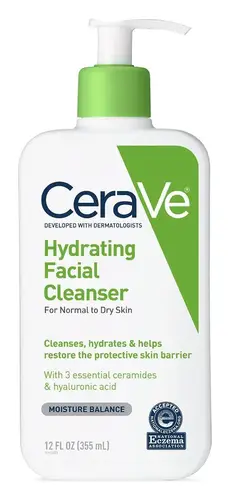
This oil-based makeup remover is made to dissolve makeup, sunscreen, and daily buildup.
This mild cream makeup remover is made to dissolve makeup, sunscreen, and daily buildup.


What's inside
What's inside
 Key Ingredients
Benefits
Concerns
Ingredients Side-by-side
Adansonia Digitata Seed Oil
Emollient



Argania Spinosa Kernel Oil
Emollient



Carapa Guaianensis Seed Oil
Skin Conditioning
Orbignya Oleifera Seed Oil
Emollient
Ricinus Communis Seed Oil
Masking
Butyrospermum Parkii Butter
Skin Conditioning


Simmondsia Chinensis Seed Oil
Emollient
Cetyl Alcohol
Emollient

Helianthus Annuus Seed Oil
Emollient
Sorbitan Olivate
Emulsifying
Olea Europaea Fruit Oil
Masking
Cetearyl Olivate
Sodium Hyaluronate
Humectant


Caprylic/Capric Triglyceride
Masking
Polysorbate 80
Emulsifying
Tocopheryl Acetate
Antioxidant


Ethylhexylglycerin
Skin ConditioningPhenoxyethanol
Preservative
Adansonia Digitata Seed Oil, Argania Spinosa Kernel Oil, Carapa Guaianensis Seed Oil, Orbignya Oleifera Seed Oil, Ricinus Communis Seed Oil, Butyrospermum Parkii Butter, Simmondsia Chinensis Seed Oil, Cetyl Alcohol, Helianthus Annuus Seed Oil, Sorbitan Olivate, Olea Europaea Fruit Oil, Cetearyl Olivate, Sodium Hyaluronate, Caprylic/Capric Triglyceride, Polysorbate 80, Tocopheryl Acetate, Ethylhexylglycerin, Phenoxyethanol
Water
Skin ConditioningCetearyl Alcohol
Emollient
Adansonia Digitata Seed Oil
Emollient
Cetearyl Olivate
Coco-Caprylate/Caprate
Emollient
Glycerin
Humectant
Sorbitan Olivate
Emulsifying
Algae Extract
Emollient
Rosmarinus Officinalis Extract
AntimicrobialHelianthus Annuus Seed Oil
Emollient
Tocopherol
Antioxidant
Arginine
Masking
Salicylic Acid
Masking





Cetyl Alcohol
Emollient
Hydroxypropyl Starch Phosphate
Sodium Hyaluronate
Humectant
Caprylyl Glycol
Emollient
Sodium Phytate
ChelatingPhenoxyethanol
Preservative
Water, Cetearyl Alcohol, Adansonia Digitata Seed Oil, Cetearyl Olivate, Coco-Caprylate/Caprate, Glycerin, Sorbitan Olivate, Algae Extract, Rosmarinus Officinalis Extract, Helianthus Annuus Seed Oil, Tocopherol, Arginine, Salicylic Acid, Cetyl Alcohol, Hydroxypropyl Starch Phosphate, Sodium Hyaluronate, Caprylyl Glycol, Sodium Phytate, Phenoxyethanol
Ingredients Explained
These ingredients are found in both products.
Ingredients higher up in an ingredient list are typically present in a larger amount.
This ingredient is also known as Baobab Seed Oil. Like most plant oils, it works by sitting on the skin's surface to slow water loss and keep skin soft.
The fatty acid content of this oil is roughly 25-36% linoleic acid, 20-30% oleic acid, and 25-30% palmitic acid. Plus, it has smaller amounts of stearic and linolenic acid.
Linoleic acid is the most abundant fatty acid naturally found in your epidermis and your skin uses it to build ceramides.
Baobab seed oil also brings some Vitamin E that provides mild antioxidant activity and helps keep the oil itself stable.
An actual human study that ran a 48-hour occlusive patch test found this ingredient caused no significant irritation.
Because this ingredient is full of C16-18 fatty acids that Malassezia feeds on, this ingredient may not be fungal acne safe.
Learn more about Adansonia Digitata Seed OilCetearyl Olivate is a plant-derived emulsifier and texture enhancer. It helps keep the oil and water phases from separating so your formulas stay stable.
You'll likely see it combined with Sorbitan Olivate (together sold as the trade name Olivem 1000). This combination generates a liquid crystal structure that closely resemble the lipid organization of the stratum corneum.
These "skin-like" liquid crystals improve skin barrier integrity and promote the delivery of actives into the skin.
This ingredient is well-tolerated and has no significant sensitization data.
Because it is derived from the fatty acids in olive oil, this ingredient may not be fungal acne safe.
Learn more about Cetearyl OlivateCetyl Alcohol is a fatty alcohol. Fatty Alcohols are most often used as an emollient or to thicken a product.
Its main roles are:
Though it has "alcohol" in the name, it is not related to denatured alcohol or ethyl alcohol.
The FDA allows products labeled "alcohol-free" to have fatty alcohols.
This ingredient may not be fungal acne safe. It is a primary fatty alcohol with a chain length above 12 carbons. A study from 2019 show Malassezia can feed on fatty alcohols in this range, so it may trigger fungal acne in those prone to it.
Learn more about Cetyl AlcoholHelianthus Annuus Seed Oil is a plant oil derived from the seeds of a sunflower.
It is rich in fatty acids, primarily linoleic acid and oleic acid. This gives it emollient and skin conditioning properties.
The reason this ingredient is so effective is because it forms a thin film on the skin that reduces transepidermal water loss (TEWL) while supplying linoleic acid to the stratum corneum to improve barrier strength.
The high linoleic acid content is particularly noteworthy for acne-prone skin.
Research suggests that acne-prone skin tends to be deficient in linoleic acid in sebum. Topical application may help replenish this to support a healthier follicular environment and less comedone-promoting sebum.
One randomized study found sunflower seed oil preserved skin barrier integrity in adult volunteers with and without atopic dermatitis (outperforming olive oil).
This ingredient is well-studied, gentle, and an effective emollient suitable for most skin types.
On fungal acne: This ingredient may not be Fungal acne (Malassezia folliculitis) safe. This is because it contains fatty acids with carbon chain lengths in the C11-C24 range.
Learn more about Helianthus Annuus Seed OilPhenoxyethanol is one of the most widely used preservatives in skincare (and for good reason!).
It has a large spectrum of antimicrobial activity and especially effective bacteria, yeast, and mold while only having a weak effect on your skin's natural microbiome.
On a cellular level, it disrupts the cell membranes of microbes by poking holes that make the cell leak. This shuts down the chemical reactions the microbe needs to make energy so it can no longer survive.
Another perk of this ingredient is that it stays functional across a wide pH range (3-10).
You'll often see it paired with boosters like Ethylhexylglycerin; one study showed that a 1:9 ratio of Ethylhexylglycerin to Phenoxyethanol damages bacterial membranes as effectively as doubling the Phenoxyethanol concentration on its own.
Typical use concentrations range from 0.3-1% depending on the formula, and this ingredient is capped at 1% int the EU.
Safety-wise, the fear mongering does not hold up to the evidence. The EU's Scientific Committee on Consumer Safety and FDA consider it safe as a preservative at up to 1%, including for children of all ages.
Adverse systemic effects only showed up in animal studies at exposures roughly 200x higher than what people get from cosmetics. And despite its very widespread use, this ingredient is a rare sensitizer and allergic reactions are uncommon.
Learn more about PhenoxyethanolSodium Hyaluronate is the salt form of hyaluronic acid. It is a long sugar chain that is naturally found in your skin, joints, and connective tissue that maintains hydration and elasticity.
In skincare, it works as a humectant. It pulls water from the environment and deeper layers of skin and binds it to the surface.
Interestingly, the size of the molecule affects its behavior:
Some clinical evidence links low molecular weight versions to improved wrinkle depth, elasticity, anti-inflammatory effects, and barrier repair.
Many serums use a blend of both weights so you can get surface hydration plus longer-lasting and deeper effects.
You'll typically see concentrations between 0.1-2% for this ingredient.
Learn more about Sodium HyaluronateSorbitan Olivate is created from the fatty acids in olive oil and sorbitol.
This ingredient is an oil in water emulsifier. It helps stabilize a product by preventing oils and waters from separating. Sorbitan Olivate also helps hydrate the skin.
This ingredient is also known as part of Olivem 1000, with Cetearyl Olivate being the other part.
According to a manufacturer, this ingredient helps preserve the natural microbiome of skin. Having a healthy microbiome helps keep our skin healthy and protects against harmful bacteria.
Please note, having a healthy microbiome is different from fungal acne; a healthy microbiome includes small amounts of yeast that normally live on your skin without causing problems.
Fungal acne happens when one type of yeast (Malassezia) grows out of control. This is usually because it's feeding on certain oils or fatty acids. Due to the olive oil base, this ingredient may not be fungal acne safe.
Learn more about Sorbitan Olivate