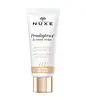
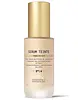
Nuxe Prodigieux Le Teint Éclat 24H Tinted Moisturizing BB Cream Versus Biologique Recherche Sérum Teinté

What's inside
What's inside
 Key Ingredients
Benefits
Concerns
Ingredients Side-by-side
Water
Skin ConditioningCoco-Caprylate/Caprate
Emollient
Helianthus Annuus Seed Oil
Emollient



Propanediol
Solvent
Glycerin
Humectant
Prunus Amygdalus Dulcis Oil
Skin Conditioning

Butyrospermum Parkii Butter
Skin Conditioning
Pentylene Glycol
Skin Conditioning
Parfum
Masking


Xylitylglucoside
Humectant
Behenyl Alcohol
Emollient
Glyceryl Behenate
Emollient
Anhydroxylitol
Humectant
Lecithin
Emollient
Benzyl Alcohol
Perfuming


Sodium Stearoyl Glutamate
CleansingSodium Acrylates Copolymer
Glyceryl Caprylate
EmollientXylitol
Humectant
Tocopherol
Antioxidant





Xanthan Gum
EmulsifyingDehydroacetic Acid
Preservative
Hydrogenated Lecithin
Emulsifying
Phenethyl Alcohol
MaskingSodium Carrageenan
Emulsion StabilisingCitric Acid
Buffering
Sea Salt
Abrasive
Linalool
Perfuming
Geraniol
Perfuming
Limonene
Perfuming
CI 77891
Cosmetic ColorantCI 77492
Cosmetic ColorantCI 77491
Cosmetic ColorantCI 77499
Cosmetic ColorantWater, Coco-Caprylate/Caprate, Helianthus Annuus Seed Oil, Propanediol, Glycerin, Prunus Amygdalus Dulcis Oil, Butyrospermum Parkii Butter, Pentylene Glycol, Parfum, Xylitylglucoside, Behenyl Alcohol, Glyceryl Behenate, Anhydroxylitol, Lecithin, Benzyl Alcohol, Sodium Stearoyl Glutamate, Sodium Acrylates Copolymer, Glyceryl Caprylate, Xylitol, Tocopherol, Xanthan Gum, Dehydroacetic Acid, Hydrogenated Lecithin, Phenethyl Alcohol, Sodium Carrageenan, Citric Acid, Sea Salt, Linalool, Geraniol, Limonene, CI 77891, CI 77492, CI 77491, CI 77499
Water
Skin ConditioningDicaprylyl Carbonate
EmollientSaccharide Isomerate
Humectant
Triolein
Skin Conditioning
Polyglyceryl-6 Distearate
Emulsifying
Methylpropanediol
SolventGlycerin
Humectant
Propanediol
Solvent
Glyceryl Isostearate
Emollient
Xylitylglucoside
Humectant
Isostearyl Alcohol
Emollient
Jojoba Esters
Emollient
Lupinus Albus Seed Oil
Skin Conditioning
Triticum Vulgare Germ Oil Unsaponifiables
Emollient
Butyrospermum Parkii Butter Extract
Skin Conditioning
Chondrus Crispus Extract
Skin Conditioning
Vegetable Oil
Skin Conditioning
Anhydroxylitol
Humectant
Xylitol
Humectant
Dimethylmethoxy Chromanol
Antioxidant
Citric Acid
Buffering
Xanthan Gum
EmulsifyingLecithin
Emollient
Tocopheryl Acetate
Antioxidant
Hydrogenated Lecithin
Emulsifying
Glyceryl Caprylate
EmollientTocopherol
Antioxidant
Sodium Stearoyl Glutamate
CleansingDiisopropyl Adipate
EmollientCetyl Alcohol
Emollient
Caprylic/Capric Triglyceride
Masking
Polyglyceryl-3 Beeswax
Emulsifying
Hydrogenated Polycyclopentadiene
Euphorbia Cerifera Cera
Astringent
Acrylic Acid/Acrylamidomethyl Propane Sulfonic Acid Copolymer
ChelatingBrassica Campestris Sterols
EmollientCaprylyl Glycol
Emollient
Phenylpropanol
Masking
Sodium Citrate
BufferingSodium Benzoate
Masking
CI 77891
Cosmetic ColorantCI 77492
Cosmetic ColorantCI 77491
Cosmetic ColorantCI 77499
Cosmetic ColorantWater, Dicaprylyl Carbonate, Saccharide Isomerate, Triolein, Polyglyceryl-6 Distearate, Methylpropanediol, Glycerin, Propanediol, Glyceryl Isostearate, Xylitylglucoside, Isostearyl Alcohol, Jojoba Esters, Lupinus Albus Seed Oil, Triticum Vulgare Germ Oil Unsaponifiables, Butyrospermum Parkii Butter Extract, Chondrus Crispus Extract, Vegetable Oil, Anhydroxylitol, Xylitol, Dimethylmethoxy Chromanol, Citric Acid, Xanthan Gum, Lecithin, Tocopheryl Acetate, Hydrogenated Lecithin, Glyceryl Caprylate, Tocopherol, Sodium Stearoyl Glutamate, Diisopropyl Adipate, Cetyl Alcohol, Caprylic/Capric Triglyceride, Polyglyceryl-3 Beeswax, Hydrogenated Polycyclopentadiene, Euphorbia Cerifera Cera, Acrylic Acid/Acrylamidomethyl Propane Sulfonic Acid Copolymer, Brassica Campestris Sterols, Caprylyl Glycol, Phenylpropanol, Sodium Citrate, Sodium Benzoate, CI 77891, CI 77492, CI 77491, CI 77499
Ingredients Explained
These ingredients are found in both products.
Ingredients higher up in an ingredient list are typically present in a larger amount.
This ingredient is created from dehydrating xylitol in acidic conditions. Xylitol is a famous sugar and humectant.
Much like its predecessor, anhydroxylitol is a humectant. Humectants attract and hold water to moisturize the skin.
This ingredient is most commonly found in a popular trio called Aquaxyl. Aquaxyl is made up of anhydroxylitol (24 - 34%), xylitylglucoside (35 - 50%), and xylitol (5 - 15%).
According to a manufacturer, Aquaxyl is known for a 3-D hydration concept and an anti-dehydration shield to reinforce the outer layer of skin.
This ingredient is often derived from plants such as wood and sugarcane.
Learn more about AnhydroxylitolCi 77491 is also hydrated iron III oxide. It's sole purpose is to give a red/pink hue to products.
Iron III oxides are classified as inorganic chemicals for coloring.
Synthetically created Ci 77491 is considered safer than those naturally found. This is because the synthetically created version may contain less impurities. Iron oxides are generally non-toxic and non-allergenic.
Learn more about CI 77491CI 77492 is also hydrated iron III oxide. It's sole purpose is to give a yellow hue to products.
Iron III oxides are classified as inorganic chemicals for coloring.
Synthetically created CI 77492 is considered safer than those naturally found. This is because the synthetically created version may contain less impurities. Iron oxides are generally non-toxic and non-allergenic.
Learn more about CI 77492Ci 77499 is also hydrated iron III oxide. It is created from mixing red and black iron oxides. This helps give shades of darkness to a product.
Iron III oxides are classified as inorganic chemicals for coloring.
Ci 77891 is a white pigment from Titanium dioxide. It is naturally found in minerals such as rutile and ilmenite.
It's main function is to add a white color to cosmetics. It can also be mixed with other colors to create different shades.
Ci 77891 is commonly found in sunscreens due to its ability to block UV rays.
Learn more about CI 77891Citric Acid is an alpha hydroxy acid (AHA) naturally found in citrus fruits like oranges, lemons, and limes.
Like other AHAs, citric acid can exfoliate skin by breaking down the bonds that hold dead skin cells together. This helps reveal smoother and brighter skin underneath.
However, this exfoliating effect only happens at high concentrations (20%) which can be hard to find in cosmetic products.
Due to this, citric acid is usually included in small amounts as a pH adjuster. This helps keep products slightly more acidic and compatible with skin's natural pH.
In skincare formulas, citric acid can:
While it can provide some skin benefits, research shows lactic acid and glycolic acid are generally more effective and less irritating exfoliants.
Most citric acid used in skincare today is made by fermenting sugars (usually from molasses). This synthetic version is identical to the natural citrus form but easier to stabilize and use in formulations.
Rosacea skin has a lower threshold for acids generally, with 62.5% of rosacea subjects in one study reacting to lactic acid in a sting test. This is why we mark citric acid as a potential rosacea trigger.
However, this ingredient shows up as a pH adjuster or chelator at roughly 0.1-1% in many products. These low levels are unlikely to be an issue for rosacea skin and becomes a potential trigger at exfoliating concentrations (20%). Because everybody's skin is unique, we recommend a patch test if you are unsure.
Learn more about Citric AcidGlycerin (or glycerol) is a compound naturally found in your skin. It's a powerhouse humectant that pulls water into the stratum corneum.
Topically, glycerin does several things at once:
Your skin makes glycerin on its own (mostly from sebaceous oil breakdown) and shuttles it to your outermost layer of skin, or your epidermis, via aquaporin-3.
Aquaporin-3 is a transporter that is essential for normal skin hydration, elasticity, and repair. Interestingly, mice lacking in AQP3 have dry and less elastic skin that can be fully corrected with glycerin.
This ingredient is non-irritating, plays well with almost every ingredient, and works across all skin types. Typical use is anywhere between 3-10% but can go up to 79% in some leave-on products.
Just know very high concentrations (>40%) can feel tacky in low humidity.
Glycerin is the name for this ingredient in American English. British English uses Glycerol/Glycerine.
Learn more about GlycerinGlyceryl Caprylate comes from glycerin and caprylic acid. It is an emollient, co-emulsifier, and preservative booster.
Its short C8 fatty acid chain makes it behave differently from its longer-chain emollient cousins like Glyceryl Stearate. It feels more lightweight, fast-absorbing, and silky instead of rich and waxy.
As a co-emulsifier, its "head" and "tail" sit at the oil-water interface. But overall, the short C8 tail and not being water soluble means it doesn't really have the muscle to emulsify a formula on its own. That's why you'll often see it paired with a primary emulsifier like Cetearyl Glucoside.
Interestingly, Glyceryl Caprylate acts as a preservative booster. This is because its fatty-acid backbone disrupts microbial lipid membranes. It shows excellent activity against bacteria and yeast but is weaker against mold.
Typical concentrations range from 0.5-1% and this ingredient is generally non-irritating.
Because this ingredient has a C8 fatty acid chain, it is outside the range that the Malassezia yeast metabolizes (making it fungal acne safe).
Learn more about Glyceryl CaprylateHydrogenated Lecithin is a more stable version of lecithin.
It's made by taking lecithin (a phospholipid commonly found in soybeans and egg yolks) and hydrogenating it. This just means the unsaturated fatty acids are turned into saturated ones so they don't go bad as easily.
This ingredient is an emollient, emulsifier, and penetration enhancer. As an emollient, it helps soften and hydrate skin by trapping moisture within. As an emulsifier, it prevents oil and water ingredients from separating.
Hydrogenated Lecithin can form tiny spherical structures made of phospholipid bilayers called liposomes. These liposomes are able to capture compounds inside their structure and deliver them through the skin barrier.
Because phospholipids are a natural component of our cell membranes, this ingredient is inherently compatible with skin.
A 2021 study found lecithin-based surfactants were less harsh and more tolerable comared to Sodium Lauryl Sulfate (SLS).
Learn more about Hydrogenated LecithinLecithin is a term for a group of substances found in the cell membranes of plants, animals, and humans. They are made up of phospholipids.
Thanks to its amphiphilic structure (water-loving head and oil-loving tail), it is a true multitasker:
It plays well with most ingredients and is typically used at 0.1-1%. However, concentrations up to 50% have been reported in moisturizers.
Learn more about LecithinPropanediol is an all-star ingredient. It softens, hydrates, and smooths the skin.
It’s often used to:
Propanediol is not likely to cause sensitivity and considered safe to use. It is derived from corn or petroleum with a clear color and no scent.
Learn more about PropanediolSodium Stearoyl Glutamate is an amino-acid based emulsifier. It is made by combining stearic acid with L-glutamic acid and neutralizing it to a sodium salt.
As an emulsifier, it works mainly as an oil-in-water one and helps keep the oil and water in your formulas blended. It also contributes to a smooth, non-greasy skin feel.
This ingredient is biodegradable and commonly available in natural/COSMOS-certified grades.
Learn more about Sodium Stearoyl GlutamateTocopherol is a fat-soluble antioxidant known as Vitamin E.
You'll find this ingredient in the vast majority of skincare (for good reason). It works to neutralize free radicals, or unstable molecules generated by UV exposure, pollution, and other environmental stressors, before they can cause oxidative damage to your skin cells.
Topically applied tocopherol has been shown to protect against UV damage by ramping up the skin's own natural defense enzymes.
It also acts as a skin conditioning agent; some studies show that regular topical use can improve the skin's water-binding capacity over 2-4 weeks.
This ingredient is especially loved for being a team player. When combined with Vitamin C, the photoprotective effect of both ingredients roughly doubles and the combo also helps reduce UV-induced DNA damage.
This ingredient has some brightening potential but it's more of a prevention ingredient than spot-fader. Cell studies show it can slow down melanin production but it's worth noting that it's not the most powerful brightener out there.
In formulations, it also serves as a stabilizer that helps protect other oxidation-prone ingredients from degrading.
Concentrations usually range from 0.1-1% in most leave-on products.
Learn more about TocopherolWater. It's the most common cosmetic ingredient of all. You'll usually see it at the top of ingredient lists, meaning that it makes up the largest part of the product.
So why is it so popular? Water most often acts as a solvent - this means that it helps dissolve other ingredients into the formulation.
You'll also recognize water as that liquid we all need to stay alive. If you see this, drink a glass of water. Remember to stay hydrated!
Learn more about WaterXanthan gum is used as a stabilizer and thickener within cosmetic products. It helps give products a sticky, thick feeling - preventing them from being too runny.
On the technical side of things, xanthan gum is a polysaccharide - a combination consisting of multiple sugar molecules bonded together.
Xanthan gum is a pretty common and great ingredient. It is a natural, non-toxic, non-irritating ingredient that is also commonly used in food products.
Learn more about Xanthan GumXylitol is a humectant and prebiotic. It can help with dry skin.
In studies, xylitol has been shown to improve dry skin. It decreased transepidermal water loss, or when water passes through the skin and evaporates. Xylitol also showed to help improve the biomechanical properties of the skin barrier.
The prebiotic property of xylitol may also help reinforce our skin's natural microbiome. Having a healthy microbiome prevents infection by bad bacteria and helps with hydration.
As a humectant, Xylitol helps draw moisture from both the air and from deeper skin layers. This helps keep skin hydrated.
Xylitol is a sugar alcohol and commonly used as a sugar substitute. It is naturally occurring in plants such as strawberries and pumpkin.
Learn more about XylitolXylitylglucoside is created from xylitol and glucose, two humectants.
Not surprisingly, this ingredient is also a humectant. It attracts and holds water in your skin, helping to maintain hydration.
This ingredient is most commonly found in a popular trio called Aquaxyl. Aquaxyl is made up of anhydroxylitol(24 - 34%), xylitylglucoside (35 - 50%), and xylitol (5 - 15%).
According to a manufacturer, Aquaxyl is known for a 3-D hydration concept and an anti-dehydration shield to reinforce the outer layer of skin.
Learn more about Xylitylglucoside

