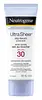
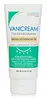
Neutrogena Ultra Sheer Dry-Touch Sunscreen Lotion SPF 30 Versus Vanicream Facial Moisturizer Broad Spectrum SPF 30
This chemical sunscreen covers most of the UV range, lighter on the deep UVA that drives aging.
This mineral sunscreen covers the full UV range and blocks ~97% of UVB at SPF 30.

What's inside
What's inside
 Key Ingredients
Benefits
Concerns
Ingredients Side-by-side
Octocrylene 8%
UV Absorber



Homosalate 6%
Skin Conditioning
Ethylhexyl Salicylate 4.5%
UV Absorber
Butyl Methoxydibenzoylmethane 2.5%
UV Absorber
Acrylates/Dimethicone Copolymer
Skin Conditioning
Behenyl Alcohol
Emollient
Benzyl Alcohol
Perfuming




BHT
Antioxidant
Caprylyl Glycol
Emollient
Caprylyl Methicone
Skin Conditioning
Cera Alba
Emollient




Cetyl Dimethicone
Emollient
Chlorphenesin
Antimicrobial
Diisopropyl Adipate
EmollientDimethicone
Emollient
Dimethicone/PEG-10/15 Crosspolymer
Disodium EDTA
ChelatingEthylhexyl Stearate
Emollient
Ethylhexylglycerin
Skin ConditioningGlyceryl Stearate
Emollient
Hydrolyzed Jojoba Esters
Skin Conditioning
Jojoba Esters
Emollient
Parfum
Masking
PEG-100 Stearate
Surfactant
Potassium Cetyl Phosphate
EmulsifyingSilica
Abrasive


Sodium Polyacrylate
Absorbent
Tocopheryl Acetate
Antioxidant

Trideceth-6
EmulsifyingWater
Skin ConditioningXanthan Gum
EmulsifyingOctocrylene 8%, Homosalate 6%, Ethylhexyl Salicylate 4.5%, Butyl Methoxydibenzoylmethane 2.5%, Acrylates/Dimethicone Copolymer, Behenyl Alcohol, Benzyl Alcohol, BHT, Caprylyl Glycol, Caprylyl Methicone, Cera Alba, Cetyl Dimethicone, Chlorphenesin, Diisopropyl Adipate, Dimethicone, Dimethicone/PEG-10/15 Crosspolymer, Disodium EDTA, Ethylhexyl Stearate, Ethylhexylglycerin, Glyceryl Stearate, Hydrolyzed Jojoba Esters, Jojoba Esters, Parfum, PEG-100 Stearate, Potassium Cetyl Phosphate, Silica, Sodium Polyacrylate, Tocopheryl Acetate, Trideceth-6, Water, Xanthan Gum
Zinc Oxide
Cosmetic Colorant
Water
Skin ConditioningC12-15 Alkyl Benzoate
AntimicrobialIsopentyldiol
Humectant
Squalane
Emollient
Glycerin
Humectant
Coco-Caprylate/Caprate
Emollient
Bis-Octyldodecyl Dimer Dilinoleate/Propanediol Copolymer
EmollientGlyceryl Stearate
Emollient
PEG-100 Stearate
Surfactant
Polyhydroxystearic Acid
Emulsifying
Cetearyl Alcohol
Emollient
Sucrose Stearate
EmollientCeramide EOP
Skin Conditioning


Ceramide Ng
Skin Conditioning
Ceramide NP
Skin Conditioning
Ceramide As
Skin Conditioning
Ceramide AP
Skin Conditioning
Carnosine
Skin Conditioning
Phytosterols
Skin Conditioning
Hydrogenated Lecithin
Emulsifying
Dimethicone
Emollient
Triethoxycaprylylsilane
Polyacrylate Crosspolymer-11
Emulsion StabilisingCaprylyl Glycol
Emollient
1,2-Hexanediol
Skin Conditioning
Zinc Oxide, Water, C12-15 Alkyl Benzoate, Isopentyldiol, Squalane, Glycerin, Coco-Caprylate/Caprate, Bis-Octyldodecyl Dimer Dilinoleate/Propanediol Copolymer, Glyceryl Stearate, PEG-100 Stearate, Polyhydroxystearic Acid, Cetearyl Alcohol, Sucrose Stearate, Ceramide EOP, Ceramide Ng, Ceramide NP, Ceramide As, Ceramide AP, Carnosine, Phytosterols, Hydrogenated Lecithin, Dimethicone, Triethoxycaprylylsilane, Polyacrylate Crosspolymer-11, Caprylyl Glycol, 1,2-Hexanediol
Reviews
Ingredients Explained
These ingredients are found in both products.
Ingredients higher up in an ingredient list are typically present in a larger amount.
Caprylyl Glycol is a humectant, skin conditioner, emollient, and preservative booster derived from either caprylic acid or synthetically created.
Typical use levels vary from 0.3-1% as a preservative booster and go up to 2% to condition skin.
Because it is not a free-fatty acid, this ingredient is fungal acne safe (there's nothing for Malassezia to feed on).
Learn more about Caprylyl GlycolDimethicone is a type of synthetic silicone created from natural materials such as quartz. It is also known as polydimethylsiloxane.
What it does:
Dimethicone comes in different viscosities:
Depending on the viscosity, dimethicone has different properties.
Ingredients lists don't always show which type is used, so we recommend reaching out to the brand if you have questions about the viscosity.
This ingredient is unlikely to cause irritation because it does not get absorbed into skin. However, people with silicone allergies should be careful about using this ingredient.
Note: Dimethicone may contribute to pilling. This is because it is not oil or water soluble, so pilling may occur when layered with products. When mixed with heavy oils in a formula, the outcome is also quite greasy.
Learn more about DimethiconeGlyceryl Stearate is made by reacting glycerin with stearic acid (typically sourced from plant oils like palm or coconut). It's an emulsifier, emollient, and mild occlusive.
Emulsifiers help ingredients like oil and water stay mixed so your formula stays nicely blended and uniform in texture.
This ingredient is typically used in concentrations between 1-10%. Studies have found it to be non-sensitizing, non-phototoxic, and non-photoallergenic.
A close cousin of this ingredient is Glyceryl Stearate SE ("self-emulsifying"). This just has a small amount of sodium or potassium stearate added so it can emulsify without a co-emulsifier.
Since this ingredient is an ester of a C18 fatty acid, it may not be fungal acne safe. The Malassezia yeast can potentially metabolize within the C11-C24 range.
Fun fact: The human body also creates Glyceryl Stearate naturally.
Learn more about Glyceryl StearatePeg-100 Stearate is an emollient and emulsifier. As an emollient, it helps keep skin soft by trapping moisture in. On the other hand, emulsifiers help prevent oil and water from separating in a product.
PEGS are a hydrophilic polyether compound . There are 100 ethylene oxide monomers in Peg-100 Stearate. Peg-100 Stearate is polyethylene glycol ester of stearic acid.
Water. It's the most common cosmetic ingredient of all. You'll usually see it at the top of ingredient lists, meaning that it makes up the largest part of the product.
So why is it so popular? Water most often acts as a solvent - this means that it helps dissolve other ingredients into the formulation.
You'll also recognize water as that liquid we all need to stay alive. If you see this, drink a glass of water. Remember to stay hydrated!
Learn more about Water

