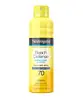
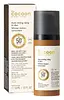
Neutrogena Beach Defense Water + Sun Protection Sunscreen Spray SPF 70 Versus The Cocoon Vietnam Winter Melon Suncreen SPF 50 + PA ++++
This chemical sunscreen covers most of the UV range, lighter on the deep UVA that drives aging.
This chemical sunscreen covers the full UV range and blocks ~98% of UVB at SPF 50.


What's inside
What's inside
 Key Ingredients
Benefits
Concerns
No concerns
Ingredients Side-by-side
Butyl Methoxydibenzoylmethane 3%
UV Absorber
Homosalate 15%
Skin Conditioning
Ethylhexyl Salicylate 5%
UV Absorber
Octocrylene 10%
UV Absorber

Alcohol Denat.
Antimicrobial




Butyl Methoxydibenzoylmethane 3%, Homosalate 15%, Ethylhexyl Salicylate 5%, Octocrylene 10%, Alcohol Denat., Isobutane, Butyloctyl Salicylate, Dicaprylyl Carbonate, Diethylhexyl 2,6-Naphthalate, Polyester-7, Acrylates/Octylacrylamide Copolymer, Neopentyl Glycol Diheptanoate, Parfum, Tocopheryl Acetate
Water
Skin ConditioningC12-15 Alkyl Benzoate
AntimicrobialIsododecane
EmollientCyclopentasiloxane
Emollient
Bis-Ethylhexyloxyphenol Methoxyphenyl Triazine
UV Absorber
Butyloctyl Salicylate
Skin Conditioning
Tris-Biphenyl Triazine
UV Absorber
Silica
Abrasive


Methyl Methacrylate Crosspolymer
Dicaprylyl Carbonate
EmollientEthylhexyl Triazone
UV Absorber
Butyl Methoxydibenzoylmethane
UV Absorber
Diethylamino Hydroxybenzoyl Hexyl Benzoate
UV Filter
Ethylhexyl Methoxycrylene
Skin Conditioning
Caprylyl Methicone
Skin Conditioning
Benincasa Cerifera Fruit Extract
Skin ConditioningNiacinamide
Smoothing









Betaine
Humectant
Hydroxymethoxyphenyl Decanone
Skin ConditioningTetrahexyldecyl Ascorbate
Antioxidant

Glycine Soja Seed Extract
Skin Conditioning
Acrylates/C10-30 Alkyl Acrylate Crosspolymer
Emulsion StabilisingTrimethylsiloxysilicate
Emollient
Glycerin
Humectant
Propanediol
Solvent
Butylene Glycol
Humectant
Pentylene Glycol
Skin Conditioning
1,2-Hexanediol
Skin Conditioning
Trisodium Ethylenediamine Disuccinate
ChelatingTocopherol
Antioxidant
Decyl Glucoside
Cleansing
Ethylhexylglycerin
Skin ConditioningCaprylic/Capric Triglyceride
Masking
Disodium Phosphate
BufferingXanthan Gum
EmulsifyingPhenoxyethanol
Preservative
Water, C12-15 Alkyl Benzoate, Isododecane, Cyclopentasiloxane, Bis-Ethylhexyloxyphenol Methoxyphenyl Triazine, Butyloctyl Salicylate, Tris-Biphenyl Triazine, Silica, Methyl Methacrylate Crosspolymer, Dicaprylyl Carbonate, Ethylhexyl Triazone, Butyl Methoxydibenzoylmethane, Diethylamino Hydroxybenzoyl Hexyl Benzoate, Ethylhexyl Methoxycrylene, Caprylyl Methicone, Benincasa Cerifera Fruit Extract, Niacinamide, Betaine, Hydroxymethoxyphenyl Decanone, Tetrahexyldecyl Ascorbate, Glycine Soja Seed Extract, Acrylates/C10-30 Alkyl Acrylate Crosspolymer, Trimethylsiloxysilicate, Glycerin, Propanediol, Butylene Glycol, Pentylene Glycol, 1,2-Hexanediol, Trisodium Ethylenediamine Disuccinate, Tocopherol, Decyl Glucoside, Ethylhexylglycerin, Caprylic/Capric Triglyceride, Disodium Phosphate, Xanthan Gum, Phenoxyethanol
Reviews
Ingredients Explained
These ingredients are found in both products.
Ingredients higher up in an ingredient list are typically present in a larger amount.
Also known as Avobenzone, this ingredient is an oil-soluble used to absorb the full spectrum of UVA rays (peak 357 nm).
It's one of the most effective UVA filters available but has a major caveat of photostability: avobenzone is susceptible to photodegradation.
This means it can lose efficacy when exposed to sunlight without the help of a stabilizing agent.
Studies show antioxidants (like vitamin E or vitamin C) and some UV filters (like octocrylene and Tinosorb S) can meaningfully improve its stability in a formulation.
The maximum allowable concentration according to regulation is 3% in the US + Canada, and 5% in the EU, Australia, China, Korea, and ASEAN countries.
It has a well-support safety profile: a comprehensive 2025 review found minimal toxicity with no evidence of carcinogenicity.
Overall, avobenzone is a safe and regulated ingredient used in sunscreen for over 40 years.
Learn more about Butyl MethoxydibenzoylmethaneButyloctyl Salicylate is a chemical UV filter structurally similar to octisalate. It is a photostabilizer, SPF booster, emollient and solvent. This ingredient helps evenly spread out ingredients.
According to a manufacturer, it is suitable for pairing with micro Titanium Dioxide, Zinc Oxide, and pigments.
Photostabilizers help stabilize UV-filters and prevents them from degrading quickly.
Learn more about Butyloctyl SalicylateDicaprylyl Carbonate comes from carbonic acid and caprylyl alcohol, a fatty alcohol. It is an emollient and gives skin a velvet feel. The sources of Dicaprylyl Carbonate may be synthetic or from animals.
As an emollient, Dicaprylyl Carbonate creates a film on the skin. This film traps moisture in, keeping your skin soft and hydrated.


