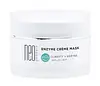
This wash off mask is formulated around Glycolic Acid to exfoliate and smooth skin.

What's inside
What's inside
 Key Ingredients
Benefits
Concerns
Ingredients Side-by-side
Water
Skin ConditioningCarthamus Tinctorius Seed Oil
Masking



Glycerin
Humectant

Bentonite
Absorbent


Helianthus Annuus Seed Oil
Emollient
Kaolin
Abrasive

Behenyl Alcohol
Emollient
Glyceryl Stearate
Emollient
PEG-100 Stearate
Surfactant
Propanediol
Solvent
Niacinamide
Smoothing





Maltodextrin
Absorbent
Bromelain
Skin Conditioning
Papain
Skin Conditioning
Glycine Soja Seed Extract
Skin Conditioning
Carthamus Tinctorius Oleosomes
Emollient
Xanthan Gum
EmulsifyingPhytic Acid
Chelating
Tocopherol
Antioxidant

Polysorbate 80
Emulsifying
Cetearyl Alcohol
Emollient



Tetrasodium Glutamate Diacetate
ChelatingCitrus Aurantium Dulcis Peel Oil
Masking
Citrus Aurantium Bergamia Peel Oil
Perfuming



Ethylhexylglycerin
Skin ConditioningTitanium Dioxide
Cosmetic Colorant

Phenoxyethanol
Preservative
Water, Carthamus Tinctorius Seed Oil, Glycerin, Bentonite, Helianthus Annuus Seed Oil, Kaolin, Behenyl Alcohol, Glyceryl Stearate, PEG-100 Stearate, Propanediol, Niacinamide, Maltodextrin, Bromelain, Papain, Glycine Soja Seed Extract, Carthamus Tinctorius Oleosomes, Xanthan Gum, Phytic Acid, Tocopherol, Polysorbate 80, Cetearyl Alcohol, Tetrasodium Glutamate Diacetate, Citrus Aurantium Dulcis Peel Oil, Citrus Aurantium Bergamia Peel Oil, Ethylhexylglycerin, Titanium Dioxide, Phenoxyethanol
Aloe Barbadensis Leaf Juice
Skin Conditioning
Propylene Glycol
Humectant
Glycerin
Humectant
Cetyl Alcohol
Emollient
Perlite
Absorbent
Bromelain
Skin Conditioning
Papain
Skin Conditioning
Carthamus Tinctorius Seed Oil
Masking
Hydrogenated Polydecene
EmollientGlycolic Acid
Buffering
Lactic Acid
Buffering
Glyceryl Stearate
Emollient
Dimethicone
Emollient
PEG-100 Stearate
Surfactant
Polyacrylate-13
Hydroxyethylcellulose
Emulsion StabilisingChamomilla Recutita Flower Extract
Masking
Tocopherol
Antioxidant
Polyisobutene
Polysorbate 80
Emulsifying
Polysorbate 20
Emulsifying
Benzyl Alcohol
Perfuming

Kaolin
Abrasive
Magnesium Aluminum Silicate
Absorbent
Ethylhexylglycerin
Skin ConditioningParfum
Masking
Aloe Barbadensis Leaf Juice, Propylene Glycol, Glycerin, Cetyl Alcohol, Perlite, Bromelain, Papain, Carthamus Tinctorius Seed Oil, Hydrogenated Polydecene, Glycolic Acid, Lactic Acid, Glyceryl Stearate, Dimethicone, PEG-100 Stearate, Polyacrylate-13, Hydroxyethylcellulose, Chamomilla Recutita Flower Extract, Tocopherol, Polyisobutene, Polysorbate 80, Polysorbate 20, Benzyl Alcohol, Kaolin, Magnesium Aluminum Silicate, Ethylhexylglycerin, Parfum
Reviews
Ingredients Explained
These ingredients are found in both products.
Ingredients higher up in an ingredient list are typically present in a larger amount.
Bromelain is a proteolytic enzyme derived from pineapple stem. It gently exfoliates by by dissolving the "glue" holding dead skin cells to your skin's surface.
By faciliating the removal of dead skin cells from the outermost layer of skin, it helps with enhancing skin firmness, hydration, and texture.
Besides exfoliation, it also has anti-inflammatory properties by blocking the inflammation signaling pathways.
It is considered gentler than traditional AHAs or physical scrubs and is a great option for sensitive skin. At this time, most of the clinical trial data on enzyme exfoliants is still limited and further in vivo research is needed.
Typical concentrations for this ingredient range between 0.1-5%.
Bromelain's use in cosmetic formulations has been limited by its sensitivity to pH and temperature (it maintains best stability at pH 5.0). This means how effective is it in a finished product can vary depending on how well the formula is designed.
Learn more about BromelainCarthamus Tinctorius Seed Oil comes from the seeds of the safflower plant. It is a skin conditioning agent that helps soften skin and keep it hydrated.
This seed oil has an unusual fatty acid profile: it is one of the highest linoleic acid plant oils out there (~55-77%). It also has low amounts of oleic acid, and this high-linoleic/low-oleic ratio gets people excited.
Linoleic acid helps maintain skin barrier integrity and is a building block for the ceramides in your stratum corneum. Notably, people with acne tend to have lower linoleic acid in their skin lipids as well (and this gets worse as acne gets more severe).
Overall, it's a lightweight, fast-absorbing oil that has a long safety track record. Lab testing has found it to be non-irritating for skin or eyes.
The Malassezia yeast can metabolize the fatty acids in this oil to grow; therefore this ingredient may not be fungal acne safe.
Learn more about Carthamus Tinctorius Seed OilEthylhexylglycerin is created from glycerin. It is a multitasker ingredient that:
The CIR Expert Panel found minimal skin absorption or sensitization of any kind in a safety assessment. Though this ingredient is considered well-tolerated, a small number of cases of allergic dermatitis have been published since 2002. Just be sure to patch test if you are unsure.
Industry-reported use ranges from 8% in rinse-off products and 2% in leave-on formulations.
Learn more about EthylhexylglycerinGlycerin (or glycerol) is a compound naturally found in your skin. It's a powerhouse humectant that pulls water into the stratum corneum.
Topically, glycerin does several things at once:
Your skin makes glycerin on its own (mostly from sebaceous oil breakdown) and shuttles it to your outermost layer of skin, or your epidermis, via aquaporin-3.
Aquaporin-3 is a transporter that is essential for normal skin hydration, elasticity, and repair. Interestingly, mice lacking in AQP3 have dry and less elastic skin that can be fully corrected with glycerin.
This ingredient is non-irritating, plays well with almost every ingredient, and works across all skin types. Typical use is anywhere between 3-10% but can go up to 79% in some leave-on products.
Just know very high concentrations (>40%) can feel tacky in low humidity.
Glycerin is the name for this ingredient in American English. British English uses Glycerol/Glycerine.
Learn more about GlycerinGlyceryl Stearate is made by reacting glycerin with stearic acid (typically sourced from plant oils like palm or coconut). It's an emulsifier, emollient, and mild occlusive.
Emulsifiers help ingredients like oil and water stay mixed so your formula stays nicely blended and uniform in texture.
This ingredient is typically used in concentrations between 1-10%. Studies have found it to be non-sensitizing, non-phototoxic, and non-photoallergenic.
A close cousin of this ingredient is Glyceryl Stearate SE ("self-emulsifying"). This just has a small amount of sodium or potassium stearate added so it can emulsify without a co-emulsifier.
Since this ingredient is an ester of a C18 fatty acid, it may not be fungal acne safe. The Malassezia yeast can potentially metabolize within the C11-C24 range.
Fun fact: The human body also creates Glyceryl Stearate naturally.
Learn more about Glyceryl StearateKaolin is a clay. It is used for oil control and to help minimize pores. Like other clays, kaolin has the ability to absorb excess sebum or oil. This can help clean out pores and mattify the skin.
Some types of kaolin may have exfoliating properties. When water is added to kaolin, it becomes a paste with small abrasive particles.
Most kaolin is a white color, but may be pink/orange/red depending on where it comes from.
The name 'kaolin' comes from a Chinese village named 'Gaoling'. Kaolin clay comes from rocks rich in kaolinite. Kaolinite, the mineral, has a silicate layered structure. Kaolinite is formed from chemical weathering of aluminum siilicate minerals.
Besides skincare, kaolin is commonly used to make glossy paper, in ceramics, toothpaste, and as medicine to soothe stomach issues.
Learn more about KaolinPapain is a proteolytic enzyme extracted from unripe papaya fruit. It is a gentle exfoliator that helps remove the dead skin cells from your outermost layer of skin.
Basically, papain works by dissolving the "glue" holding dead skin cells to your skin's surface. This also promotes cell turnover and smooths texture.
Unlike other exfoliants, papain can work without causing significant irritation.
Beyond exfoliation, its proteolytic action also helps soothe irritated skin and supports the healing of minor wounds.
A 2024 in vivo/in vitro study confirmed its potential to suppress skin inflammation and improve transepidermal water loss (TEWL) in atopic dermatitis models.
Just one thing worth noting: there are reports of allergic responses in individuals with a papaya or latex sensitivity. Be sure to patch test if you're in this camp.
Learn more about PapainPeg-100 Stearate is an emollient and emulsifier. As an emollient, it helps keep skin soft by trapping moisture in. On the other hand, emulsifiers help prevent oil and water from separating in a product.
PEGS are a hydrophilic polyether compound . There are 100 ethylene oxide monomers in Peg-100 Stearate. Peg-100 Stearate is polyethylene glycol ester of stearic acid.
Polysorbate 80 is a synthetic surfactant and emulsifier derived from sorbitol and oleic acid.
It reduces the surface tension between oil and water phases to help them stay mixed and stable in a formulation. In other words, it prevents your formulas from separating into an oily mess.
The CIR Expert Panel has evaluated the scientific data and found this ingredient to be safe, non-irritating, and non-sensitizing at concentrations up to 5% (it's even approved by the FDA as an OTC eye drop ingredient).
Learn more about Polysorbate 80Tocopherol is a fat-soluble antioxidant known as Vitamin E.
You'll find this ingredient in the vast majority of skincare (for good reason). It works to neutralize free radicals, or unstable molecules generated by UV exposure, pollution, and other environmental stressors, before they can cause oxidative damage to your skin cells.
Topically applied tocopherol has been shown to protect against UV damage by ramping up the skin's own natural defense enzymes.
It also acts as a skin conditioning agent; some studies show that regular topical use can improve the skin's water-binding capacity over 2-4 weeks.
This ingredient is especially loved for being a team player. When combined with Vitamin C, the photoprotective effect of both ingredients roughly doubles and the combo also helps reduce UV-induced DNA damage.
This ingredient has some brightening potential but it's more of a prevention ingredient than spot-fader. Cell studies show it can slow down melanin production but it's worth noting that it's not the most powerful brightener out there.
In formulations, it also serves as a stabilizer that helps protect other oxidation-prone ingredients from degrading.
Concentrations usually range from 0.1-1% in most leave-on products.
Learn more about Tocopherol

