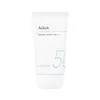
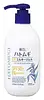
Missha All Round Safe Block Aqua Sun Gel SPF 50+ PA++++ Versus KUMANO COSME Hatomugi UV Care & Moisturizing The UV Milky Gel SPF 50+ PA++++
This chemical sunscreen covers the full UV range and blocks ~98% of UVB at SPF 50.
This chemical sunscreen covers most of the UV range, lighter on the deep UVA that drives aging.


What's inside
What's inside
 Key Ingredients
Benefits
Concerns
Ingredients Side-by-side
Water
Skin ConditioningHomosalate
Skin Conditioning

Alcohol Denat.
Antimicrobial




Ethylhexyl Salicylate
UV Absorber
Dipropylene Glycol
HumectantButyl Methoxydibenzoylmethane
UV Absorber
Silica
Abrasive


Methyl Methacrylate Crosspolymer
Bis-Ethylhexyloxyphenol Methoxyphenyl Triazine
UV Absorber
Isoamyl P-Methoxycinnamate
UV Absorber
Octocrylene
UV Absorber
Bis-PEG/PPG-20/5 PEG/PPG-20/5 Dimethicone
Emulsifying
Methoxy PEG/PPG-25/4 Dimethicone
Emulsifying
Dimethicone
Emollient
Caprylyl Glycol
Emollient
Acrylates/C10-30 Alkyl Acrylate Crosspolymer
Emulsion StabilisingCaprylic/Capric Triglyceride
Masking


Parfum
Masking

Ethylhexylglycerin
Skin ConditioningSodium Hydroxide
Buffering1,2-Hexanediol
Skin Conditioning
BHT
Antioxidant
Disodium EDTA
ChelatingLimonia Acidissima Extract
Skin ConditioningButylene Glycol
Humectant
Vp/Hexadecene Copolymer
Cyclopentasiloxane
Emollient
Acrylates/Dimethicone Copolymer
Skin Conditioning
Chrysanthemum Indicum Flower Extract
Skin Conditioning
Camellia Sinensis Leaf Extract
Antimicrobial


Phenoxyethanol
Preservative
Morus Alba Fruit Extract
Antioxidant
Cinnamomum Cassia Bark Extract
Masking
Artemisia Princeps Leaf Extract
Skin ConditioningDiospyros Kaki Leaf Extract
Skin Protecting
Pueraria Lobata Root Extract
HumectantThymus Vulgaris Leaf Water
Skin ConditioningCentaurea Cyanus Flower Water
Skin Conditioning
Helichrysum Italicum Flower Water
Skin ConditioningWater, Homosalate, Alcohol Denat., Ethylhexyl Salicylate, Dipropylene Glycol, Butyl Methoxydibenzoylmethane, Silica, Methyl Methacrylate Crosspolymer, Bis-Ethylhexyloxyphenol Methoxyphenyl Triazine, Isoamyl P-Methoxycinnamate, Octocrylene, Bis-PEG/PPG-20/5 PEG/PPG-20/5 Dimethicone, Methoxy PEG/PPG-25/4 Dimethicone, Dimethicone, Caprylyl Glycol, Acrylates/C10-30 Alkyl Acrylate Crosspolymer, Caprylic/Capric Triglyceride, Parfum, Ethylhexylglycerin, Sodium Hydroxide, 1,2-Hexanediol, BHT, Disodium EDTA, Limonia Acidissima Extract, Butylene Glycol, Vp/Hexadecene Copolymer, Cyclopentasiloxane, Acrylates/Dimethicone Copolymer, Chrysanthemum Indicum Flower Extract, Camellia Sinensis Leaf Extract, Phenoxyethanol, Morus Alba Fruit Extract, Cinnamomum Cassia Bark Extract, Artemisia Princeps Leaf Extract, Diospyros Kaki Leaf Extract, Pueraria Lobata Root Extract, Thymus Vulgaris Leaf Water, Centaurea Cyanus Flower Water, Helichrysum Italicum Flower Water
Water
Skin ConditioningEthylhexyl Methoxycinnamate 9.5%
UV Absorber
Alcohol
Antimicrobial
Butyl Methoxydibenzoylmethane 1%
UV Absorber
Octocrylene 1%
UV Absorber
Steareth-6
EmulsifyingDimethicone
Emollient
Butylene Glycol
Humectant
Carbomer
Emulsion StabilisingCoix Lacryma-Jobi Ma-Yuen Seed Extract
Skin ConditioningRosmarinus Officinalis Leaf Extract
AntimicrobialPrunus Persica Leaf Extract
Emollient
Aloe Barbadensis Leaf Extract
Emollient
Citrus Junos Peel Oil
Astringent
Cocos Nucifera Oil
Masking


Sodium Hyaluronate
Humectant
Ceramide Ng
Skin Conditioning
Xanthan Gum
EmulsifyingTetrasodium EDTA
ChelatingSodium Hydroxide 0.1%
BufferingBHT
Antioxidant
Methylparaben 0.2%
Preservative
Ethylparaben 0.01%
Preservative
Phenoxyethanol 0.9%
Preservative
Water, Ethylhexyl Methoxycinnamate 9.5%, Alcohol, Butyl Methoxydibenzoylmethane 1%, Octocrylene 1%, Steareth-6, Dimethicone, Butylene Glycol, Carbomer, Coix Lacryma-Jobi Ma-Yuen Seed Extract, Rosmarinus Officinalis Leaf Extract, Prunus Persica Leaf Extract, Aloe Barbadensis Leaf Extract, Citrus Junos Peel Oil, Cocos Nucifera Oil, Sodium Hyaluronate, Ceramide Ng, Xanthan Gum, Tetrasodium EDTA, Sodium Hydroxide 0.1%, BHT, Methylparaben 0.2%, Ethylparaben 0.01%, Phenoxyethanol 0.9%
Reviews
Ingredients Explained
These ingredients are found in both products.
Ingredients higher up in an ingredient list are typically present in a larger amount.
BHT is a synthetic antioxidant and preservative.
As an antioxidant, it helps your body fight off free-radicals. Free-radicals are molecules that may damage your skin cells.
As a preservative, it is used to stabilize products and prevent them from degrading. Specifically, BHT prevents degradation from oxidation.
The concerns related to BHT come from oral studies; this ingredient is currently allowed for use by both the FDA and EU.
However, it was recently restricted for use in the UK as of April 2024.
Learn more about BHTAlso known as Avobenzone, this ingredient is an oil-soluble used to absorb the full spectrum of UVA rays (peak 357 nm).
It's one of the most effective UVA filters available but has a major caveat of photostability: avobenzone is susceptible to photodegradation.
This means it can lose efficacy when exposed to sunlight without the help of a stabilizing agent.
Studies show antioxidants (like vitamin E or vitamin C) and some UV filters (like octocrylene and Tinosorb S) can meaningfully improve its stability in a formulation.
The maximum allowable concentration according to regulation is 3% in the US + Canada, and 5% in the EU, Australia, China, Korea, and ASEAN countries.
It has a well-support safety profile: a comprehensive 2025 review found minimal toxicity with no evidence of carcinogenicity.
Overall, avobenzone is a safe and regulated ingredient used in sunscreen for over 40 years.
Learn more about Butyl MethoxydibenzoylmethaneButylene Glycol (or BG) is used within cosmetic products for a few different reasons:
Overall, Butylene Glycol is a safe and well-rounded ingredient that works well with other ingredients.
Though this ingredient works well with most skin types, some people with sensitive skin may experience a reaction such as allergic rashes, closed comedones, or itchiness.
Learn more about Butylene GlycolDimethicone is a type of synthetic silicone created from natural materials such as quartz. It is also known as polydimethylsiloxane.
What it does:
Dimethicone comes in different viscosities:
Depending on the viscosity, dimethicone has different properties.
Ingredients lists don't always show which type is used, so we recommend reaching out to the brand if you have questions about the viscosity.
This ingredient is unlikely to cause irritation because it does not get absorbed into skin. However, people with silicone allergies should be careful about using this ingredient.
Note: Dimethicone may contribute to pilling. This is because it is not oil or water soluble, so pilling may occur when layered with products. When mixed with heavy oils in a formula, the outcome is also quite greasy.
Learn more about DimethiconeOctocrylene is an oil-soluble organic UV filter that mainly absorbs UVB and short wave UVA II light.
Its real superpower is teamwork: octocrylene is remarkably photostable and is most famous for stabilizing avobenzone (the workhorse UVA filter).
This ingredient is commonly used to enhance both UVB and UVA protection due to its unique property in stabilizing avobenzone. It also pulls double duty by boosting water resistance and giving formulas a smooth, spreadable feel.
The EU's Scientific Committee on Consumer Safety (SCCS) has deemed octocrylene to be safe as a UV-filter at concentrations up to 10% (capped at 9% in propellant sprays). The US also permits it up to 10%.
Two things worth knowing:
You'll usually see this ingredient used in concentrations between 2-10% (higher amounts when used as a stabilizer for avobenzone).
Learn more about OctocrylenePhenoxyethanol is one of the most widely used preservatives in skincare (and for good reason!).
It has a large spectrum of antimicrobial activity and especially effective bacteria, yeast, and mold while only having a weak effect on your skin's natural microbiome.
On a cellular level, it disrupts the cell membranes of microbes by poking holes that make the cell leak. This shuts down the chemical reactions the microbe needs to make energy so it can no longer survive.
Another perk of this ingredient is that it stays functional across a wide pH range (3-10).
You'll often see it paired with boosters like Ethylhexylglycerin; one study showed that a 1:9 ratio of Ethylhexylglycerin to Phenoxyethanol damages bacterial membranes as effectively as doubling the Phenoxyethanol concentration on its own.
Typical use concentrations range from 0.3-1% depending on the formula, and this ingredient is capped at 1% int the EU.
Safety-wise, the fear mongering does not hold up to the evidence. The EU's Scientific Committee on Consumer Safety and FDA consider it safe as a preservative at up to 1%, including for children of all ages.
Adverse systemic effects only showed up in animal studies at exposures roughly 200x higher than what people get from cosmetics. And despite its very widespread use, this ingredient is a rare sensitizer and allergic reactions are uncommon.
Learn more about PhenoxyethanolSodium Hydroxide is also known as lye or caustic soda. It is used to adjust the pH of products; many ingredients require a specific pH to be effective.
In small amounts, sodium hydroxide is considered safe to use. However, large amounts may cause chemical burns due to its high alkaline.
Your skin has a natural pH and acid mantle. This acid mantle helps prevent harmful bacteria from breaking through. The acid mantle also helps keep your skin hydrated.
"Alkaline" refers to a high pH level. A low pH level would be considered acidic.
Learn more about Sodium HydroxideWater. It's the most common cosmetic ingredient of all. You'll usually see it at the top of ingredient lists, meaning that it makes up the largest part of the product.
So why is it so popular? Water most often acts as a solvent - this means that it helps dissolve other ingredients into the formulation.
You'll also recognize water as that liquid we all need to stay alive. If you see this, drink a glass of water. Remember to stay hydrated!
Learn more about Water

