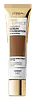
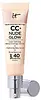
L'Oreal Age Perfect Radiant Serum Foundation With SPF 50 Versus IT Cosmetics CC+ Nude Glow Lightweight Foundation SPF 40


What's inside
What's inside
 Key Ingredients
Benefits
Concerns
Ingredients Side-by-side
Homosalate
Skin Conditioning

Ethylhexyl Salicylate
UV Absorber
Octocrylene
UV Absorber

Titanium Dioxide
Cosmetic Colorant
Water
Skin ConditioningDimethicone
Emollient

Glycerin
Humectant

Propanediol
Solvent
Alcohol Denat.
Antimicrobial


Niacinamide
Smoothing









Vinyl Dimethicone/Methicone Silsesquioxane Crosspolymer
Synthetic Fluorphlogopite
PEG-30 Dipolyhydroxystearate
Emulsifying
Tocopherol
Antioxidant

Polyglyceryl-4 Diisostearate/Polyhydroxystearate/Sebacate
Emulsifying
Disteardimonium Hectorite
StabilisingMagnesium Sulfate
Phenoxyethanol
Preservative
Disodium Stearoyl Glutamate
CleansingAluminum Hydroxide
EmollientStearic Acid
Cleansing
Aloe Barbadensis Leaf Juice Powder
Skin Conditioning
Sodium Hyaluronate
Humectant
Iron Oxides
Homosalate, Ethylhexyl Salicylate, Octocrylene, Titanium Dioxide, Water, Dimethicone, Glycerin, Propanediol, Alcohol Denat., Niacinamide, Vinyl Dimethicone/Methicone Silsesquioxane Crosspolymer, Synthetic Fluorphlogopite, PEG-30 Dipolyhydroxystearate, Tocopherol, Polyglyceryl-4 Diisostearate/Polyhydroxystearate/Sebacate, Disteardimonium Hectorite, Magnesium Sulfate, Phenoxyethanol, Disodium Stearoyl Glutamate, Aluminum Hydroxide, Stearic Acid, Aloe Barbadensis Leaf Juice Powder, Sodium Hyaluronate, Iron Oxides
Homosalate 8.3%
Skin Conditioning
Ethylhexyl Salicylate 4.5%
UV Absorber
Octocrylene 5.6%
UV Absorber
Water
Skin ConditioningGlycerin
Humectant
Caprylyl Methicone
Skin Conditioning
Dimethicone
Emollient
Butyloctyl Salicylate
Skin Conditioning
Cetyl PEG/PPG-10/1 Dimethicone
Emulsifying
Niacinamide
Smoothing
Propanediol
Solvent
Dimethicone/PEG-10/15 Crosspolymer
Synthetic Fluorphlogopite
Phenoxyethanol
Preservative
Sodium Chloride
MaskingButylene Glycol
Humectant
Trimethylsiloxysilicate
Emollient
Disteardimonium Hectorite
StabilisingDisodium Stearoyl Glutamate
CleansingParfum
Masking

Chlorphenesin
Antimicrobial
Caprylyl Glycol
Emollient
Snail Secretion Filtrate
Skin Conditioning
Silica Silylate
Emollient
Trisodium Ethylenediamine Disuccinate
ChelatingLimonene
Perfuming
Simethicone
Emollient
Maltodextrin
Absorbent
Aluminum Hydroxide
EmollientAdenosine
Skin Conditioning
Ethyl Hexanediol
SolventDipropylene Glycol
HumectantSodium Hyaluronate
Humectant
Citral
Perfuming
Linalool
Perfuming
Sodium Citrate
BufferingCamellia Sinensis Leaf Extract
Antimicrobial
Tocopherol
Antioxidant
Pentaerythrityl Tetra-Di-T-Butyl Hydroxyhydrocinnamate
Antioxidant
Iron Oxides
Titanium Dioxide
Cosmetic Colorant
Homosalate 8.3%, Ethylhexyl Salicylate 4.5%, Octocrylene 5.6%, Water, Glycerin, Caprylyl Methicone, Dimethicone, Butyloctyl Salicylate, Cetyl PEG/PPG-10/1 Dimethicone, Niacinamide, Propanediol, Dimethicone/PEG-10/15 Crosspolymer, Synthetic Fluorphlogopite, Phenoxyethanol, Sodium Chloride, Butylene Glycol, Trimethylsiloxysilicate, Disteardimonium Hectorite, Disodium Stearoyl Glutamate, Parfum, Chlorphenesin, Caprylyl Glycol, Snail Secretion Filtrate, Silica Silylate, Trisodium Ethylenediamine Disuccinate, Limonene, Simethicone, Maltodextrin, Aluminum Hydroxide, Adenosine, Ethyl Hexanediol, Dipropylene Glycol, Sodium Hyaluronate, Citral, Linalool, Sodium Citrate, Camellia Sinensis Leaf Extract, Tocopherol, Pentaerythrityl Tetra-Di-T-Butyl Hydroxyhydrocinnamate, Iron Oxides, Titanium Dioxide
Reviews
Ingredients Explained
These ingredients are found in both products.
Ingredients higher up in an ingredient list are typically present in a larger amount.
Aluminum Hydroxide is a form of aluminum. It can be naturally found in nature as the mineral gibbsite. In cosmetics, Aluminum Hydroxide is used as a colorant, pH adjuster, and absorbent.
As a colorant, Aluminum Hydroxide may add opacity, or reduce the transparency. Aluminum hydroxide is contains both basic and acidic properties.
According to manufacturers, this ingredient is an emollient and humectant. This means it helps hydrate the skin.
In medicine, this ingredient is used to help relieve heartburn and help heal ulcers.
There is currently no credible scientific evidence linking aluminum hydroxide in cosmetics to increased cancer risk.
Major health organizations allow the use of aluminum hydroxide in personal care products and have not flagged it as a carcinogenic risk at typical usage levels.
Learn more about Aluminum HydroxideDimethicone is a type of synthetic silicone created from natural materials such as quartz. It is also known as polydimethylsiloxane.
What it does:
Dimethicone comes in different viscosities:
Depending on the viscosity, dimethicone has different properties.
Ingredients lists don't always show which type is used, so we recommend reaching out to the brand if you have questions about the viscosity.
This ingredient is unlikely to cause irritation because it does not get absorbed into skin. However, people with silicone allergies should be careful about using this ingredient.
Note: Dimethicone may contribute to pilling. This is because it is not oil or water soluble, so pilling may occur when layered with products. When mixed with heavy oils in a formula, the outcome is also quite greasy.
Learn more about DimethiconeDSG is used as a surfactant.
Surfactants are cleansing ingredients that help remove oil, dirt, and other impurities from the skin. They work by reducing surface tension between water and oils/dirt to allow them to be easily rinsed away.
Disteardimonium Hectorite comes from the clay mineral named hectorite. It is used to add thickness to a product.
It can also help stabilize a product by helping to disperse other ingredients.
Hectorite is a rare, white clay mineral.
Learn more about Disteardimonium HectoriteEthylhexyl Salicylate (also called Octisalate or Octyl Salicylate) is an oil-soluble organic UV filter that's been used in sunscreen since the 1950's.
It absorbs UVB light in the 280-320 nm range with a peak absorbance around 306 nm.
You'll often see it paired with other UV filters to boost overall SPF because octisalate is a fairly week filter on its own.
The reason you'll see it so often is because it can help solubilize and stabilize the trickier filters like oxybenzone and avobenzone.
Unlike these filters, octisalate has pretty good photostability and doesn't create skin-damaging free radicals when exposed to sunlight.
The fatty-alcohol part of the molecule also gives it a light, emollient feel so it doubles as a nice texture enhancer.
Usage levels vary around the world:
Safety-wise, this ingredient has a pretty reassuring track record. The EU's Scientific Committee on Consumer Products (SCCP) found very low skin penetration in human skin tests and negative results for irritation, phototoxicity, and photoallergy.
The real-world allergy risk is pretty low too; a 2012 European study of 1,031 people recorded only 2 reactions to it (a rate of 0.19%).
You might have seen scary headlines about sunscreen getting into your blood.
In 2019, the FDA found that several chemical filters can absorb through the skin and show up in the bloodstream at small but measurable levels.
Here's the important part: these tiny levels are just a cutoff the FDA uses to decide which ingredients need more testing and doesn't mean anything harmful was found.
The researchers were clear that the results are no reason to stop wearing sunscreen.
Learn more about Ethylhexyl SalicylateGlycerin (or glycerol) is a compound naturally found in your skin. It's a powerhouse humectant that pulls water into the stratum corneum.
Topically, glycerin does several things at once:
Your skin makes glycerin on its own (mostly from sebaceous oil breakdown) and shuttles it to your outermost layer of skin, or your epidermis, via aquaporin-3.
Aquaporin-3 is a transporter that is essential for normal skin hydration, elasticity, and repair. Interestingly, mice lacking in AQP3 have dry and less elastic skin that can be fully corrected with glycerin.
This ingredient is non-irritating, plays well with almost every ingredient, and works across all skin types. Typical use is anywhere between 3-10% but can go up to 79% in some leave-on products.
Just know very high concentrations (>40%) can feel tacky in low humidity.
Glycerin is the name for this ingredient in American English. British English uses Glycerol/Glycerine.
Learn more about GlycerinHomosalate is an oil-soluble organic UVB filter that has been a sunscreen staple for decades. Its job is to absorb UVB rays (~295-315 nm) and protect your skin against sunburn,
This is one of the more photostable organic UV filters; it holds up pretty well under UV and a 2022 quantum-chemistry study found it stays stable in sunlight.
It's actually so reliable that formulators often pair it with shakier ingredients like oxybenzone and avobenzone. Formulators also use it to help dissolve the other UV filters into the oil phase.
One thing to keep in mind: "stable" isn't the same as "strong". On its own, homosalate is actually a pretty weak UV filter so it's better off as a helpful team player that helps boost overall SPF protection.
The safety picture is a bit nuanced but not scary.
This ingredient has a long track record of being gentle and regulators agree it isn't an irritant; EU's Scientific Committee on Consumer Safety found that homosalate is not considered a skin irritant and doesn't raise eye-irritation flags either.
There's talk about homosalate because your skin absorbs a little bit of it into your bloodstream. A 2020 FDA-backed study found homosalate showed up in people's blood levels at the level where the FDA decides to double check.
The EU's Scientific Committee on Consumer Safety (SCCS) also found small amounts in blood and breast milk. They estimated that about 5% of what you apply gets absorbed through the skin.
Due to the debate about whether it might mess with hormones, the SCCS recommended a maximum limit of 0.5% in most products of 7.3% in face creams/pump sprays.
One important thing to keep in mind: in the US, Homosalate is currently labeled "non-GRASE" by the FDA. This sounds alarming but really just means the FDA wants more data to confirm it's safe. It's not confidently saying this ingredient is harmful.
As of now, homosalate is still completely legal and widely used while that research gets done.
The current maximum limits are:
Learn more about HomosalateNiacinamide is a multitasking form of vitamin B3 that strengthens the skin barrier, reduces pores and dark spots, regulates oil, and improves signs of aging.
And the best part? It's gentle and well-tolerated by most skin types, including sensitive and reactive skin.
You might have heard of "niacin flush", or the reddening of skin that causes itchiness. Niacinamide has not been found to cause this.
In very rare cases, some individuals may not be able to tolerate niacinamide at all or experience an allergic reaction to it.
If you are experiencing flaking, irritation, and dryness with this ingredient, be sure to double check all your products as this ingredient can be found in all categories of skincare.
When incorporating niacinamide into your routine, look out for concentration amounts. Typically, 5% niacinamide provides benefits such as fading dark spots. However, if you have sensitive skin, it is better to begin with a smaller concentration.
When you apply niacinamide to your skin, your body converts it into nicotinamide adenine dinucleotide (NAD). NAD is an essential coenzyme that is already found in your cells as "fuel" and powers countless biological processes.
In your skin, NAD helps repair cell damage, produce new healthy cells, support collagen production, strengthen the skin barrier, and fight environmental stressors (like UV and pollution).
Our natural NAD levels start to decline with age, leading to slower skin repair, visible aging, and a weaker skin barrier. By providing your skin niacinamide, you're recharging your skin's NAD levels. This leads to stronger, healthier, and younger looking skin.
Another name for vitamin B3 is nicotinamide. This vitamin is water-soluble and our bodies don't store it. We obtain Vitamin B3 from either food or skincare. Meat, fish, wheat, yeast, and leafy greens contain vitamin B3.
The type of niacinamide used in skincare is synthetically created.
Learn more about NiacinamideOctocrylene is an oil-soluble organic UV filter that mainly absorbs UVB and short wave UVA II light.
Its real superpower is teamwork: octocrylene is remarkably photostable and is most famous for stabilizing avobenzone (the workhorse UVA filter).
This ingredient is commonly used to enhance both UVB and UVA protection due to its unique property in stabilizing avobenzone. It also pulls double duty by boosting water resistance and giving formulas a smooth, spreadable feel.
The EU's Scientific Committee on Consumer Safety (SCCS) has deemed octocrylene to be safe as a UV-filter at concentrations up to 10% (capped at 9% in propellant sprays). The US also permits it up to 10%.
Two things worth knowing:
You'll usually see this ingredient used in concentrations between 2-10% (higher amounts when used as a stabilizer for avobenzone).
Learn more about OctocrylenePhenoxyethanol is one of the most widely used preservatives in skincare (and for good reason!).
It has a large spectrum of antimicrobial activity and especially effective bacteria, yeast, and mold while only having a weak effect on your skin's natural microbiome.
On a cellular level, it disrupts the cell membranes of microbes by poking holes that make the cell leak. This shuts down the chemical reactions the microbe needs to make energy so it can no longer survive.
Another perk of this ingredient is that it stays functional across a wide pH range (3-10).
You'll often see it paired with boosters like Ethylhexylglycerin; one study showed that a 1:9 ratio of Ethylhexylglycerin to Phenoxyethanol damages bacterial membranes as effectively as doubling the Phenoxyethanol concentration on its own.
Typical use concentrations range from 0.3-1% depending on the formula, and this ingredient is capped at 1% int the EU.
Safety-wise, the fear mongering does not hold up to the evidence. The EU's Scientific Committee on Consumer Safety and FDA consider it safe as a preservative at up to 1%, including for children of all ages.
Adverse systemic effects only showed up in animal studies at exposures roughly 200x higher than what people get from cosmetics. And despite its very widespread use, this ingredient is a rare sensitizer and allergic reactions are uncommon.
Learn more about PhenoxyethanolPropanediol is an all-star ingredient. It softens, hydrates, and smooths the skin.
It’s often used to:
Propanediol is not likely to cause sensitivity and considered safe to use. It is derived from corn or petroleum with a clear color and no scent.
Learn more about PropanediolSodium Hyaluronate is the salt form of hyaluronic acid. It is a long sugar chain that is naturally found in your skin, joints, and connective tissue that maintains hydration and elasticity.
In skincare, it works as a humectant. It pulls water from the environment and deeper layers of skin and binds it to the surface.
Interestingly, the size of the molecule affects its behavior:
Some clinical evidence links low molecular weight versions to improved wrinkle depth, elasticity, anti-inflammatory effects, and barrier repair.
Many serums use a blend of both weights so you can get surface hydration plus longer-lasting and deeper effects.
You'll typically see concentrations between 0.1-2% for this ingredient.
Learn more about Sodium HyaluronateSynthetic Fluorphlogopite is the synthethic version of mica. It consists of fluorine, aluminum and silicate.
Synthetic Fluorphlogopite is used to add volume to products.
It is considered non-irritating on the skin.
Learn more about Synthetic FluorphlogopiteTitanium Dioxide (TD) is a mineral UV filter widely used in sunscreens and cosmetics.
It's one of only two UV filters officially classified as "mineral" by regulatory agencies (the other being Zinc Oxide).
A really common myth is that mineral filters work by reflecting UV light off your skin like tiny mirrors.
They don't only do that; modern research shows TD protects mostly by absorbing UV radiation, the same way chemical filters do.
When researchers measured this, reflection accounted for only about 4-5% of the protection (and less than SPF 2 on its own). The other ~95% comes from absorption: the UV photons hit the particle and their energy gets soaked up by its semiconductor band gap rather than bouncing off.
So "reflects vs. absorbs" was never really the right way to split mineral from chemical filters.
TD gives broad-spectrum protection that's strongest in the UVB and UVA-2 range and weaker in the UVA-1 range. Its UVA protection isn't quite as strong as Zinc Oxide's which is why you'll often see the two paired together.
Together, they make a solid broad-spectrum system.
TD is a great pick for sensitive, acne-prone, or redness-prone skin because it's non-irritating and chemically inert. Regulatory reviews classify it as a non-sensitizer and mild-to-non-irritant.
It's also unlikely to cause the "eye sting" some chemical filters are known for.
The main trade-off is cosmetic; TD can leave a white cast and has a thicker texture. This is why mineral sunscreens are often less cosmetically elegant than chemical or hybrid formulas (and harder to shade-match on deeper skin tones).
Formulators often use micronized or nano-sized TD to cut down on white case and improve spreadability. Smaller particles scatter less visible light so the formula looks less chalky while still filtering UV.
TD is almost always bundled with coatings like Alumina, Silica, Stearic Acid, or Dimethicone. These coatings do two important jobs:
TD can be used at up to 25% in a finished sunscreen; this is the regulatory ceiling in both the US and the EU.
In practice, the amount in any given product varies a lot depending on the target SPF and whether it's paired with other UV filters.
TD is one of the most heavily vetted sunscreen ingredients out there. It is approved as a UV filter in all major markets worldwide, including the US, EU, UK, Japan, Korea, China, Australia, and Canada.
The safety evidence is solid. There was an old worry that nano particles might absorb through skin into the body but multiple studies (including on damaged, sunburned, and UV-irradiated skin) have shown that TD stays on the surface and the layer of dead skin cells on top of everything else.
There's also no evidence of carcinogenicity, mutagenicity, or reproductive toxicity from dermal exposure of this ingredient.
For those who have seen the headline about a 2022 EU ban on TD, that was on TD as a food additive (a complete separate use from topical sunscreen).
There are ongoing questions about how nano-TD might affect marine ecosystems. As of now, there has been no conclusive evidence that any form of TD (or any other sunscreen filter) harms coral reefs or marine life.
The science is still developing and it's a space worth watching rather than packing over.
However, several destinations have reef-safety sunscreen rules that restrict certain chemical filters and steer visitors toward mineral, non-nano options. If you're traveling somewhere with these rules, a non-nano mineral sunscreen is the safe bet.
Learn more about Titanium DioxideTocopherol is a fat-soluble antioxidant known as Vitamin E.
You'll find this ingredient in the vast majority of skincare (for good reason). It works to neutralize free radicals, or unstable molecules generated by UV exposure, pollution, and other environmental stressors, before they can cause oxidative damage to your skin cells.
Topically applied tocopherol has been shown to protect against UV damage by ramping up the skin's own natural defense enzymes.
It also acts as a skin conditioning agent; some studies show that regular topical use can improve the skin's water-binding capacity over 2-4 weeks.
This ingredient is especially loved for being a team player. When combined with Vitamin C, the photoprotective effect of both ingredients roughly doubles and the combo also helps reduce UV-induced DNA damage.
This ingredient has some brightening potential but it's more of a prevention ingredient than spot-fader. Cell studies show it can slow down melanin production but it's worth noting that it's not the most powerful brightener out there.
In formulations, it also serves as a stabilizer that helps protect other oxidation-prone ingredients from degrading.
Concentrations usually range from 0.1-1% in most leave-on products.
Learn more about TocopherolWater. It's the most common cosmetic ingredient of all. You'll usually see it at the top of ingredient lists, meaning that it makes up the largest part of the product.
So why is it so popular? Water most often acts as a solvent - this means that it helps dissolve other ingredients into the formulation.
You'll also recognize water as that liquid we all need to stay alive. If you see this, drink a glass of water. Remember to stay hydrated!
Learn more about WaterThis ingredient is a combination of red, black, and yellow iron oxide pigments. This combination of colors is usually found in foundation, because it results in a "skin" color.
The EU typically uses CI numbers for colorants when applicable, such as CI 77489. In the US, iron oxides are regulated as color additives and "iron oxides" is the most commonly used name in US cosmetic practice.
A 2021 paper looked at skincare formulations containing iron oxides and found that they reduced transmission of blue light when measured optically. In simple terms, the pigment particles helped block or scatter part of the visible light spectrum in lab testing and the authors suggest this could translate into better protection against blue-light-related skin effects.
There is also clinical and experimental research showing that tinted products containing iron oxides can reduce visible light-induced pigmentation:
Please note, whether a product reduces visible or blue light depends on things like:
In the EU's CosIng database, iron oxides are only listed as a colorant. CosIng groups ingredients by their main cosmetic role, such as colorant, preservative, or UV filter.
Though studies say iron oxides can "attenuate blue light", they're describing an optical property and not an officially recognized cosmetic function.
So CosIng isn’t contradicting the research. It’s just classifying iron oxides by what they officially are: pigments that add color.
Learn more about Iron Oxides

