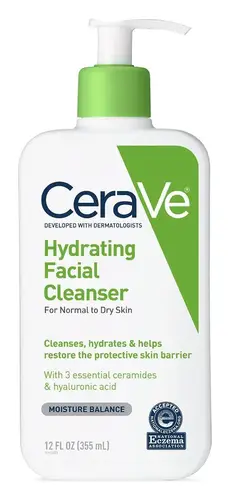
This oil-based cleanser is made to cleanse without leaving your skin tight or dry.
This oil-based makeup remover is made to dissolve makeup, sunscreen, and daily buildup.


What's inside
What's inside
 Key Ingredients
Benefits
Concerns
Ingredients Side-by-side
Ethylhexyl Palmitate
Emollient




Olea Europaea Fruit Oil
Masking


Trihydroxystearin
Skin Conditioning
Vitis Vinifera Seed Oil
Emollient
PEG-20 Glyceryl Triisostearate
Emollient
Cetearyl Alcohol
Emollient

Ozokerite
Emulsion StabilisingGlyceryl Caprylate
EmollientTocopheryl Acetate
Antioxidant


Pyrus Communis Fruit Extract
Skin ConditioningRosa Damascena Flower Water
Masking
Iris Florentina Root Extract
MaskingCucumis Melo Seed Extract
Skin ConditioningHedera Helix Leaf/Stem Extract
AntimicrobialMelia Azadirachta Leaf Extract
Skin ConditioningMelia Azadirachta Flower Extract
Skin ConditioningCoccinia Indica Fruit Extract
Skin Conditioning
Amber Powder
Moringa Oleifera Seed Oil
Emollient
Curcuma Longa Root Extract
Antioxidant
Ocimum Sanctum Leaf Extract
Skin ConditioningOrbignya Oleifera Seed Oil
Emollient
Corallina Officinalis Extract
Skin Conditioning
Sclerocarya Birrea Seed Oil
Humectant
Helianthus Annuus Seed Oil
Emollient
Curcuma Longa Root Oil
Perfuming

Hippophae Rhamnoides Fruit Oil
Skin Protecting
Tocopherol
Antioxidant


Ethylhexyl Palmitate, Olea Europaea Fruit Oil, Trihydroxystearin, Vitis Vinifera Seed Oil, PEG-20 Glyceryl Triisostearate, Cetearyl Alcohol, Ozokerite, Glyceryl Caprylate, Tocopheryl Acetate, Pyrus Communis Fruit Extract, Rosa Damascena Flower Water, Iris Florentina Root Extract, Cucumis Melo Seed Extract, Hedera Helix Leaf/Stem Extract, Melia Azadirachta Leaf Extract, Melia Azadirachta Flower Extract, Coccinia Indica Fruit Extract, Amber Powder, Moringa Oleifera Seed Oil, Curcuma Longa Root Extract, Ocimum Sanctum Leaf Extract, Orbignya Oleifera Seed Oil, Corallina Officinalis Extract, Sclerocarya Birrea Seed Oil, Helianthus Annuus Seed Oil, Curcuma Longa Root Oil, Hippophae Rhamnoides Fruit Oil, Tocopherol
Helianthus Annuus Seed Oil
Emollient
Vitis Vinifera Seed Oil
Emollient
Caprylic/Capric Triglyceride
Masking
PEG-20 Glyceryl Triisostearate
Emollient
Castor Oil/Ipdi Copolymer
Cetearyl Alcohol
Emollient
Tocopheryl Acetate
Antioxidant
Pyrus Communis Fruit Extract
Skin ConditioningRosa Damascena Flower Water
Masking
Caprylyl Glycol
Emollient
Glyceryl Caprylate
EmollientHedera Helix Leaf/Stem Extract
AntimicrobialCucumis Melo Seed Extract
Skin ConditioningIris Florentina Root Extract
MaskingHelianthus Annuus Seed Oil, Vitis Vinifera Seed Oil, Caprylic/Capric Triglyceride, PEG-20 Glyceryl Triisostearate, Castor Oil/Ipdi Copolymer, Cetearyl Alcohol, Tocopheryl Acetate, Pyrus Communis Fruit Extract, Rosa Damascena Flower Water, Caprylyl Glycol, Glyceryl Caprylate, Hedera Helix Leaf/Stem Extract, Cucumis Melo Seed Extract, Iris Florentina Root Extract
Reviews
Ingredients Explained
These ingredients are found in both products.
Ingredients higher up in an ingredient list are typically present in a larger amount.
Cetearyl alcohol is a waxy mixture of two fatty alcohols: cetyl alcohol and stearyl alcohol. It is an emollient and emulsifier.
Despite having "alcohol" in its name, it has nothing to do with drying solvent alcohols; the FDA also allows "alcohol-free" products to contain fatty alcohols like this ingredient.
It plays several roles in a formula:
Typical use levels for this ingredient sit around 1-10% and the Cosmetic Ingredient Review Expert Panel has affirmed safety at concentrations up to 25% in leave-on products.
Multiple assessments have found it to be non-irritating and non-sensitizing to most people.
However, there have been some cases of allergic contact dermatitis in patients with chronically compromised skin barriers.
Cetearyl alcohol has a comedogenic rating of 2 and irritancy rating of 1. Both of these numbers come from the 1989 study that used rabbit ears; a "2" means mildly comedogenic and a "1" means low irritancy.
Here's the catch: rabbit skin is more sensitive than human skin and throws a lot of false positives. A 1996 reappraisal found that ingredients rated 1-2 in the rabbit ear tests are generally safe for humans.
Remember comedogenic ratings are unable to assess the entire formula of a product or how it will react on your skin. Just be sure to patch test if you are unsure about certain ingredients.
This ingredient is not fungal acne safe. Cetearyl alcohol is a fatty alcohol with chain lengths that fall within the range that Malassezia can metabolize.
A 2019 study has also observed Malassezia growth in the presence of this ingredient, confirming it to be not-fungal acne safe.
Learn more about Cetearyl AlcoholWe don't have a description for Cucumis Melo Seed Extract yet.
Glyceryl Caprylate comes from glycerin and caprylic acid. It is an emollient, co-emulsifier, and preservative booster.
Its short C8 fatty acid chain makes it behave differently from its longer-chain emollient cousins like Glyceryl Stearate. It feels more lightweight, fast-absorbing, and silky instead of rich and waxy.
As a co-emulsifier, its "head" and "tail" sit at the oil-water interface. But overall, the short C8 tail and not being water soluble means it doesn't really have the muscle to emulsify a formula on its own. That's why you'll often see it paired with a primary emulsifier like Cetearyl Glucoside.
Interestingly, Glyceryl Caprylate acts as a preservative booster. This is because its fatty-acid backbone disrupts microbial lipid membranes. It shows excellent activity against bacteria and yeast but is weaker against mold.
Typical concentrations range from 0.5-1% and this ingredient is generally non-irritating.
Because this ingredient has a C8 fatty acid chain, it is outside the range that the Malassezia yeast metabolizes (making it fungal acne safe).
Learn more about Glyceryl CaprylateThis ingredient comes from the English Ivy, a climbing evergreen plant. The extract is rich in compounds that give it antioxidant, skin conditioning, and anti-inflammatory properties.
Two of the compounds, Alpha-Hederin and Hederasaponin-C, showed strong inhibition of shown to be effective at protecting against oxidative damage as well as synthetic antioxidants like butylated hydroxyanisole and BHT.
Helianthus Annuus Seed Oil is a plant oil derived from the seeds of a sunflower.
It is rich in fatty acids, primarily linoleic acid and oleic acid. This gives it emollient and skin conditioning properties.
The reason this ingredient is so effective is because it forms a thin film on the skin that reduces transepidermal water loss (TEWL) while supplying linoleic acid to the stratum corneum to improve barrier strength.
The high linoleic acid content is particularly noteworthy for acne-prone skin.
Research suggests that acne-prone skin tends to be deficient in linoleic acid in sebum. Topical application may help replenish this to support a healthier follicular environment and less comedone-promoting sebum.
One randomized study found sunflower seed oil preserved skin barrier integrity in adult volunteers with and without atopic dermatitis (outperforming olive oil).
This ingredient is well-studied, gentle, and an effective emollient suitable for most skin types.
On fungal acne: This ingredient may not be Fungal acne (Malassezia folliculitis) safe. This is because it contains fatty acids with carbon chain lengths in the C11-C24 range.
Learn more about Helianthus Annuus Seed OilWe don't have a description for Iris Florentina Root Extract yet.
PEG-20 Glyceryl Triisostearate is a synthetic, oil-loving helper ingredient that does two jobs:
This ingredient is made by joining three building blocks: PEG, Isostearic Acid and glycerin. The PEG gives it the oil-and-water blending power.
This ingredient has been found safe for use in cosmetics and broader PEG family testing shows minimal irritation/sensitization. The molecule's large size also means it isn't expected to penetrate skin to any meaningful degree.
Fungal acne note: This ingredient may not be fungal acne safe due to isostearic acid (C18). Isostearic acid falls into the C11-24 range that Malassezia can feed on.
Learn more about PEG-20 Glyceryl TriisostearateThis ingredient comes from the common pear and has skin conditioning/skin protecting properties. Pears are rich in bioactive phenolic compounds, with the most notable ones being Arbutin, Chlorogenic Acid, and Catechin.
A small in-vivo study with 13 volunteers found using a 5% pear extract gel over 12 weeks significantly improved skin moisture and elasticity, and decreased melanin and sebum levels compared to placebo.
In phytochemical analysis, this extract has also demonstrated anti-tyrosinase activity which further supports its brightening properties.
Just so you know, individuals with birch pollen allergy should be careful and patch test this ingredient as pears belong to the same family. But topical use of this ingredient is generally well-tolerated.
Learn more about Pyrus Communis Fruit ExtractRosa Damascena Flower Water is the water-based byproduct of steam-distilling damask rose petals. It has skin conditioning, masking, and skin protecting properties.
Research shows that Rosa damascena is rich in flavonoids and phenolic compounds like gallic acid that contribute to its antioxidant activity.
In vitro studies have shown that Rosa damascena can scavenge free radicals and reduce melanin overproduction. Research has also found this extract offers some degree of UV absorption but this should not replace your sunscreen.
Learn more about Rosa Damascena Flower WaterTocopheryl Acetate is a stable, shelf-friendly form of vitamin E.
Formulators love it because plain vitamin E oxidizes quickly once it hits air. This acetate version stays stable and resists going off, helping to extend a product's shelf life.
It's actually inactive on its own and works like a slow-release "storage" form; the enzymes in your skin called esterases gradually convert it into active vitamin E over time.
One in vivo study showed 5% of the acetate in the living layer of the epidermis converted to vitamin E after 5 days of application. This study also found the skin gained protection against UV damage even though the conversion was slow and small.
Once converted, vitamin E acts as a skin's main fat-soluble antioxidant that fights free radicals to protect skin from damage.
Topical vitamin E generally boosts the skin's photoprotection, and it reduced UV-damage in animal models.
This ingredient has some brightening potential but it's more of a prevention ingredient than spot-fader. Cell studies show it can slow down melanin production but it's worth noting that it's not the most powerful brightener out there.
Overall, it has a pretty solid safety profile and has been found to be non-irritating and non-comedogenic. Allergic reactions may happen but stay rare due to how widely the ingredient gets used.
The concentration will vary depending on the formula; industry data shows 0.1% in baby lotions, 3% in lipsticks, and 5% in foot powders. You can also find this ingredient at 100% in a pure vitamin E oil.
Most leave-on skincare keeps it at the lower end, often between 0.5-1%.
Learn more about Tocopheryl AcetateVitis Vinifera Seed Oil comes from the grape vine. Grape seeds are a byproduct of creating grape juice or wine.
The components of grape seeds have many skin benefits. Research has found it to be antimicrobial and anti-inflammatory. It also contains many potent antioxidants such as Vitamin E , Vitamin C, proanthocyanidins, polyphenols, flavonoids, and anthocyanins. Proanthocyanidin has been shown to help even out skin tone.
Antioxidants help fight free-radical molecules. Free-radical molecules are capable of damaging our cells and other genetic material. Antioxidants help stabilize free-radicals by donating extra electrons. Grape seed extract may help reduce the signs of aging.
The antimicrobial properties of grape seed may help treat acne. However, more research is needed to support this claim.
Grape seed has also been found to help absorb UV rays. Grape seed extract should not replace your sunscreen.
The fatty acids of grape seed oil give it emollient properties. Emollients help soothe and soften your skin by creating a film. This film traps moisture within, keeping your skin hydrated.
Learn more about Vitis Vinifera Seed Oil