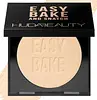
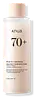
Huda Beauty Easy Bake & Snatch Pressed Brightening & Setting Powder Versus Anua Rice 70 Glow Milky Toner
This brightening toner is formulated around Niacinamide and Oryza Sativa Extract to brighten dull-looking skin and hydrate skin.


What's inside
What's inside
 Key Ingredients
Benefits
Concerns
No concerns
Ingredients Side-by-side
Mica
Cosmetic ColorantBoron Nitride
Absorbent
Nylon-12

Magnesium Myristate


Caprylic/Capric Triglyceride
Masking


Butyl Avocadate
Skin Conditioning

Olea Europaea Fruit Oil
Masking

Hyaluronic Acid
Humectant


Tocopherol
Antioxidant




Ricinus Communis Seed Oil
Masking
Phenoxyethanol
Preservative
Dimer Dilinoleyl Dimer Dilinoleate
EmollientOctyldodecyl Stearoyl Stearate
Emollient
Sodium Dehydroacetate
Preservative
CI 19140
Cosmetic ColorantCI 77491
Cosmetic ColorantIron Oxides
CI 77492
Cosmetic ColorantMica, Boron Nitride, Nylon-12, Magnesium Myristate, Caprylic/Capric Triglyceride, Butyl Avocadate, Olea Europaea Fruit Oil, Hyaluronic Acid, Tocopherol, Ricinus Communis Seed Oil, Phenoxyethanol, Dimer Dilinoleyl Dimer Dilinoleate, Octyldodecyl Stearoyl Stearate, Sodium Dehydroacetate, CI 19140, CI 77491, Iron Oxides, CI 77492
Oryza Sativa Bran Water 71%
Masking
Butylene Glycol
Humectant
Glycerin
Humectant
Dipropylene Glycol
HumectantNiacinamide
Smoothing




Propanediol
Solvent
Water
Skin Conditioning1,2-Hexanediol
Skin Conditioning
Methyl Gluceth-20
Humectant
Panthenol
Skin Conditioning
Betaine
Humectant
Oryza Sativa Extract
Absorbent
Hydroxyacetophenone
Antioxidant
Diphenyl Dimethicone
Emollient
Triethylhexanoin
MaskingHydrogenated Lecithin
Emulsifying
Adenosine
Skin Conditioning
Ethylhexylglycerin
Skin ConditioningCarbomer
Emulsion StabilisingTromethamine
BufferingXanthan Gum
EmulsifyingGlyceryl Acrylate/Acrylic Acid Copolymer
HumectantTheobroma Cacao Seed Extract
Antioxidant
Sodium Hyaluronate
Humectant
Hydrolyzed Hyaluronic Acid
Humectant
Hyaluronic Acid
Humectant
Dextrin
AbsorbentHydrolyzed Rice Protein
Skin ConditioningOryza Sativa Seed Protein
Antioxidant
Ceramide NP
Skin Conditioning
Sodium Lauroyl Lactylate
EmulsifyingArbutin
Antioxidant
Ascorbic Acid
Antioxidant
Allantoin
Skin Conditioning
Ceramide AP
Skin Conditioning
Phytosphingosine
Skin Conditioning
Cholesterol
Emollient
Ceramide EOP
Skin Conditioning
Oryza Sativa Bran Water 71%, Butylene Glycol, Glycerin, Dipropylene Glycol, Niacinamide, Propanediol, Water, 1,2-Hexanediol, Methyl Gluceth-20, Panthenol, Betaine, Oryza Sativa Extract, Hydroxyacetophenone, Diphenyl Dimethicone, Triethylhexanoin, Hydrogenated Lecithin, Adenosine, Ethylhexylglycerin, Carbomer, Tromethamine, Xanthan Gum, Glyceryl Acrylate/Acrylic Acid Copolymer, Theobroma Cacao Seed Extract, Sodium Hyaluronate, Hydrolyzed Hyaluronic Acid, Hyaluronic Acid, Dextrin, Hydrolyzed Rice Protein, Oryza Sativa Seed Protein, Ceramide NP, Sodium Lauroyl Lactylate, Arbutin, Ascorbic Acid, Allantoin, Ceramide AP, Phytosphingosine, Cholesterol, Ceramide EOP
Reviews
Ingredients Explained
These ingredients are found in both products.
Ingredients higher up in an ingredient list are typically present in a larger amount.
Hyaluronic acid (HA) is a glycosaminoglycan (basically a long sugar chain) that your skin already makes on its own. In your skin, HA lives in the extracellular matrix and acts as the body's moisture reservoir.
Topically, HA is a humectant that binds water and helps skin look more plump, smooth, and hydrated.
The only catch is that HA isn't a single thing; it actually comes in a wide range of molecular weights (~50 - 2,000+ kDA) and size matters.
Some clinical evidence links low molecular weight versions to improved wrinkle depth, elasticity, anti-inflammatory effects, and barrier repair.
This is why the best HA serums blend the two sizes together so you get the best of both worlds.
The majority of cosmetic HA is produced by bacterial fermentation, typically using Streptococcus or Bacillus strains. Typical use levels in skincare sit around 0.1-2%.
A clinical study using a 0.2% low-molecular weight HA gel showed improvement in facial seborrheic dermatitis with excellent tolerance.
These are some other common types of Hyaluronic Acid:
Learn more about Hyaluronic Acid

