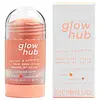
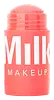
Glow Hub Beauty Nourish & Hydrate Face Mask Stick Versus Milk Makeup Watermelon Brightening Face Mask
This wash off mask is made with Aloe Barbadensis Leaf Juice and Kaolin for a rinse-off hydration boost.
This wash off mask is made with Kaolin and Ascorbyl Palmitate for a rinse-off brightening boost.


What's inside
What's inside
 Key Ingredients
Benefits
Concerns
Ingredients Side-by-side
Aloe Barbadensis Leaf Juice
Skin Conditioning


Glycerin
Humectant

Kaolin
Abrasive



Propylene Glycol
Humectant

Titanium Dioxide
Cosmetic Colorant

Sodium Stearate
CleansingHectorite
AbsorbentPrunus Persica Fruit Extract
Abrasive
Cocos Nucifera Fruit Extract
Emollient

Sodium Hyaluronate
Humectant

Phenoxyethanol
Preservative
Polysorbate 20
Emulsifying
PEG-40 Hydrogenated Castor Oil
Emulsifying
Ethylhexylglycerin
Skin ConditioningPotassium Sorbate
Preservative
Sorbic Acid
Preservative
Sodium Benzoate
Masking
Citric Acid
Buffering

Sodium Gluconate
ChelatingParfum
Masking


Benzyl Alcohol
Perfuming

Benzyl Benzoate
Antimicrobial
CI 77491
Cosmetic ColorantAloe Barbadensis Leaf Juice, Glycerin, Kaolin, Propylene Glycol, Titanium Dioxide, Sodium Stearate, Hectorite, Prunus Persica Fruit Extract, Cocos Nucifera Fruit Extract, Sodium Hyaluronate, Phenoxyethanol, Polysorbate 20, PEG-40 Hydrogenated Castor Oil, Ethylhexylglycerin, Potassium Sorbate, Sorbic Acid, Sodium Benzoate, Citric Acid, Sodium Gluconate, Parfum, Benzyl Alcohol, Benzyl Benzoate, CI 77491
Water
Skin ConditioningGlycerin
Humectant
Kaolin
Abrasive
Propylene Glycol
Humectant
Sodium Stearate
CleansingDisteardimonium Hectorite
StabilisingPhenoxyethanol
Preservative
Sodium Hydroxide
BufferingGellan Gum
Ethylhexylglycerin
Skin ConditioningStearic Acid
Cleansing
Ascorbyl Palmitate
Antioxidant

Hydrolyzed Hyaluronic Acid
Humectant
Tocopheryl Acetate
Antioxidant
Opuntia Ficus-Indica Seed Oil
Emollient
Cellulose Gum
Emulsion StabilisingLepidium Sativum Sprout Extract
Skin ConditioningSodium Polyacrylate
Absorbent
Butylene Glycol
Humectant
Polysorbate 80
Emulsifying
Alcohol
Antimicrobial
Lecithin
Emollient
Citrullus Lanatus Fruit Extract
Skin Conditioning
Lens Culinaris Fruit Extract
Skin ProtectingSodium Lactate
Buffering
Carbomer
Emulsion StabilisingPolysorbate 20
Emulsifying
Potassium Sorbate
Preservative
Sodium Benzoate
Masking
Soy Isoflavones
Skin ConditioningPalmitoyl Tripeptide-1
Skin Conditioning

Palmitoyl Tetrapeptide-7
Skin Conditioning
CI 77891
Cosmetic ColorantCI 77491
Cosmetic ColorantWater, Glycerin, Kaolin, Propylene Glycol, Sodium Stearate, Disteardimonium Hectorite, Phenoxyethanol, Sodium Hydroxide, Gellan Gum, Ethylhexylglycerin, Stearic Acid, Ascorbyl Palmitate, Hydrolyzed Hyaluronic Acid, Tocopheryl Acetate, Opuntia Ficus-Indica Seed Oil, Cellulose Gum, Lepidium Sativum Sprout Extract, Sodium Polyacrylate, Butylene Glycol, Polysorbate 80, Alcohol, Lecithin, Citrullus Lanatus Fruit Extract, Lens Culinaris Fruit Extract, Sodium Lactate, Carbomer, Polysorbate 20, Potassium Sorbate, Sodium Benzoate, Soy Isoflavones, Palmitoyl Tripeptide-1, Palmitoyl Tetrapeptide-7, CI 77891, CI 77491
Ingredients Explained
These ingredients are found in both products.
Ingredients higher up in an ingredient list are typically present in a larger amount.
Ci 77491 is also hydrated iron III oxide. It's sole purpose is to give a red/pink hue to products.
Iron III oxides are classified as inorganic chemicals for coloring.
Synthetically created Ci 77491 is considered safer than those naturally found. This is because the synthetically created version may contain less impurities. Iron oxides are generally non-toxic and non-allergenic.
Learn more about CI 77491Ethylhexylglycerin is created from glycerin. It is a multitasker ingredient that:
The CIR Expert Panel found minimal skin absorption or sensitization of any kind in a safety assessment. Though this ingredient is considered well-tolerated, a small number of cases of allergic dermatitis have been published since 2002. Just be sure to patch test if you are unsure.
Industry-reported use ranges from 8% in rinse-off products and 2% in leave-on formulations.
Learn more about EthylhexylglycerinGlycerin (or glycerol) is a compound naturally found in your skin. It's a powerhouse humectant that pulls water into the stratum corneum.
Topically, glycerin does several things at once:
Your skin makes glycerin on its own (mostly from sebaceous oil breakdown) and shuttles it to your outermost layer of skin, or your epidermis, via aquaporin-3.
Aquaporin-3 is a transporter that is essential for normal skin hydration, elasticity, and repair. Interestingly, mice lacking in AQP3 have dry and less elastic skin that can be fully corrected with glycerin.
This ingredient is non-irritating, plays well with almost every ingredient, and works across all skin types. Typical use is anywhere between 3-10% but can go up to 79% in some leave-on products.
Just know very high concentrations (>40%) can feel tacky in low humidity.
Glycerin is the name for this ingredient in American English. British English uses Glycerol/Glycerine.
Learn more about GlycerinKaolin is a clay. It is used for oil control and to help minimize pores. Like other clays, kaolin has the ability to absorb excess sebum or oil. This can help clean out pores and mattify the skin.
Some types of kaolin may have exfoliating properties. When water is added to kaolin, it becomes a paste with small abrasive particles.
Most kaolin is a white color, but may be pink/orange/red depending on where it comes from.
The name 'kaolin' comes from a Chinese village named 'Gaoling'. Kaolin clay comes from rocks rich in kaolinite. Kaolinite, the mineral, has a silicate layered structure. Kaolinite is formed from chemical weathering of aluminum siilicate minerals.
Besides skincare, kaolin is commonly used to make glossy paper, in ceramics, toothpaste, and as medicine to soothe stomach issues.
Learn more about KaolinPhenoxyethanol is one of the most widely used preservatives in skincare (and for good reason!).
It has a large spectrum of antimicrobial activity and especially effective bacteria, yeast, and mold while only having a weak effect on your skin's natural microbiome.
On a cellular level, it disrupts the cell membranes of microbes by poking holes that make the cell leak. This shuts down the chemical reactions the microbe needs to make energy so it can no longer survive.
Another perk of this ingredient is that it stays functional across a wide pH range (3-10).
You'll often see it paired with boosters like Ethylhexylglycerin; one study showed that a 1:9 ratio of Ethylhexylglycerin to Phenoxyethanol damages bacterial membranes as effectively as doubling the Phenoxyethanol concentration on its own.
Typical use concentrations range from 0.3-1% depending on the formula, and this ingredient is capped at 1% int the EU.
Safety-wise, the fear mongering does not hold up to the evidence. The EU's Scientific Committee on Consumer Safety and FDA consider it safe as a preservative at up to 1%, including for children of all ages.
Adverse systemic effects only showed up in animal studies at exposures roughly 200x higher than what people get from cosmetics. And despite its very widespread use, this ingredient is a rare sensitizer and allergic reactions are uncommon.
Learn more about PhenoxyethanolPolysorbate 20 is a gentle, water-soluble emulsifier and mild surfactant. It stops oil and water from separating to keep your formulas blended and stable.
It also acts as a mild penetration enhancer by helping active ingredients absorb slightly better.
The common safety discussion around this ingredient involves a manufacturing byproduct called 1,4-dioxane.
Trace amounts can form during production but the EU's Scientific Committee on Consumer Safety has concluded that levels at/below 10 ppm in finished products are safe (commercial products consistently fall within acceptable margins).
True allergic reactions are uncommon and the CIR Expert Panel has confirmed this ingredient to be safe as used in cosmetics.
Because it is derived from lauric acid, it may not be fungal acne safe.
Learn more about Polysorbate 20Potassium Sorbate is a preservative used to prevent yeast and mold in products. It is commonly found in both cosmetic and food products.
This ingredient comes from potassium salt derived from sorbic acid. Sorbic acid is a natural antibiotic and effective against fungus.
Both potassium sorbate and sorbic acid can be found in baked goods, cheeses, dried meats, dried fruit, ice cream, pickles, wine, yogurt, and more.
You'll often find this ingredient used with other preservatives.
Learn more about Potassium SorbatePropylene Glycol is a synthetic, colorless, odorless liquid that has been a staple in cosmetics for decades. It is a skin conditioning agent, humectant, and solvent.
As a humectant, it draw water to the skin to reduce flaking and restore suppleness. It's also a solvent that helps dissolve other actives and keeps formulas stable across temperature changes.
The CIR Expert Panel has confirmed this ingredient to be nontoxic and clinical studies show no sensitization at cosmetic use concentrations.
True allergic reactions are quite rare: a 15-year retrospective study of 6,751 patients found only 0.31% had a positive reaction (and less than half were considered clinically relevant).
It seemed that when sensitization does occur, it's most commonly linked to topical medication (like corticosteroids) and not cosmetics. Allergic contact dermatitis also appears largely limited to individuals with underlying skin conditions.
Overall, propylene glycol is a well-studied ingredient that most people can tolerate without issue.
Learn more about Propylene GlycolSodium Benzoate is a preservative. It's used in both cosmetic and food products to inhibit the growth of mold and bacteria. It is typically produced synthetically.
Both the US FDA and EU Health Committee have approved the use of sodium benzoate. In the US, levels of 0.1% (of the total product) are allowed.
Sodium benzoate works as a preservative by inhibiting the growth of bacteria inside of cells. It prevents the cell from fermenting a type of sugar using an enzyme called phosphofructokinase.
It is the salt of benzoic acid. Foods containing sodium benzoate include soda, salad dressings, condiments, fruit juices, wines, and snack foods.
Studies for using ascorbic acid and sodium benzoate in cosmetics are lacking, especially in skincare routines with multiple steps.
We always recommend speaking with a professional, such as a dermatologist, if you have any concerns.
Learn more about Sodium BenzoateSodium Stearate is soap and usually the main thing holding a bar of soap together. In cosmetics, it does three jobs: it cleanses, thickens, and turns liquids into solid sticks.
Use levels vary hugely by product type; supplier guidance puts the typical range at 0.5-20%, with bar soaps at 5-20%, deodorant sticks at 4-8%, and under 1% when it's acting as a co-emulfisifier. Industry data has reported levels as high as 84% in some leave-on fragrance products.
Safety-wise, it's about as well-established as an ingredient gets. The FDA and European food-safety regulators treat this ingredient as safe in food.
Allergy risk is genuinely low too; stearates aren't on standard patch test series and published sensitization reports are scarce. The more realistic concern is irritation since high-percentage soaps can leave the skin tight and dry.
Learn more about Sodium Stearate

