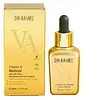
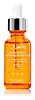
Dr. Rashel Beauty Elixirs Vitamin A Retinol Age-defying & Rejuvenation Face Serum Versus JUMISO All Day Vitamin Brightening & Balancing Facial Serum
This anti-aging serum is formulated around Retinyl Palmitate and Carnosine to soften the look of wrinkles.
This brightening serum is formulated around Hippophae Rhamnoides Fruit Extract and Niacinamide to brighten dull-looking skin and calm redness.


What's inside
What's inside
 Key Ingredients
Benefits
Concerns
Ingredients Side-by-side
Water
Skin ConditioningPropylene Glycol
Humectant


Glycerin
Humectant

Trehalose
Humectant
1,2-Hexanediol
Skin Conditioning
Hydroxyacetophenone
Antioxidant
Eryngium Maritimum Callus Culture Filtrate
Skin ConditioningRetinyl Palmitate
Skin Conditioning



Sodium Hyaluronate
Humectant

Xanthan Gum
EmulsifyingPEG-40 Hydrogenated Castor Oil
Emulsifying
Hydroxyethylcellulose
Emulsion StabilisingDisodium EDTA
ChelatingCarnosine
Skin Conditioning
Parfum
Masking


Tocopherol
Antioxidant
Ethylhexylglycerin
Skin ConditioningCI 19140
Cosmetic ColorantAcetyl Hexapeptide-8
Humectant
Water, Propylene Glycol, Glycerin, Trehalose, 1,2-Hexanediol, Hydroxyacetophenone, Eryngium Maritimum Callus Culture Filtrate, Retinyl Palmitate, Sodium Hyaluronate, Xanthan Gum, PEG-40 Hydrogenated Castor Oil, Hydroxyethylcellulose, Disodium EDTA, Carnosine, Parfum, Tocopherol, Ethylhexylglycerin, CI 19140, Acetyl Hexapeptide-8
Hippophae Rhamnoides Fruit Extract
Skin Conditioning
Methylpropanediol
SolventGlycerin
Humectant
Niacinamide
Smoothing




Dipropylene Glycol
HumectantSodium Hyaluronate
Humectant
PEG-40 Hydrogenated Castor Oil
Emulsifying
Centella Asiatica Extract
Cleansing
Polygonum Cuspidatum Root Extract
Antioxidant
Scutellaria Baicalensis Root Extract
Astringent
Camellia Sinensis Leaf Extract
Antimicrobial
Glycyrrhiza Glabra Root Extract
Bleaching
Chamomilla Recutita Flower Extract
Masking
Rosmarinus Officinalis Leaf Extract
AntimicrobialPanthenol
Skin Conditioning
Betaine
Humectant
Ascorbic Acid
Antioxidant
Hydroxyacetophenone
Antioxidant
Pentylene Glycol
Skin Conditioning
Caprylyl Glycol
Emollient
Butylene Glycol
Humectant
Chlorphenesin
Antimicrobial
Carbomer
Emulsion StabilisingArginine
Masking
Disodium EDTA
ChelatingPelargonium Graveolens Flower Oil
Masking

Cymbopogon Martini Oil
Masking
Cananga Odorata Flower Oil
Masking
Citrus Aurantium Bergamia Peel Oil
Perfuming
Rosa Damascena Flower Oil
Masking
Hippophae Rhamnoides Fruit Extract, Methylpropanediol, Glycerin, Niacinamide, Dipropylene Glycol, Sodium Hyaluronate, PEG-40 Hydrogenated Castor Oil, Centella Asiatica Extract, Polygonum Cuspidatum Root Extract, Scutellaria Baicalensis Root Extract, Camellia Sinensis Leaf Extract, Glycyrrhiza Glabra Root Extract, Chamomilla Recutita Flower Extract, Rosmarinus Officinalis Leaf Extract, Panthenol, Betaine, Ascorbic Acid, Hydroxyacetophenone, Pentylene Glycol, Caprylyl Glycol, Butylene Glycol, Chlorphenesin, Carbomer, Arginine, Disodium EDTA, Pelargonium Graveolens Flower Oil, Cymbopogon Martini Oil, Cananga Odorata Flower Oil, Citrus Aurantium Bergamia Peel Oil, Rosa Damascena Flower Oil
Reviews
Ingredients Explained
These ingredients are found in both products.
Ingredients higher up in an ingredient list are typically present in a larger amount.
Disodium EDTA is a chelating agent. It grabs onto and deactivates metal ions that sneak into your products from water, packaging, or air.
This ingredient mainly works behind the scenes and helps with:
On top of that, this ingredient can counteract the effects of hard water by binding to the minerals in it.
One thing worth knowing is that Disodium EDTA has been shown to be a mild penetration enhancer. It can help other ingredients absorb into skin more effectively which can be a double-edged sword (great for actives, but can also make the active too strong if you have sensitive skin).
Clinical patch testing showed no significant skin irritation at typical use concentrations and minimal dermal absorption.
You'll most likely see this ingredient near the end of an ingredient list. It's typically found in concentrations less than 1%.
Learn more about Disodium EDTAGlycerin (or glycerol) is a compound naturally found in your skin. It's a powerhouse humectant that pulls water into the stratum corneum.
Topically, glycerin does several things at once:
Your skin makes glycerin on its own (mostly from sebaceous oil breakdown) and shuttles it to your outermost layer of skin, or your epidermis, via aquaporin-3.
Aquaporin-3 is a transporter that is essential for normal skin hydration, elasticity, and repair. Interestingly, mice lacking in AQP3 have dry and less elastic skin that can be fully corrected with glycerin.
This ingredient is non-irritating, plays well with almost every ingredient, and works across all skin types. Typical use is anywhere between 3-10% but can go up to 79% in some leave-on products.
Just know very high concentrations (>40%) can feel tacky in low humidity.
Glycerin is the name for this ingredient in American English. British English uses Glycerol/Glycerine.
Learn more about GlycerinHydroxyacetophenone is a small phenolic molecule that earns its place in a formulas as an antioxidant and preservative booster.
As a phenol, it is able to neutralize free radicals to protect both the product and the skin from oxidative stress.
Though it can't kill microbes on its own, it works as a good supporting agent when combined with other preservatives like Phenoxyethanol or 1,2-Hexanediol.
This ingredient naturally occurs as piceol in Norwegian spruce needles (~0.4-1.1% dry weight and in cloudberries). Though the cosmetic-grade material is synthesized for purity and consistency.
You'll usually see it used at low levels and suppliers recommend up to 1% added to a water phase.
Safety testing was done at concentrations like 0.05% in SPF products and 0.5% in a Human Repeated Insult Patch Test. The safety evidence is assuring; this ingredient is safe for cosmetics in current use and also holds safety status as a food flavoring as well.
An honest caveat: the "soothing" and "anti-inflammatory" claims come mostly from supplier marketing rather than published clinical trials. The Cosmetic Ingredient Review's own literature search found no useful efficacy studies on this ingredient.
So the antioxidant and preservative-boosting roles are the well supported ones while the calming benefit is plausible but thinly evidenced.
Overall, this is a well-tolerated, low-irritation multitasker that quietly helps a formula stay fresh and stable.
Learn more about HydroxyacetophenonePEG-40 Hydrogenated Castor Oil is an emulsifier derived from castor oil.
As an emulsifying agent, it helps other ingredients like fragrances and fat-soluble vitamins dissolve cohesively.
Due to its large molecule size, it doesn't penetrate beyond the skin's surface.
This ingredient has a solid regulatory track record; the CIR Expert Panel first concluded it was safe for use in cosmetics at concentrations up to 100% in 1997. A 2012 reassessment reaffirmed that finding. Safety studies have also found no irritation or evidence of toxicity.
A 2019 study did find this ingredient to grow Malassezia, so this ingredient may not be fungal acne safe.
Learn more about PEG-40 Hydrogenated Castor OilSodium Hyaluronate is the salt form of hyaluronic acid. It is a long sugar chain that is naturally found in your skin, joints, and connective tissue that maintains hydration and elasticity.
In skincare, it works as a humectant. It pulls water from the environment and deeper layers of skin and binds it to the surface.
Interestingly, the size of the molecule affects its behavior:
Some clinical evidence links low molecular weight versions to improved wrinkle depth, elasticity, anti-inflammatory effects, and barrier repair.
Many serums use a blend of both weights so you can get surface hydration plus longer-lasting and deeper effects.
You'll typically see concentrations between 0.1-2% for this ingredient.
Learn more about Sodium Hyaluronate

