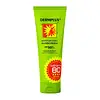
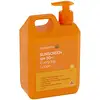
Dermplus Moisturizing Sunscreen SPF 50 PA+++ Extreme 80 Versus Woolworths Sunscreen Everyday Lotion SPF 50+
This hybrid sunscreen covers the full UV range and blocks ~98% of UVB at SPF 50.
This chemical sunscreen covers most of the UV range, lighter on the deep UVA that drives aging.


What's inside
What's inside
 Key Ingredients
Benefits
Concerns
Ingredients Side-by-side
Water
Skin ConditioningC12-15 Alkyl Benzoate
AntimicrobialTitanium Dioxide
Cosmetic Colorant

Alumina
Abrasive
Polyhydroxystearic Acid
Emulsifying

Isopropyl Titanium Triisostearate/Triethoxycaprylylsilane Crosspolymer
SurfactantOctocrylene
UV Absorber

Glycerin
Humectant


Butyl Methoxydibenzoylmethane
UV Absorber
Cyclopentasiloxane
Emollient
Dimethicone/Vinyl Dimenthicone Cross Polymer
Aluminum Silicate
Abrasive
Glyceryl Stearate
Emollient
Dimethicone
Emollient
Ethylhexyl Methoxycinnamate
UV Absorber
Triethanolamine
BufferingCaprylic/Capric Triglyceride
Masking
Cetearyl Alcohol
Emollient


Ceteareth-20
Cleansing
Stearyl Alcohol
Emollient
Vp/Hexadecene Copolymer
Isopropyl Myristate
Emollient
Polysorbate 80
Emulsifying
Carbomer
Emulsion StabilisingMethylparaben
Preservative

Propylparaben
Preservative
Tetrasodium EDTA
ChelatingBHT
Antioxidant
Water, C12-15 Alkyl Benzoate, Titanium Dioxide, Alumina, Polyhydroxystearic Acid, Isopropyl Titanium Triisostearate/Triethoxycaprylylsilane Crosspolymer, Octocrylene, Glycerin, Butyl Methoxydibenzoylmethane, Cyclopentasiloxane, Dimethicone/Vinyl Dimenthicone Cross Polymer, Aluminum Silicate, Glyceryl Stearate, Dimethicone, Ethylhexyl Methoxycinnamate, Triethanolamine, Caprylic/Capric Triglyceride, Cetearyl Alcohol, Ceteareth-20, Stearyl Alcohol, Vp/Hexadecene Copolymer, Isopropyl Myristate, Polysorbate 80, Carbomer, Methylparaben, Propylparaben, Tetrasodium EDTA, BHT
Butyl Methoxydibenzoylmethane
UV Absorber
Homosalate
Skin Conditioning
Octocrylene
UV Absorber
Ethylhexyl Salicylate
UV Absorber
C12-15 Alkyl Benzoate
AntimicrobialAloe Barbadensis Leaf Juice
Skin Conditioning

Benzyl Alcohol
Perfuming



Carbomer
Emulsion StabilisingCeresin
Emulsion StabilisingCitric Acid
Buffering

Tocopheryl Acetate
Antioxidant
Methylparaben
Preservative
Parfum
Masking
Hydrogenated Vegetable Oil
Emollient
Hydroxyethylcellulose
Emulsion StabilisingPEG-15 Cocamine
EmulsifyingPEG-40 Stearate
Emulsifying
Phenoxyethanol
Preservative
Water
Skin ConditioningStearic Acid
Cleansing
Stearyl Stearate
Emollient
Triethanolamine
BufferingCera Alba
Emollient
Butyl Methoxydibenzoylmethane, Homosalate, Octocrylene, Ethylhexyl Salicylate, C12-15 Alkyl Benzoate, Aloe Barbadensis Leaf Juice, Benzyl Alcohol, Carbomer, Ceresin, Citric Acid, Tocopheryl Acetate, Methylparaben, Parfum, Hydrogenated Vegetable Oil, Hydroxyethylcellulose, PEG-15 Cocamine, PEG-40 Stearate, Phenoxyethanol, Water, Stearic Acid, Stearyl Stearate, Triethanolamine, Cera Alba
Ingredients Explained
These ingredients are found in both products.
Ingredients higher up in an ingredient list are typically present in a larger amount.
Also known as Avobenzone, this ingredient is an oil-soluble used to absorb the full spectrum of UVA rays (peak 357 nm).
It's one of the most effective UVA filters available but has a major caveat of photostability: avobenzone is susceptible to photodegradation.
This means it can lose efficacy when exposed to sunlight without the help of a stabilizing agent.
Studies show antioxidants (like vitamin E or vitamin C) and some UV filters (like octocrylene and Tinosorb S) can meaningfully improve its stability in a formulation.
The maximum allowable concentration according to regulation is 3% in the US + Canada, and 5% in the EU, Australia, China, Korea, and ASEAN countries.
It has a well-support safety profile: a comprehensive 2025 review found minimal toxicity with no evidence of carcinogenicity.
Overall, avobenzone is a safe and regulated ingredient used in sunscreen for over 40 years.
Learn more about Butyl MethoxydibenzoylmethaneC12-15 Alkyl Benzoate is a lightweight emollient made by combinig benzoic acid with fatty alcohols that are 12-15 carbons long.
In cosmetics, it plays several roles:
The Cosmetic Review Expert Panel has concluded the alkyl benzoate group to be safe as used in cosmetics; it wasn't found to be a skin irritant and unlikely to be absorbed due to its low water solubility.
This report recorded almost 1000 reported uses with concentrations up to 59% in leave-on products but your cosmetics will typically use 0.5-15% depending on the product.
It's often called a "SPF booster": this is because it keeps UV filters properly dissolved and evenly distributed to support a sunscreen's performance. It doesn't actually raise SPF on its own.
Overall, this ingredient is well tolerated.
This ingredient is fungal acne safe because it is an ester of benzoic acid.
Think of this ingredient as two parts stuck together: an oily part and an acid part. Malassezia only gets a meal when it can snip off a fatty acid to eat. With C12-15 Alkyl Benzoate, the acid part is benzoic acid, which isn't a fatty acid and which the yeast can't use as food.
Benzoic acid is actually used as a preservative to stop yeast from growing.
The oily part is a blend of C12-15 fatty alcohols but fatty alcohols in this size range can support only a little Malassezia growth (mostly for one species of Malassezia as well).
In the ingredient, those alcohols stay locked inside the molecule. The yeast can only reach them by snipping the benzoate bond, and that type of bond is harder for it to cut than a normal fatty bond.
So not much gets released. And whatever does get snipped comes packaged with benzoic acid, which discourages yeast growth.
Learn more about C12-15 Alkyl BenzoateCarbomer is a synthetic thickening and gelling agent. It's basically the ingredient that gives a lot of serums, gels, creams, and sunscreens their smooth, non-sticky texture.
Although legally permitted at very high levels, carbomers are normally used at concentrations below 1%.
It also needs to be neutralized to actually thicken, and because it is a large molecule, it doesn't really penetrate the skin barrier.
Allergy-wise, the risk is very low. Clinical studies show carbomers have low potential for skin irritation/sensitization even at concentrations up to 100%.
A 2024 UK study patch-tested 1,302 patients and found true allergy to the parent group of carbomer to be rare with no confirmed relevant reactions.
Learn more about CarbomerMethylparaben is a synthetic preservative and one of the most widely used in the world. It has a simple, but important job: prevent your products from going bad by stopping bacteria, yeast, and mold from growing.
Typical use levels are low, often 0.1-0.3%.
This is also one of the most heavily studied preservatives out there and major regulatory bodies have repeatedly given it the green light.
In 2023, the EU's Scientific Committee on Consumer Safety (SCCS) confirmed that this ingredient is safe up to 0.4% on its own, of up to 0.8% when mixed with other paraben esters.
Here's the science behind the noise behind parabens/hormones as well:
Methylparaben shows very weak estrogen-like activity in vitro tests (more than 1,000x weaker than your body's own estradiol). In vivo (live-organism) studies don't support a meaningful endocrine-disrupting effect either.
You get a stronger estrogenic effect from eating tofu, actually.
It's also a low sensitizer and allergic reactions are uncommon; they usually happen on damage or broken skin.
There is a caveat: France has proposed to formally re-examine its endocrine classification in 2025 so the regulatory conversation isn't fully closed as of yet.
But as it stands today, this ingredient is considered safe at permitted levels.
Learn more about MethylparabenOctocrylene is an oil-soluble organic UV filter that mainly absorbs UVB and short wave UVA II light.
Its real superpower is teamwork: octocrylene is remarkably photostable and is most famous for stabilizing avobenzone (the workhorse UVA filter).
This ingredient is commonly used to enhance both UVB and UVA protection due to its unique property in stabilizing avobenzone. It also pulls double duty by boosting water resistance and giving formulas a smooth, spreadable feel.
The EU's Scientific Committee on Consumer Safety (SCCS) has deemed octocrylene to be safe as a UV-filter at concentrations up to 10% (capped at 9% in propellant sprays). The US also permits it up to 10%.
Two things worth knowing:
You'll usually see this ingredient used in concentrations between 2-10% (higher amounts when used as a stabilizer for avobenzone).
Learn more about OctocryleneTriethanolamine (TEA) is an emulsifier and pH adjuster. It is created using ethylene oxide and ammonia. This gives Triethanolamine a nitrogen core and a similar scent to ammonia.
As an emulsifier, it prevents ingredients from separating and enhances texture by adding volume to a product.
PH adjusters are common in cosmetic products. The pH of a product can affect the effectiveness of other ingredients. A product with a high pH may also irritate the skin.
If you are looking for the tea leaf ingredient, click here.
Learn more about TriethanolamineWater. It's the most common cosmetic ingredient of all. You'll usually see it at the top of ingredient lists, meaning that it makes up the largest part of the product.
So why is it so popular? Water most often acts as a solvent - this means that it helps dissolve other ingredients into the formulation.
You'll also recognize water as that liquid we all need to stay alive. If you see this, drink a glass of water. Remember to stay hydrated!
Learn more about Water

