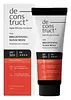
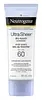
Deconstruct Fluid Brightening Sunscreen SPF 50+ Versus Neutrogena Ultra Sheer Dry-Touch Sunscreen SPF60
This chemical sunscreen covers most of the UV range, lighter on the deep UVA that drives aging.
This chemical sunscreen covers most of the UV range, lighter on the deep UVA that drives aging.


What's inside
What's inside
 Key Ingredients
Benefits
Concerns
Ingredients Side-by-side
Water
Skin ConditioningEthylhexyl Methoxycinnamate
UV Absorber


Butyl Methoxydibenzoylmethane
UV Absorber
Benzophenone-3
UV Absorber
PEG-100 Stearate
Surfactant
Butylene Glycol
Humectant

Phospholipids
Skin Conditioning
Phenoxyethanol
Preservative
Glycerin
Humectant
Ethylhexylglycerin
Skin ConditioningNiacinamide
Smoothing









Xanthan Gum
EmulsifyingLecithin
Emollient
Sclerotium Gum
Emulsion StabilisingPullulan
Sodium Acrylates Copolymer
Allantoin
Skin Conditioning
Disodium EDTA
ChelatingHomosalate 15%
Skin Conditioning
Octocrylene 10%
UV Absorber
Ethylhexyl Salicylate 5%
UV Absorber
Butyl Methoxydibenzoylmethane 3%
UV Absorber
Acrylates/Dimethicone Copolymer
Skin Conditioning
Aluminum Starch Octenylsuccinate
Absorbent
Behenyl Alcohol
Emollient
Benzyl Alcohol
Perfuming



BHT
Antioxidant
Butyloctyl Salicylate
Skin Conditioning
Caprylyl Glycol
Emollient
Caprylyl Methicone
Skin Conditioning
Cera Alba
Emollient

Cetyl Dimethicone
Emollient
Chlorphenesin
Antimicrobial
Dimethicone
Emollient
Dimethicone/PEG-10/15 Crosspolymer
Disodium EDTA
ChelatingEthylhexyl Stearate
Emollient
Ethylhexylglycerin
Skin ConditioningGlyceryl Stearate
Emollient
Hydrolyzed Jojoba Esters
Skin Conditioning
Jojoba Esters
Emollient
Parfum
Masking
PEG-100 Stearate
Surfactant
Potassium Cetyl Phosphate
EmulsifyingSilica
Abrasive
Sodium Polyacrylate
Absorbent
Styrene/Acrylates Copolymer
Tocopheryl Acetate
Antioxidant
Trideceth-6
EmulsifyingWater
Skin ConditioningXanthan Gum
EmulsifyingHomosalate 15%, Octocrylene 10%, Ethylhexyl Salicylate 5%, Butyl Methoxydibenzoylmethane 3%, Acrylates/Dimethicone Copolymer, Aluminum Starch Octenylsuccinate, Behenyl Alcohol, Benzyl Alcohol, BHT, Butyloctyl Salicylate, Caprylyl Glycol, Caprylyl Methicone, Cera Alba, Cetyl Dimethicone, Chlorphenesin, Dimethicone, Dimethicone/PEG-10/15 Crosspolymer, Disodium EDTA, Ethylhexyl Stearate, Ethylhexylglycerin, Glyceryl Stearate, Hydrolyzed Jojoba Esters, Jojoba Esters, Parfum, PEG-100 Stearate, Potassium Cetyl Phosphate, Silica, Sodium Polyacrylate, Styrene/Acrylates Copolymer, Tocopheryl Acetate, Trideceth-6, Water, Xanthan Gum
Reviews
Ingredients Explained
These ingredients are found in both products.
Ingredients higher up in an ingredient list are typically present in a larger amount.
Also known as Avobenzone, this ingredient is an oil-soluble used to absorb the full spectrum of UVA rays (peak 357 nm).
It's one of the most effective UVA filters available but has a major caveat of photostability: avobenzone is susceptible to photodegradation.
This means it can lose efficacy when exposed to sunlight without the help of a stabilizing agent.
Studies show antioxidants (like vitamin E or vitamin C) and some UV filters (like octocrylene and Tinosorb S) can meaningfully improve its stability in a formulation.
The maximum allowable concentration according to regulation is 3% in the US + Canada, and 5% in the EU, Australia, China, Korea, and ASEAN countries.
It has a well-support safety profile: a comprehensive 2025 review found minimal toxicity with no evidence of carcinogenicity.
Overall, avobenzone is a safe and regulated ingredient used in sunscreen for over 40 years.
Learn more about Butyl MethoxydibenzoylmethaneDisodium EDTA is a chelating agent. It grabs onto and deactivates metal ions that sneak into your products from water, packaging, or air.
This ingredient mainly works behind the scenes and helps with:
On top of that, this ingredient can counteract the effects of hard water by binding to the minerals in it.
One thing worth knowing is that Disodium EDTA has been shown to be a mild penetration enhancer. It can help other ingredients absorb into skin more effectively which can be a double-edged sword (great for actives, but can also make the active too strong if you have sensitive skin).
Clinical patch testing showed no significant skin irritation at typical use concentrations and minimal dermal absorption.
You'll most likely see this ingredient near the end of an ingredient list. It's typically found in concentrations less than 1%.
Learn more about Disodium EDTAEthylhexylglycerin is created from glycerin. It is a multitasker ingredient that:
The CIR Expert Panel found minimal skin absorption or sensitization of any kind in a safety assessment. Though this ingredient is considered well-tolerated, a small number of cases of allergic dermatitis have been published since 2002. Just be sure to patch test if you are unsure.
Industry-reported use ranges from 8% in rinse-off products and 2% in leave-on formulations.
Learn more about EthylhexylglycerinPeg-100 Stearate is an emollient and emulsifier. As an emollient, it helps keep skin soft by trapping moisture in. On the other hand, emulsifiers help prevent oil and water from separating in a product.
PEGS are a hydrophilic polyether compound . There are 100 ethylene oxide monomers in Peg-100 Stearate. Peg-100 Stearate is polyethylene glycol ester of stearic acid.
Water. It's the most common cosmetic ingredient of all. You'll usually see it at the top of ingredient lists, meaning that it makes up the largest part of the product.
So why is it so popular? Water most often acts as a solvent - this means that it helps dissolve other ingredients into the formulation.
You'll also recognize water as that liquid we all need to stay alive. If you see this, drink a glass of water. Remember to stay hydrated!
Learn more about WaterXanthan gum is used as a stabilizer and thickener within cosmetic products. It helps give products a sticky, thick feeling - preventing them from being too runny.
On the technical side of things, xanthan gum is a polysaccharide - a combination consisting of multiple sugar molecules bonded together.
Xanthan gum is a pretty common and great ingredient. It is a natural, non-toxic, non-irritating ingredient that is also commonly used in food products.
Learn more about Xanthan Gum

