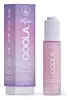
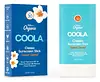
COOLA Full Spectrum 360° Sun Silk Drops Organic Sunscreen SPF 30 Versus COOLA Classic Organic Sunscreen Stick SPF 30 Tropical Coconut
This chemical sunscreen covers most of the UV range, lighter on the deep UVA that drives aging.
This chemical sunscreen covers most of the UV range, lighter on the deep UVA that drives aging.

What's inside
What's inside
 Key Ingredients
Benefits
Concerns
Ingredients Side-by-side
Hyaluronic Acid
Humectant




Nelumbo Nucifera Flower Extract
Skin ConditioningButyl Methoxydibenzoylmethane 2%
UV Absorber
Homosalate 10%
Skin Conditioning
Ethylhexyl Salicylate 5%
UV Absorber
Octocrylene 6%
UV Absorber

Aloe Barbadensis Leaf Extract
Emollient

Anthemis Nobilis Flower Oil
Masking


Butylene Glycol
Humectant
Butyloctyl Salicylate
Skin Conditioning
Calcium Gluconate
HumectantCaprylic/Capric Triglyceride
Masking
Carthamus Tinctorius Seed Oil
Masking

Citrus Aurantium Amara Flower Extract
RefreshingCitrus Aurantium Amara Leaf/Twig Extract
Skin ConditioningDicaprylyl Carbonate
EmollientGlycerin
Humectant
Glyceryl Stearate Se
Emulsifying

Jasminum Sambac Leaf Cell Extract
Masking
Nylon-12

Olea Europaea Fruit Oil
Masking
Plankton Extract
Skin ConditioningPropanediol
Solvent
Schinus Molle Extract
Skin ProtectingSimmondsia Chinensis Seed Oil
Emollient
Sodium Benzoate
Masking
Sodium Hyaluronate
Humectant
Sodium Stearoyl Glutamate
CleansingTheobroma Cacao Seed Extract
Antioxidant
Tocopheryl Acetate
Antioxidant

Water
Skin ConditioningXanthan Gum
EmulsifyingHyaluronic Acid, Nelumbo Nucifera Flower Extract, Butyl Methoxydibenzoylmethane 2%, Homosalate 10%, Ethylhexyl Salicylate 5%, Octocrylene 6%, Aloe Barbadensis Leaf Extract, Anthemis Nobilis Flower Oil, Butylene Glycol, Butyloctyl Salicylate, Calcium Gluconate, Caprylic/Capric Triglyceride, Carthamus Tinctorius Seed Oil, Citrus Aurantium Amara Flower Extract, Citrus Aurantium Amara Leaf/Twig Extract, Dicaprylyl Carbonate, Glycerin, Glyceryl Stearate Se, Jasminum Sambac Leaf Cell Extract, Nylon-12, Olea Europaea Fruit Oil, Plankton Extract, Propanediol, Schinus Molle Extract, Simmondsia Chinensis Seed Oil, Sodium Benzoate, Sodium Hyaluronate, Sodium Stearoyl Glutamate, Theobroma Cacao Seed Extract, Tocopheryl Acetate, Water, Xanthan Gum
Butyl Methoxydibenzoylmethane
UV Absorber
Ethylhexyl Salicylate
UV Absorber
1,2-Hexanediol
Skin Conditioning
Bisabolol
Antioxidant
Bis-Octyldodecyl Dimer Dilinoleate/Propanediol Copolymer
EmollientBrassica Campestris Seed Oil
Skin Conditioning
Camelina Sativa Seed Oil
Skin Conditioning
Camellia Oleifera Seed Oil
Skin Conditioning
Caprylic/Capric Triglyceride
Masking
Carthamus Tinctorius Seed Oil
Masking
Dimethylheptenal
Perfuming
Gamma-Nonalactone
Masking
Gamma-Octalactone
Perfuming
Hydroxystearic Acid
Cleansing
Limnanthes Alba Seed Oil
Skin Conditioning
Maltol
MaskingMauritia Flexuosa Fruit Oil
Skin Conditioning
Opuntia Ficus-Indica Flower Extract
Skin ConditioningPolyester-8
Skin Conditioning
Rubus Idaeus Seed Oil
Emollient
Silica Dimethyl Silylate
EmollientTrans-2-Hexenal
Perfuming
Triethyl Citrate
Masking
Vanillin
Masking
Butyl Methoxydibenzoylmethane, Ethylhexyl Salicylate, 1,2-Hexanediol, Bisabolol, Bis-Octyldodecyl Dimer Dilinoleate/Propanediol Copolymer, Brassica Campestris Seed Oil, Camelina Sativa Seed Oil, Camellia Oleifera Seed Oil, Caprylic/Capric Triglyceride, Carthamus Tinctorius Seed Oil, Dimethylheptenal, Gamma-Nonalactone, Gamma-Octalactone, Hydroxystearic Acid, Limnanthes Alba Seed Oil, Maltol, Mauritia Flexuosa Fruit Oil, Opuntia Ficus-Indica Flower Extract, Polyester-8, Rubus Idaeus Seed Oil, Silica Dimethyl Silylate, Trans-2-Hexenal, Triethyl Citrate, Vanillin
Reviews
Alternatives
Ingredients Explained
These ingredients are found in both products.
Ingredients higher up in an ingredient list are typically present in a larger amount.
Also known as Avobenzone, this ingredient is an oil-soluble used to absorb the full spectrum of UVA rays (peak 357 nm).
It's one of the most effective UVA filters available but has a major caveat of photostability: avobenzone is susceptible to photodegradation.
This means it can lose efficacy when exposed to sunlight without the help of a stabilizing agent.
Studies show antioxidants (like vitamin E or vitamin C) and some UV filters (like octocrylene and Tinosorb S) can meaningfully improve its stability in a formulation.
The maximum allowable concentration according to regulation is 3% in the US + Canada, and 5% in the EU, Australia, China, Korea, and ASEAN countries.
It has a well-support safety profile: a comprehensive 2025 review found minimal toxicity with no evidence of carcinogenicity.
Overall, avobenzone is a safe and regulated ingredient used in sunscreen for over 40 years.
Learn more about Butyl MethoxydibenzoylmethaneCaprylic/Capric Triglyceride (aka MCT Oil) is a lightweight emollient, solvent, and texture enhancer. It is considered a skin-softener by helping to prevent moisture loss.
Though it behaves like an oil, it is not technically one due to its chemical composition. One perk of this ingredient is that it is very stable, resistant to oxidation, and unlikely to go rancid.
In practice, that translates to a long shelf life and a consistently elegant skin feel.
While there is an assumption Caprylic Triglyceride can clog pores due to it being derived from coconut oil, there is no research supporting this. Just patch test if you have concerns.
Fractionated coconut oil and MCT Oil are both listed as Caprylic/Capric Triglyceride according to INCI. This is because INCI names are based on the ingredient’s final chemical composition and not its marketing name or source.
This ingredient is treated as the gold standard fungal acne safe oil. Even though it is coconut derived, the problematic lauric acid is stripped out.
This leaves just caprylic (C8) and capric (C10) acid. These chain lengths actually trend antifungal; a 2020 study found caprylic acid was enough to disrupt Malassezia furfur cell membrane, with a caprylic acid derivative damaging membrane structures at concentrations as low as 0.2%.
Learn more about Caprylic/Capric TriglycerideCarthamus Tinctorius Seed Oil comes from the seeds of the safflower plant. It is a skin conditioning agent that helps soften skin and keep it hydrated.
This seed oil has an unusual fatty acid profile: it is one of the highest linoleic acid plant oils out there (~55-77%). It also has low amounts of oleic acid, and this high-linoleic/low-oleic ratio gets people excited.
Linoleic acid helps maintain skin barrier integrity and is a building block for the ceramides in your stratum corneum. Notably, people with acne tend to have lower linoleic acid in their skin lipids as well (and this gets worse as acne gets more severe).
Overall, it's a lightweight, fast-absorbing oil that has a long safety track record. Lab testing has found it to be non-irritating for skin or eyes.
The Malassezia yeast can metabolize the fatty acids in this oil to grow; therefore this ingredient may not be fungal acne safe.
Learn more about Carthamus Tinctorius Seed OilEthylhexyl Salicylate (also called Octisalate or Octyl Salicylate) is an oil-soluble organic UV filter that's been used in sunscreen since the 1950's.
It absorbs UVB light in the 280-320 nm range with a peak absorbance around 306 nm.
You'll often see it paired with other UV filters to boost overall SPF because octisalate is a fairly week filter on its own.
The reason you'll see it so often is because it can help solubilize and stabilize the trickier filters like oxybenzone and avobenzone.
Unlike these filters, octisalate has pretty good photostability and doesn't create skin-damaging free radicals when exposed to sunlight.
The fatty-alcohol part of the molecule also gives it a light, emollient feel so it doubles as a nice texture enhancer.
Usage levels vary around the world:
Safety-wise, this ingredient has a pretty reassuring track record. The EU's Scientific Committee on Consumer Products (SCCP) found very low skin penetration in human skin tests and negative results for irritation, phototoxicity, and photoallergy.
The real-world allergy risk is pretty low too; a 2012 European study of 1,031 people recorded only 2 reactions to it (a rate of 0.19%).
You might have seen scary headlines about sunscreen getting into your blood.
In 2019, the FDA found that several chemical filters can absorb through the skin and show up in the bloodstream at small but measurable levels.
Here's the important part: these tiny levels are just a cutoff the FDA uses to decide which ingredients need more testing and doesn't mean anything harmful was found.
The researchers were clear that the results are no reason to stop wearing sunscreen.
Learn more about Ethylhexyl Salicylate

