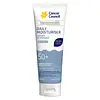
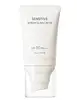
Cancer Council Daily Moisturiser Water Resistant SPF 50+ Versus Skintific Sensitive Serum Sunscreen SPF 50
This chemical sunscreen covers most of the UV range, lighter on the deep UVA that drives aging.
This chemical sunscreen covers the full UV range and blocks ~98% of UVB at SPF 50.


What's inside
What's inside
 Key Ingredients
Benefits
Concerns
Ingredients Side-by-side
Octocrylene 8%
UV Absorber



Homosalate 6%
Skin Conditioning
Butyl Methoxydibenzoylmethane 3%
UV Absorber
Acrylates/C10-30 Alkyl Acrylate Crosspolymer
Emulsion StabilisingAloe Barbadensis Leaf Juice
Skin Conditioning


Carbomer
Emulsion StabilisingCetearyl Alcohol
Emollient





Disodium EDTA
ChelatingTocopheryl Acetate
Antioxidant


Glycerin
Humectant

Glyceryl Stearate
Emollient
Hydrated Silica
Abrasive
Hydroxyacetophenone
Antioxidant
Alcohol
Antimicrobial

Isopropyl Palmitate
Emollient
Phenoxyethanol
Preservative
Polyglyceryl-3 Diisostearate
Emulsifying
Potassium Cetyl Phosphate
EmulsifyingWater
Skin ConditioningVp/Hexadecene Copolymer
Triethanolamine
BufferingXanthan Gum
EmulsifyingOctocrylene 8%, Homosalate 6%, Butyl Methoxydibenzoylmethane 3%, Acrylates/C10-30 Alkyl Acrylate Crosspolymer, Aloe Barbadensis Leaf Juice, Carbomer, Cetearyl Alcohol, Disodium EDTA, Tocopheryl Acetate, Glycerin, Glyceryl Stearate, Hydrated Silica, Hydroxyacetophenone, Alcohol, Isopropyl Palmitate, Phenoxyethanol, Polyglyceryl-3 Diisostearate, Potassium Cetyl Phosphate, Water, Vp/Hexadecene Copolymer, Triethanolamine, Xanthan Gum
Water
Skin ConditioningOctocrylene
UV Absorber
Ethylhexyl Salicylate
UV Absorber
Butyl Methoxydibenzoylmethane
UV Absorber
Dimethicone
Emollient
Phenylbenzimidazole Sulfonic Acid
UV Absorber
Polysilicone-15
UV Filter
Neopentyl Glycol Diheptanoate
EmollientVinyl Dimethicone/Methicone Silsesquioxane Crosspolymer

Silica
Abrasive
Tromethamine
BufferingMethylpropanediol
SolventSodium Stearoyl Glutamate
Cleansing1,2-Hexanediol
Skin Conditioning
Hydroxyacetophenone
Antioxidant
Bis-Ethylhexyloxyphenol Methoxyphenyl Triazine
UV Absorber
Acrylates/Steareth-20 Methacrylate Copolymer
Jojoba Esters
Emollient
Glyceryl Stearates
Emollient
Stearyl Alcohol
Emollient
Cetyl Alcohol
Emollient
Butylene Glycol
Humectant
Bisabolol
Antioxidant
Helianthus Annuus Seed Wax
Skin Conditioning
Niacinamide
Smoothing




Sodium Hydroxide
BufferingSphingomonas Ferment Extract
Skin Conditioning
Ethylhexylglycerin
Skin ConditioningDisodium EDTA
ChelatingHydroxypropyl Cyclodextrin
MaskingUndecylenoyl Phenylalanine
Skin Conditioning
Dipropylene Glycol
HumectantPolyglycerin-3
Humectant
Pinus Densiflora Leaf Extract
Antimicrobial
Lactobacillus Ferment
Skin Conditioning
Zingiber Officinale Root Extract
Masking
Tocopherol
Antioxidant
Water, Octocrylene, Ethylhexyl Salicylate, Butyl Methoxydibenzoylmethane, Dimethicone, Phenylbenzimidazole Sulfonic Acid, Polysilicone-15, Neopentyl Glycol Diheptanoate, Vinyl Dimethicone/Methicone Silsesquioxane Crosspolymer, Silica, Tromethamine, Methylpropanediol, Sodium Stearoyl Glutamate, 1,2-Hexanediol, Hydroxyacetophenone, Bis-Ethylhexyloxyphenol Methoxyphenyl Triazine, Acrylates/Steareth-20 Methacrylate Copolymer, Jojoba Esters, Glyceryl Stearates, Stearyl Alcohol, Cetyl Alcohol, Butylene Glycol, Bisabolol, Helianthus Annuus Seed Wax, Niacinamide, Sodium Hydroxide, Sphingomonas Ferment Extract, Ethylhexylglycerin, Disodium EDTA, Hydroxypropyl Cyclodextrin, Undecylenoyl Phenylalanine, Dipropylene Glycol, Polyglycerin-3, Pinus Densiflora Leaf Extract, Lactobacillus Ferment, Zingiber Officinale Root Extract, Tocopherol
Reviews
Ingredients Explained
These ingredients are found in both products.
Ingredients higher up in an ingredient list are typically present in a larger amount.
Also known as Avobenzone, this ingredient is an oil-soluble used to absorb the full spectrum of UVA rays (peak 357 nm).
It's one of the most effective UVA filters available but has a major caveat of photostability: avobenzone is susceptible to photodegradation.
This means it can lose efficacy when exposed to sunlight without the help of a stabilizing agent.
Studies show antioxidants (like vitamin E or vitamin C) and some UV filters (like octocrylene and Tinosorb S) can meaningfully improve its stability in a formulation.
The maximum allowable concentration according to regulation is 3% in the US + Canada, and 5% in the EU, Australia, China, Korea, and ASEAN countries.
It has a well-support safety profile: a comprehensive 2025 review found minimal toxicity with no evidence of carcinogenicity.
Overall, avobenzone is a safe and regulated ingredient used in sunscreen for over 40 years.
Learn more about Butyl MethoxydibenzoylmethaneDisodium EDTA is a chelating agent. It grabs onto and deactivates metal ions that sneak into your products from water, packaging, or air.
This ingredient mainly works behind the scenes and helps with:
On top of that, this ingredient can counteract the effects of hard water by binding to the minerals in it.
One thing worth knowing is that Disodium EDTA has been shown to be a mild penetration enhancer. It can help other ingredients absorb into skin more effectively which can be a double-edged sword (great for actives, but can also make the active too strong if you have sensitive skin).
Clinical patch testing showed no significant skin irritation at typical use concentrations and minimal dermal absorption.
You'll most likely see this ingredient near the end of an ingredient list. It's typically found in concentrations less than 1%.
Learn more about Disodium EDTAHydroxyacetophenone is a small phenolic molecule that earns its place in a formulas as an antioxidant and preservative booster.
As a phenol, it is able to neutralize free radicals to protect both the product and the skin from oxidative stress.
Though it can't kill microbes on its own, it works as a good supporting agent when combined with other preservatives like Phenoxyethanol or 1,2-Hexanediol.
This ingredient naturally occurs as piceol in Norwegian spruce needles (~0.4-1.1% dry weight and in cloudberries). Though the cosmetic-grade material is synthesized for purity and consistency.
You'll usually see it used at low levels and suppliers recommend up to 1% added to a water phase.
Safety testing was done at concentrations like 0.05% in SPF products and 0.5% in a Human Repeated Insult Patch Test. The safety evidence is assuring; this ingredient is safe for cosmetics in current use and also holds safety status as a food flavoring as well.
An honest caveat: the "soothing" and "anti-inflammatory" claims come mostly from supplier marketing rather than published clinical trials. The Cosmetic Ingredient Review's own literature search found no useful efficacy studies on this ingredient.
So the antioxidant and preservative-boosting roles are the well supported ones while the calming benefit is plausible but thinly evidenced.
Overall, this is a well-tolerated, low-irritation multitasker that quietly helps a formula stay fresh and stable.
Learn more about HydroxyacetophenoneOctocrylene is an oil-soluble organic UV filter that mainly absorbs UVB and short wave UVA II light.
Its real superpower is teamwork: octocrylene is remarkably photostable and is most famous for stabilizing avobenzone (the workhorse UVA filter).
This ingredient is commonly used to enhance both UVB and UVA protection due to its unique property in stabilizing avobenzone. It also pulls double duty by boosting water resistance and giving formulas a smooth, spreadable feel.
The EU's Scientific Committee on Consumer Safety (SCCS) has deemed octocrylene to be safe as a UV-filter at concentrations up to 10% (capped at 9% in propellant sprays). The US also permits it up to 10%.
Two things worth knowing:
You'll usually see this ingredient used in concentrations between 2-10% (higher amounts when used as a stabilizer for avobenzone).
Learn more about OctocryleneWater. It's the most common cosmetic ingredient of all. You'll usually see it at the top of ingredient lists, meaning that it makes up the largest part of the product.
So why is it so popular? Water most often acts as a solvent - this means that it helps dissolve other ingredients into the formulation.
You'll also recognize water as that liquid we all need to stay alive. If you see this, drink a glass of water. Remember to stay hydrated!
Learn more about Water

