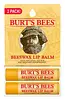
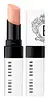
This lip moisturizer is formulated around Cera Alba and Cocos Nucifera Oil to hydrate lips.

What's inside
What's inside
 Key Ingredients
Benefits
Concerns
Ingredients Side-by-side


Hydrogenated Polyisobutene
EmollientPhytosteryl/Isostearyl/Cetyl/Stearyl/Behenyl Dimer Dilinoleate
Skin Conditioning

Polyglyceryl-10 Decaisostearate
EmollientPhytosteryl/Octyldodecyl Lauroyl Glutamate
Skin ConditioningMicrocrystalline Wax
Emulsion StabilisingOctyldodecanol
Emollient
Polyethylene
Abrasive

Cetearyl Alcohol
Emollient


Octyldodecyl Neopentanoate
EmollientCaprylic/Capric Triglyceride
Masking

Hydrogenated Olive Oil
Skin Conditioning
Ethylene/Propylene Copolymer
Abrasive
Ethylhexyl Palmitate
Emollient
Squalane
Emollient
Persea Gratissima Oil
Skin Conditioning
Simmondsia Chinensis Seed Oil
Emollient
Orbignya Oleifera Seed Oil
Emollient
Theobroma Cacao Seed Butter
Emollient
Butyrospermum Parkii Butter
Skin Conditioning
Olea Europaea Oil Unsaponifiables
Skin Conditioning
Olea Europaea Fruit Oil
Masking
Palmitoyl Tripeptide-1
Skin Conditioning

Lactic Acid
Buffering





Cholesterol
Emollient
Ceramide Ng
Skin Conditioning

Tribehenin
Emollient
Sorbitan Isostearate
Emulsifying
Sorbitan Oleate
Emulsifying
Parfum
Masking
Citral
Perfuming
Linalool
Perfuming
Limonene
Perfuming
Tocopherol
Antioxidant


BHT
Antioxidant
Ascorbyl Palmitate
Antioxidant
Tocopheryl Acetate
Antioxidant
Pentaerythrityl Tetra-Di-T-Butyl Hydroxyhydrocinnamate
Antioxidant
Mica
Cosmetic ColorantCI 77891
Cosmetic ColorantCI 77491
Cosmetic ColorantCI 77492
Cosmetic ColorantCI 77499
Cosmetic ColorantCI 77163
Cosmetic Colorant
CI 42090
Cosmetic ColorantCI 77400
Cosmetic ColorantCI 77742
Cosmetic ColorantCI 45370
Cosmetic ColorantCI 15850
Cosmetic ColorantCI 45380
Cosmetic ColorantCI 45410
Cosmetic ColorantCI 73360
Cosmetic ColorantCI 17200
Cosmetic ColorantCI 19140
Cosmetic ColorantCI 15985
Cosmetic ColorantHydrogenated Polyisobutene, Phytosteryl/Isostearyl/Cetyl/Stearyl/Behenyl Dimer Dilinoleate, Polyglyceryl-10 Decaisostearate, Phytosteryl/Octyldodecyl Lauroyl Glutamate, Microcrystalline Wax, Octyldodecanol, Polyethylene, Cetearyl Alcohol, Octyldodecyl Neopentanoate, Caprylic/Capric Triglyceride, Hydrogenated Olive Oil, Ethylene/Propylene Copolymer, Ethylhexyl Palmitate, Squalane, Persea Gratissima Oil, Simmondsia Chinensis Seed Oil, Orbignya Oleifera Seed Oil, Theobroma Cacao Seed Butter, Butyrospermum Parkii Butter, Olea Europaea Oil Unsaponifiables, Olea Europaea Fruit Oil, Palmitoyl Tripeptide-1, Lactic Acid, Cholesterol, Ceramide Ng, Tribehenin, Sorbitan Isostearate, Sorbitan Oleate, Parfum, Citral, Linalool, Limonene, Tocopherol, BHT, Ascorbyl Palmitate, Tocopheryl Acetate, Pentaerythrityl Tetra-Di-T-Butyl Hydroxyhydrocinnamate, Mica, CI 77891, CI 77491, CI 77492, CI 77499, CI 77163, CI 42090, CI 77400, CI 77742, CI 45370, CI 15850, CI 45380, CI 45410, CI 73360, CI 17200, CI 19140, CI 15985
Reviews
Ingredients Explained
These ingredients are found in both products.
Ingredients higher up in an ingredient list are typically present in a larger amount.
Limonene is a fragrance that adds scent and taste to a formulation.
It's found in the peel oil of citrus fruits and other plants such as lavender and eucalyptus. The scent of limonene is generally described as "sweet citrus".
Limonene acts as an antioxidant, meaning it helps neutralize free radicals.
When exposed to air, oxidized limonene may sensitize the skin. Because of this, limonene is often avoided by people with sensitive skin.
The term 'fragrance' is not regulated in many countries. In many cases, it is up to the brand to define this term. For instance, many brands choose to label themselves as "fragrance-free" because they are not using synthetic fragrances. However, their products may still contain ingredients such as essential oils that are considered a fragrance.
Learn more about LimoneneTocopherol is a fat-soluble antioxidant known as Vitamin E.
You'll find this ingredient in the vast majority of skincare (for good reason). It works to neutralize free radicals, or unstable molecules generated by UV exposure, pollution, and other environmental stressors, before they can cause oxidative damage to your skin cells.
Topically applied tocopherol has been shown to protect against UV damage by ramping up the skin's own natural defense enzymes.
It also acts as a skin conditioning agent; some studies show that regular topical use can improve the skin's water-binding capacity over 2-4 weeks.
This ingredient is especially loved for being a team player. When combined with Vitamin C, the photoprotective effect of both ingredients roughly doubles and the combo also helps reduce UV-induced DNA damage.
This ingredient has some brightening potential but it's more of a prevention ingredient than spot-fader. Cell studies show it can slow down melanin production but it's worth noting that it's not the most powerful brightener out there.
In formulations, it also serves as a stabilizer that helps protect other oxidation-prone ingredients from degrading.
Concentrations usually range from 0.1-1% in most leave-on products.
Learn more about Tocopherol

