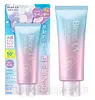
This hybrid sunscreen covers the full UV range and blocks ~98% of UVB at SPF 50.

What's inside
What's inside
 Key Ingredients
Benefits
Concerns
Ingredients Side-by-side
Water
Skin ConditioningAlcohol
Antimicrobial




Ethylhexyl Methoxycinnamate
UV Absorber

Zinc Oxide
Cosmetic Colorant
Silica
Abrasive

Isopropyl Palmitate
Emollient


Butylene Glycol
Humectant

Ethylhexyl Triazone
UV Absorber
Diethylamino Hydroxybenzoyl Hexyl Benzoate
UV Filter
Mica
Cosmetic ColorantIsononyl Isononanoate
EmollientCI 77891
Cosmetic ColorantDipentaerythrityl Tri-Polyhydroxystearate
Emollient
Triethoxycaprylylsilane

Bis-Ethylhexyloxyphenol Methoxyphenyl Triazine
UV Absorber
Sorbitan Stearate
Emulsifying
Hydroxyethyl Acrylate/Sodium Acryloyldimethyl Taurate Copolymer
Emulsion StabilisingSodium Acrylate/Sodium Acryloyldimethyl Taurate Copolymer
Emulsion StabilisingIsohexadecane
EmollientPolysilicone-9
Polysorbate 80
Emulsifying
Parfum
Masking

Disodium EDTA
ChelatingTin Oxide
Abrasive
BHT
Antioxidant
CI 17200
Cosmetic ColorantCI 42090
Cosmetic ColorantRoyal Jelly Extract
Skin Conditioning
Sodium Hyaluronate
Humectant


Methylparaben
Preservative

Water, Alcohol, Ethylhexyl Methoxycinnamate, Zinc Oxide, Silica, Isopropyl Palmitate, Butylene Glycol, Ethylhexyl Triazone, Diethylamino Hydroxybenzoyl Hexyl Benzoate, Mica, Isononyl Isononanoate, CI 77891, Dipentaerythrityl Tri-Polyhydroxystearate, Triethoxycaprylylsilane, Bis-Ethylhexyloxyphenol Methoxyphenyl Triazine, Sorbitan Stearate, Hydroxyethyl Acrylate/Sodium Acryloyldimethyl Taurate Copolymer, Sodium Acrylate/Sodium Acryloyldimethyl Taurate Copolymer, Isohexadecane, Polysilicone-9, Polysorbate 80, Parfum, Disodium EDTA, Tin Oxide, BHT, CI 17200, CI 42090, Royal Jelly Extract, Sodium Hyaluronate, Methylparaben
Water
Skin ConditioningStearic Acid
Cleansing
Myristic Acid
Cleansing
PEG-8
HumectantPotassium Hydroxide
BufferingLauric Acid
Cleansing
Glycerin
Humectant
Dipropylene Glycol
HumectantBeeswax
Emulsion Stabilising
Polyquaternium-7
PEG-90m
Emulsion StabilisingPEG/PPG-14/7 Dimethyl Ether
Skin ConditioningSodium Hyaluronate
Humectant
Sodium Acetylated Hyaluronate
Humectant
Hydrolyzed Silk
Humectant
Soluble Collagen
Humectant
Alcohol
Antimicrobial
Polyquaternium-112
Disodium EDTA
ChelatingSodium Metabisulfite
Antioxidant
Silica
Abrasive
BHT
Antioxidant
Citric Acid
Buffering

Sorbic Acid
Preservative
Sodium Benzoate
Masking
Phenoxyethanol
Preservative
Parfum
Masking
Iron Oxides
Water, Stearic Acid, Myristic Acid, PEG-8, Potassium Hydroxide, Lauric Acid, Glycerin, Dipropylene Glycol, Beeswax, Polyquaternium-7, PEG-90m, PEG/PPG-14/7 Dimethyl Ether, Sodium Hyaluronate, Sodium Acetylated Hyaluronate, Hydrolyzed Silk, Soluble Collagen, Alcohol, Polyquaternium-112, Disodium EDTA, Sodium Metabisulfite, Silica, BHT, Citric Acid, Sorbic Acid, Sodium Benzoate, Phenoxyethanol, Parfum, Iron Oxides
Reviews
Ingredients Explained
These ingredients are found in both products.
Ingredients higher up in an ingredient list are typically present in a larger amount.
This ingredient is also called ethanol or ethyl alcohol. It is denatured, meaning made undrinkable for cosmetic use.
In formulas, it:
Is it bad for your skin?
The answer comes down to concentration. Patch and wash studies have found highly concentrated alcohol-based hand rubs (60-100%) cause less barrier disruption than washing with a basic detergent like SLS. The only measurable effect in these studies was a temporary dip in skin hydration.
Concentrations below 12-15% in leave-on cosmetics is generally well-tolerated. Concentrations above start to see increased transepidermal water loss (TEWL) and reduced hydration.
In concentrations about 58%, it creates temporary channels in your skin's lipid layers to become more permeable and allow other ingredients to slip through easily.
This ingredient can be up to 80% of the formula in alcohol-based perfumes.
Overall, this ingredient is probably harmless if found lower down an ingredients list but worth side-eyeing if it's high up (especially if your barrier is already struggling).
Alcohol can worsen dry skin, eczema, and oily skin, especially at higher concentrations. This is because it can increase transepidermal water loss and decrease hydration to disrupt the skin barrier.
According to the National Rosacea Society based in the US, you should be mindful of products with these alcohols in the top half of ingredients.
True allergic contact dermatitis to ethanol is uncommon, but be sure to patch test if you have dry or sensitive skin.
Learn more about AlcoholBHT is a synthetic antioxidant and preservative.
As an antioxidant, it helps your body fight off free-radicals. Free-radicals are molecules that may damage your skin cells.
As a preservative, it is used to stabilize products and prevent them from degrading. Specifically, BHT prevents degradation from oxidation.
The concerns related to BHT come from oral studies; this ingredient is currently allowed for use by both the FDA and EU.
However, it was recently restricted for use in the UK as of April 2024.
Learn more about BHTDisodium EDTA is a chelating agent. It grabs onto and deactivates metal ions that sneak into your products from water, packaging, or air.
This ingredient mainly works behind the scenes and helps with:
On top of that, this ingredient can counteract the effects of hard water by binding to the minerals in it.
One thing worth knowing is that Disodium EDTA has been shown to be a mild penetration enhancer. It can help other ingredients absorb into skin more effectively which can be a double-edged sword (great for actives, but can also make the active too strong if you have sensitive skin).
Clinical patch testing showed no significant skin irritation at typical use concentrations and minimal dermal absorption.
You'll most likely see this ingredient near the end of an ingredient list. It's typically found in concentrations less than 1%.
Learn more about Disodium EDTAParfum is a catch-all term for an ingredient or more that is used to give a scent to products.
Also called "fragrance", this ingredient can be a blend of hundreds of chemicals or plant oils. This means every product with "fragrance" or "parfum" in the ingredients list is a different mixture.
For instance, Habanolide is a proprietary trade name for a specific aroma chemical. When used as a fragrance ingredient in cosmetics, most aroma chemicals fall under the broad labeling category of “FRAGRANCE” or “PARFUM” according to EU and US regulations.
The term 'parfum' or 'fragrance' is not regulated in many countries. In many cases, it is up to the brand to define this term.
For instance, many brands choose to label themselves as "fragrance-free" because they are not using synthetic fragrances. However, their products may still contain ingredients such as essential oils that are considered a fragrance by INCI standards.
One example is Calendula flower extract. Calendula is an essential oil that still imparts a scent or 'fragrance'.
Depending on the blend, the ingredients in the mixture can cause allergies and sensitivities on the skin. Some ingredients that are known EU allergens include linalool and citronellol.
Parfum can also be used to mask or cover an unpleasant scent.
The bottom line is: not all fragrances/parfum/ingredients are created equally. If you are worried about fragrances, we recommend taking a closer look at an ingredient. And of course, we always recommend speaking with a professional.
Learn more about ParfumSilica, also known as silicon dioxide, is a naturally occurring mineral. It is used as a fine, spherical, and porous powder in cosmetics.
Though it has exfoliant properties, the function of silica varies depending on the product.
The unique structure of silica enhances the spreadability and adds smoothness, making it a great texture enhancer.
It is also used as an active carrier, emulsifier, and mattifier due to its ability to absorb excess oil.
In some products, tiny microneedles called spicules are made from silica or hydrolyzed sponge. When you rub them in, they lightly polish away dead skin layers and enhance the penetration of active ingredients.
Learn more about SilicaSodium Hyaluronate is the salt form of hyaluronic acid. It is a long sugar chain that is naturally found in your skin, joints, and connective tissue that maintains hydration and elasticity.
In skincare, it works as a humectant. It pulls water from the environment and deeper layers of skin and binds it to the surface.
Interestingly, the size of the molecule affects its behavior:
Some clinical evidence links low molecular weight versions to improved wrinkle depth, elasticity, anti-inflammatory effects, and barrier repair.
Many serums use a blend of both weights so you can get surface hydration plus longer-lasting and deeper effects.
You'll typically see concentrations between 0.1-2% for this ingredient.
Learn more about Sodium HyaluronateWater. It's the most common cosmetic ingredient of all. You'll usually see it at the top of ingredient lists, meaning that it makes up the largest part of the product.
So why is it so popular? Water most often acts as a solvent - this means that it helps dissolve other ingredients into the formulation.
You'll also recognize water as that liquid we all need to stay alive. If you see this, drink a glass of water. Remember to stay hydrated!
Learn more about Water

