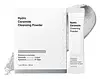
This smoothing exfoliator is formulated around Niacinamide and Papain to refine skin texture and strengthen the skin barrier.


What's inside
What's inside
 Key Ingredients
Benefits
Concerns
Ingredients Side-by-side
Zea Mays Starch
Absorbent
Sodium Cocoyl Isethionate
Cleansing
Sodium Lauroyl Glutamate
SurfactantDiglycerin
Humectant
Niacinamide
Smoothing










Betaine
Humectant
Cellulose Gum
Emulsion StabilisingAllantoin
Skin Conditioning
Maltodextrin
Absorbent
Papain
Skin Conditioning
Bifida Ferment Filtrate
Skin Conditioning
Bifida Ferment Lysate
Skin Conditioning
Lactococcus Ferment Lysate
Skin Conditioning
Lactobacillus Ferment Lysate
Skin Conditioning
Lactobacillus Ferment
Skin Conditioning
Sodium Acetylated Hyaluronate
Humectant
Hydrolyzed Hyaluronic Acid
Humectant
Hyaluronic Acid
Humectant
Sodium Hyaluronate Crosspolymer
Humectant
Hydrolyzed Sodium Hyaluronate
Skin Conditioning
Potassium Hyaluronate
Skin ConditioningSodium Hyaluronate
Humectant
Hydroxypropyltrimonium Hyaluronate
Stearic Acid
Cleansing


Ceramide NP
Skin Conditioning
Ceramide Ns
Skin Conditioning
Ceramide AP
Skin Conditioning
Ceramide As
Skin Conditioning
Ceramide EOP
Skin Conditioning
Phytosphingosine
Skin Conditioning
Cholesterol
Emollient
Hydrogenated Lecithin
Emulsifying
Cetearyl Alcohol
Emollient


Water
Skin ConditioningButylene Glycol
Humectant
Glycerin
Humectant
1,2-Hexanediol
Skin Conditioning
Zea Mays Starch, Sodium Cocoyl Isethionate, Sodium Lauroyl Glutamate, Diglycerin, Niacinamide, Betaine, Cellulose Gum, Allantoin, Maltodextrin, Papain, Bifida Ferment Filtrate, Bifida Ferment Lysate, Lactococcus Ferment Lysate, Lactobacillus Ferment Lysate, Lactobacillus Ferment, Sodium Acetylated Hyaluronate, Hydrolyzed Hyaluronic Acid, Hyaluronic Acid, Sodium Hyaluronate Crosspolymer, Hydrolyzed Sodium Hyaluronate, Potassium Hyaluronate, Sodium Hyaluronate, Hydroxypropyltrimonium Hyaluronate, Stearic Acid, Ceramide NP, Ceramide Ns, Ceramide AP, Ceramide As, Ceramide EOP, Phytosphingosine, Cholesterol, Hydrogenated Lecithin, Cetearyl Alcohol, Water, Butylene Glycol, Glycerin, 1,2-Hexanediol
Talc
Abrasive
Maltitol
HumectantSodium Cocoyl Isethionate
Cleansing
Sodium Myristoyl Glutamate
CleansingSodium Lauroyl Glutamate
SurfactantSodium C14-16 Olefin Sulfonate
Cleansing
Potassium Laurate
EmulsifyingCarrageenan
Glycyrrhiza Glabra Root Extract
Bleaching
Squalane
Emollient
Citric Acid
Buffering
Sodium Hyaluronate
Humectant
Helianthus Annuus Seed Oil
Emollient
Persea Gratissima Oil
Skin Conditioning
BHT
Antioxidant
Dipropylene Glycol
HumectantSilk
Ethyl Glucoside
HumectantProtease
Exfoliating
Lipase
Skin ConditioningSodium Benzoate
Masking
Talc, Maltitol, Sodium Cocoyl Isethionate, Sodium Myristoyl Glutamate, Sodium Lauroyl Glutamate, Sodium C14-16 Olefin Sulfonate, Potassium Laurate, Carrageenan, Glycyrrhiza Glabra Root Extract, Squalane, Citric Acid, Sodium Hyaluronate, Helianthus Annuus Seed Oil, Persea Gratissima Oil, BHT, Dipropylene Glycol, Silk, Ethyl Glucoside, Protease, Lipase, Sodium Benzoate
Ingredients Explained
These ingredients are found in both products.
Ingredients higher up in an ingredient list are typically present in a larger amount.
Sodium cocoyl isethionate is a natural ingredient from coconut oil. It is an ultra gentle cleanser that gives a nice foam without drying the skin or impacting the skin barrier.
The amount of foam created depends on the amount of sodium cocoyl isethionate used in the product.
This ingredient also helps improve the spreadability of a product.
This ingredient hasn’t been shown in studies to feed fungal acne yeast.
Learn more about Sodium Cocoyl IsethionateSodium Hyaluronate is the salt form of hyaluronic acid. It is a long sugar chain that is naturally found in your skin, joints, and connective tissue that maintains hydration and elasticity.
In skincare, it works as a humectant. It pulls water from the environment and deeper layers of skin and binds it to the surface.
Interestingly, the size of the molecule affects its behavior:
Some clinical evidence links low molecular weight versions to improved wrinkle depth, elasticity, anti-inflammatory effects, and barrier repair.
Many serums use a blend of both weights so you can get surface hydration plus longer-lasting and deeper effects.
You'll typically see concentrations between 0.1-2% for this ingredient.
Learn more about Sodium HyaluronateSodium Lauroyl Glutamate is an amino-acid based mild surfactant that is used in formulas as a primary or secondary cleansing agent. This means it helps lift away oil, dirt, and makeup.
You'll see this ingredient in facial cleansers, shampoos, and even toothpaste because it foams reasonably well while being much gentler than harsher surfactants like SLS.
A study comparing surfactant mixtures found that Sodium Lauroyl Glutamate caused visibly less disruption to skin lipid structure and less irritation than SLS when tested on human subjects; this correlated with the data from in vivo results as well.
The Tenside, Surfactants, Detergents cosmetics industry journal has also concluded that amino acid based surfactants are generally milder than their corresponding alkyl sulfate counterparts. They also stated glutamates in particular are considered one of the gentler options in the category.
The Cosmetic Ingredient Review (CIR) Expert Panel has reviewed dermal irritation and sensitization data for this ingredient at the highest reported use concentration and concluded it to be safe in present practices.
Typical use concentrations tend to run low (generally less than 10%) though the CIR's review noted the highest reported use concentration was 40% as a raw material blend (and not a diluted finished cosmetic product).
Learn more about Sodium Lauroyl Glutamate

