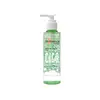
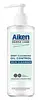
Bio Essence Bio-Cleanse Cica Acne Clear Gel Cleanser Versus Aiken Derma Care Deep Cleansing Oil Control Skin Cleanser
This salicylic acid gel cleanser is formulated around Salicylic Acid to clear breakouts and unclog pores.


What's inside
What's inside
 Key Ingredients
Benefits
Concerns
Ingredients Side-by-side
Water
Skin ConditioningGlycerin
Humectant


Cocamidopropyl Betaine
Cleansing



Ammonium Lauryl Sulfate
Cleansing

Sodium Cocoyl Alaninate
Surfactant
Acrylates Copolymer
PEG-8 Caprylic/Capric Glycerides
EmulsifyingMannitol
Humectant
Sodium Hydroxide
BufferingSodium Metabisulfite
Antioxidant

Microcrystalline Cellulose
AbsorbentSucrose
Humectant
Zea Mays Starch
Absorbent
Niacinamide
Smoothing








Euglena Gracilis Extract
Skin ConditioningHydroxypropyl Methylcellulose
Emulsion StabilisingButylene Glycol
Humectant
Centella Asiatica Extract
Cleansing
Centella Asiatica Leaf Extract
Skin Conditioning
Tocopherol
Antioxidant
Disodium EDTA
ChelatingPhenoxyethanol
Preservative
Chlorphenesin
Antimicrobial
CI 74260
Cosmetic ColorantCI 11710
Cosmetic ColorantWater, Glycerin, Cocamidopropyl Betaine, Ammonium Lauryl Sulfate, Sodium Cocoyl Alaninate, Acrylates Copolymer, PEG-8 Caprylic/Capric Glycerides, Mannitol, Sodium Hydroxide, Sodium Metabisulfite, Microcrystalline Cellulose, Sucrose, Zea Mays Starch, Niacinamide, Euglena Gracilis Extract, Hydroxypropyl Methylcellulose, Butylene Glycol, Centella Asiatica Extract, Centella Asiatica Leaf Extract, Tocopherol, Disodium EDTA, Phenoxyethanol, Chlorphenesin, CI 74260, CI 11710
Water
Skin ConditioningGlycerin
Humectant
Cocamidopropyl Betaine
Cleansing
Ammonium Lauryl Sulfate
Cleansing
Sodium Cocoyl Alaninate
Surfactant
Acrylates Copolymer
PEG-6 Caprylic/Capric Glycerides
EmulsifyingPEG-8
HumectantSodium Hydroxide
BufferingDisodium EDTA
ChelatingBenzophenone-4
UV Absorber
Salicylic Acid
Masking
Helianthus Annuus Seed Oil
Emollient

Glycine Soja Oil
Emollient

PEG-7 Glyceryl Cocoate
Emulsifying
Prunus Amygdalus Dulcis Oil
Skin Conditioning
Calendula Officinalis Flower Extract
Masking
Lavandula Angustifolia Oil
Masking

Ceramide NP
Skin Conditioning
Anthemis Nobilis Flower Oil
Masking
Rosmarinus Officinalis Leaf Oil
Masking
Tocopherol
Antioxidant
Phenoxyethanol
Preservative
Chlorphenesin
Antimicrobial
Sodium Metabisulfite
Antioxidant
Water, Glycerin, Cocamidopropyl Betaine, Ammonium Lauryl Sulfate, Sodium Cocoyl Alaninate, Acrylates Copolymer, PEG-6 Caprylic/Capric Glycerides, PEG-8, Sodium Hydroxide, Disodium EDTA, Benzophenone-4, Salicylic Acid, Helianthus Annuus Seed Oil, Glycine Soja Oil, PEG-7 Glyceryl Cocoate, Prunus Amygdalus Dulcis Oil, Calendula Officinalis Flower Extract, Lavandula Angustifolia Oil, Ceramide NP, Anthemis Nobilis Flower Oil, Rosmarinus Officinalis Leaf Oil, Tocopherol, Phenoxyethanol, Chlorphenesin, Sodium Metabisulfite
Reviews
Ingredients Explained
These ingredients are found in both products.
Ingredients higher up in an ingredient list are typically present in a larger amount.
Acrylates Copolymer is used as a film-forming agent and texture enhancer.
After applied, Acrylates Copolymer forms a thin film cover that helps skin feel more soft. It can help sunscreens become more water-resistant.
It is also used to make a product more thick.
Learn more about Acrylates CopolymerAmmonium Lauryl Sulfate is a type of sulfate. It can be bad for dry skin, cause irritation, and worsen rosacea.
Chlorphenesin is a synthetic preservative. It helps protect a product against bacteria in order to extend shelf life. In most cases, Chlorphenesin is paired with other preservatives such as phenoxyethanol and caprylyl glycol.
Chlorphenesin is a biocide. This means it is able to help fight the microorganisms on our skin. It is also able to fight odor-releasing bacteria.
Chlorphenesin is soluble in both water and glycerin.
Studies show Chlorphenesin is easily absorbed by our skin. You should speak with a skincare professional if you have concerns about using Chlorphenesin.
Learn more about ChlorphenesinCocamidopropyl Betaine is a fatty acid created by mixing similar compounds in coconut oil and dimethylaminopropylamine, a compound with two amino groups.
This ingredient is a surfactant and cleanser. It helps gather the dirt, pollutants, and other impurities in your skin to be washed away. It also helps thicken a product and make the texture more creamy.
Being created from coconut oil means Cocamidopropyl Betaine is hydrating for the skin.
While Cocamidopropyl Betaine was believed to be an allergen, a study from 2012 disproved this. It found two compounds in unpure Cocamidopropyl Betaine to be the irritants: aminoamide and 3-dimethylaminopropylamine. High-grade and pure Cocamidopropyl Betaine did not induce allergic reactions during this study.
Learn more about Cocamidopropyl BetaineDisodium EDTA is a chelating agent. It grabs onto and deactivates metal ions that sneak into your products from water, packaging, or air.
This ingredient mainly works behind the scenes and helps with:
On top of that, this ingredient can counteract the effects of hard water by binding to the minerals in it.
One thing worth knowing is that Disodium EDTA has been shown to be a mild penetration enhancer. It can help other ingredients absorb into skin more effectively which can be a double-edged sword (great for actives, but can also make the active too strong if you have sensitive skin).
Clinical patch testing showed no significant skin irritation at typical use concentrations and minimal dermal absorption.
You'll most likely see this ingredient near the end of an ingredient list. It's typically found in concentrations less than 1%.
Learn more about Disodium EDTAGlycerin (or glycerol) is a compound naturally found in your skin. It's a powerhouse humectant that pulls water into the stratum corneum.
Topically, glycerin does several things at once:
Your skin makes glycerin on its own (mostly from sebaceous oil breakdown) and shuttles it to your outermost layer of skin, or your epidermis, via aquaporin-3.
Aquaporin-3 is a transporter that is essential for normal skin hydration, elasticity, and repair. Interestingly, mice lacking in AQP3 have dry and less elastic skin that can be fully corrected with glycerin.
This ingredient is non-irritating, plays well with almost every ingredient, and works across all skin types. Typical use is anywhere between 3-10% but can go up to 79% in some leave-on products.
Just know very high concentrations (>40%) can feel tacky in low humidity.
Glycerin is the name for this ingredient in American English. British English uses Glycerol/Glycerine.
Learn more about GlycerinPhenoxyethanol is one of the most widely used preservatives in skincare (and for good reason!).
It has a large spectrum of antimicrobial activity and especially effective bacteria, yeast, and mold while only having a weak effect on your skin's natural microbiome.
On a cellular level, it disrupts the cell membranes of microbes by poking holes that make the cell leak. This shuts down the chemical reactions the microbe needs to make energy so it can no longer survive.
Another perk of this ingredient is that it stays functional across a wide pH range (3-10).
You'll often see it paired with boosters like Ethylhexylglycerin; one study showed that a 1:9 ratio of Ethylhexylglycerin to Phenoxyethanol damages bacterial membranes as effectively as doubling the Phenoxyethanol concentration on its own.
Typical use concentrations range from 0.3-1% depending on the formula, and this ingredient is capped at 1% int the EU.
Safety-wise, the fear mongering does not hold up to the evidence. The EU's Scientific Committee on Consumer Safety and FDA consider it safe as a preservative at up to 1%, including for children of all ages.
Adverse systemic effects only showed up in animal studies at exposures roughly 200x higher than what people get from cosmetics. And despite its very widespread use, this ingredient is a rare sensitizer and allergic reactions are uncommon.
Learn more about PhenoxyethanolThis ingredient is a surfactant and foam producer.
Sodium Hydroxide is also known as lye or caustic soda. It is used to adjust the pH of products; many ingredients require a specific pH to be effective.
In small amounts, sodium hydroxide is considered safe to use. However, large amounts may cause chemical burns due to its high alkaline.
Your skin has a natural pH and acid mantle. This acid mantle helps prevent harmful bacteria from breaking through. The acid mantle also helps keep your skin hydrated.
"Alkaline" refers to a high pH level. A low pH level would be considered acidic.
Learn more about Sodium HydroxideSodium metabisulfite is also known as Sodium Pyrosulfite. It is a preservative, antioxidant, and disinfectant.
As a preservative, it helps stabilize cosmetic formulas without affecting their color or scent.
Tocopherol is a fat-soluble antioxidant known as Vitamin E.
You'll find this ingredient in the vast majority of skincare (for good reason). It works to neutralize free radicals, or unstable molecules generated by UV exposure, pollution, and other environmental stressors, before they can cause oxidative damage to your skin cells.
Topically applied tocopherol has been shown to protect against UV damage by ramping up the skin's own natural defense enzymes.
It also acts as a skin conditioning agent; some studies show that regular topical use can improve the skin's water-binding capacity over 2-4 weeks.
This ingredient is especially loved for being a team player. When combined with Vitamin C, the photoprotective effect of both ingredients roughly doubles and the combo also helps reduce UV-induced DNA damage.
This ingredient has some brightening potential but it's more of a prevention ingredient than spot-fader. Cell studies show it can slow down melanin production but it's worth noting that it's not the most powerful brightener out there.
In formulations, it also serves as a stabilizer that helps protect other oxidation-prone ingredients from degrading.
Concentrations usually range from 0.1-1% in most leave-on products.
Learn more about TocopherolWater. It's the most common cosmetic ingredient of all. You'll usually see it at the top of ingredient lists, meaning that it makes up the largest part of the product.
So why is it so popular? Water most often acts as a solvent - this means that it helps dissolve other ingredients into the formulation.
You'll also recognize water as that liquid we all need to stay alive. If you see this, drink a glass of water. Remember to stay hydrated!
Learn more about Water

