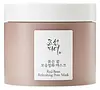
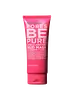
Beauty of Joseon Red Bean Refreshing Pore Mask Versus Formula 10.0.6 Pores Be Pure Skin-Clarifying Mud Mask
This wash off mask is made with Kaolin for a rinse-off pore-care boost.
This wash off mask is formulated around Salicylic Acid to clear breakouts and unclog pores.


What's inside
What's inside
 Key Ingredients
Benefits
Concerns
Ingredients Side-by-side
Water
Skin ConditioningGlycerin
Humectant


Kaolin
Abrasive



Caprylic/Capric Triglyceride
Masking
1,2-Hexanediol
Skin Conditioning
Phaseolus Angularis Seed Powder
Hectorite
AbsorbentCetyl Alcohol
Emollient


Glyceryl Stearate Se
Emulsifying


Cetearyl Olivate
Sorbitan Olivate
Emulsifying
Phaseolus Angularis Seed Extract
Antioxidant
Ultramarines
Pyrus Communis Fruit Extract
Skin ConditioningEthylhexylglycerin
Skin ConditioningSodium Acrylate/Sodium Acryloyldimethyl Taurate Copolymer
Emulsion StabilisingHedera Helix Leaf/Stem Extract
AntimicrobialPolyisobutene
Fragaria Chiloensis Fruit Extract
Skin Conditioning
Pyrus Malus Leaf Extract
Skin ConditioningCI 77491
Cosmetic ColorantCaprylyl/Capryl Glucoside
CleansingSorbitan Oleate
Emulsifying
Triethoxycaprylylsilane

Water, Glycerin, Kaolin, Caprylic/Capric Triglyceride, 1,2-Hexanediol, Phaseolus Angularis Seed Powder, Hectorite, Cetyl Alcohol, Glyceryl Stearate Se, Cetearyl Olivate, Sorbitan Olivate, Phaseolus Angularis Seed Extract, Ultramarines, Pyrus Communis Fruit Extract, Ethylhexylglycerin, Sodium Acrylate/Sodium Acryloyldimethyl Taurate Copolymer, Hedera Helix Leaf/Stem Extract, Polyisobutene, Fragaria Chiloensis Fruit Extract, Pyrus Malus Leaf Extract, CI 77491, Caprylyl/Capryl Glucoside, Sorbitan Oleate, Triethoxycaprylylsilane
Water
Skin ConditioningKaolin
Abrasive
Bentonite
Absorbent
Stearic Acid
Cleansing
Cetyl Alcohol
Emollient
Glyceryl Stearate Se
Emulsifying
Cetearyl Alcohol
Emollient
Caprylic/Capric Triglyceride
Masking
Glycerin
Humectant
PEG-40 Stearate
Emulsifying
Ceteareth-20
Cleansing
Tocopherol
Antioxidant




Fragaria Chiloensis Fruit Extract
Skin Conditioning
Achillea Millefolium Extract
CleansingRosmarinus Officinalis Leaf Extract
AntimicrobialXanthan Gum
EmulsifyingSalicylic Acid
Masking




Phenoxyethanol
Preservative
Parfum
Masking

Methylparaben
Preservative

Propylparaben
Preservative
Sodium Hydroxide
BufferingCI 15850
Cosmetic ColorantWater, Kaolin, Bentonite, Stearic Acid, Cetyl Alcohol, Glyceryl Stearate Se, Cetearyl Alcohol, Caprylic/Capric Triglyceride, Glycerin, PEG-40 Stearate, Ceteareth-20, Tocopherol, Fragaria Chiloensis Fruit Extract, Achillea Millefolium Extract, Rosmarinus Officinalis Leaf Extract, Xanthan Gum, Salicylic Acid, Phenoxyethanol, Parfum, Methylparaben, Propylparaben, Sodium Hydroxide, CI 15850
Reviews
Ingredients Explained
These ingredients are found in both products.
Ingredients higher up in an ingredient list are typically present in a larger amount.
Caprylic/Capric Triglyceride (aka MCT Oil) is a lightweight emollient, solvent, and texture enhancer. It is considered a skin-softener by helping to prevent moisture loss.
Though it behaves like an oil, it is not technically one due to its chemical composition. One perk of this ingredient is that it is very stable, resistant to oxidation, and unlikely to go rancid.
In practice, that translates to a long shelf life and a consistently elegant skin feel.
While there is an assumption Caprylic Triglyceride can clog pores due to it being derived from coconut oil, there is no research supporting this. Just patch test if you have concerns.
Fractionated coconut oil and MCT Oil are both listed as Caprylic/Capric Triglyceride according to INCI. This is because INCI names are based on the ingredient’s final chemical composition and not its marketing name or source.
This ingredient is treated as the gold standard fungal acne safe oil. Even though it is coconut derived, the problematic lauric acid is stripped out.
This leaves just caprylic (C8) and capric (C10) acid. These chain lengths actually trend antifungal; a 2020 study found caprylic acid was enough to disrupt Malassezia furfur cell membrane, with a caprylic acid derivative damaging membrane structures at concentrations as low as 0.2%.
Learn more about Caprylic/Capric TriglycerideCetyl Alcohol is a fatty alcohol. Fatty Alcohols are most often used as an emollient or to thicken a product.
Its main roles are:
Though it has "alcohol" in the name, it is not related to denatured alcohol or ethyl alcohol.
The FDA allows products labeled "alcohol-free" to have fatty alcohols.
This ingredient may not be fungal acne safe. It is a primary fatty alcohol with a chain length above 12 carbons. A study from 2019 show Malassezia can feed on fatty alcohols in this range, so it may trigger fungal acne in those prone to it.
Learn more about Cetyl AlcoholFragaria Chiloensis Fruit Extract comes from the beach strawberry. This is a strawberry native to Pacific coasts of North America, South America, and Hawaii. It likes to grow on sandy beaches.
Beach strawberries have antioxidant and moisturizing properties. They contain many compounds that are potent antioxidants, such as anthocyanins and Vitamin C.
The sugar, or polysaccharides, in strawberries help hydrate the skin by increasing water retention.
Strawberries also contain acids such as ellagic acid, a compound that may protect our skin against UVB damage. Another acid present is citric acid.
Fun fact: The strawberry we buy and eat today was created as a hybrid from the beach strawberry.
Learn more about Fragaria Chiloensis Fruit ExtractGlycerin (or glycerol) is a compound naturally found in your skin. It's a powerhouse humectant that pulls water into the stratum corneum.
Topically, glycerin does several things at once:
Your skin makes glycerin on its own (mostly from sebaceous oil breakdown) and shuttles it to your outermost layer of skin, or your epidermis, via aquaporin-3.
Aquaporin-3 is a transporter that is essential for normal skin hydration, elasticity, and repair. Interestingly, mice lacking in AQP3 have dry and less elastic skin that can be fully corrected with glycerin.
This ingredient is non-irritating, plays well with almost every ingredient, and works across all skin types. Typical use is anywhere between 3-10% but can go up to 79% in some leave-on products.
Just know very high concentrations (>40%) can feel tacky in low humidity.
Glycerin is the name for this ingredient in American English. British English uses Glycerol/Glycerine.
Learn more about GlycerinGlyceryl Stearate SE is a self-emulsifying (SE) form of Glyceryl Stearate. It comes with a small amount of soap (usually potassium or sodium stearate) that gives it the "SE" part.
That soap lets it pull oil and water together on its own which is why it shows up as an emulsifier, thickener, and emollient.
Industry survey data shows this ingredient is used around 1-5% but Glyceryl Stearate goes as high at 17% in a leave-on deodorant.
Safety-wise, it's pretty boring: it's been deemed safe for topical use in 1982 and again most recently in 2021 by the CIR. Human repeat insult patch tests come back non-irritating, non-sensitizing, non-phototoxic, and non-photoallergenic.
This ingredient does carry a comedogenic rating of 3 from the old rabbit-ear assay. Just remember testing finished products in humans showed that formulas built with "comedogenic" ingredients are not necessarily comedogenic themselves. It's worth patch testing if you're breakout prone, and always listen to your skin.
The Malassezia yeast can potentially metabolize the stearic acid in this ingredient, so it may not be fungal acne safe.
Allergy is rare: a 310-patient patch test study of common emulsifiers found this ingredient was not a meaningful reactor. Isolated case reports do exist so a true contact allergy is possible but uncommon.
Learn more about Glyceryl Stearate SeKaolin is a clay. It is used for oil control and to help minimize pores. Like other clays, kaolin has the ability to absorb excess sebum or oil. This can help clean out pores and mattify the skin.
Some types of kaolin may have exfoliating properties. When water is added to kaolin, it becomes a paste with small abrasive particles.
Most kaolin is a white color, but may be pink/orange/red depending on where it comes from.
The name 'kaolin' comes from a Chinese village named 'Gaoling'. Kaolin clay comes from rocks rich in kaolinite. Kaolinite, the mineral, has a silicate layered structure. Kaolinite is formed from chemical weathering of aluminum siilicate minerals.
Besides skincare, kaolin is commonly used to make glossy paper, in ceramics, toothpaste, and as medicine to soothe stomach issues.
Learn more about KaolinWater. It's the most common cosmetic ingredient of all. You'll usually see it at the top of ingredient lists, meaning that it makes up the largest part of the product.
So why is it so popular? Water most often acts as a solvent - this means that it helps dissolve other ingredients into the formulation.
You'll also recognize water as that liquid we all need to stay alive. If you see this, drink a glass of water. Remember to stay hydrated!
Learn more about Water

