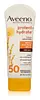
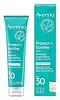
Aveeno Protect Hydrate Face Sunscreen Lotion With - SPF 50 Versus Aveeno Protect + Soothe Face Mineral Sunscreen SPF 30

What's inside
What's inside
 Key Ingredients
Benefits
Concerns
Ingredients Side-by-side
Butyl Methoxydibenzoylmethane 3%
UV Absorber
Homosalate 10%
Skin Conditioning
Ethylhexyl Salicylate 5%
UV Absorber
Octocrylene 6%
UV Absorber

Benzophenone-3 5%
UV Absorber
Water
Skin ConditioningGlycerin
Humectant


Silica
Abrasive


Cetyl Dimethicone
Emollient
Dimethicone
Emollient
Beeswax
Emulsion Stabilising


Benzyl Alcohol
Perfuming



Ethylhexylglycerin
Skin ConditioningGlyceryl Stearate
Emollient
PEG-100 Stearate
Surfactant
Behenyl Alcohol
Emollient
Phenoxyethanol
Preservative
Caprylyl Methicone
Skin Conditioning
Caprylyl Glycol
Emollient
Acrylates/Dimethicone Copolymer
Skin Conditioning
Acrylates/C10-30 Alkyl Acrylate Crosspolymer
Emulsion StabilisingPropylene Glycol
Humectant
Chlorphenesin
Antimicrobial
Diethylhexyl 2,6-Naphthalate
EmollientDisodium EDTA
Sodium Hydroxide
BufferingParfum
Masking
Avena Sativa Kernel Flour
Abrasive
Avena Sativa Kernel Extract
Abrasive


Codium Tomentosum Extract
Skin ProtectingHydrolyzed Oat Protein
Skin ConditioningPotassium Palmitoyl Hydrolyzed Oat Protein
Skin ConditioningButyl Methoxydibenzoylmethane 3%, Homosalate 10%, Ethylhexyl Salicylate 5%, Octocrylene 6%, Benzophenone-3 5%, Water, Glycerin, Silica, Cetyl Dimethicone, Dimethicone, Beeswax, Benzyl Alcohol, Ethylhexylglycerin, Glyceryl Stearate, PEG-100 Stearate, Behenyl Alcohol, Phenoxyethanol, Caprylyl Methicone, Caprylyl Glycol, Acrylates/Dimethicone Copolymer, Acrylates/C10-30 Alkyl Acrylate Crosspolymer, Propylene Glycol, Chlorphenesin, Diethylhexyl 2,6-Naphthalate, Disodium EDTA, Sodium Hydroxide, Parfum, Avena Sativa Kernel Flour, Avena Sativa Kernel Extract, Codium Tomentosum Extract, Hydrolyzed Oat Protein, Potassium Palmitoyl Hydrolyzed Oat Protein
Titanium Dioxide 6.5%
Cosmetic Colorant
Zinc Oxide 18.7%
Cosmetic Colorant
Water
Skin ConditioningIsohexadecane
EmollientC12-15 Alkyl Benzoate
AntimicrobialEthylhexyl Methoxycrylene
Skin Conditioning
Behenyl Alcohol
Emollient
Steareth-21
CleansingGlyceryl Stearate
Emollient
PEG-100 Stearate
Surfactant
Calcium Aluminum Borosilicate
Euphorbia Cerifera Wax
Polyhydroxystearic Acid
Emulsifying
Cetyl Alcohol
Emollient
Triethoxycaprylylsilane
Aluminum Hydroxide
EmollientXanthan Gum
EmulsifyingStearic Acid
Cleansing
Phenoxyethanol
Preservative
Ethylhexylglycerin
Skin ConditioningGlycerin
Humectant
Chlorphenesin
Antimicrobial
Tocopheryl Acetate
Antioxidant

Disodium EDTA
Aloe Barbadensis Leaf Extract
Emollient
Avena Sativa Kernel Extract
Abrasive
Titanium Dioxide 6.5%, Zinc Oxide 18.7%, Water, Isohexadecane, C12-15 Alkyl Benzoate, Ethylhexyl Methoxycrylene, Behenyl Alcohol, Steareth-21, Glyceryl Stearate, PEG-100 Stearate, Calcium Aluminum Borosilicate, Euphorbia Cerifera Wax, Polyhydroxystearic Acid, Cetyl Alcohol, Triethoxycaprylylsilane, Aluminum Hydroxide, Xanthan Gum, Stearic Acid, Phenoxyethanol, Ethylhexylglycerin, Glycerin, Chlorphenesin, Tocopheryl Acetate, Disodium EDTA, Aloe Barbadensis Leaf Extract, Avena Sativa Kernel Extract
Reviews
Ingredients Explained
These ingredients are found in both products.
Ingredients higher up in an ingredient list are typically present in a larger amount.
Avena Sativa Kernel Extract is is derived from colloidal oatmeal. Besides being a healthy breakfast, oats have many benefits in skincare too.
This ingredient helps sooth, hydrate, and protect the skin. The starches in colloidal oatmeal are able to bind water, keeping the skin hydrated.
The cellulose and fiber in colloidal oatmeal help reduce inflammation. This can also help the skin feel softer.
Colloidal Oatmeal is also an antioxidant. Antioxidants protect our skin from free-radical damage.
Oatmeal also contains beneficial compounds:
This ingredient is created by mixing grounded oatmeal and a liquid base.
Learn more about Avena Sativa Kernel ExtractBehenyl Alcohol is a type of fatty alcohol (these are different from the drying, solvent alcohols).
Fatty Alcohols have hydrating properties and are most often used as an emollient or to thicken a product. They are usually derived from natural fats and oils; behenyl alcohol is derived from the fats of vegetable oils.
Emollients help keep your skin soft and hydrated by creating a film that traps moisture in.
In 2000, Behenyl Alcohol was approved by the US as medicine to reduce the duration of cold sores.
Learn more about Behenyl AlcoholChlorphenesin is a synthetic preservative. It helps protect a product against bacteria in order to extend shelf life. In most cases, Chlorphenesin is paired with other preservatives such as phenoxyethanol and caprylyl glycol.
Chlorphenesin is a biocide. This means it is able to help fight the microorganisms on our skin. It is also able to fight odor-releasing bacteria.
Chlorphenesin is soluble in both water and glycerin.
Studies show Chlorphenesin is easily absorbed by our skin. You should speak with a skincare professional if you have concerns about using Chlorphenesin.
Learn more about ChlorphenesinDisodium EDTA is a chelating agent. It grabs onto and deactivates metal ions that sneak into your products from water, packaging, or air.
This ingredient mainly works behind the scenes and helps with:
On top of that, this ingredient can counteract the effects of hard water by binding to the minerals in it.
One thing worth knowing is that Disodium EDTA has been shown to be a mild penetration enhancer. It can help other ingredients absorb into skin more effectively which can be a double-edged sword (great for actives, but can also make the active too strong if you have sensitive skin).
Clinical patch testing showed no significant skin irritation at typical use concentrations and minimal dermal absorption.
You'll most likely see this ingredient near the end of an ingredient list. It's typically found in concentrations less than 1%.
Learn more about Disodium EDTAEthylhexylglycerin is created from glycerin. It is a multitasker ingredient that:
The CIR Expert Panel found minimal skin absorption or sensitization of any kind in a safety assessment. Though this ingredient is considered well-tolerated, a small number of cases of allergic dermatitis have been published since 2002. Just be sure to patch test if you are unsure.
Industry-reported use ranges from 8% in rinse-off products and 2% in leave-on formulations.
Learn more about EthylhexylglycerinGlycerin (or glycerol) is a compound naturally found in your skin. It's a powerhouse humectant that pulls water into the stratum corneum.
Topically, glycerin does several things at once:
Your skin makes glycerin on its own (mostly from sebaceous oil breakdown) and shuttles it to your outermost layer of skin, or your epidermis, via aquaporin-3.
Aquaporin-3 is a transporter that is essential for normal skin hydration, elasticity, and repair. Interestingly, mice lacking in AQP3 have dry and less elastic skin that can be fully corrected with glycerin.
This ingredient is non-irritating, plays well with almost every ingredient, and works across all skin types. Typical use is anywhere between 3-10% but can go up to 79% in some leave-on products.
Just know very high concentrations (>40%) can feel tacky in low humidity.
Glycerin is the name for this ingredient in American English. British English uses Glycerol/Glycerine.
Learn more about GlycerinGlyceryl Stearate is made by reacting glycerin with stearic acid (typically sourced from plant oils like palm or coconut). It's an emulsifier, emollient, and mild occlusive.
Emulsifiers help ingredients like oil and water stay mixed so your formula stays nicely blended and uniform in texture.
This ingredient is typically used in concentrations between 1-10%. Studies have found it to be non-sensitizing, non-phototoxic, and non-photoallergenic.
A close cousin of this ingredient is Glyceryl Stearate SE ("self-emulsifying"). This just has a small amount of sodium or potassium stearate added so it can emulsify without a co-emulsifier.
Since this ingredient is an ester of a C18 fatty acid, it may not be fungal acne safe. The Malassezia yeast can potentially metabolize within the C11-C24 range.
Fun fact: The human body also creates Glyceryl Stearate naturally.
Learn more about Glyceryl StearatePeg-100 Stearate is an emollient and emulsifier. As an emollient, it helps keep skin soft by trapping moisture in. On the other hand, emulsifiers help prevent oil and water from separating in a product.
PEGS are a hydrophilic polyether compound . There are 100 ethylene oxide monomers in Peg-100 Stearate. Peg-100 Stearate is polyethylene glycol ester of stearic acid.
Phenoxyethanol is a preservative that has germicide, antimicrobial, and aromatic properties. Studies show that phenoxyethanol can prevent microbial growth. By itself, it has a scent that is similar to that of a rose.
It's often used in formulations along with Caprylyl Glycol to preserve the shelf life of products.
Water. It's the most common cosmetic ingredient of all. You'll usually see it at the top of ingredient lists, meaning that it makes up the largest part of the product.
So why is it so popular? Water most often acts as a solvent - this means that it helps dissolve other ingredients into the formulation.
You'll also recognize water as that liquid we all need to stay alive. If you see this, drink a glass of water. Remember to stay hydrated!
Learn more about Water
