This mineral sunscreen covers the full UV range, though its SPF isn't confirmed on file yet.
This calming moisturizer is formulated around Aloe Barbadensis Leaf Juice and Allantoin to calm redness and hydrate skin.

What's inside
What's inside
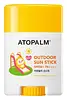 Key Ingredients
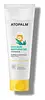
Benefits
Concerns
No concerns
Ingredients Side-by-side
Octyldodecanol
Emollient
Isopropyl Palmitate
Emollient




Butylene Glycol Dicaprylate/Dicaprate
EmollientC12-15 Alkyl Benzoate
AntimicrobialTitanium Dioxide
Cosmetic Colorant

Benzotriazolyl Dodecyl P-Cresol
UV AbsorberSilica Silylate
Emollient
Polyamide-8
EmollientDibutyl Lauroyl Glutamide
Skin ConditioningDibutyl Ethylhexanoyl Glutamide
Skin ConditioningVinyldimethicone

Aluminum Stearate
Cosmetic ColorantPolyhydroxystearic Acid
Emulsifying
Centella Asiatica Extract
Cleansing





Mentha Viridis Leaf Oil
Astringent


Caprylic/Capric Triglyceride
Masking

Alumina
Abrasive
Stearic Acid
Cleansing
Pentaerythrityl Tetra-Di-T-Butyl Hydroxyhydrocinnamate
Antioxidant
Myristoyl/Palmitoyl Oxostearamide/Arachamide Mea
Skin ConditioningPanthenol
Skin Conditioning
Water
Skin ConditioningDehydroacetic Acid 0.05%
Preservative
Octyldodecanol, Isopropyl Palmitate, Butylene Glycol Dicaprylate/Dicaprate, C12-15 Alkyl Benzoate, Titanium Dioxide, Benzotriazolyl Dodecyl P-Cresol, Silica Silylate, Polyamide-8, Dibutyl Lauroyl Glutamide, Dibutyl Ethylhexanoyl Glutamide, Vinyldimethicone, Aluminum Stearate, Polyhydroxystearic Acid, Centella Asiatica Extract, Mentha Viridis Leaf Oil, Caprylic/Capric Triglyceride, Alumina, Stearic Acid, Pentaerythrityl Tetra-Di-T-Butyl Hydroxyhydrocinnamate, Myristoyl/Palmitoyl Oxostearamide/Arachamide Mea, Panthenol, Water, Dehydroacetic Acid 0.05%
Water
Skin Conditioning1,2-Hexanediol
Skin Conditioning
Pentylene Glycol
Skin Conditioning
Aloe Barbadensis Leaf Juice
Skin Conditioning
Carbomer
Emulsion StabilisingArginine
Masking
Allantoin
Skin Conditioning
Caprylyl Glycol
Emollient
Hydroxypropyl Methylcellulose
Emulsion StabilisingEthylhexylglycerin
Skin ConditioningDisodium EDTA
ChelatingButylene Glycol
Humectant
Glycerin
Humectant
Hydrolyzed Hyaluronic Acid
Humectant
Centella Asiatica Extract
Cleansing
Madecassoside
Antioxidant
Mentha Viridis Leaf Extract
Masking
Myristoyl/Palmitoyl Oxostearamide/Arachamide Mea
Skin ConditioningPropanediol
Solvent
Asiaticoside
Antioxidant
Madecassic Acid
Skin Conditioning
Asiatic Acid
Skin Conditioning
Aspergillus Ferment
Skin ConditioningBrassica Oleracea Capitata Sprout Extract
Skin ConditioningBrassica Oleracea Italica Extract
AstringentMedicago Sativa Extract
TonicSorghum Bicolor Leaf/Stem Extract
Skin ConditioningTriticum Vulgare Sprout Extract
Skin ConditioningBrassica Campestris Extract
Skin ConditioningRaphanus Sativus Seed Extract
Skin ConditioningSaccharide Isomerate
Humectant
Water, 1,2-Hexanediol, Pentylene Glycol, Aloe Barbadensis Leaf Juice, Carbomer, Arginine, Allantoin, Caprylyl Glycol, Hydroxypropyl Methylcellulose, Ethylhexylglycerin, Disodium EDTA, Butylene Glycol, Glycerin, Hydrolyzed Hyaluronic Acid, Centella Asiatica Extract, Madecassoside, Mentha Viridis Leaf Extract, Myristoyl/Palmitoyl Oxostearamide/Arachamide Mea, Propanediol, Asiaticoside, Madecassic Acid, Asiatic Acid, Aspergillus Ferment, Brassica Oleracea Capitata Sprout Extract, Brassica Oleracea Italica Extract, Medicago Sativa Extract, Sorghum Bicolor Leaf/Stem Extract, Triticum Vulgare Sprout Extract, Brassica Campestris Extract, Raphanus Sativus Seed Extract, Saccharide Isomerate
Ingredients Explained
These ingredients are found in both products.
Ingredients higher up in an ingredient list are typically present in a larger amount.
Centella Asiatica Extract (Centella) is one of the most researched botanical extracts in skincare with decades of studies backing its effects on inflammation, collagen, and the skin barrier.
That research keeps pointing back to the same four triterpenoid saponins: Asiaticoside, Madecassoside, Asiatic Acid, and Madecassic Acid.
These compounds allow centella to dial back inflammation, encourage the skin to build and hold onto collagen, support the barrier and hydration, and bring solid antioxidant activity to protect against signs of aging.
Centella also carries a nice supporting cast of Vitamin A, vitamin C, several B vitamins, and amino acids. Put it all together and you get an ingredient that soothes, hydrates, and protects, all at once.
Most of centella's magic comes from the four big compounds (Asiaticoside, Madecassoside, Asiatic Acid, and Madecassic Acid). These are the actives doing the heavy lifting in almost every centella study.
Here is the short version of what they do in the skin:
So it is not just soothing for the sake of soothing. Centella calms the skin AND helps it rebuild.
Just FYI, not all centella on an ingredient list is the same. What you are getting actually depends on the extract:
Fun fact on the ratios: the leaves tend to be richest in Madecassoside and Asiaticoside, and lower in the two acids. The exact amounts shift with where the plant is grown and how it is processed. This means purity really does vary brand to brand.
Centella is one of the most easygoing actives out there.
It layers well with basically everything: niacinamide, hyaluronic acid, peptides, and vitamin C, and also pairs nicely with stronger actives like retinoids and exfoliating acids where it can help take the edge off irritation.
On the safety side, centella and its triterpenes are classified as weak sensitizers, meaning allergic reactions are possible but uncommon.
Patch tests at 1% and 5% came back negative in test panels, and creams at typical use levels did not cause allergic reactions across large groups of people.
But as with any new active, a patch test is still a smart move for very reactive skin.
Centella is widely used because it is effective at low percentages. For context, human safety testing found no meaningful irritation from creams containing centella extract at everyday use levels (the tested amounts were well under 1%).
The irritancy threshold in animal testing was also above 30% (so real-world formulas sit far below anything concerning).
In collagen lab studies, higher concentrations drove more collagen synthesis, so serums built around centella tend to feature it more prominently.
Bottom line: you will find centella working nicely anywhere from a fraction of a percent up to hero-ingredient levels depending on whether it is a supporting soother or the main event.
Fun fact: Centella has been used as a medicine and in food for many centuries. As a medicine, it is used to treat burns, scratches, and wounds.
Learn more about Centella Asiatica ExtractMyristoyl/Palmitoyl Oxostearamide/Arachamide Mea (M/PO/AM) is a synthetic pseudoceramide; it's basically a lab-made ingredient designed to mimic the ceramides that your skin naturally produces.
What makes this ingredient special? It is connected to something called multi-lamellar emulsion (MLE) technology.
Your skin's outermost layer (stratum corneum) is often described as a "brick wall" where skin cells are bricks and lipids hold everything together. Your lipids are Ceramides, Cholesterol, and free fatty acids.
These fatty acids are not just randomly squished together. They're arranged in very specific layered (lamellar) structures. Your barrier suffers when the layer structure gets disrupted from things like eczema, harsh weather, or over-exfoliating.
M/PO/AM is formulated within MLE technology to closely replicate your skin's natural layers, setting it apart from other ceramides.
The research behind M/PO/AM is pretty solid for eczema, aka atopic dermatitis. A 2003 study on children with eczema found that an MLE cream containing M/PO/AM outperformed a standard urea-based moisturizer. The study also found a 31-35% decrease in severity index compared to smaller improvements from the control cream.
Recently, a 2024 trial found that combining M/PO/AM with topical corticosteroid led to better outcomes than using the steroid alone. The trial noted improvements in skin hydration, dryness, itching, and quality of life scores.
Research has also shown that M/PO/AM can help reduce barrier-damaging side effects of long term topical steroid use.
This ingredient also goes by the trade name PC-9S. No notable allergy concerns have been flagged for this ingredient in the published literature.
Learn more about Myristoyl/Palmitoyl Oxostearamide/Arachamide MeaWater. It's the most common cosmetic ingredient of all. You'll usually see it at the top of ingredient lists, meaning that it makes up the largest part of the product.
So why is it so popular? Water most often acts as a solvent - this means that it helps dissolve other ingredients into the formulation.
You'll also recognize water as that liquid we all need to stay alive. If you see this, drink a glass of water. Remember to stay hydrated!
Learn more about Water

