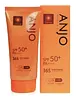
This hybrid sunscreen covers the full UV range and blocks ~98% of UVB at SPF 50.
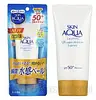
This chemical sunscreen covers the full UV range and blocks ~98% of UVB at SPF 50.


What's inside
What's inside
 Key Ingredients
Benefits
Concerns
Ingredients Side-by-side
Cyclomethicone
Emollient
Titanium Dioxide
Cosmetic Colorant

Butylene Glycol
Humectant

Caprylic/Capric Triglyceride
Masking
Propylene Glycol
Humectant

Ethylhexyl Methoxycinnamate
UV Absorber
Cetyl PEG/PPG-10/1 Dimethicone
Emulsifying
4-Methylbenzylidene Camphor
UV Absorber
Zinc Oxide
Cosmetic Colorant
Paraffinum Liquidum
Emollient

Sorbitan Olivate
Emulsifying
Microcrystalline Wax
Emulsion StabilisingButyrospermum Parkii Butter
Skin Conditioning
Dimethicone
Emollient
CI 77492
Cosmetic ColorantSodium Hyaluronate
Humectant


Magnesium Sulfate
Beeswax
Emulsion Stabilising
CI 77491
Cosmetic ColorantCI 77499
Cosmetic ColorantAllantoin
Skin Conditioning
Betaine
Humectant
Sodium Chloride
MaskingGlyceryl Caprylate
EmollientCaprylyl Glycol
Emollient
Tocopheryl Acetate
Antioxidant


Camellia Sinensis Leaf Extract
Antimicrobial
Morus Alba Bark Extract
Skin ConditioningGlycyrrhiza Glabra Root Extract
Bleaching
Disodium EDTA
Cyclomethicone, Titanium Dioxide, Butylene Glycol, Caprylic/Capric Triglyceride, Propylene Glycol, Ethylhexyl Methoxycinnamate, Cetyl PEG/PPG-10/1 Dimethicone, 4-Methylbenzylidene Camphor, Zinc Oxide, Paraffinum Liquidum, Sorbitan Olivate, Microcrystalline Wax, Butyrospermum Parkii Butter, Dimethicone, CI 77492, Sodium Hyaluronate, Magnesium Sulfate, Beeswax, CI 77491, CI 77499, Allantoin, Betaine, Sodium Chloride, Glyceryl Caprylate, Caprylyl Glycol, Tocopheryl Acetate, Camellia Sinensis Leaf Extract, Morus Alba Bark Extract, Glycyrrhiza Glabra Root Extract, Disodium EDTA
Water
Skin ConditioningEthylhexyl Methoxycinnamate
UV Absorber
Alcohol Denat.
Antimicrobial

Butylene Glycol
Humectant
Isononyl Isononanoate
EmollientMethylene Bis-Benzotriazolyl Tetramethylbutylphenol
UV Filter
Sodium Hyaluronate
Humectant
Hydrolyzed Collagen
Emollient
Arginine
Masking
Leather Coral Extract
Skin ConditioningVaccinium Myrtillus Fruit Extract
Skin ConditioningDiethylamino Hydroxybenzoyl Hexyl Benzoate
UV Filter
Glycol Dimethacrylate Crosspolymer
Bis-Ethylhexyloxyphenol Methoxyphenyl Triazine
Skin Conditioning
Polysilicone-13
PEG-40 Stearate
Emulsifying
Bis-PEG-18 Methyl Ether Dimethyl Silane
EmollientAcrylates/C10-30 Alkyl Acrylate Crosspolymer
Emulsion StabilisingMelaleuca Alternifolia Leaf Oil
Antioxidant


Decyl Glucoside
Cleansing
Polystyrene
Polyvinyl Alcohol
Xanthan Gum
EmulsifyingDisodium EDTA
Propylene Glycol
Humectant
Phenoxyethanol
Preservative
Water, Ethylhexyl Methoxycinnamate, Alcohol Denat., Butylene Glycol, Isononyl Isononanoate, Methylene Bis-Benzotriazolyl Tetramethylbutylphenol, Sodium Hyaluronate, Hydrolyzed Collagen, Arginine, Leather Coral Extract, Vaccinium Myrtillus Fruit Extract, Diethylamino Hydroxybenzoyl Hexyl Benzoate, Glycol Dimethacrylate Crosspolymer, Bis-Ethylhexyloxyphenol Methoxyphenyl Triazine, Polysilicone-13, PEG-40 Stearate, Bis-PEG-18 Methyl Ether Dimethyl Silane, Acrylates/C10-30 Alkyl Acrylate Crosspolymer, Melaleuca Alternifolia Leaf Oil, Decyl Glucoside, Polystyrene, Polyvinyl Alcohol, Xanthan Gum, Disodium EDTA, Propylene Glycol, Phenoxyethanol
Reviews
Ingredients Explained
These ingredients are found in both products.
Ingredients higher up in an ingredient list are typically present in a larger amount.
Butylene Glycol (or BG) is used within cosmetic products for a few different reasons:
Overall, Butylene Glycol is a safe and well-rounded ingredient that works well with other ingredients.
Though this ingredient works well with most skin types, some people with sensitive skin may experience a reaction such as allergic rashes, closed comedones, or itchiness.
Learn more about Butylene GlycolDisodium EDTA is a chelating agent. It grabs onto and deactivates metal ions that sneak into your products from water, packaging, or air.
This ingredient mainly works behind the scenes and helps with:
On top of that, this ingredient can counteract the effects of hard water by binding to the minerals in it.
One thing worth knowing is that Disodium EDTA has been shown to be a mild penetration enhancer. It can help other ingredients absorb into skin more effectively which can be a double-edged sword (great for actives, but can also make the active too strong if you have sensitive skin).
Clinical patch testing showed no significant skin irritation at typical use concentrations and minimal dermal absorption.
You'll most likely see this ingredient near the end of an ingredient list. It's typically found in concentrations less than 1%.
Learn more about Disodium EDTAThis ingredient is also known as Octinoxate and is one of the oldest and most widely used chemical UV filters in skincare.
It has a simple job: soap up UVB radiation (290-320 nm), the wavelengths responsible for sunburn and a big chunk of long-term sun damage.
In formulas, it's always paired with a separate UVA filter because octinoxate solely protects skin from UVB.
Because it's an oil-soluble liquid, it's easy to blend into the oil phase of lotions/creams and gives a cosmetically elegant feel.
The one quirk about formulating this ingredient is photostability; the molecule slowly changes shape into a less effective version when sunlight hits it. So the longer you're in the sun, the weaker its protection gets. The drop can be more than 30% in some formulas.
It also doesn't play nice with Avobenzone (the common UVA filter) since avobenzone destabilizes octinoxate and the two degrade each other. But don't worry: brands have solved this issue by adding photostabilizers like Tinosorb S to prevent degradation and keep SPF stable under heavy UV exposure.
The maximum allowed level is 10% in the EU and Australia, 7.5% in the US and Canada, and 20% in Japan.
The Cosmetic Ingredient Review Panel has concluded this ingredient to be safe in cosmetics up to 10%.
One last thing worth knowing for context:
Octinoxate has been the subject of ongoing review in Europe where the Scientific Committee on Consumer Safety's (SCCS) 2025 final opinion is that this ingredient is an endocrine-active substance.
Lab and animal studies suggest it can act a bit like a hormone in the body (mildly mimicking estrogen and slightly blocking male hormones). It's important to know this hasn't really been shown to happen in everyday human use.
This ingredient is also banned in Hawaii over coral reef concerns.
Learn more about Ethylhexyl MethoxycinnamatePropylene Glycol is a synthetic, colorless, odorless liquid that has been a staple in cosmetics for decades. It is a skin conditioning agent, humectant, and solvent.
As a humectant, it draw water to the skin to reduce flaking and restore suppleness. It's also a solvent that helps dissolve other actives and keeps formulas stable across temperature changes.
The CIR Expert Panel has confirmed this ingredient to be nontoxic and clinical studies show no sensitization at cosmetic use concentrations.
True allergic reactions are quite rare: a 15-year retrospective study of 6,751 patients found only 0.31% had a positive reaction (and less than half were considered clinically relevant).
It seemed that when sensitization does occur, it's most commonly linked to topical medication (like corticosteroids) and not cosmetics. Allergic contact dermatitis also appears largely limited to individuals with underlying skin conditions.
Overall, propylene glycol is a well-studied ingredient that most people can tolerate without issue.
Learn more about Propylene GlycolSodium Hyaluronate is the salt form of hyaluronic acid. It is a long sugar chain that is naturally found in your skin, joints, and connective tissue that maintains hydration and elasticity.
In skincare, it works as a humectant. It pulls water from the environment and deeper layers of skin and binds it to the surface.
Interestingly, the size of the molecule affects its behavior:
Some clinical evidence links low molecular weight versions to improved wrinkle depth, elasticity, anti-inflammatory effects, and barrier repair.
Many serums use a blend of both weights so you can get surface hydration plus longer-lasting and deeper effects.
You'll typically see concentrations between 0.1-2% for this ingredient.
Learn more about Sodium Hyaluronate

