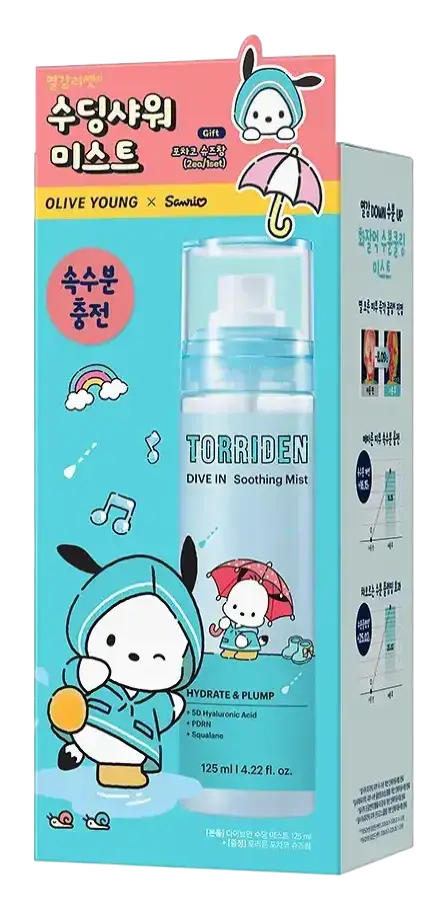
Torriden Dive In Soothing Mist
A toner with 40 ingredients, including AHA, hyaluronic acid, and ectoin.
This hydrating toner is formulated around Sodium Hyaluronate and Ectoin to hydrate skin and calm redness.
We independently verify ingredients, backed by peer-reviewed research. Suggest an update.
What's inside
Ingredients List
Water
Skin ConditioningGlycerin
Humectant


Propanediol
Solvent
Glycereth-26
Humectant
1,2-Hexanediol
Skin Conditioning
Sodium Hyaluronate Crosspolymer
Humectant
Sodium Hyaluronate
Humectant

Sodium Acetylated Hyaluronate
Humectant
Hydrolyzed Sodium Hyaluronate
Skin Conditioning
Hydrolyzed Hyaluronic Acid
Humectant
Ectoin
Skin Conditioning
Dipotassium Glycyrrhizate
Humectant
2,3-Butanediol
HumectantPanthenol
Skin Conditioning
Allantoin
Skin Conditioning
Erythritol
Humectant
Trehalose
Humectant
Squalane
Emollient
Sodium DNA
Skin Conditioning
Butylene Glycol
Humectant
Polyglyceryl-10 Oleate
Skin Conditioning

Dextrin
AbsorbentMethyl Diisopropyl Propionamide
MaskingAcrylic Acid/Vp Crosspolymer
SurfactantHydroxyethyl Urea
Humectant
Ethoxydiglycol
HumectantPolysorbate 20
Emulsifying
Sorbitan Sesquioleate
Emulsifying
Arginine
Masking
Hydrogenated Lecithin
Emulsifying
Mandelic Acid
Antimicrobial







Butyrospermum Parkii Butter
Skin Conditioning


Coriandrum Sativum Extract
Skin ConditioningCrocus Sativus Flower Extract
MaskingElettaria Cardamomum Seed Extract
Perfuming
Foeniculum Vulgare Fruit Extract
EmollientMalachite Extract
Antioxidant
Gardenia Florida Flower Extract
Skin ConditioningEthylhexylglycerin
Skin ConditioningCaprylyl Glycol
Emollient
Water, Glycerin, Propanediol, Glycereth-26, 1,2-Hexanediol, Sodium Hyaluronate Crosspolymer, Sodium Hyaluronate, Sodium Acetylated Hyaluronate, Hydrolyzed Sodium Hyaluronate, Hydrolyzed Hyaluronic Acid, Ectoin, Dipotassium Glycyrrhizate, 2,3-Butanediol, Panthenol, Allantoin, Erythritol, Trehalose, Squalane, Sodium DNA, Butylene Glycol, Polyglyceryl-10 Oleate, Dextrin, Methyl Diisopropyl Propionamide, Acrylic Acid/Vp Crosspolymer, Hydroxyethyl Urea, Ethoxydiglycol, Polysorbate 20, Sorbitan Sesquioleate, Arginine, Hydrogenated Lecithin, Mandelic Acid, Butyrospermum Parkii Butter, Coriandrum Sativum Extract, Crocus Sativus Flower Extract, Elettaria Cardamomum Seed Extract, Foeniculum Vulgare Fruit Extract, Malachite Extract, Gardenia Florida Flower Extract, Ethylhexylglycerin, Caprylyl Glycol
Key Ingredients
Benefits
Concerns
Ingredients Explained
Water. It's the most common cosmetic ingredient of all. You'll usually see it at the top of ingredient lists, meaning that it makes up the largest part of the product.
So why is it so popular? Water most often acts as a solvent - this means that it helps dissolve other ingredients into the formulation.
You'll also recognize water as that liquid we all need to stay alive. If you see this, drink a glass of water. Remember to stay hydrated!
Learn more about WaterGlycerin (or glycerol) is a compound naturally found in your skin. It's a powerhouse humectant that pulls water into the stratum corneum.
Topically, glycerin does several things at once:
Your skin makes glycerin on its own (mostly from sebaceous oil breakdown) and shuttles it to your outermost layer of skin, or your epidermis, via aquaporin-3.
Aquaporin-3 is a transporter that is essential for normal skin hydration, elasticity, and repair. Interestingly, mice lacking in AQP3 have dry and less elastic skin that can be fully corrected with glycerin.
This ingredient is non-irritating, plays well with almost every ingredient, and works across all skin types. Typical use is anywhere between 3-10% but can go up to 79% in some leave-on products.
Just know very high concentrations (>40%) can feel tacky in low humidity.
Glycerin is the name for this ingredient in American English. British English uses Glycerol/Glycerine.
Learn more about GlycerinPropanediol is an all-star ingredient. It softens, hydrates, and smooths the skin.
It’s often used to:
Propanediol is not likely to cause sensitivity and considered safe to use. It is derived from corn or petroleum with a clear color and no scent.
Learn more about PropanediolGlycereth-26 is a synthetic ingredient and polyethylene glycol ether of Glycerin. Glycerin is already naturally found in your skin and helps keep your skin moisturized.
It is a humectant and helps add texture to products. It can make your product thicker.
As a humectant, it helps draw moisture from the air to your skin. This helps your skin stay hydrated.
Learn more about Glycereth-261,2-Hexanediol is a synthetic liquid and another multi-functional powerhouse.
It is a:
- Humectant, drawing moisture into the skin
- Emollient, helping to soften skin
- Solvent, dispersing and stabilizing formulas
- Preservative booster, enhancing the antimicrobial activity of other preservatives
Sodium Hyaluronate Crosspolymer is a crosslinked version of sodium hyaluronate. This just means it's linked into a 3D mesh network that lets it be more stable and sit on skin as a cohesive, gel-like film rather than sinking into skin.
A 2016 human skin study found crosslinked HA increased epidermal water content by 7.6% over the control group and reduced transepidermal water loss by 27.8%.
A follow-up clinical trial found that a topical crosslinked HA serum applied after fillers, microneedling, or chemical peels was well-tolerated and enhanced skin quality at 14 / 28 days.
More recent research suggests that concentrations as low as 0.03% can act as a penetration enhancer for other skincare actives.
Learn more about Sodium Hyaluronate CrosspolymerSodium Hyaluronate is the salt form of hyaluronic acid. It is a long sugar chain that is naturally found in your skin, joints, and connective tissue that maintains hydration and elasticity.
In skincare, it works as a humectant. It pulls water from the environment and deeper layers of skin and binds it to the surface.
Interestingly, the size of the molecule affects its behavior:
Some clinical evidence links low molecular weight versions to improved wrinkle depth, elasticity, anti-inflammatory effects, and barrier repair.
Many serums use a blend of both weights so you can get surface hydration plus longer-lasting and deeper effects.
You'll typically see concentrations between 0.1-2% for this ingredient.
Learn more about Sodium HyaluronateSodium Acetylated Hyaluronate is a type of Hyaluronic Acid.
Hyaluronic Acids help moisturize, soothe, and protect the skin.
Read about common types of Hyaluronic Acid here:
Learn more about Sodium Acetylated HyaluronateThis ingredient is created by putting sodium hyaluronate through hydrolysis.
You might know this as 'mini' or 'ultra low-molecular weight' hyaluronic acid. The small molecule size means it is able to travel deeper in the skin.
According to studies, low molecular-weight hyaluronic acid can:
One study from 2011 found ultra-low weight HA to show pro-inflammatory properties. Another study from 2022 found it to downregulate UV-B induced inflammation.
Hydrolysis is a process of changing a molecule using water or enzymes.
This ingredient is water-soluble.
Learn more about Hydrolyzed Sodium HyaluronateHydrolyzed Hyaluronic Acid is hyaluronic acid (HA) that is broken down into lower molecular weight fragments.
It's a humectant that pulls and holds water in the skin to help with hydration, plumpness, and reduce transepidermal water loss.
Because hydrolyzed hyaluronic acid is smaller in size, it can slip past your outermost layer of skin more easily than full-sized HA.
Most formulations will combine all sizes to get the best of both worlds.
Typical usage levels range from 0.01-1%. Any percentage higher than 2% might become goopy and tacky.
Learn more about Hydrolyzed Hyaluronic AcidEctoin is a compound found naturally in some species of bacteria. It can be synthetically created for skincare use.
This ingredient is an osmolyte; Osmolytes help organisms survive osmotic shock (it protects them from extreme conditions). It does this by influencing the properties of biological fluids within cells.
When applied to the skin, ectoin helps bind water molecules to protect our skin. The water forms a sort of armor for the parts of our skin cells, enzymes, proteins, and more.
Besides this, ectoin has many uses in skincare:
A study from 2004 found ectoin to counteract the damage from UV-A exposure at different cell levels. It has also been shown to protect skin against both UV-A, UV-B rays, infrared light, and visible light.
Studies show ectoin to have dual-action pollution protection: first, it protects our skin from further pollution damage. Second, it helps repair damage from pollution.
In fact, ectoin has been shown to help with:
Fun fact: In the EU, ectoin is used in inhalation medication as an anti-pollution ingredient.
Ectoin is a highly stable ingredient. It has a wide pH range of 1-9. Light, oxygen, and temperature do not affect this ingredient.
The chemical name for this ingredient is Tetrahydromethylpyrimidine Carboxylic Acid.
Learn more about EctoinDipotassium Glycyrrhizate comes from licorice root.
Extracts of licorice have demonstrated to have antibacterial, anti‐inflammatory, antiviral, antioxidant properties.
One component, glabridin, has extra potent antioxidant and soothing properties. It has also been found to block pigmentation from UVB rays in guinea pigs.
Licorice Root also contains a flavonoid. Flavonoids are a natural substance from in plants. Flavonoids also have antioxidant properties.
Another component, glycyrrhizin, has been found to have anti-inflammatory and antimicrobial benefits. This may make licorice root extract effective at treating acne. However, more research is needed to support this.
Liquiritin is one of the flavone compounds found in licorice. It has been found to help lighten skin by preventing tyrosinase from reacting with tyrosine. When the two react, protein is converted to melanin. Melanin is the substance in your body that gives your features pigmentation.
Licorice root is native to Southern Europe and Asia. It has been used in traditional Chinese medicine to help with respiratory issues.
Learn more about Dipotassium Glycyrrhizate2,3-Butanediol is a naturally occurring humectant and solvent. It's created from fermentation and can be found in foods like cocoa butter and sweet corn.
This ingredient attracts and holds onto moisture to boost hydration in skin. According to a manufacturer, this ingredient improves the spreadability of ingredients like vitamin C.
Panthenol is a common ingredient that helps hydrate and soothe the skin. It is found naturally in our skin and hair.
There are two forms of panthenol: D and L.
D-panthenol is also known as dexpanthenol. Most cosmetics use dexpanthenol or a mixture of D and L-panthenol.
Panthenol is famous due to its ability to go deeper into the skin's layers. Using this ingredient has numerous pros (and no cons):
Like hyaluronic acid, panthenol is a humectant. Humectants are able to bind and hold large amounts of water to keep skin hydrated.
This ingredient works well for wound healing. It works by increasing tissue in the wound and helps close open wounds.
Once oxidized, panthenol converts to pantothenic acid. Panthothenic acid is found in all living cells.
This ingredient is also referred to as pro-vitamin B5.
Learn more about PanthenolAllantoin is a soothing ingredient known for its protective and moisturizing properties; it's basically a quiet workhorse ingredient you can find in a huge range of cosmetics.
Though it can be derived from the comfrey plant, allantoin is produced synthetically for cosmetic products to ensure purity.
Research shows it can encourage your skin cells to turn over and renew by stimulating keratinocyte and fibroblast proliferation.
It also has mild keratolytic properties to help loosen and shed dead skin cells without being harsh.
Studies also suggest allantoin can help calm inflammation by dialing down some of the chemical signals your skin sends out when it is irritated.
This ingredient is typically used in the 0.1-0.5% range, and the FDA recognizes it as a skin protectant in OTC products up to 2%.
Overall, allantoin is a wonderful addition to most routines; it is stable across a wide pH range (~4-8), works well with other ingredients, and is considered non-sensitizing/non-irritating.
Fun fact: Allantoin is naturally occurring in comfrey root, beets, chamomile, and wheat sprouts. Our bodies even produce it as a byproduct of uric acid metabolism.
Learn more about AllantoinYou might know this ingredient as a sugar substitute in foods. It is a sugar alcohol with humectant properties.
Humectants attract water to your skin (like glycerin or hyaluronic acid).
Fun fact: Erythritol can be naturally found in some fermented foods.
Learn more about ErythritolTrehalose is a disaccharide made of two glucose molecules (glucose is sugar!). Trehalose is used to help moisturize skin. It also has antioxidant properties.
As a humectant, trehalose helps draw moisture from the air to your skin. This helps keep your skin hydrated.
Due to its antioxidant properties, trehalose may help with signs of aging. Antioxidants help fight free-radical molecules, unstable molecules that may damage your skin.
In medicine, trehalose and hyaluronic acid are used to help treat dry eyes.
Some animals, plants, and bacteria create trehalose as a source of energy to survive freeze or lack of water.
Learn more about TrehaloseSqualane is the hydrogenated and shelf-stable form of squalene (a lipid that naturally occurs in human sebum).
It is an emollient and skin conditioning agent that is able to integrate seamlessly into the skin's lipid barrier without clogging pores.
This is due to how structurally similar it is to what your skin already produces.
Though it is mostly an emollient that helps soften and hydrate skin, it also has some humectant and occlusive action. Humectants help the skin retain moisture while occlusives seal it in, making squalane a triple-threat moisturizer.
Research shows it has antioxidant capabilities that help protect against stressors like UV exposure, specifically UVA induced oxidative stress. This study also found that it supports collagen biosynthesis in human dermal fibroblasts.
No clinical study has reported significant adverse effects and irritation reactions are very rare from this ingredient (even at 100% concentration).
Overall, it's a fantastic ingredient for hydration and is suitable for all skin types.
This depends on the source. Squalane can be derived from both plants and animals. Most squalane used in skincare comes from plants.
Please note: the source of squalane is only known if disclosed by the brand. We recommend reaching out to the brand if you have any questions about their squalane.
Read more about squalene with an "e".
Though squalane is often called an oil, it’s technically not one. It is a hydrocarbon, meaning it is only made of carbon and hydrogen. True oils are triglycerides and made of fatty acids and glycerol.
The term “oil-free” isn’t regulated so companies can define it however they want. Some exclude all oils, while others just avoid mineral oil or comedogenic oils.
Squalane has a comedogenic rating of 1 from the original 1972 study that tested raw ingredients under occlusion on rabbit ears. This system is not standardized or peer-reviewed, and using the raw ingredients is very different from how diluted cosmetic formulations are used on human skin.
A comedogenic rating of 1 means it is "unlikely to clog pores" according to the original rating system.
The overall formula of a product matters more than the individual ingredients on whether or not it will cause clogged pores.
Learn more about SqualaneSodium DNA is an emerging anti-aging ingredient.
It is created by taking deoxyribonucleic acid (DNA) and purifying it with sodium hydroxide.
The DNA is extracted from several different animal sources, including: calf thymus, the gonadic tissue of a male sturgeon, or herring / salmon sperm.
You have probably seen this ingredient in anti-aging skincare. But what is it?
DNA is composed of nucleotides, or chemical building blocks. Nucleotides include adenine (A), thymine (T), guanine (G), and cytosine (C). Talk about a flashback to biology! Nucleosides are formed from these nucleotides.
The science behind Sodium DNA is based on an ingredient called Polydeoxyribonucleotide or PDRN.
PDRN are DNA fragments mainly extracted from the sperm cells of trout or salmon. Meaning, PDRN can be derived from Sodium DNA.
PDRN consists of chains of nucleotides and nucleosides mentioned above. They can range anywhere from 80 - 2000 pairs.
Studies show PDRN has the following properties:
Most of the research on PDRN has been done using injectable forms. That’s important, because PDRN is a large molecule and doesn’t absorb well through the skin. So if you’re applying it topically, the effects are likely to be much milder.
Still, topical Sodium DNA is emerging as a trendy anti-aging ingredient. It’s generally well-tolerated and offers good biocompatibility with human skin, making it a low-risk addition to most routines.
Further studies are needed to truly confirm this ingredients anti-aging ability (Remember, retinol has decades of research!).
Sodium DNA may be sourced from fish, animal tissue, or plants. Since this isn’t always disclosed, we recommend asking the brand directly if the ingredient’s origin is important to you.
Learn more about Sodium DNAButylene Glycol (or BG) is used within cosmetic products for a few different reasons:
Overall, Butylene Glycol is a safe and well-rounded ingredient that works well with other ingredients.
Though this ingredient works well with most skin types, some people with sensitive skin may experience a reaction such as allergic rashes, closed comedones, or itchiness.
Learn more about Butylene GlycolPolyglyceryl-10 Oleate is made by combining ten units of glycerin with oleic acid.
According to a manufacturer, it is a low-irritation and hydrophilic (water loving) skin conditioning agent. It also improves the sensory feel and texture of a product.
Fungal acne note:
Since this ingredient is made from oleic acid, it might not be fungal acne safe. The Malassezia yeast survives by eating certain fats, including oleic acid.
However, it should be noted this oleic acid is chemically bound to a large polyglycerol molecule, so it might not trigger fungal acne for everyone.
Learn more about Polyglyceryl-10 OleateDextrin is a starch-derived polysaccharide. It's made by partially breaking down corn, potato, or other plant starches.
Think of it as "half-processed" starch; it's less complex than the original but not fully broken down into sugar like maltodextrin.
In cosmetics, it mainly functions as a bulking agent, viscosity controller, binder, and absorbent. It helps thicken products, stabilize powders, and get certain textures a less "wet" feel.
This ingredient has a pretty solid safety profile; it's recognized as a safe food additive and its large molecular size means it doesn't meaningfully penetrate skin.
Human repeat insult patch tests using a rinse-off facial product containing 42.69% dextrin found no skin irritation or sensitization in 54 subjects.
Typical real-world usage is much lower: usually under 1% as a texture modifier and up to 40% in masks (rinse off products use less).
Learn more about DextrinWe don't have a description for Methyl Diisopropyl Propionamide yet.
We don't have a description for Acrylic Acid/Vp Crosspolymer yet.
Ethoxydiglycol (aka Diethylene Glycol Monoethyl Ether) is one of the cosmetic world's quiet problem solvers.
In a formula, it is a solvent that dissolves tricky ingredients that don't want to mix in and helps spread ingredients evenly across your skin without leaving a greasy or sticky feeling
This makes it great for hard-to-dissolve actives like vitamin C, benzoyl peroxide, and self-tanner DHA.
It also has mild humectant and penetration enhancer abilities so it can help some actives absorb a little deeper.
The penetration boost is backed by lab research: studies using human skin samples found it improved how well an active dissolves into the upper layer of skin rather than tearing down your skin barrier. Reviews of its mechanism also describe it interacting gently with the lipids and water in your outermost layer of skin.
Just know this penetration-enhancing effect is not universal. It helps a lot in some formulas and did very little in others (so the benefit really depends on the specific product).
Safety-wise, the evidence is reassuring. The Cosmetic Ingredient Review Expert Panel reviewed it and concluded it's safe for use in cosmetics and recognized it as non-irritating, non-sensitizing, and non-comedogenic in skincare.
Typical leave-on skincare usage lands around 1-10%. The EU has sets caps of 2.6% in non-spray products, 10% in rinse-offs, 7% in oxidative hair dye, and 5% in non-oxidative hair dye.
Learn more about EthoxydiglycolPolysorbate 20 is a gentle, water-soluble emulsifier and mild surfactant. It stops oil and water from separating to keep your formulas blended and stable.
It also acts as a mild penetration enhancer by helping active ingredients absorb slightly better.
The common safety discussion around this ingredient involves a manufacturing byproduct called 1,4-dioxane.
Trace amounts can form during production but the EU's Scientific Committee on Consumer Safety has concluded that levels at/below 10 ppm in finished products are safe (commercial products consistently fall within acceptable margins).
True allergic reactions are uncommon and the CIR Expert Panel has confirmed this ingredient to be safe as used in cosmetics.
Because it is derived from lauric acid, it may not be fungal acne safe.
Learn more about Polysorbate 20Sorbitan Sesquioleate is derived from sorbitol and oleic acid. It is an emulsifier and prevents ingredients from separating.
Specifically, this ingredient is a water-in-oil emulsifier, meaning it helps water dissolve into oil.
Some studies suggest this ingredient may cause irritation in some people. If you are unsure, it is best to patch test.
This ingredient may not be Malassezia folliculitis, or fungal-acne safe due to the oleic acid. In vitro studies have shown that Oleic Acid is one of the fatty acids that induce rapid Malassezia growth in lab settings.
This ingredient does have a comedogenic rating of 0-1. The original test stated 0-1 meant an ingredient is unlikely to cause comedones.
Just remember human testing has proved that any finished product with a comedogenic ingredient won't automatically make you break out; it really comes down to concentration, formula, and your skin.
Learn more about Sorbitan SesquioleateArginine is a semi-essential amino acid. This just means our bodies can product a bit on its own, but sometimes needs a little boost from food sources.
It is a part of your skin's natural moisturizing factor (NMF), or the water-loving molecules in your outermost layer of skin (stratum corneum) that keeps everything hydrated and happy.
Here's an interesting thing about Arginine: your skin converts it into urea through the Krebs-Henseleit urea cycle. Urea is one of the most effective humectants your skin naturally produces.
A clinical study showed applying 2.5% arginine hydrochloride to atopic dermatitis skin showed significant urea levels in the stratum corneum and improved moisture in just four weeks.
Arginine is also a precursor to nitric oxide; nitric oxide improves microcirculation and supports wound healing and collagen synthesis.
One study found that an amino acid complex containing Arginine reduced skin irritation, improved hydration, and accelerated skin repair in clinical / in-vivo studies.
Arginine itself is an amino acid and not a fatty acid, oil, or ester. On its own, it's not a direct food source for Malassezia, or the yeast that causes fungal acne.
Learn more about ArginineHydrogenated Lecithin is a more stable version of lecithin.
It's made by taking lecithin (a phospholipid commonly found in soybeans and egg yolks) and hydrogenating it. This just means the unsaturated fatty acids are turned into saturated ones so they don't go bad as easily.
This ingredient is an emollient, emulsifier, and penetration enhancer. As an emollient, it helps soften and hydrate skin by trapping moisture within. As an emulsifier, it prevents oil and water ingredients from separating.
Hydrogenated Lecithin can form tiny spherical structures made of phospholipid bilayers called liposomes. These liposomes are able to capture compounds inside their structure and deliver them through the skin barrier.
Because phospholipids are a natural component of our cell membranes, this ingredient is inherently compatible with skin.
A 2021 study found lecithin-based surfactants were less harsh and more tolerable comared to Sodium Lauryl Sulfate (SLS).
Learn more about Hydrogenated LecithinMandelic Acid is an alpha hydroxy acid (AHA).
Like other AHAs, it helps exfoliate the surface of the skin by breaking down the bonds that hold dead skin cells together. This helps reveal smoother and brighter skin underneath.
Mandelic acid helps with:
Due to it having a larger molecular size than glycolic acid, mandelic acid is able to penetrate the skin more slowly and evenly. This makes it gentler and less irritating, making it a great option for sensitive or beginner skin.
Despite being milder, mandelic acid is still an effective exfoliant that improves skin texture and tone over time.
What makes mandelic acid stand out from other AHAs? It has antibacterial and antioxidant properties.
These traits make it a great option for acne-prone or problem skin by reducing active breakouts and fading post-acne marks. Studies show that mandelic acid (especially when combined with salicylic acid) can significantly reduce pimples and hyperpigmentation while causing fewer side effects than stronger acids.
Mandelic acid is effective in concentrations of 5% and up with an ideal pH range of 3-4 for at-home use.
Like other AHAs, it’s important to wear sunscreen daily to protect your newly exfoliated skin.
However, unlike glycolic acid, mandelic acid is light-sensitive. Be sure your mandelic acid is packaged in opaque containers to ensure it stays stable and effective.
In short, mandelic acid is a gentle yet powerful AHA that exfoliates, brightens, and helps clarify skin while keeping irritation low. Its antibacterial action makes it especially beneficial for those with acne-prone, sensitive, or uneven skin, offering smoother, clearer, and more even-toned results over time.
Read more about some other popular AHA's here:
Learn more about Mandelic AcidThis ingredient is also known as shea butter. It is a plant-derived extract from the nuts of the Africa shea tree and one of the most well-studied emollients.
Because it has a high concentration of fatty acids (primarily oleic, stearic, and linoleic) it is able to form a protective barrier on the skin's surface. This helps seal in moisture and prevents transepidermal water loss (TEWL).
In vitro research found an increase in skin hydration by 58% and a decrease in TEWL by 37.8% after 24 hours of applying this ingredient (pretty impressive for a single ingredient!).
Besides hydration, shea butter also contains triterpenes that have anti-inflammatory potential. In particule, lupeol cinnamate has shown the highest anti-inflammatory activity in vivo.
Shea butter also contains vitamins A and E which may contribute to antioxidant activity.
While Shea Butter has an SPF rating of about 3-4, it is not a sunscreen replacement.
This ingredient may not be fungal acne safe because its fatty acids fall within the C11-C24 range that the Malassezia yeast can metabolize.
This ingredient shows up on a lot of "pore-clogging" lists but there's no real evidence behind that. It doesn't even have a comedogenic rating from an actual study; the numbers you'll find online come from blogs citing other blogs.
Ratings for other ingredients mostly come from a 1980s rabbit ear test. This test doesn't translate well to human skin or to real products because the ingredient sits at a much lower percentage.
Some people still find it breaks them out. So if that's you, definitely trust your skin. Just know this one's based on experience and not evidence.
Learn more about Butyrospermum Parkii ButterCoriander or cilantro extract is rich in vitamin A, vitamin C, and vitamin K.
We don't have a description for Crocus Sativus Flower Extract yet.
Cardamomum extract is used to add a sweet, warm, and spicy scent to products.
We don't have a description for Foeniculum Vulgare Fruit Extract yet.
Malachite extract is created by grinding down the malachite stone.
More than half of the mineral is made up of copper, which plays a role in skin formation and regeneration processes.
We don't have a description for Gardenia Florida Flower Extract yet.
Ethylhexylglycerin is created from glycerin. It is a multitasker ingredient that:
The CIR Expert Panel found minimal skin absorption or sensitization of any kind in a safety assessment. Though this ingredient is considered well-tolerated, a small number of cases of allergic dermatitis have been published since 2002. Just be sure to patch test if you are unsure.
Industry-reported use ranges from 8% in rinse-off products and 2% in leave-on formulations.
Learn more about EthylhexylglycerinCaprylyl Glycol is a humectant, skin conditioner, emollient, and preservative booster derived from either caprylic acid or synthetically created.
Typical use levels vary from 0.3-1% as a preservative booster and go up to 2% to condition skin.
Because it is not a free-fatty acid, this ingredient is fungal acne safe (there's nothing for Malassezia to feed on).
Learn more about Caprylyl GlycolReviews
No written reviews yet. Be the first to review this product.
Recent searches
Search reviews by skin type, ingredient, or keyword.
Where it's from
Torriden is a Korean brand


We're dedicated to providing you with the most up-to-date and science-backed ingredient info out there.
The data we've presented on this page has been verified by a member of the SkinSort Team.
Read more about us· Updated September 7, 2026 • Added by bunblink


