Kaleidos Makeup Glassload Lip Melt
A lip stain with 31 ingredients, including exfoliants and peptides.
Overview
What it is
Lip stain with 31 ingredients that contains exfoliants and peptides
Cool Features
It is vegan, cruelty-free, and reef safe
Suited For
It has ingredients that are good for anti aging and dry skin
Free From
It doesn't contain any harsh alcohols, common allergens, oils, parabens or sulfates
Fun facts
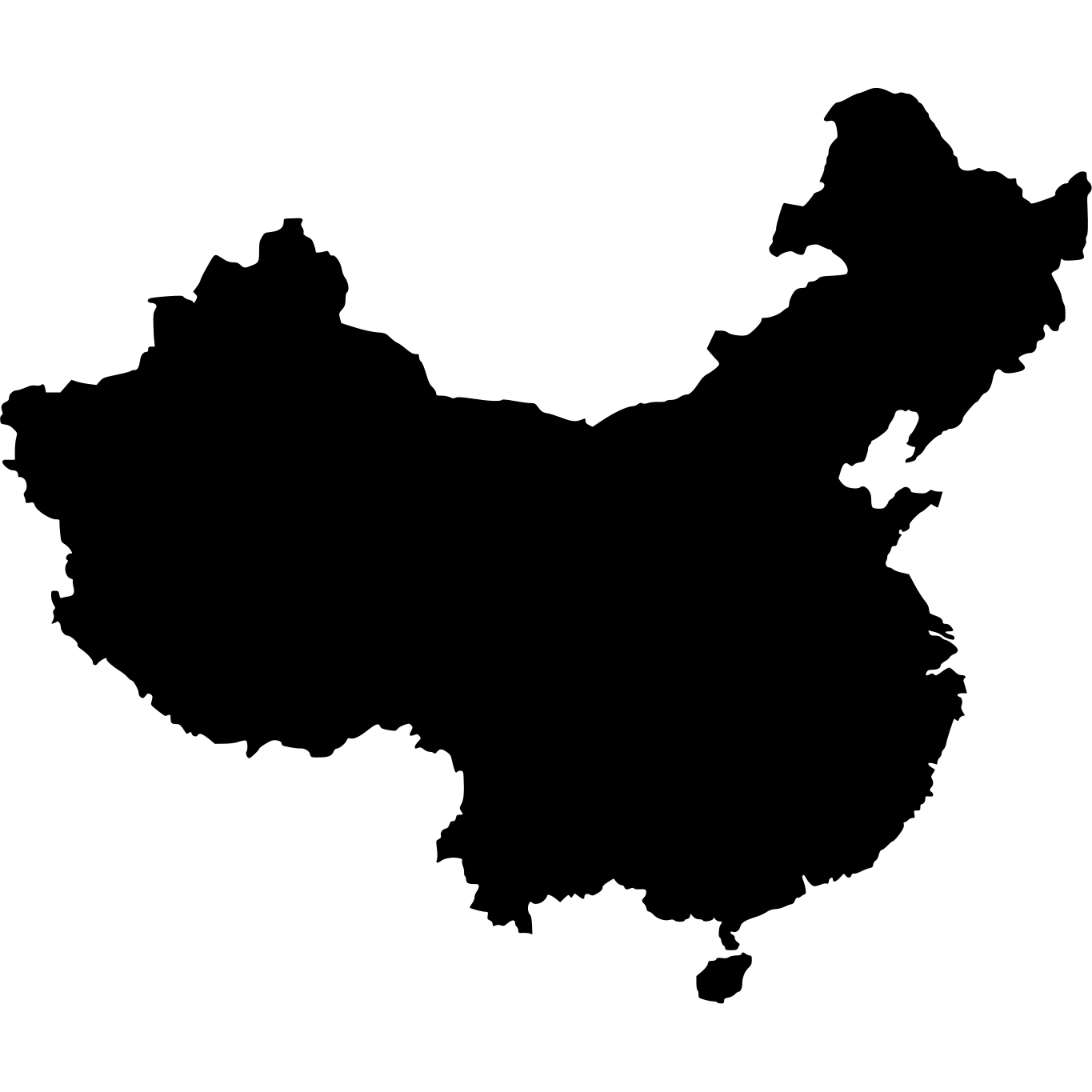
Kaleidos Makeup is from China.
We independently verify ingredients and our claims are backed by peer-reviewed research. Does this product need an update? Let us know.
What's inside
Ingredients List
Diisostearyl Malate
EmollientBis-Behenyl/Isostearyl/Phytosteryl Dimer Dilinoleyl Dimer Dilinoleate
EmollientBis-Diglyceryl Polyacyladipate-2
Emollient

Polyglyceryl-2 Triisostearate
Emulsifying
Synthetic Wax
Abrasive

Hydrogenated Polyisobutene
EmollientOctyldodecanol
Emollient
Sorbitan Isostearate
Emulsifying
Cetyl PEG/PPG-10/1 Dimethicone
Emulsifying
Disteardimonium Hectorite
StabilisingPhenoxyethanol
Preservative
Menthoxypropanediol
Masking
Helianthus Annuus Seed Wax
Skin Conditioning
Caprylyl Glycol
Emollient
Ethylene/Propylene Copolymer
Abrasive
Parfum
Masking


Ethylhexylglycerin
Skin ConditioningPropylene Carbonate
SolventEthylhexyl Palmitate
Emollient
Triethoxycaprylylsilane
Tribehenin
Emollient
Aminopropyl Triethoxysilane
CI 77120
Cosmetic ColorantLactic Acid
Buffering







Palmitoyl Tripeptide-1
Skin Conditioning
CI 16035
Cosmetic ColorantCI 17200
Cosmetic ColorantCI 45410
Cosmetic ColorantCI 15985
Cosmetic ColorantIron Oxides
CI 15850
Cosmetic ColorantDiisostearyl Malate, Bis-Behenyl/Isostearyl/Phytosteryl Dimer Dilinoleyl Dimer Dilinoleate, Bis-Diglyceryl Polyacyladipate-2, Polyglyceryl-2 Triisostearate, Synthetic Wax, Hydrogenated Polyisobutene, Octyldodecanol, Sorbitan Isostearate, Cetyl PEG/PPG-10/1 Dimethicone, Disteardimonium Hectorite, Phenoxyethanol, Menthoxypropanediol, Helianthus Annuus Seed Wax, Caprylyl Glycol, Ethylene/Propylene Copolymer, Parfum, Ethylhexylglycerin, Propylene Carbonate, Ethylhexyl Palmitate, Triethoxycaprylylsilane, Tribehenin, Aminopropyl Triethoxysilane, CI 77120, Lactic Acid, Palmitoyl Tripeptide-1, CI 16035, CI 17200, CI 45410, CI 15985, Iron Oxides, CI 15850
Key Ingredients
Benefits
Concerns
Ingredients Explained
Diisostearyl Malate is an emollient and most often used in lip products. It comes from isostearyl alcohol, a fatty acid, and malic acid, an AHA.
As an emollient, Diisostearyl Malate helps create a thin film on your skin to trap moisture in. This helps keep your skin soft and smooth.
We don't have a description for Bis-Behenyl/Isostearyl/Phytosteryl Dimer Dilinoleyl Dimer Dilinoleate yet.
This ingredient is lipid-based synthetic skin-conditioning agent derived from adipic acid and a mixture of fatty acids. It is often called a lanolin substitute.
As an emollient, it helps soften and hydrate the skin. Emollients create a barrier on the skin to trap moisture in.
Due to its fatty acid base, it may not be Malassezia folliculitis safe.
Learn more about Bis-Diglyceryl Polyacyladipate-2This ingredient is a form of glycerin with emulsifying and emollient properties.
As an emulsifier, this ingredient helps keep products together while adding a thick texture. The manufacturer states this ingredient has emollient properties. Emollients help keep the skin hydrated by trapping moisture in.
Polyglyceryl-2 Triisostearate is created by reacting diglycerin and isostearic acid. Due to the isostearic acid base, it may not be safe for Malassezia or fungal acne.
Learn more about Polyglyceryl-2 TriisostearateSynthetic Wax is created from fossil fuels such as natural gas. It is used to enhance texture, adjust pH, and as an occlusive.
It may also be used as an abrasive ingredient to exfoliate the skin.
Synthetic Wax may not be fungal acne safe.
Learn more about Synthetic WaxHydrogenated Polyisobutene is a synthetic polymer. Polymers are compounds with high molecular weight. Hydrogenated Polyisobutene is an emollient and texture enhancer.
In one study, Hydrogenated Polyisobutene showed better skin hydration levels than Caprylic/Capric Triglyceride. As an emollient, it helps keep your skin soft and hydrated by trapping moisture in.
Hydrogenated Polyisobutene is often used as a mineral oil replacement.
Learn more about Hydrogenated PolyisobuteneOctyldodecanol is a fatty alcohol. It is primarily used to enhance the texture of products.
As an emulsifier, Octyldodecanol helps prevent the oils and waters from separating. It also prevents ingredients from creating foam when shaken.
Octyldodecanol is created by reducing fatty acid to an alcohol.
Due to its high molecular weight, it does not get absorbed into the skin.
Learn more about OctyldodecanolSorbitan Isostearate is an emulsifer and cleaning agent. It is created from isostearic acid and sorbitol.
As an emulsifier, Sorbitan Isostearate prevents oils and water from separating.
Due to its isostearic acid base, it may not be safe for Malassezia or fungal acne.
Learn more about Sorbitan IsostearateThis ingredient is a high molecular weight silicone. It has emulsifying and skin conditioning properties.
Disteardimonium Hectorite comes from the clay mineral named hectorite. It is used to add thickness to a product.
It can also help stabilize a product by helping to disperse other ingredients.
Hectorite is a rare, white clay mineral.
Learn more about Disteardimonium HectoritePhenoxyethanol is a preservative that has germicide, antimicrobial, and aromatic properties. Studies show that phenoxyethanol can prevent microbial growth. By itself, it has a scent that is similar to that of a rose.
It's often used in formulations along with Caprylyl Glycol to preserve the shelf life of products.
Menthoxypropanediol can cause irritation.
Helianthus Annuus Seed Wax is created from the common sunflower.
Sunflower seed wax is made up of long chain non-glyceride esters, a small amount of fatty alcohols, and fatty acids.
This ingredient is often used to enhance the texture of products. The fatty acid properties also help hydrate the skin.
Learn more about Helianthus Annuus Seed WaxCaprylyl Glycol is a humectant and emollient, meaning it attracts and preserves moisture.
It is a common ingredient in many products, especially those designed to hydrate skin. The primary benefits are retaining moisture, skin softening, and promoting a healthy skin barrier.
Though Caprylyl Glycol is an alcohol derived from fatty acids, it is not the kind that can dry out skin.
This ingredient is also used as a preservative to extend the life of products. It has slight antimicrobial properties.
Learn more about Caprylyl GlycolEthylene/Propylene Copolymer is an exfoliant.
Parfum is a catch-all term for an ingredient or more that is used to give a scent to products.
Also called "fragrance", this ingredient can be a blend of hundreds of chemicals or plant oils. This means every product with "fragrance" or "parfum" in the ingredients list is a different mixture.
For instance, Habanolide is a proprietary trade name for a specific aroma chemical. When used as a fragrance ingredient in cosmetics, most aroma chemicals fall under the broad labeling category of “FRAGRANCE” or “PARFUM” according to EU and US regulations.
The term 'parfum' or 'fragrance' is not regulated in many countries. In many cases, it is up to the brand to define this term.
For instance, many brands choose to label themselves as "fragrance-free" because they are not using synthetic fragrances. However, their products may still contain ingredients such as essential oils that are considered a fragrance by INCI standards.
One example is Calendula flower extract. Calendula is an essential oil that still imparts a scent or 'fragrance'.
Depending on the blend, the ingredients in the mixture can cause allergies and sensitivities on the skin. Some ingredients that are known EU allergens include linalool and citronellol.
Parfum can also be used to mask or cover an unpleasant scent.
The bottom line is: not all fragrances/parfum/ingredients are created equally. If you are worried about fragrances, we recommend taking a closer look at an ingredient. And of course, we always recommend speaking with a professional.
Learn more about ParfumEthylhexylglycerin (we can't pronounce this either) is commonly used as a preservative and skin softener. It is derived from glyceryl.
You might see Ethylhexylglycerin often paired with other preservatives such as phenoxyethanol. Ethylhexylglycerin has been found to increase the effectiveness of these other preservatives.
This ingredient is a solvent. It helps dissolve active ingredients and alter the texture of products.
Propylene Carbonate is commonly used in makeup and with clay, such as montmorillonite or bentonite.
Studies show this ingredient to be safe for cosmetics. When it is undiluted, it can cause skin irritation. (It is always diluted in skincare and makeup). This ingredient is water-soluble.
Propylene Carbonate is created from propylene glycol and carbonic acid.
Learn more about Propylene CarbonateEthylhexyl Palmitate, also known as octyl palmitate, is created from 2-ethylhexyl alcohol and palmitic acid. It is a fatty acid ester.
The fatty acid content of Ethylhexyl Palmitate makes it an emollient. Emollients help soften and hydrate your skin by trapping moisture within.
Ethylhexyl Palmitate is also used to help improve the texture of cosmetics. It helps other ingredient dissolve in products and help disperse ingredients more evenly.
You'll likely find this ingredient in sunscreen, as it is often used to mix UV-blocking ingredients such as avobenzone and ethylhexyl triazone.
It can also help stabilize the fragrances in a product as a fragrance fixative.
Ethylhexyl Palmitate can be used to substitute mineral oil.
Due to its high fatty acid content, it may not be fungal-acne safe.
Learn more about Ethylhexyl PalmitateTriethoxycaprylylsilane is a silicone used to bind and stabilize ingredients.
As an emulsifier, it helps prevent ingredients from separating. This can help elongate the shelf life of products.
Triethoxycaprylylsilane is often used to coat mineral sunscreens ingredients to help give a better feel. It also helps reduce oxidative stress in sunscreens.
Learn more about TriethoxycaprylylsilaneTribehenin comes from glycerin and behenic acid.
It is used as an emollient, or moisturizer. Emollients form a thin barrier on skin to prevent moisture from escaping.
This ingredient may not be Malassezia folliculitis, or fungal-acne safe.
Learn more about TribeheninWe don't have a description for Aminopropyl Triethoxysilane yet.
We don't have a description for CI 77120 yet.
Lactic Acid is another well-loved alpha hydroxy acid (AHA). It is gentler than glycolic acid but still highly effective.
Its main role is to exfoliate the surface of the skin by loosening the “glue” that holds dead skin cells together. Shedding those old cells leads to smoother, softer, and more even-toned skin.
Because lactic acid molecules are larger than glycolic acid, they don’t penetrate as deeply. This means they’re less likely to sting or irritate, making it a great choice for beginners or those with sensitive skin.
Like glycolic acid, it can:
Lactic acid also acts as a humectant (like hyaluronic acid). It can draw water into the skin to improve hydration and also plays a role in the skin's natural moisturizing factor (NMF) in the form of sodium lactate.
Studies show it can boost ceramide production to strengthen the skin barrier and even help balance the skin’s microbiome.
To get results, choose products with a pH between 3-4.
Lower strengths (5-12%) focus on surface exfoliation; higher strengths (12% and up) can reach deeper in the dermis (deeper, supportive layer) to improve skin texture and firmness over time.
Though it was originally derived from milk, most modern lactic acid used in skincare is vegan. It is made through non-dairy fermentation to create a bio-identical and stable form suitable for all formulations.
When lactic acid shows up near the end of an ingredient list, it usually means the brand added just a tiny amount to adjust the product’s pH.
Legend has it that Cleopatra used to bathe in sour milk to help reduce wrinkles.
Lactic acid is truly a gentle multitasker: it exfoliates, hydrates, strengthens, and brightens. It's a great ingredient for giving your skin a smooth, glowing, and healthy look without the harshness of stronger acids.
Read more about some other popular AHA's here:
Learn more about Lactic AcidPalmitoyl Tripeptide-1 is also known as pal-GHK. It is made up of 3 amino acids and palmitic acid, a fatty acid that helps it absorb into skin more easily.
This peptide is as a signal peptide, meaning it tells the skin to produce more collagen. Collagen is the key protein that helps form the skin's structure and keep it plump, firm, and hydrated.
By boosting collagen production, this ingredient supports a stronger skin barrier and helps reduce the appearance of wrinkles.
You'll most likely see this ingredient paired with Palmitoyl Tetrapeptide-7 in the well-known Matrixyl 3000 complex. While results from in-house testing should be viewed cautiously, this peptide duo is among the most studied and widely used in modern skincare.
Due to its palmitic acid base, this ingredient may not be safe for Malassezia folliculitis.
Read more about other common types of peptides here:
Learn more about Palmitoyl Tripeptide-1Ci 16035 is a synthetic dark-red dye. This dye is created from an acid called Allura red AC, an azo dye.
Azo dyes need to be purified thoroughly before use. This makes them more stable and longer lasting.
This dye is commonly used in foods, approved by both the FDA and EFSA.
Learn more about CI 16035Ci 17200 is a synthetic reddish-purple dye.
CI 45410 is a synthetic red-pigment and dye.
It often goes by both Red 28 or Red 27; manufacturers label both ingredients as CI 45410.
This dye is commonly found in makeup because it imparts a vivid color. Some types of this dye change color based on pH level and interaction with moisture:
Your skin has a natural pH of around 4.5 - 5.5.
According to the FDA, CI 45410 is not permitted for use in eye products.
Red 27 is a flourescein dye and commonly used as a fluorescent tracer in medicine.
Learn more about CI 45410Ci 15985 is a dye made from petroleum. It is synthetically created and approved by the FDA for use in foods and cosmetics.
The color of this dye is orange/yellow.
This ingredient can be found in makeup, sun care, and skincare.
Learn more about CI 15985This ingredient is a combination of red, black, and yellow iron oxide pigments. This combination of colors is usually found in foundation, because it results in a "skin" color.
Ci 15850 is the pigment color red. It is an azo dye and created synthetically.
Azo dyes need to be thoroughly purified before use. This allows them to be more stable and longer-lasting.
This ingredient is common in foundations, lipsticks, and blushes. This color is described as brown/orangey red.
It has many secondary names such as Red 6 and Red 7. According to a manufacturer, Red 6 usually contains aluminum.
Learn more about CI 15850Reviews
No written reviews yet. Be the first to review this product.
Where it's from
Kaleidos Makeup is a Chinese brand

We're dedicated to providing you with the most up-to-date and science-backed ingredient info out there.
The data we've presented on this page has been verified by a member of the SkinSort Team.
Read more about us· Updated December 5, 2025 • Added by anemone

