Flower Knows Little Angel Matte Lipstick
Lipstick with 43 ingredients that contains exfoliants and Vitamin E
We independently verify ingredients, backed by peer-reviewed research. Suggest an update.
What's inside
Ingredients List
Dimethicone
Emollient

Dimethicone/Vinyl Dimethicone Crosspolymer
Skin Conditioning
Phenyl Trimethicone
Skin Conditioning
Microcrystalline Wax
Emulsion StabilisingSynthetic Wax
Abrasive

Isononyl Isononanoate
EmollientCaprylyl Methicone
Skin Conditioning
Dimethicone Crosspolymer
Emulsion Stabilising
C30-45 Alkyl Dimethicone
Skin Conditioning
CI 77220
Cosmetic ColorantHydrogenated Polyisobutene
EmollientVinyl Dimethicone/Methicone Silsesquioxane Crosspolymer

Hydrogenated Polydecene
EmollientCI 77891
Cosmetic ColorantDiglyceryl Sebacate/Isopalmitate
EmollientMica
Cosmetic ColorantCI 77491
Cosmetic ColorantCI 15985
Cosmetic ColorantPhytosteryl/Behenyl/Octyldodecyl Lauroyl Glutamate
Skin ConditioningCetyl PEG/PPG-10/1 Dimethicone
Emulsifying
Polyglyceryl-2 Triisostearate
Emulsifying

Polymethylsilsesquioxane
Vp/Hexadecene Copolymer
CI 15850
Cosmetic ColorantHydrogenated Poly(C6-14 Olefin)
EmollientDiisostearyl Malate
EmollientDisteardimonium Hectorite
StabilisingCI 77492
Cosmetic ColorantPhytosteryl/Octyldodecyl Lauroyl Glutamate
Skin ConditioningCI 77499
Cosmetic ColorantHydrogenated Styrene/Methylstyrene/Indene Copolymer
Parfum
Masking



Triethyl Citrate
Masking
CI 42090
Cosmetic ColorantCaprylyl Glycol
Emollient
Glyceryl Caprylate
EmollientCI 17200
Cosmetic ColorantSilica
Abrasive
Triethoxycaprylylsilane
Aluminum Hydroxide
EmollientLauroyl Lysine
Skin Conditioning
Tocopherol
Antioxidant







Pentaerythrityl Tetra-Di-T-Butyl Hydroxyhydrocinnamate
Antioxidant
Dimethicone, Dimethicone/Vinyl Dimethicone Crosspolymer, Phenyl Trimethicone, Microcrystalline Wax, Synthetic Wax, Isononyl Isononanoate, Caprylyl Methicone, Dimethicone Crosspolymer, C30-45 Alkyl Dimethicone, CI 77220, Hydrogenated Polyisobutene, Vinyl Dimethicone/Methicone Silsesquioxane Crosspolymer, Hydrogenated Polydecene, CI 77891, Diglyceryl Sebacate/Isopalmitate, Mica, CI 77491, CI 15985, Phytosteryl/Behenyl/Octyldodecyl Lauroyl Glutamate, Cetyl PEG/PPG-10/1 Dimethicone, Polyglyceryl-2 Triisostearate, Polymethylsilsesquioxane, Vp/Hexadecene Copolymer, CI 15850, Hydrogenated Poly(C6-14 Olefin), Diisostearyl Malate, Disteardimonium Hectorite, CI 77492, Phytosteryl/Octyldodecyl Lauroyl Glutamate, CI 77499, Hydrogenated Styrene/Methylstyrene/Indene Copolymer, Parfum, Triethyl Citrate, CI 42090, Caprylyl Glycol, Glyceryl Caprylate, CI 17200, Silica, Triethoxycaprylylsilane, Aluminum Hydroxide, Lauroyl Lysine, Tocopherol, Pentaerythrityl Tetra-Di-T-Butyl Hydroxyhydrocinnamate
Key Ingredients
Benefits
Concerns
Ingredients Explained
Dimethicone is a type of synthetic silicone created from natural materials such as quartz. It is also known as polydimethylsiloxane.
What it does:
Dimethicone comes in different viscosities:
Depending on the viscosity, dimethicone has different properties.
Ingredients lists don't always show which type is used, so we recommend reaching out to the brand if you have questions about the viscosity.
This ingredient is unlikely to cause irritation because it does not get absorbed into skin. However, people with silicone allergies should be careful about using this ingredient.
Note: Dimethicone may contribute to pilling. This is because it is not oil or water soluble, so pilling may occur when layered with products. When mixed with heavy oils in a formula, the outcome is also quite greasy.
Learn more about DimethiconeThis ingredient is a silicone elastomer that works as a texture enhancer, adds a silky slip, and also helps absorb excess oil.
Because it's a large macromolecule that's insoluble in water and chemically inert, it's not expected to penetrate or be absorbed into skin.
Human patch tests with a facial lotion containing 1% of this ingredient found no sensitization.
Learn more about Dimethicone/Vinyl Dimethicone CrosspolymerPhenyl Trimethicone is a silicon-based polymer. It is derived from silica.
Phenyl Trimethicone is used as an emollient and prevents products from foaming.
As an emollient, it helps trap moisture in the skin. It is considered an occlusive.
Learn more about Phenyl TrimethiconeMicrocrystalline Wax is derived from petroleum through a de-oiling process, then highly refined and purified before use in cosmetics.
In skincare formulations, it is used to improve texture and create a smooth, even consistency. It also helps stabilize products by preventing ingredients from separating.
Synthetic Wax is a manufactured hydrocarbon wax. In formulas, it works as an occlusive emollient that helps reduce water loss and improves the spreadability of products.
Research comparing synthetic wax to traditional mineral-derived products found that formulas containing it perform as well for skin hydration.
It is considered non-comedogenic and vegan-friendly.
This ingredient has a well-established safety record by the CIR Expert Panel for Cosmetic Ingredient Safety.
Synthetic Waxes are straight/branched-chain hydrocarbons with no ester bond or fatty acids. That means there is nothing for the Malassezia yeast to feed on.
Learn more about Synthetic WaxIsononyl Isononanoate is a synthetic skin-conditioner and texture enhancer. It is created from nonanoic acid, a fatty acid found in cocoa and lavender oil.
As an emollient, Isononyl Isononanoate helps keep your skin soft and smooth. This is because emollients create a barrier on the skin to trap moisture in.
Isononyl Isononanoate helps give products a velvet feel and improves spreadability.
Learn more about Isononyl IsononanoateCaprylyl Methicone is a synthetic and lightweight silicone fluid. It gives products a silky, dry-touch finish without the heaviness of pure oils.
Though the EU CosIng Database lists this ingredient as a skin conditioner, it is also used for sensory reasons. It spreads easily, cuts greasiness, and reduces tackiness.
This ingredient is volatile which means it will mostly evaporate (but it evaporates slower than older cyclomethicones, like Cyclotetrasiloxane).
Typical concentration ranges from 1-30% depending on if it's being used to tweak the feel of a product or acting as the main emollient.
Learn more about Caprylyl MethiconeDimethicone Crosspolymer is a silicone created by modifying dimethicone with hydrocarbon side chains. Due to its large size, it does not penetrate skin. It is considered non-occlusive.
Dimethicone Crosspolymer is used to stabilize and thicken products. It also helps give products a silky feel.
C30-45 Alkyl Dimethicone is a type of silicone.
We don't have a description for CI 77220 yet.
Hydrogenated Polyisobutene is a synthetic polymer. Polymers are compounds with high molecular weight. Hydrogenated Polyisobutene is an emollient and texture enhancer.
In one study, Hydrogenated Polyisobutene showed better skin hydration levels than Caprylic/Capric Triglyceride. As an emollient, it helps keep your skin soft and hydrated by trapping moisture in.
Hydrogenated Polyisobutene is often used as a mineral oil replacement.
Learn more about Hydrogenated PolyisobuteneThis ingredient is used in makeup and skincare to thicken formulas, reduce shine, and give skin a silky-smooth feel.
It’s a white silicone powder that sits in fine lines and pores to blur their appearance though its effectiveness depends on the particle size.
You'll typically find this ingredient in amounts between 0.1-20%.
Learn more about Vinyl Dimethicone/Methicone Silsesquioxane CrosspolymerHydrogenated Polydecene is a synthetic emollient. It forms a non-occlusive film on the skin's surface to provide a silky feel without being greasy.
In vivo studies in volunteers with atopic and dry skin showed no irritation or intolerance. The volunteers also saw a positive effect in dryness, scaling, and roughness after 28 days of use.
Concentrations up to 100% in guinea pig tests found it to be non-sensitizing and completely safe for use in cosmetics.
Learn more about Hydrogenated PolydeceneCi 77891 is a white pigment from Titanium dioxide. It is naturally found in minerals such as rutile and ilmenite.
It's main function is to add a white color to cosmetics. It can also be mixed with other colors to create different shades.
Ci 77891 is commonly found in sunscreens due to its ability to block UV rays.
Learn more about CI 77891This ingredient is an emollient made from glycerin and fatty acids. Due to its structure, it can help add a silky and cushiony feel without being greasy.
Mica is a naturally occurring mineral used to add shimmer and color in cosmetics. It can also help improve the texture of a product or give it an opaque, white/silver color.
Serecite is the name for very fine but ragged grains of mica.
This ingredient is often coated with metal oxides like titanium dioxide. Trace amounts of heavy metals may be found in mica, but these metals are not harmful in our personal products.
Mica has been used since prehistoric times throughout the world. Ancient Egyptian, Indian, Greek, Roman, Aztec, and Chinese civilizations have used mica.
Learn more about MicaCi 77491 is also hydrated iron III oxide. It's sole purpose is to give a red/pink hue to products.
Iron III oxides are classified as inorganic chemicals for coloring.
Synthetically created Ci 77491 is considered safer than those naturally found. This is because the synthetically created version may contain less impurities. Iron oxides are generally non-toxic and non-allergenic.
Learn more about CI 77491Ci 15985 is a dye made from petroleum. It is synthetically created and approved by the FDA for use in foods and cosmetics.
The color of this dye is orange/yellow.
This ingredient can be found in makeup, sun care, and skincare.
Learn more about CI 15985We don't have a description for Phytosteryl/Behenyl/Octyldodecyl Lauroyl Glutamate yet.
This ingredient is a silicone-based emulsifer that helps the water and oil phases play nicely together.
It's pretty effective because one end of the molecule loves oil and the other one loves water.
Besides holding formulas together, it also leaves a silky and lightweight feel on skin without the greasiness. A manufacturer also claims it can help with the controlled release of active ingredients.
The CIR Expert Panel found this ingredient to not be sensitizing in concentrations up to 15% in human maximazation testing and dimethicone-based compounds were not comedogenic.
It has a high molecular weight well above 1,000 g/mol which means it limits meaningful skin penetration.
A 2019 study specifically tested this ingredient and found no observable Malassezia growth in its presence.
Learn more about Cetyl PEG/PPG-10/1 DimethiconePolyglyceryl-2 Triisostearate is a plant-derived emulsifier and pigment-dispersing agent with a non-sticky skin feel.
It helps products glide on smoothly and prevents oil and water from separating in a formula, making it suitable for sunscreen and makeup formulations.
The EU inventory of cosmetics has no use restrictions on this ingredient and it is considered well-tolerated.
This ingredient may not be fungal acne safe because it is derived from isostearic acid.
Learn more about Polyglyceryl-2 TriisostearatePolymethylsilsesquioxane is a silicone used as a film forming agent.
When applied to the skin, this ingredient creates an invisible film on the surface. This film still allows oxygen to pass through, but prevents moisture from escaping. This can help condition and hydrate the skin. It also leaves a silky feel when applied.
Polymethylsilsesquioxane has not been shown to clog pores. It has been deemed safe to use up to 55%, but most cosmetics use much less.
If you have concerns about using this ingredient, we recommend speaking with a professional.
Learn more about PolymethylsilsesquioxaneVP/Hexadecene Copolymer is a synthetic film-forming agent. It has both water and oil loving properties, allowing it to create a flexible, even film on the skin.
This ingredient helps enhance texture, smoothness, and wear resistance in makeup products while reducing tackiness.
Ci 15850 is the pigment color red. It is an azo dye and created synthetically.
Azo dyes need to be thoroughly purified before use. This allows them to be more stable and longer-lasting.
This ingredient is common in foundations, lipsticks, and blushes. This color is described as brown/orangey red.
It has many secondary names such as Red 6 and Red 7. According to a manufacturer, Red 6 usually contains aluminum.
Learn more about CI 15850This ingredient is a synthetic ingredient with emollient and skin conditioner used to make skincare products feel more lightweight on the skin. It helps improve slip and spreadability without feeling greasy.
Because it is high molecular weight and lipophilic (oil loving), it remains on the surface of skin.
Diisostearyl Malate is an emollient and most often used in lip products. It comes from isostearyl alcohol, a fatty acid, and malic acid, an AHA.
As an emollient, Diisostearyl Malate helps create a thin film on your skin to trap moisture in. This helps keep your skin soft and smooth.
Disteardimonium Hectorite comes from the clay mineral named hectorite. It is used to add thickness to a product.
It can also help stabilize a product by helping to disperse other ingredients.
Hectorite is a rare, white clay mineral.
Learn more about Disteardimonium HectoriteCI 77492 is also hydrated iron III oxide. It's sole purpose is to give a yellow hue to products.
Iron III oxides are classified as inorganic chemicals for coloring.
Synthetically created CI 77492 is considered safer than those naturally found. This is because the synthetically created version may contain less impurities. Iron oxides are generally non-toxic and non-allergenic.
Learn more about CI 77492We don't have a description for Phytosteryl/Octyldodecyl Lauroyl Glutamate yet.
Ci 77499 is also hydrated iron III oxide. It is created from mixing red and black iron oxides. This helps give shades of darkness to a product.
Iron III oxides are classified as inorganic chemicals for coloring.
We don't have a description for Hydrogenated Styrene/Methylstyrene/Indene Copolymer yet.
Parfum is a catch-all term for an ingredient or more that is used to give a scent to products.
Also called "fragrance", this ingredient can be a blend of hundreds of chemicals or plant oils. This means every product with "fragrance" or "parfum" in the ingredients list is a different mixture.
For instance, Habanolide is a proprietary trade name for a specific aroma chemical. When used as a fragrance ingredient in cosmetics, most aroma chemicals fall under the broad labeling category of “FRAGRANCE” or “PARFUM” according to EU and US regulations.
The term 'parfum' or 'fragrance' is not regulated in many countries. In many cases, it is up to the brand to define this term.
For instance, many brands choose to label themselves as "fragrance-free" because they are not using synthetic fragrances. However, their products may still contain ingredients such as essential oils that are considered a fragrance by INCI standards.
One example is Calendula flower extract. Calendula is an essential oil that still imparts a scent or 'fragrance'.
Depending on the blend, the ingredients in the mixture can cause allergies and sensitivities on the skin. Some ingredients that are known EU allergens include linalool and citronellol.
Parfum can also be used to mask or cover an unpleasant scent.
The bottom line is: not all fragrances/parfum/ingredients are created equally. If you are worried about fragrances, we recommend taking a closer look at an ingredient. And of course, we always recommend speaking with a professional.
Learn more about ParfumTriethyl Citrate comes from citric acid. It has masking, perfuming, and solvent properties. As a solvent, this ingredient helps disperse ingredients evenly in skincare.
One manufacturer claims this ingredient can:
According to perfume manufacturers, this ingredient is almost odorless but has a mild fruity, wine and plum scent. It can be used to mask the scent of other ingredients.
This ingredient can be plant-sourced or synthetic; it can naturally be found in cabbage and white wine.
Learn more about Triethyl CitrateCi 42090 is a synthetic dye created from petroleum. It is used to give a bright blue color to cosmetics, medicine, and food.
Caprylyl Glycol is a humectant, skin conditioner, emollient, and preservative booster derived from either caprylic acid or synthetically created.
Typical use levels vary from 0.3-1% as a preservative booster and go up to 2% to condition skin.
Because it is not a free-fatty acid, this ingredient is fungal acne safe (there's nothing for Malassezia to feed on).
Learn more about Caprylyl GlycolGlyceryl Caprylate comes from glycerin and caprylic acid. It is an emollient, co-emulsifier, and preservative booster.
Its short C8 fatty acid chain makes it behave differently from its longer-chain emollient cousins like Glyceryl Stearate. It feels more lightweight, fast-absorbing, and silky instead of rich and waxy.
As a co-emulsifier, its "head" and "tail" sit at the oil-water interface. But overall, the short C8 tail and not being water soluble means it doesn't really have the muscle to emulsify a formula on its own. That's why you'll often see it paired with a primary emulsifier like Cetearyl Glucoside.
Interestingly, Glyceryl Caprylate acts as a preservative booster. This is because its fatty-acid backbone disrupts microbial lipid membranes. It shows excellent activity against bacteria and yeast but is weaker against mold.
Typical concentrations range from 0.5-1% and this ingredient is generally non-irritating.
Because this ingredient has a C8 fatty acid chain, it is outside the range that the Malassezia yeast metabolizes (making it fungal acne safe).
Learn more about Glyceryl CaprylateCI 17200 is a synthetic, water-soluble, reddish-pink dye. It is used purely as a cosmetic colorant.
In the US, the FDA permits this ingredient in cosmetics but it is not approved for use around the eyes while the EU allows this to be used in all cosmetic products.
The FDA requires batch-to-batch certification for this ingredient that is held to a pretty rigorous standard. That means the CI 17200 in your cosmetics has been tested and approved before it ever reaches you.
Contact allergy to cosmetic-grade dyes used at low concentrations are uncommon but has been documented before.
This ingredient also goes by the name D&C RED NO. 33.
CI 17200 has a comedogenic rating of 1 and an irritancy rating of 2 on a scale of 0-5. This is based on peer-reviewed research from the man who invented the comedogenic scale.
A 1 on the comedogenic scale is about as low as it gets without being a flat zero, and makes sense for CI 17200.
It's a water-soluble dye used at very small concentrations (typically 0.001-0.1%), so it dissolves into the water phase of a formula rather than sitting on your skin the way an oil or wax would.
The irritancy rating of 2 reflects that, like most synthetic dyes, there's a small possibility of mild irritation ( particularly for people with existing dye sensitivities).
For the vast majority of people, it's a non-issue at typical use levels.
It's also worth keeping in mind that comedogenic and irritancy ratings are tested on individual ingredients, not finished formulas. The final product's formulation, concentration, and other ingredients all play a role in how something actually behaves on your skin.
Just so you know, the FDA ban on Red Dye No. 3 refers to CI 45430, not this ingredient. CI 45430 and CI 17200 are different chemical compounds with distinct safety and regulatory histories.
It's also worth noting that Red No. 3 (CI 45430) was already banned from cosmetics back in 1990, so the 2025 action just extended the ban to food and oral drugs. CI 17200 was never part of any of this.
Learn more about CI 17200Silica, also known as silicon dioxide, is a naturally occurring mineral. It is used as a fine, spherical, and porous powder in cosmetics.
Though it has exfoliant properties, the function of silica varies depending on the product.
The unique structure of silica enhances the spreadability and adds smoothness, making it a great texture enhancer.
It is also used as an active carrier, emulsifier, and mattifier due to its ability to absorb excess oil.
In some products, tiny microneedles called spicules are made from silica or hydrolyzed sponge. When you rub them in, they lightly polish away dead skin layers and enhance the penetration of active ingredients.
Learn more about SilicaTriethoxycaprylylsilane is a silicon-based surface modifier that makes sunscreens feel silky and makeup stay put.
Its main job is to coat mineral particles like titanium dioxide, zinc oxide, and color pigments in a thin, oily layer so they spread smoothly, don't clump, and stick to skin better.
This ingredient is typically used at low levels (up to 2.5% in eyeshadow and 1% in lipstick).
Learn more about TriethoxycaprylylsilaneAluminum Hydroxide is a form of aluminum. It can be naturally found in nature as the mineral gibbsite. In cosmetics, Aluminum Hydroxide is used as a colorant, pH adjuster, and absorbent.
As a colorant, Aluminum Hydroxide may add opacity, or reduce the transparency. Aluminum hydroxide is contains both basic and acidic properties.
According to manufacturers, this ingredient is an emollient and humectant. This means it helps hydrate the skin.
In medicine, this ingredient is used to help relieve heartburn and help heal ulcers.
There is currently no credible scientific evidence linking aluminum hydroxide in cosmetics to increased cancer risk.
Major health organizations allow the use of aluminum hydroxide in personal care products and have not flagged it as a carcinogenic risk at typical usage levels.
Learn more about Aluminum HydroxideThis ingredient comes from a fatty acid (lauric acid) and amino acid (lysine). It is used to add a silky feel to cosmetics.
According to a manufacturer, its fatty acid base leaves a silky feeling on the skin. It also has emollient properties because of this. Emollients help soften skin by preventing water from evaporating.
Lauroyl lysine is barely soluble in water.
Learn more about Lauroyl LysineTocopherol is a fat-soluble antioxidant known as Vitamin E.
You'll find this ingredient in the vast majority of skincare (for good reason). It works to neutralize free radicals, or unstable molecules generated by UV exposure, pollution, and other environmental stressors, before they can cause oxidative damage to your skin cells.
Topically applied tocopherol has been shown to protect against UV damage by ramping up the skin's own natural defense enzymes.
It also acts as a skin conditioning agent; some studies show that regular topical use can improve the skin's water-binding capacity over 2-4 weeks.
This ingredient is especially loved for being a team player. When combined with Vitamin C, the photoprotective effect of both ingredients roughly doubles and the combo also helps reduce UV-induced DNA damage.
This ingredient has some brightening potential but it's more of a prevention ingredient than spot-fader. Cell studies show it can slow down melanin production but it's worth noting that it's not the most powerful brightener out there.
In formulations, it also serves as a stabilizer that helps protect other oxidation-prone ingredients from degrading.
Concentrations usually range from 0.1-1% in most leave-on products.
Learn more about TocopherolPentaerythrityl Tetra-Di-T-Butyl Hydroxyhydrocinnamate (long name, huh?) is a synthetic antioxidant.
It is used to help stabilize other antioxidants or prevent the color from changing in a product.
As an antioxidant, it helps fight free-radical molecules. Free-radical molecules are capable of damaging our cells and other genetic material. Thus, antioxidants may reduce the signs of aging.
This ingredient is oil-soluble.
Learn more about Pentaerythrityl Tetra-Di-T-Butyl HydroxyhydrocinnamateReviews
No written reviews yet. Be the first to review this product.
Recent searches
Search reviews by skin type, ingredient, or keyword.
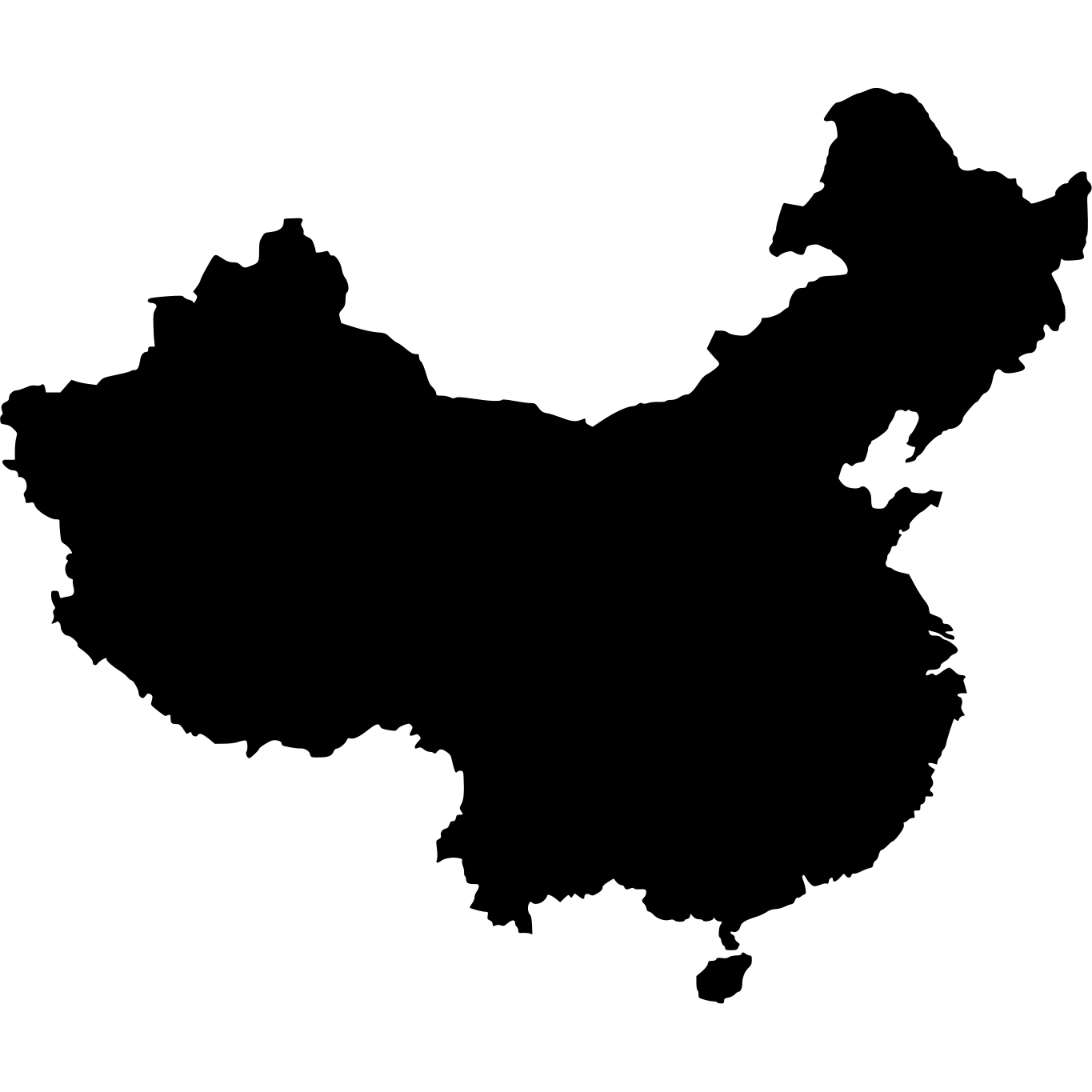
Where it's from
Flower Knows is a Chinese brand

We're dedicated to providing you with the most up-to-date and science-backed ingredient info out there.
The data we've presented on this page has been verified by a member of the SkinSort Team.
Read more about us· Updated January 27, 2026 • Added by teddyphoria


