Florasis Water Lily Balancing Cushion Foundation
Bb, cc, tinted moisturizer with 46 ingredients that contains exfoliants and Vitamin E
We independently verify ingredients, backed by peer-reviewed research. Suggest an update.
What's inside
Ingredients List
Water
Skin ConditioningCyclopentasiloxane
Emollient
CI 77891
Cosmetic ColorantIsododecane
EmollientTristearin
Skin ConditioningDiisostearyl Malate
EmollientLauryl PEG-10 Tris(Trimethylsiloxy)Silylethyl Dimethicone
Emulsifying
Polypropylsilsesquioxane
Vp/Hexadecene Copolymer
Mica
Cosmetic ColorantButylene Glycol
Humectant

Silica
Abrasive


Glycerin
Humectant
CI 77492
Cosmetic Colorant1,2-Hexanediol
Skin Conditioning
Dipropylene Glycol Dibenzoate
EmollientBis-Diglyceryl Polyacyladipate-2
Emollient

Behenoxy PEG-10 Dimethicone
Humectant
Triethyl Citrate
Masking

Distearyldimonium Chloride
Montmorillonite
AbsorbentPEG-9 Methyl Ether Dimethicone
Emulsifying
Magnesium Sulfate
Aluminum Hydroxide
EmollientTriethoxycaprylylsilane
CI 77491
Cosmetic ColorantDimethicone/Vinyl Dimethicone Crosspolymer
Skin Conditioning
CI 77499
Cosmetic ColorantChamomilla Recutita Flower Extract
Masking

Ethylhexylglycerin
Skin ConditioningCentella Asiatica Extract
Cleansing

Glyceryl Caprate
EmollientPEG-10 Dimethicone
Skin Conditioning
Disodium EDTA
ChelatingCaprylic/Capric Triglyceride
Masking
Dipropylene Glycol
HumectantSodium Palmitoyl Proline
Skin ConditioningTocopherol
Antioxidant



Camellia Japonica Flower Extract
EmollientAtractylodes Macrocephala Root Extract
Skin ConditioningAmpelopsis Japonica Root Extract
Skin ConditioningPaeonia Albiflora Root Extract
Skin ConditioningPrunus Serrulata Flower Extract
Skin ConditioningRosa Rugosa Flower Extract
Skin ConditioningNymphaea Alba Flower Extract
Skin ConditioningBletilla Striata Root Extract
Skin ConditioningWater, Cyclopentasiloxane, CI 77891, Isododecane, Tristearin, Diisostearyl Malate, Lauryl PEG-10 Tris(Trimethylsiloxy)Silylethyl Dimethicone, Polypropylsilsesquioxane, Vp/Hexadecene Copolymer, Mica, Butylene Glycol, Silica, Glycerin, CI 77492, 1,2-Hexanediol, Dipropylene Glycol Dibenzoate, Bis-Diglyceryl Polyacyladipate-2, Behenoxy PEG-10 Dimethicone, Triethyl Citrate, Distearyldimonium Chloride, Montmorillonite, PEG-9 Methyl Ether Dimethicone, Magnesium Sulfate, Aluminum Hydroxide, Triethoxycaprylylsilane, CI 77491, Dimethicone/Vinyl Dimethicone Crosspolymer, CI 77499, Chamomilla Recutita Flower Extract, Ethylhexylglycerin, Centella Asiatica Extract, Glyceryl Caprate, PEG-10 Dimethicone, Disodium EDTA, Caprylic/Capric Triglyceride, Dipropylene Glycol, Sodium Palmitoyl Proline, Tocopherol, Camellia Japonica Flower Extract, Atractylodes Macrocephala Root Extract, Ampelopsis Japonica Root Extract, Paeonia Albiflora Root Extract, Prunus Serrulata Flower Extract, Rosa Rugosa Flower Extract, Nymphaea Alba Flower Extract, Bletilla Striata Root Extract
Key Ingredients
Benefits
Ingredients Explained
Water. It's the most common cosmetic ingredient of all. You'll usually see it at the top of ingredient lists, meaning that it makes up the largest part of the product.
So why is it so popular? Water most often acts as a solvent - this means that it helps dissolve other ingredients into the formulation.
You'll also recognize water as that liquid we all need to stay alive. If you see this, drink a glass of water. Remember to stay hydrated!
Learn more about WaterCyclopentasiloxane (D5) is a lightweight silicone that mostly acts as an emollient and solvent in cosmetics. Its the reason your products feel silky, fast-spreading, and non-greasy.
Since D5 is volatile, it does its thing and then evaporates off the skin quickly.
The safety profile of this ingredient is reassuring; the US CIR Expert Panel concluded D5 is safe as used in cosmetics and Health Canada concluded that D5 is not harmful to human health or the environment as currently used in cosmetics
There's a study that people mention about D5 in a rat study showing tumors. This study is related to long-term inhalation of high D5 levels.
Regulatory bodies have judged this study to be not applicable in topical skincare since skin absorption of D5 is very low and we're not really inhaling huge amounts of D5.
The only restriction for this ingredient is environmental. The European Chemicals Agency (ECHA) restricted D5 in wash-off cosmetics at or above 0.1% due to their persistence in water.
Learn more about CyclopentasiloxaneCi 77891 is a white pigment from Titanium dioxide. It is naturally found in minerals such as rutile and ilmenite.
It's main function is to add a white color to cosmetics. It can also be mixed with other colors to create different shades.
Ci 77891 is commonly found in sunscreens due to its ability to block UV rays.
Learn more about CI 77891Isododecane is a fragrance, emollient, and solvent.
As an emollient, it helps your skin stay soft and hydrated. Emollients help trap moisture into your skin.
Isododecane's role as a solvent makes it a great texture enhancer. It spreads smoothly on skin and does not leave a sticky feeling behind. Isododecane also helps prevent color transfer in makeup products.
Isododecane is not absorbed into skin.
The chemical name for this ingredient is 2,2,4,6,6-PENTAMETHYLHEPTANE.
Learn more about IsododecaneWe don't have a description for Tristearin yet.
Diisostearyl Malate is an emollient and most often used in lip products. It comes from isostearyl alcohol, a fatty acid, and malic acid, an AHA.
As an emollient, Diisostearyl Malate helps create a thin film on your skin to trap moisture in. This helps keep your skin soft and smooth.
Lauryl PEG-10 Tris(Trimethylsiloxy)Silylethyl Dimethicone is a type of silicone.
Polypropylsilsesquioxane is a synthetic silicone resin used to create a flexible, water-resistant layer on the skin or hair.
This helps improve the wear and transfer resistance in products like foundations, sunscreens, and colored makeup without feeling greasy.
VP/Hexadecene Copolymer is a synthetic film-forming agent. It has both water and oil loving properties, allowing it to create a flexible, even film on the skin.
This ingredient helps enhance texture, smoothness, and wear resistance in makeup products while reducing tackiness.
Mica is a naturally occurring mineral used to add shimmer and color in cosmetics. It can also help improve the texture of a product or give it an opaque, white/silver color.
Serecite is the name for very fine but ragged grains of mica.
This ingredient is often coated with metal oxides like titanium dioxide. Trace amounts of heavy metals may be found in mica, but these metals are not harmful in our personal products.
Mica has been used since prehistoric times throughout the world. Ancient Egyptian, Indian, Greek, Roman, Aztec, and Chinese civilizations have used mica.
Learn more about MicaButylene Glycol (or BG) is used within cosmetic products for a few different reasons:
Overall, Butylene Glycol is a safe and well-rounded ingredient that works well with other ingredients.
Though this ingredient works well with most skin types, some people with sensitive skin may experience a reaction such as allergic rashes, closed comedones, or itchiness.
Learn more about Butylene GlycolSilica, also known as silicon dioxide, is a naturally occurring mineral. It is used as a fine, spherical, and porous powder in cosmetics.
Though it has exfoliant properties, the function of silica varies depending on the product.
The unique structure of silica enhances the spreadability and adds smoothness, making it a great texture enhancer.
It is also used as an active carrier, emulsifier, and mattifier due to its ability to absorb excess oil.
In some products, tiny microneedles called spicules are made from silica or hydrolyzed sponge. When you rub them in, they lightly polish away dead skin layers and enhance the penetration of active ingredients.
Learn more about SilicaGlycerin (or glycerol) is a compound naturally found in your skin. It's a powerhouse humectant that pulls water into the stratum corneum.
Topically, glycerin does several things at once:
Your skin makes glycerin on its own (mostly from sebaceous oil breakdown) and shuttles it to your outermost layer of skin, or your epidermis, via aquaporin-3.
Aquaporin-3 is a transporter that is essential for normal skin hydration, elasticity, and repair. Interestingly, mice lacking in AQP3 have dry and less elastic skin that can be fully corrected with glycerin.
This ingredient is non-irritating, plays well with almost every ingredient, and works across all skin types. Typical use is anywhere between 3-10% but can go up to 79% in some leave-on products.
Just know very high concentrations (>40%) can feel tacky in low humidity.
Glycerin is the name for this ingredient in American English. British English uses Glycerol/Glycerine.
Learn more about GlycerinCI 77492 is also hydrated iron III oxide. It's sole purpose is to give a yellow hue to products.
Iron III oxides are classified as inorganic chemicals for coloring.
Synthetically created CI 77492 is considered safer than those naturally found. This is because the synthetically created version may contain less impurities. Iron oxides are generally non-toxic and non-allergenic.
Learn more about CI 774921,2-Hexanediol is a synthetic liquid and another multi-functional powerhouse.
It is a:
- Humectant, drawing moisture into the skin
- Emollient, helping to soften skin
- Solvent, dispersing and stabilizing formulas
- Preservative booster, enhancing the antimicrobial activity of other preservatives
We don't have a description for Dipropylene Glycol Dibenzoate yet.
Bis-Diglyceryl Polyacyladipate-2 is a synthetic emollient that works as a lanolin substitute.
This ingredient is a great vegan option for those avoiding animal-derived ingredients.
It mostly stays on the surface of skin where it helps hydrate due to its large molecular size and low water solubility.
Due to it being derived from fatty acids, this ingredient may not be Malassezia or fungal acne safe.
Learn more about Bis-Diglyceryl Polyacyladipate-2Behenoxy PEG-10 Dimethicone is a type of silicone.
Triethyl Citrate comes from citric acid. It has masking, perfuming, and solvent properties. As a solvent, this ingredient helps disperse ingredients evenly in skincare.
One manufacturer claims this ingredient can:
According to perfume manufacturers, this ingredient is almost odorless but has a mild fruity, wine and plum scent. It can be used to mask the scent of other ingredients.
This ingredient can be plant-sourced or synthetic; it can naturally be found in cabbage and white wine.
Learn more about Triethyl CitrateDistearyldimonium Chloride is an antistatic agent and a surfactant.
Montmorillonite is a clay (aluminomagnesium silicate) with strong absorption properties. It has a similar pH to skin.
This clay is named after Montmorillon in France.
Learn about other types of clay, such as Kaolin, Bentonite, or Fuller's Earth.
Learn more about MontmorillonitePEG-9 Methyl Ether Dimethicone is a type of silicone.
Magnesium Sulfate is a salt. More specifically, it is an epsom salt, or the bath salt used to help relieve muscle aches.
Despite having ‘sulfate’ in the name, it isn’t a surfactant or cleansing agent like sodium lauryl sulfate. Unlike those sulfates, magnesium sulfate doesn’t have the same cleansing or foaming properties (it's simply a type of salt).
In cosmetics, Magnesium Sulfate is used to thicken a product or help dilute other solids. It is a non-reactive and non-irritating ingredient.
One study shows magnesium deficiency may lead to inflammation of the skin. Applying magnesium topically may help reduce inflammation.
You can find this ingredient in sea water or mineral deposits.
Learn more about Magnesium SulfateAluminum Hydroxide is a form of aluminum. It can be naturally found in nature as the mineral gibbsite. In cosmetics, Aluminum Hydroxide is used as a colorant, pH adjuster, and absorbent.
As a colorant, Aluminum Hydroxide may add opacity, or reduce the transparency. Aluminum hydroxide is contains both basic and acidic properties.
According to manufacturers, this ingredient is an emollient and humectant. This means it helps hydrate the skin.
In medicine, this ingredient is used to help relieve heartburn and help heal ulcers.
There is currently no credible scientific evidence linking aluminum hydroxide in cosmetics to increased cancer risk.
Major health organizations allow the use of aluminum hydroxide in personal care products and have not flagged it as a carcinogenic risk at typical usage levels.
Learn more about Aluminum HydroxideTriethoxycaprylylsilane is a silicon-based surface modifier that makes sunscreens feel silky and makeup stay put.
Its main job is to coat mineral particles like titanium dioxide, zinc oxide, and color pigments in a thin, oily layer so they spread smoothly, don't clump, and stick to skin better.
This ingredient is typically used at low levels (up to 2.5% in eyeshadow and 1% in lipstick).
Learn more about TriethoxycaprylylsilaneCi 77491 is also hydrated iron III oxide. It's sole purpose is to give a red/pink hue to products.
Iron III oxides are classified as inorganic chemicals for coloring.
Synthetically created Ci 77491 is considered safer than those naturally found. This is because the synthetically created version may contain less impurities. Iron oxides are generally non-toxic and non-allergenic.
Learn more about CI 77491This ingredient is a silicone elastomer that works as a texture enhancer, adds a silky slip, and also helps absorb excess oil.
Because it's a large macromolecule that's insoluble in water and chemically inert, it's not expected to penetrate or be absorbed into skin.
Human patch tests with a facial lotion containing 1% of this ingredient found no sensitization.
Learn more about Dimethicone/Vinyl Dimethicone CrosspolymerCi 77499 is also hydrated iron III oxide. It is created from mixing red and black iron oxides. This helps give shades of darkness to a product.
Iron III oxides are classified as inorganic chemicals for coloring.
Chamomilla Recutita Flower Extract comes from the Chamomile flower.
Chamomile is rich in antioxidants and has anti-inflammatory properties. Several compounds found in chamomile help with soothing, such as bisbolol.
Antioxidant components in chamomile make it an effective ingredient to help slow the signs of aging. Antioxidants help fight free-radical molecules, or molecules that may damage your skin.
Essential oils from chamomile have been found to improve wound healing due to its antimicrobial properties.
Ancient Greeks and Egyptians used Chamomile to treat skin redness and dryness. Chamomile has also been used to help treat stomach issues.
Learn more about Chamomilla Recutita Flower ExtractEthylhexylglycerin is created from glycerin. It is a multitasker ingredient that:
The CIR Expert Panel found minimal skin absorption or sensitization of any kind in a safety assessment. Though this ingredient is considered well-tolerated, a small number of cases of allergic dermatitis have been published since 2002. Just be sure to patch test if you are unsure.
Industry-reported use ranges from 8% in rinse-off products and 2% in leave-on formulations.
Learn more about EthylhexylglycerinCentella Asiatica Extract (Centella) is one of the most researched botanical extracts in skincare with decades of studies backing its effects on inflammation, collagen, and the skin barrier.
That research keeps pointing back to the same four triterpenoid saponins: Asiaticoside, Madecassoside, Asiatic Acid, and Madecassic Acid.
These compounds allow centella to dial back inflammation, encourage the skin to build and hold onto collagen, support the barrier and hydration, and bring solid antioxidant activity to protect against signs of aging.
Centella also carries a nice supporting cast of Vitamin A, vitamin C, several B vitamins, and amino acids. Put it all together and you get an ingredient that soothes, hydrates, and protects, all at once.
Most of centella's magic comes from the four big compounds (Asiaticoside, Madecassoside, Asiatic Acid, and Madecassic Acid). These are the actives doing the heavy lifting in almost every centella study.
Here is the short version of what they do in the skin:
So it is not just soothing for the sake of soothing. Centella calms the skin AND helps it rebuild.
Just FYI, not all centella on an ingredient list is the same. What you are getting actually depends on the extract:
Fun fact on the ratios: the leaves tend to be richest in Madecassoside and Asiaticoside, and lower in the two acids. The exact amounts shift with where the plant is grown and how it is processed. This means purity really does vary brand to brand.
Centella is one of the most easygoing actives out there.
It layers well with basically everything: niacinamide, hyaluronic acid, peptides, and vitamin C, and also pairs nicely with stronger actives like retinoids and exfoliating acids where it can help take the edge off irritation.
On the safety side, centella and its triterpenes are classified as weak sensitizers, meaning allergic reactions are possible but uncommon.
Patch tests at 1% and 5% came back negative in test panels, and creams at typical use levels did not cause allergic reactions across large groups of people.
But as with any new active, a patch test is still a smart move for very reactive skin.
Centella is widely used because it is effective at low percentages. For context, human safety testing found no meaningful irritation from creams containing centella extract at everyday use levels (the tested amounts were well under 1%).
The irritancy threshold in animal testing was also above 30% (so real-world formulas sit far below anything concerning).
In collagen lab studies, higher concentrations drove more collagen synthesis, so serums built around centella tend to feature it more prominently.
Bottom line: you will find centella working nicely anywhere from a fraction of a percent up to hero-ingredient levels depending on whether it is a supporting soother or the main event.
Fun fact: Centella has been used as a medicine and in food for many centuries. As a medicine, it is used to treat burns, scratches, and wounds.
Learn more about Centella Asiatica ExtractWe don't have a description for Glyceryl Caprate yet.
Peg-10 Dimethicone is silicone with conditioner and emulsifier properties. It mostly acts as an emollient in skincare and and humectant in haircare.
According to the manufacturer, acidic formulations decrease the stability of this ingredient. It works best in neutral or near neutral formulations.
Disodium EDTA is a chelating agent. It grabs onto and deactivates metal ions that sneak into your products from water, packaging, or air.
This ingredient mainly works behind the scenes and helps with:
On top of that, this ingredient can counteract the effects of hard water by binding to the minerals in it.
One thing worth knowing is that Disodium EDTA has been shown to be a mild penetration enhancer. It can help other ingredients absorb into skin more effectively which can be a double-edged sword (great for actives, but can also make the active too strong if you have sensitive skin).
Clinical patch testing showed no significant skin irritation at typical use concentrations and minimal dermal absorption.
You'll most likely see this ingredient near the end of an ingredient list. It's typically found in concentrations less than 1%.
Learn more about Disodium EDTACaprylic/Capric Triglyceride (aka MCT Oil) is a lightweight emollient, solvent, and texture enhancer. It is considered a skin-softener by helping to prevent moisture loss.
Though it behaves like an oil, it is not technically one due to its chemical composition. One perk of this ingredient is that it is very stable, resistant to oxidation, and unlikely to go rancid.
In practice, that translates to a long shelf life and a consistently elegant skin feel.
While there is an assumption Caprylic Triglyceride can clog pores due to it being derived from coconut oil, there is no research supporting this. Just patch test if you have concerns.
Fractionated coconut oil and MCT Oil are both listed as Caprylic/Capric Triglyceride according to INCI. This is because INCI names are based on the ingredient’s final chemical composition and not its marketing name or source.
This ingredient is treated as the gold standard fungal acne safe oil. Even though it is coconut derived, the problematic lauric acid is stripped out.
This leaves just caprylic (C8) and capric (C10) acid. These chain lengths actually trend antifungal; a 2020 study found caprylic acid was enough to disrupt Malassezia furfur cell membrane, with a caprylic acid derivative damaging membrane structures at concentrations as low as 0.2%.
Learn more about Caprylic/Capric TriglycerideDipropylene Glycol is a synthetically created humectant, stabilizer, and solvent.
This ingredient helps:
Dipropylene glycol is technically an alcohol, but it belongs to the glycol family (often considered part of the ‘good’ alcohols). This means it is hydrating and gentle on skin unlike drying solvent alcohols like denatured alcohol.
As a masking agent, Dipropylene Glycol can be used to cover the smell of other ingredients. However, it does not have a scent.
Studies show Dipropylene Glycol is considered safe to use in skincare.
Learn more about Dipropylene GlycolWe don't have a description for Sodium Palmitoyl Proline yet.
Tocopherol is a fat-soluble antioxidant known as Vitamin E.
You'll find this ingredient in the vast majority of skincare (for good reason). It works to neutralize free radicals, or unstable molecules generated by UV exposure, pollution, and other environmental stressors, before they can cause oxidative damage to your skin cells.
Topically applied tocopherol has been shown to protect against UV damage by ramping up the skin's own natural defense enzymes.
It also acts as a skin conditioning agent; some studies show that regular topical use can improve the skin's water-binding capacity over 2-4 weeks.
This ingredient is especially loved for being a team player. When combined with Vitamin C, the photoprotective effect of both ingredients roughly doubles and the combo also helps reduce UV-induced DNA damage.
This ingredient has some brightening potential but it's more of a prevention ingredient than spot-fader. Cell studies show it can slow down melanin production but it's worth noting that it's not the most powerful brightener out there.
In formulations, it also serves as a stabilizer that helps protect other oxidation-prone ingredients from degrading.
Concentrations usually range from 0.1-1% in most leave-on products.
Learn more about TocopherolCamellia Japonica Flower Extract comes from the Japanese Camellia plant (a cousin of the green tea plant). This plant is native to East Asia and known as "Tsubaki" in Japanese.
It's a flower extract packed with flavonoids and phenolic acids that give it most of its skincare value. In lab tests on human skin cells, the ethanol extract of the flower mopped up free radicals and boosted the skin's own antioxidant enzymes.
A separate study found the flower extract had solid antioxidant activity and reduced the reactive oxygen species that urban air pollution triggers in skin cells.
Newer work also points at anti-aging and calming effects:
One 2025 paper tied the extract and its component hyperoside to collagen III and elastin production plus better skin-barrier protein expression. A mouse study on eczema-like skin found four weeks of topical camellia extract reduced inflammation and itch-related markers.
Just know that most of these studies are cell-culture and animal work and not human trials. For now, it's best to treat it as a nice supporting antioxidant rather than a headline active.
At this time, there's no published regulatory use-level for this specific ingredient; suppliers usually sell it as a water/glycerin-based extract used in the low single-digit percent range.
There's no published contact-allergy case reports for this ingredient but as with any botanical, a patch test is sensible if you react to plant extracts generally.
Learn more about Camellia Japonica Flower ExtractWe don't have a description for Atractylodes Macrocephala Root Extract yet.
We don't have a description for Ampelopsis Japonica Root Extract yet.
This ingredient comes from the root of Paeonia albiflora, aka as Radix Paeoniae Alba or the Chinese peony. It has skin conditioning properties and is rich in antioxidant compounds.
Recent research shows Paeonia Albiflora root extract helps slow down glycation. Glycation is a process where sugars damage skin proteins and contribute to dullness/uneven skin tone.
In human studies, a lotion with 1% Paeonia Albiflora Root Extract led to lower melanin levels and fewer visible dark spots after two weeks of use. In vitro and ex vivo studies support its role in regulating the process of pigment production and reducing inflammation in skin cells.
Additionally, this ingredient has been shown to promote keratinocyte migration and proliferation in wound healing models.
Paeonia Albiflora root extract is water-soluble and has a low irritation profile for most skin types. Like other botanical extracts, patch testing is recommended for people who have known plant allergies or reactive skin.
Learn more about Paeonia Albiflora Root ExtractThis ingredient comes from the flowers of the cherry blossom tree native to Japan, Korea, China, and Vietnam.
We don't have a description for Rosa Rugosa Flower Extract yet.
This ingredient is also known as white water lily extract and used in skincare as an antioxidant and skin conditioning ingredient.
It's rich in polyphenols and flavonoids that help calm irritation and protect skin from environmental damage.
Studies show it can also support wound healing and even out skin tone/radiance over time.
Its dermatological benefits include anti-aging, anti-inflammatory, antibacterial, and skin-brightening effects. A cream with 3% extract meaningfully reduced inflammation markers on skin and a separate wound-healing study used 5% concentrations.
At this time, there's no meaningful documentation of it being a common contact allergen in patch-test literature, but (as with any plant extract), individual sensitivity is always possible.
Learn more about Nymphaea Alba Flower ExtractWe don't have a description for Bletilla Striata Root Extract yet.
Reviews
No written reviews yet. Be the first to review this product.
Recent searches
Search reviews by skin type, ingredient, or keyword.
Where it's from
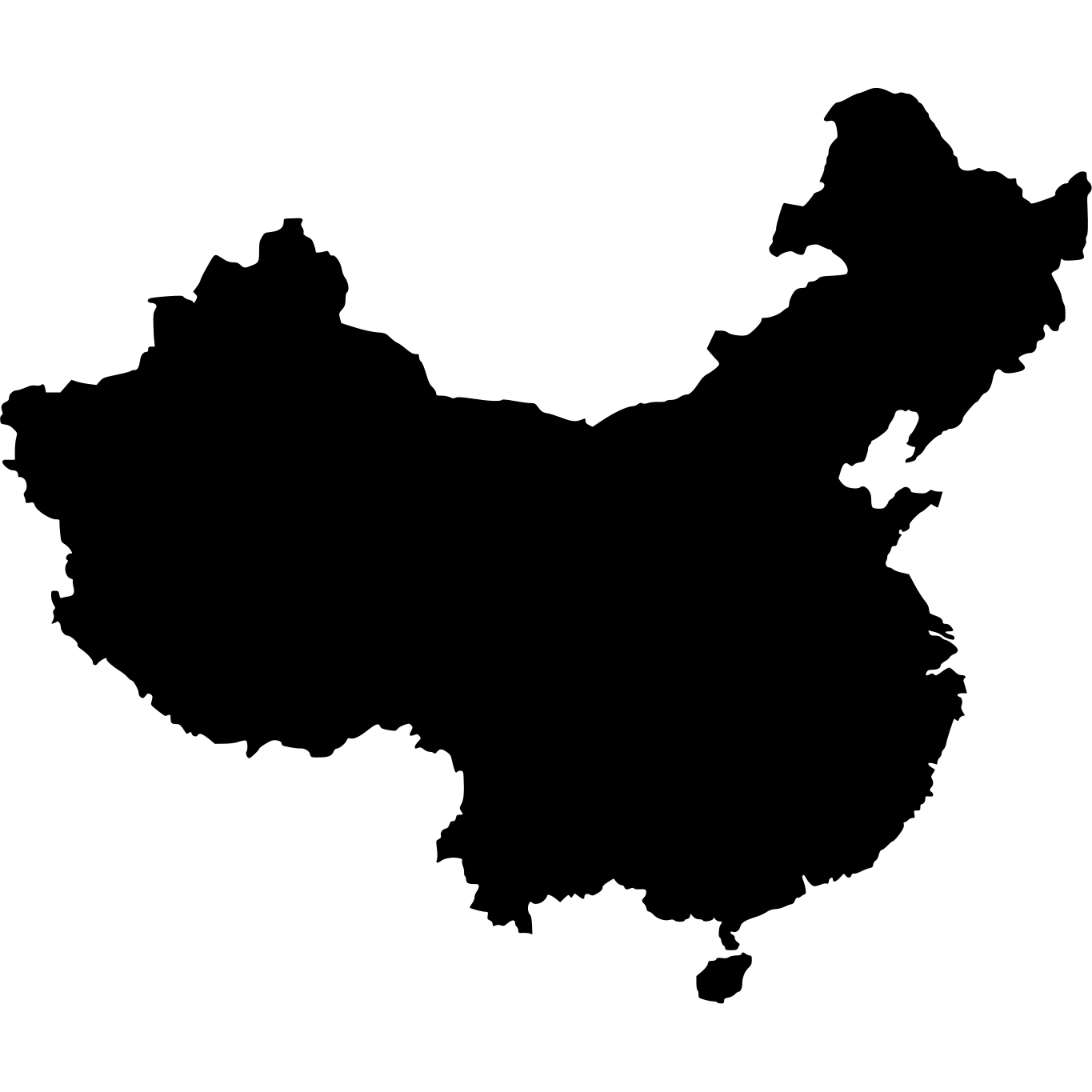
Florasis is a Chinese brand

We're dedicated to providing you with the most up-to-date and science-backed ingredient info out there.
The data we've presented on this page has been verified by a member of the SkinSort Team.
Read more about us· Updated January 21, 2026 • Added by LinhPhamthuy_985


