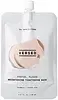
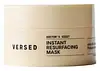
Versed Photos, Please Brightening Tightening Mask Versus Versed Doctor's Visit Instant Resurfacing Mask
This wash off mask is made with Kaolin and Citric Acid for a rinse-off oil-control boost.
This wash off mask is formulated around Salicylic Acid to clear breakouts and unclog pores.

What's inside
What's inside
 Key Ingredients
Benefits
Concerns
Ingredients Side-by-side
Water
Skin ConditioningKaolin
Abrasive



Glyceryl Stearate Se
Emulsifying




Propylene Glycol
Humectant
Coco-Caprylate/Caprate
Emollient
Polysorbate 20
Emulsifying
Sorbitan Stearate
Emulsifying
Cetyl Alcohol
Emollient
Glyceryl Stearate
Emollient
PEG-100 Stearate
Surfactant
Curcuma Longa Root Extract
Antioxidant

Hamamelis Virginiana Leaf Extract
Skin Conditioning
Bentonite
Absorbent
Citric Acid
Buffering

Tocopheryl Acetate
Antioxidant
Magnesium Aluminum Silicate
Absorbent
1,2-Hexanediol
Skin Conditioning
Phenoxyethanol
Preservative
Xanthan Gum
EmulsifyingTrisodium Ethylenediamine Disuccinate
ChelatingGlycerin
Humectant

CI 77891
Cosmetic ColorantSodium Benzoate
Masking
Potassium Sorbate
Preservative
Water, Kaolin, Glyceryl Stearate Se, Propylene Glycol, Coco-Caprylate/Caprate, Polysorbate 20, Sorbitan Stearate, Cetyl Alcohol, Glyceryl Stearate, PEG-100 Stearate, Curcuma Longa Root Extract, Hamamelis Virginiana Leaf Extract, Bentonite, Citric Acid, Tocopheryl Acetate, Magnesium Aluminum Silicate, 1,2-Hexanediol, Phenoxyethanol, Xanthan Gum, Trisodium Ethylenediamine Disuccinate, Glycerin, CI 77891, Sodium Benzoate, Potassium Sorbate
Water
Skin ConditioningGlycerin
Humectant
Polyacrylate Crosspolymer-6
Emulsion StabilisingPropanediol
Solvent
Lactic Acid
Buffering



Glycolic Acid
Buffering
Salicylic Acid
Masking
Ananas Sativus Fruit Extract
Skin ConditioningLactobacillus/Papaya Fruit Ferment Extract
Abrasive
Ocimum Basilicum Flower/Leaf Extract
TonicCurcuma Longa Root Extract
Antioxidant
Evodia Rutaecarpa Fruit Extract
Skin ConditioningMelia Azadirachta Flower Extract
Skin ConditioningMelia Azadirachta Leaf Extract
Skin ConditioningOcimum Sanctum Leaf Extract
Skin ConditioningCorallina Officinalis Extract
Skin Conditioning
Lactobacillus Ferment
Skin Conditioning
1,2-Hexanediol
Skin Conditioning
Caprylhydroxamic Acid
ChelatingLeuconostoc/Radish Root Ferment Filtrate
Antimicrobial
Potassium Hydroxide
BufferingWater, Glycerin, Polyacrylate Crosspolymer-6, Propanediol, Lactic Acid, Glycolic Acid, Salicylic Acid, Ananas Sativus Fruit Extract, Lactobacillus/Papaya Fruit Ferment Extract, Ocimum Basilicum Flower/Leaf Extract, Curcuma Longa Root Extract, Evodia Rutaecarpa Fruit Extract, Melia Azadirachta Flower Extract, Melia Azadirachta Leaf Extract, Ocimum Sanctum Leaf Extract, Corallina Officinalis Extract, Lactobacillus Ferment, 1,2-Hexanediol, Caprylhydroxamic Acid, Leuconostoc/Radish Root Ferment Filtrate, Potassium Hydroxide
Reviews
Ingredients Explained
These ingredients are found in both products.
Ingredients higher up in an ingredient list are typically present in a larger amount.
1,2-Hexanediol is a synthetic liquid and another multi-functional powerhouse.
It is a:
- Humectant, drawing moisture into the skin
- Emollient, helping to soften skin
- Solvent, dispersing and stabilizing formulas
- Preservative booster, enhancing the antimicrobial activity of other preservatives
Curcuma Longa Root Extract comes from the rhizome (underground stem) of the turmeric plant.
While the official EU Cosing Database lists this ingredient as a fragrance, it actually does more than give products a scent.
This ingredient contains a group of yellow pigments called curcuminoids (mostly curcumin) that give it genuine antioxidant and anti-inflammatory activity in skin.
Reviews of topical clinical studies have found turmeric/curcumin to be generally well-tolerated and useful across conditions like eczema and mild inflammation.
One thing working in its favor is that curcumin barely penetrates; in lab skin-permeation testing, the curcuminoids mostly stayed in the outermost layer of skin. This is a good thing because its soothing and antioxidant activity is a surface-level job anyway.
At this time, industry data shows there's no single "correct" cosmetic percentage. It's used across a wide range depending on the product and varies from tiny fractions of a percent up to a few percent.
Allergy-wise, curcumin is a documented (but uncommon) contact allergen. It can also cross react with related plants, so anyone with a turmeric/ginger/cinnamon allergy or reactive skin should patch test first.
Learn more about Curcuma Longa Root ExtractGlycerin (or glycerol) is a compound naturally found in your skin. It's a powerhouse humectant that pulls water into the stratum corneum.
Topically, glycerin does several things at once:
Your skin makes glycerin on its own (mostly from sebaceous oil breakdown) and shuttles it to your outermost layer of skin, or your epidermis, via aquaporin-3.
Aquaporin-3 is a transporter that is essential for normal skin hydration, elasticity, and repair. Interestingly, mice lacking in AQP3 have dry and less elastic skin that can be fully corrected with glycerin.
This ingredient is non-irritating, plays well with almost every ingredient, and works across all skin types. Typical use is anywhere between 3-10% but can go up to 79% in some leave-on products.
Just know very high concentrations (>40%) can feel tacky in low humidity.
Glycerin is the name for this ingredient in American English. British English uses Glycerol/Glycerine.
Learn more about GlycerinWater. It's the most common cosmetic ingredient of all. You'll usually see it at the top of ingredient lists, meaning that it makes up the largest part of the product.
So why is it so popular? Water most often acts as a solvent - this means that it helps dissolve other ingredients into the formulation.
You'll also recognize water as that liquid we all need to stay alive. If you see this, drink a glass of water. Remember to stay hydrated!
Learn more about Water

