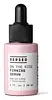
This anti-aging serum is formulated around Resveratrol and Palmitoyl Tripeptide-1 to soften the look of wrinkles and refine skin texture.
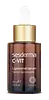
This brightening serum is formulated around 3-O-Ethyl Ascorbic Acid and Palmitoyl Tripeptide-5 to brighten dull-looking skin and soften the look of wrinkles.


What's inside
What's inside
 Key Ingredients
Benefits
Concerns
Ingredients Side-by-side
Water
Skin ConditioningPropylene Glycol
Humectant


Glycerin
Humectant

Propanediol
Solvent
Butylene Glycol
Humectant
Resveratrol
Antioxidant




Palmitoyl Tripeptide-1
Skin Conditioning

Palmitoyl Tetrapeptide-7
Skin Conditioning
Retinyl Palmitate
Skin Conditioning


Tocopheryl Acetate
Antioxidant
Tocopherol
Antioxidant
Sodium Hyaluronate
Humectant
Citric Acid
Buffering
Phenoxyethanol
Preservative
PEG-40 Hydrogenated Castor Oil
Emulsifying
Polyacrylate Crosspolymer-6
Emulsion StabilisingSodium Ascorbyl Phosphate
Antioxidant

Xanthan Gum
EmulsifyingTrisodium Ethylenediamine Disuccinate
ChelatingCeramide AP
Skin Conditioning
1,2-Hexanediol
Skin Conditioning
Carbomer
Emulsion StabilisingSodium Metabisulfite
Antioxidant
Polysorbate 20
Emulsifying
Sodium Lactate
Buffering
Water, Propylene Glycol, Glycerin, Propanediol, Butylene Glycol, Resveratrol, Palmitoyl Tripeptide-1, Palmitoyl Tetrapeptide-7, Retinyl Palmitate, Tocopheryl Acetate, Tocopherol, Sodium Hyaluronate, Citric Acid, Phenoxyethanol, PEG-40 Hydrogenated Castor Oil, Polyacrylate Crosspolymer-6, Sodium Ascorbyl Phosphate, Xanthan Gum, Trisodium Ethylenediamine Disuccinate, Ceramide AP, 1,2-Hexanediol, Carbomer, Sodium Metabisulfite, Polysorbate 20, Sodium Lactate
Water
Skin ConditioningGlycerin
Humectant
Propylene Glycol
Humectant
Propanediol
Solvent
Polymethylsilsesquioxane

PEG-40 Hydrogenated Castor Oil
Emulsifying
Ginkgo Biloba Leaf Extract
Skin Conditioning
Sodium Hyaluronate
Humectant
Resveratrol Dimethyl Ether
Antioxidant
Quercetin
Antioxidant
Palmitoyl Tripeptide-5
Skin Conditioning
Morus Alba Root Extract
Bleaching3-O-Ethyl Ascorbic Acid
Skin Conditioning
Lecithin
Emollient
Alcohol
Antimicrobial


Tocopheryl Acetate
Antioxidant
Ammonium Acryloyldimethyltaurate/Vp Copolymer
Polysorbate 20
Emulsifying
Xanthan Gum
EmulsifyingSodium Chloride
MaskingBHT
Antioxidant
Triethanolamine
BufferingDisodium EDTA
ChelatingSodium Cholate
Skin ConditioningHydroxypropyl Cyclodextrin
MaskingRetinyl Palmitate
Skin Conditioning
Sodium Hydroxide
BufferingTocopherol
Antioxidant
Phenoxyethanol
Preservative
Ethylhexylglycerin
Skin ConditioningPotassium Sorbate
Preservative
Parfum
Masking

Citronellyl Methylcrotonate
Masking
Limonene
Perfuming
Linalool
Perfuming
Citral
Perfuming
CI 15985
Cosmetic ColorantWater, Glycerin, Propylene Glycol, Propanediol, Polymethylsilsesquioxane, PEG-40 Hydrogenated Castor Oil, Ginkgo Biloba Leaf Extract, Sodium Hyaluronate, Resveratrol Dimethyl Ether, Quercetin, Palmitoyl Tripeptide-5, Morus Alba Root Extract, 3-O-Ethyl Ascorbic Acid, Lecithin, Alcohol, Tocopheryl Acetate, Ammonium Acryloyldimethyltaurate/Vp Copolymer, Polysorbate 20, Xanthan Gum, Sodium Chloride, BHT, Triethanolamine, Disodium EDTA, Sodium Cholate, Hydroxypropyl Cyclodextrin, Retinyl Palmitate, Sodium Hydroxide, Tocopherol, Phenoxyethanol, Ethylhexylglycerin, Potassium Sorbate, Parfum, Citronellyl Methylcrotonate, Limonene, Linalool, Citral, CI 15985
Reviews
Ingredients Explained
These ingredients are found in both products.
Ingredients higher up in an ingredient list are typically present in a larger amount.
Glycerin (or glycerol) is a compound naturally found in your skin. It's a powerhouse humectant that pulls water into the stratum corneum.
Topically, glycerin does several things at once:
Your skin makes glycerin on its own (mostly from sebaceous oil breakdown) and shuttles it to your outermost layer of skin, or your epidermis, via aquaporin-3.
Aquaporin-3 is a transporter that is essential for normal skin hydration, elasticity, and repair. Interestingly, mice lacking in AQP3 have dry and less elastic skin that can be fully corrected with glycerin.
This ingredient is non-irritating, plays well with almost every ingredient, and works across all skin types. Typical use is anywhere between 3-10% but can go up to 79% in some leave-on products.
Just know very high concentrations (>40%) can feel tacky in low humidity.
Glycerin is the name for this ingredient in American English. British English uses Glycerol/Glycerine.
Learn more about GlycerinPEG-40 Hydrogenated Castor Oil is an emulsifier derived from castor oil.
As an emulsifying agent, it helps other ingredients like fragrances and fat-soluble vitamins dissolve cohesively.
Due to its large molecule size, it doesn't penetrate beyond the skin's surface.
This ingredient has a solid regulatory track record; the CIR Expert Panel first concluded it was safe for use in cosmetics at concentrations up to 100% in 1997. A 2012 reassessment reaffirmed that finding. Safety studies have also found no irritation or evidence of toxicity.
A 2019 study did find this ingredient to grow Malassezia, so this ingredient may not be fungal acne safe.
Learn more about PEG-40 Hydrogenated Castor OilPhenoxyethanol is one of the most widely used preservatives in skincare (and for good reason!).
It has a large spectrum of antimicrobial activity and especially effective bacteria, yeast, and mold while only having a weak effect on your skin's natural microbiome.
On a cellular level, it disrupts the cell membranes of microbes by poking holes that make the cell leak. This shuts down the chemical reactions the microbe needs to make energy so it can no longer survive.
Another perk of this ingredient is that it stays functional across a wide pH range (3-10).
You'll often see it paired with boosters like Ethylhexylglycerin; one study showed that a 1:9 ratio of Ethylhexylglycerin to Phenoxyethanol damages bacterial membranes as effectively as doubling the Phenoxyethanol concentration on its own.
Typical use concentrations range from 0.3-1% depending on the formula, and this ingredient is capped at 1% int the EU.
Safety-wise, the fear mongering does not hold up to the evidence. The EU's Scientific Committee on Consumer Safety and FDA consider it safe as a preservative at up to 1%, including for children of all ages.
Adverse systemic effects only showed up in animal studies at exposures roughly 200x higher than what people get from cosmetics. And despite its very widespread use, this ingredient is a rare sensitizer and allergic reactions are uncommon.
Learn more about PhenoxyethanolPolysorbate 20 is a gentle, water-soluble emulsifier and mild surfactant. It stops oil and water from separating to keep your formulas blended and stable.
It also acts as a mild penetration enhancer by helping active ingredients absorb slightly better.
The common safety discussion around this ingredient involves a manufacturing byproduct called 1,4-dioxane.
Trace amounts can form during production but the EU's Scientific Committee on Consumer Safety has concluded that levels at/below 10 ppm in finished products are safe (commercial products consistently fall within acceptable margins).
True allergic reactions are uncommon and the CIR Expert Panel has confirmed this ingredient to be safe as used in cosmetics.
Because it is derived from lauric acid, it may not be fungal acne safe.
Learn more about Polysorbate 20Propanediol is an all-star ingredient. It softens, hydrates, and smooths the skin.
It’s often used to:
Propanediol is not likely to cause sensitivity and considered safe to use. It is derived from corn or petroleum with a clear color and no scent.
Learn more about PropanediolPropylene Glycol is a synthetic, colorless, odorless liquid that has been a staple in cosmetics for decades. It is a skin conditioning agent, humectant, and solvent.
As a humectant, it draw water to the skin to reduce flaking and restore suppleness. It's also a solvent that helps dissolve other actives and keeps formulas stable across temperature changes.
The CIR Expert Panel has confirmed this ingredient to be nontoxic and clinical studies show no sensitization at cosmetic use concentrations.
True allergic reactions are quite rare: a 15-year retrospective study of 6,751 patients found only 0.31% had a positive reaction (and less than half were considered clinically relevant).
It seemed that when sensitization does occur, it's most commonly linked to topical medication (like corticosteroids) and not cosmetics. Allergic contact dermatitis also appears largely limited to individuals with underlying skin conditions.
Overall, propylene glycol is a well-studied ingredient that most people can tolerate without issue.
Learn more about Propylene GlycolRetinyl Palmitate is a form of retinoid. Retinoids are the superstar class of anti-aging ingredients that include Tretinoin and Retinol.
This particular ingredient has had a bumpy year with its rise and fall in popularity.
First, Retinyl Palmitate is created from Palmitic Acid and Retinol. It is a Retinol ester and considered one of the weaker forms of retinoid.
This is because all retinoids have to be converted to Tretinoin, AKA Retinoic Acid.
Retinyl Palmitate is pretty far down the line and has to go through multiple conversions before its effects are seen. Once it's on your skin, enzymes called esterases convert it into Retinol, then into Retinal, and finally into Retinoic Acid; that's three steps with a little lost at each one.
The benefits of Retinyl Palmitate are debated due to this long and ineffective conversion line.
So why use it at all?
The answer is stability. Retinol and Retinoic Acid break down fast when they hit light, heat, and air, and Retinoic Acid can be pretty irritating on top of that.
Retinyl Palmitate is much more stable and gentler, making it easier to formulate with and easier on sensitive skin (even if it's weaker gram for gram).
Studies show Retinyl Palmitate to help:
Newer research from 2023-2025 also found that Retinyl Palmitate works especially well when paired with Retinol. The two seem to cover each other's weak spots; retinol brings the potency while Retinyl Palmitate brings the stability and gentleness. Together, they repair UV damage better than either one does alone.
This ingredient used to be found in sunscreens to boost the efficacy of sunscreen filters.
The downfall of Retinyl Palmitate was due to released reports about the ingredient being correlated to sun damage and skin tumors.
Most of this traces back to a 2012 US National Toxicology Program (NTP) study where hairless mice coated in Retinyl Palmitate cream and exposed to UV light developed skin tumors faster.
Here's the nuance, though.
When the Cosmetic Ingredient Review (CIR) Expert Panel went back through that study, they found methodological flaws and decided the results couldn't be interpreted as proof of extra risk.
The EU's Scientific Committee on Consumer Safety (SCCS) said the mouse findings might point to a concern but they're hard to apply to humans since hairless mouse skin and human skin behave differently.
While there is a study showing this ingredient to cause DNA damage when exposed to UVA, there is no concrete proof of it being linked to skin cancer. It is completely safe to use when used correctly.
Both the CIR and the SCCS consider it safe at the concentrations used in cosmetics; the SCCS specifically cleared retinoids up to 0.05% in body lotions and 0.3% in face creams, hand creams, and rinse-off products.
As of 2025, the EU has written those limits into law, plus a label warning about your total Vitamin A intake from all sources.
All retinoids increase your skin's sensitivity to the sun in the first few months of usage. Be especially careful with reapplying sunscreen when using any form of retinoid.
One more note: if you're pregnant, high doses of Vitamin A can be a concern, so a lot of people skip topical retinoids (including Retinyl Palmitate) during pregnancy just to be safe. Check with your doctor if you're unsure.
Fun fact: This ingredient is often added to low-fat milk to increase the levels of Vitamin A.
Learn more about Retinyl PalmitateSodium Hyaluronate is the salt form of hyaluronic acid. It is a long sugar chain that is naturally found in your skin, joints, and connective tissue that maintains hydration and elasticity.
In skincare, it works as a humectant. It pulls water from the environment and deeper layers of skin and binds it to the surface.
Interestingly, the size of the molecule affects its behavior:
Some clinical evidence links low molecular weight versions to improved wrinkle depth, elasticity, anti-inflammatory effects, and barrier repair.
Many serums use a blend of both weights so you can get surface hydration plus longer-lasting and deeper effects.
You'll typically see concentrations between 0.1-2% for this ingredient.
Learn more about Sodium HyaluronateTocopherol is a fat-soluble antioxidant known as Vitamin E.
You'll find this ingredient in the vast majority of skincare (for good reason). It works to neutralize free radicals, or unstable molecules generated by UV exposure, pollution, and other environmental stressors, before they can cause oxidative damage to your skin cells.
Topically applied tocopherol has been shown to protect against UV damage by ramping up the skin's own natural defense enzymes.
It also acts as a skin conditioning agent; some studies show that regular topical use can improve the skin's water-binding capacity over 2-4 weeks.
This ingredient is especially loved for being a team player. When combined with Vitamin C, the photoprotective effect of both ingredients roughly doubles and the combo also helps reduce UV-induced DNA damage.
This ingredient has some brightening potential but it's more of a prevention ingredient than spot-fader. Cell studies show it can slow down melanin production but it's worth noting that it's not the most powerful brightener out there.
In formulations, it also serves as a stabilizer that helps protect other oxidation-prone ingredients from degrading.
Concentrations usually range from 0.1-1% in most leave-on products.
Learn more about TocopherolTocopheryl Acetate is a stable, shelf-friendly form of vitamin E.
Formulators love it because plain vitamin E oxidizes quickly once it hits air. This acetate version stays stable and resists going off, helping to extend a product's shelf life.
It's actually inactive on its own and works like a slow-release "storage" form; the enzymes in your skin called esterases gradually convert it into active vitamin E over time.
One in vivo study showed 5% of the acetate in the living layer of the epidermis converted to vitamin E after 5 days of application. This study also found the skin gained protection against UV damage even though the conversion was slow and small.
Once converted, vitamin E acts as a skin's main fat-soluble antioxidant that fights free radicals to protect skin from damage.
Topical vitamin E generally boosts the skin's photoprotection, and it reduced UV-damage in animal models.
This ingredient has some brightening potential but it's more of a prevention ingredient than spot-fader. Cell studies show it can slow down melanin production but it's worth noting that it's not the most powerful brightener out there.
Overall, it has a pretty solid safety profile and has been found to be non-irritating and non-comedogenic. Allergic reactions may happen but stay rare due to how widely the ingredient gets used.
The concentration will vary depending on the formula; industry data shows 0.1% in baby lotions, 3% in lipsticks, and 5% in foot powders. You can also find this ingredient at 100% in a pure vitamin E oil.
Most leave-on skincare keeps it at the lower end, often between 0.5-1%.
Learn more about Tocopheryl AcetateWater. It's the most common cosmetic ingredient of all. You'll usually see it at the top of ingredient lists, meaning that it makes up the largest part of the product.
So why is it so popular? Water most often acts as a solvent - this means that it helps dissolve other ingredients into the formulation.
You'll also recognize water as that liquid we all need to stay alive. If you see this, drink a glass of water. Remember to stay hydrated!
Learn more about WaterXanthan gum is used as a stabilizer and thickener within cosmetic products. It helps give products a sticky, thick feeling - preventing them from being too runny.
On the technical side of things, xanthan gum is a polysaccharide - a combination consisting of multiple sugar molecules bonded together.
Xanthan gum is a pretty common and great ingredient. It is a natural, non-toxic, non-irritating ingredient that is also commonly used in food products.
Learn more about Xanthan Gum

