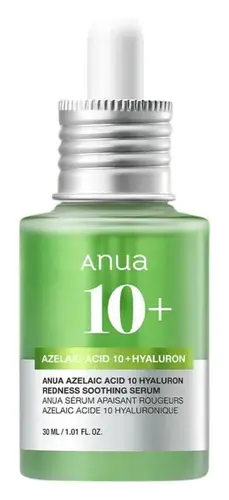
This calming serum is formulated around Azelaic Acid and Carnosine to calm redness and clear breakouts.
This calming treatment is formulated around Azelaic Acid and Glycyrrhiza Glabra Root Extract to calm redness and fade the look of dark spots.


What's inside
What's inside
 Key Ingredients
Benefits
Concerns
Ingredients Side-by-side
Water
Skin ConditioningAzelaic Acid
Buffering









Glycerin
Humectant

Propanediol
Solvent
Glycereth-26
Humectant
Avena Sativa Kernel Flour
Abrasive
Carnosine
Skin Conditioning
Acetyl Tetrapeptide-2
Skin Conditioning
Ceramide NP
Skin Conditioning
Ceramide EOP
Skin Conditioning
Ceramide Ns
Skin Conditioning
Ceramide As
Skin Conditioning
Ceramide AP
Skin Conditioning
Gallyl Glucoside
Antioxidant
Propyl Gallate
Antioxidant


Epigallocatechin Gallatyl Glucoside
Antioxidant
Daucus Carota Sativa Root Cell Culture Lysate
Skin ConditioningGossypium Herbaceum Callus Culture
Skin ConditioningSphingomonas Ferment Extract
Skin Conditioning

Ethylhexylglycerin
Skin ConditioningHydrogenated Lecithin
Emulsifying
Sucrose Distearate
Emollient
Glyceryl Stearate
Emollient
Dipropylene Glycol
HumectantDehydroacetic Acid
Preservative
Caprylyl Glycol
Emollient
Phenoxyethanol
Preservative
Triethanolamine
BufferingBenzyl Alcohol
Perfuming


Citric Acid
Buffering
Water, Azelaic Acid, Glycerin, Propanediol, Glycereth-26, Avena Sativa Kernel Flour, Carnosine, Acetyl Tetrapeptide-2, Ceramide NP, Ceramide EOP, Ceramide Ns, Ceramide As, Ceramide AP, Gallyl Glucoside, Propyl Gallate, Epigallocatechin Gallatyl Glucoside, Daucus Carota Sativa Root Cell Culture Lysate, Gossypium Herbaceum Callus Culture, Sphingomonas Ferment Extract, Ethylhexylglycerin, Hydrogenated Lecithin, Sucrose Distearate, Glyceryl Stearate, Dipropylene Glycol, Dehydroacetic Acid, Caprylyl Glycol, Phenoxyethanol, Triethanolamine, Benzyl Alcohol, Citric Acid
Water
Skin ConditioningAzelaic Acid
Buffering
Simmondsia Chinensis Seed Oil
Emollient
Pentylene Glycol
Skin Conditioning
C12-15 Alkyl Benzoate
AntimicrobialTerminalia Ferdinandiana Fruit Extract
Antioxidant
Glycyrrhiza Glabra Root Extract
Bleaching
Hexylresorcinol
Antimicrobial
Gluconolactone
Skin Conditioning
Rubus Idaeus Seed Oil
Emollient
Pichia/Resveratrol Ferment Extract
Skin ConditioningMorus Nigra Leaf Extract
Skin ConditioningGlycerin
Humectant
Artocarpus Heterophyllus Seed Extract
BleachingPhyllanthus Emblica Extract
Skin ConditioningPolyacrylate Crosspolymer-6
Emulsion StabilisingDaucus Carota Sativa Extract
Perfuming
Tocopherol
Antioxidant
Leuconostoc/Radish Root Ferment Filtrate
Antimicrobial
Cucumis Sativus Extract
Skin Conditioning
Sodium Benzoate
Masking
Benzoic Acid
Masking
Dehydroacetic Acid
Preservative
Benzyl Alcohol
Perfuming
Sodium Citrate
BufferingFerulic Acid
Antimicrobial
Tetrasodium EDTA
Potassium Sorbate
Preservative
Camellia Sinensis Leaf Extract
Antimicrobial
Water, Azelaic Acid, Simmondsia Chinensis Seed Oil, Pentylene Glycol, C12-15 Alkyl Benzoate, Terminalia Ferdinandiana Fruit Extract, Glycyrrhiza Glabra Root Extract, Hexylresorcinol, Gluconolactone, Rubus Idaeus Seed Oil, Pichia/Resveratrol Ferment Extract, Morus Nigra Leaf Extract, Glycerin, Artocarpus Heterophyllus Seed Extract, Phyllanthus Emblica Extract, Polyacrylate Crosspolymer-6, Daucus Carota Sativa Extract, Tocopherol, Leuconostoc/Radish Root Ferment Filtrate, Cucumis Sativus Extract, Sodium Benzoate, Benzoic Acid, Dehydroacetic Acid, Benzyl Alcohol, Sodium Citrate, Ferulic Acid, Tetrasodium EDTA, Potassium Sorbate, Camellia Sinensis Leaf Extract
Reviews
Ingredients Explained
These ingredients are found in both products.
Ingredients higher up in an ingredient list are typically present in a larger amount.
Azelaic acid is a multitasker ingredient that helps treat acne, pigmentation, and irritation. It is a great option for sensitive skin.
What makes it special?
OTC Azelaic acid is usually available in concentrations from 10-15% and anything over requires a prescription.
Here's what each tier does best:
Unlike other acids, azelaic acid will not make your skin more photosensitive/sun sensitive.
Though this ingredient is naturally occurring in grains like wheat, rye, and barley, it is usually synthetically created for cosmetics to ensure stability and effectiveness.
Learn more about Azelaic AcidBenzyl Alcohol is an aromatic alcohol with several roles: it's a preservative, solvent, and mild fragrance component with a floral scent.
This ingredient has been deemed safe for use in cosmetic formulations at concentrations up to 5%, and up to 10% in hair dyes. You'll typically see 0.5-2% in most rinse-off or leave-on products.
As a preservative, it works by disrupting the membrane of microbial proteins. This helps keep bacteria and fungi from growing in your products.
The sensitization picture is actually quite assuring as well:of nearly 71,000 patients patch tested with benzyl alcohol, only 0.21% showed a positive reaction with most of them being weakly positive.
This led researchers to conclude that benzyl alcohol cannot be regarded as a significant contact allergen.
It is worth noting this ingredient is classified as one of the EU's regulated fragrance allergens and restricted to 1% in finished products.
Labels must also declare it in concentrations above 0.001% in leave-on products and 0.01% in rinse-off products.
At concentrations around 5%, localized redness and itching can appear as a direct irritant response and not as a true allergic reaction.
Learn more about Benzyl AlcoholDehydroacetic Acid is a synthetic preservative that keeps your products safe from microbes.
As an organic acid, it penetrates microbial cell walls and disrupts cellular metabolism. This makes it effective against bacteria, yeast, and mold.
It is effective at low concentrations (<0.6%). Clinical studies have found it to be non-irritating, non-sensitizing, and non-photosensitizing.
Learn more about Dehydroacetic AcidGlycerin (or glycerol) is a compound naturally found in your skin. It's a powerhouse humectant that pulls water into the stratum corneum.
Topically, glycerin does several things at once:
Your skin makes glycerin on its own (mostly from sebaceous oil breakdown) and shuttles it to your outermost layer of skin, or your epidermis, via aquaporin-3.
Aquaporin-3 is a transporter that is essential for normal skin hydration, elasticity, and repair. Interestingly, mice lacking in AQP3 have dry and less elastic skin that can be fully corrected with glycerin.
This ingredient is non-irritating, plays well with almost every ingredient, and works across all skin types. Typical use is anywhere between 3-10% but can go up to 79% in some leave-on products.
Just know very high concentrations (>40%) can feel tacky in low humidity.
Glycerin is the name for this ingredient in American English. British English uses Glycerol/Glycerine.
Learn more about GlycerinWater. It's the most common cosmetic ingredient of all. You'll usually see it at the top of ingredient lists, meaning that it makes up the largest part of the product.
So why is it so popular? Water most often acts as a solvent - this means that it helps dissolve other ingredients into the formulation.
You'll also recognize water as that liquid we all need to stay alive. If you see this, drink a glass of water. Remember to stay hydrated!
Learn more about Water