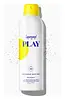
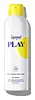
Supergoop! Play Antioxidant Mist SPF 50 PA++++ Versus Supergoop! Play Antioxidant Body Mist SPF 30 With Vitamin C
This chemical sunscreen covers most of the UV range, lighter on the deep UVA that drives aging.
This chemical sunscreen covers most of the UV range, lighter on the deep UVA that drives aging.

What's inside
What's inside
 Key Ingredients
Benefits
Concerns
Ingredients Side-by-side
Butyl Methoxydibenzoylmethane 2.8%
UV Absorber
Homosalate 9.8%
Skin Conditioning
Ethylhexyl Salicylate 4.9%
UV Absorber
Octocrylene 9.5%
UV Absorber

Alcohol Denat.
Antimicrobial


Butyloctyl Salicylate
Skin Conditioning
Camellia Sinensis Leaf Extract
Antimicrobial







Cananga Odorata Flower Oil
Masking



Caprylic/Capric Triglyceride
Masking

Citrus Aurantifolia Oil
Cleansing
Citrus Grandis Peel Oil
Masking
Citrus Limon Peel Oil
Masking
Citrus Nobilis Peel Oil
Masking
Citrus Reticulata Leaf Oil
Masking
Citrus Sinensis Peel Oil Expressed
Perfuming
Dicaprylyl Carbonate
EmollientDiisopropyl Adipate
EmollientEthyl Ferulate
Antioxidant
Euterpe Oleracea Fruit Extract
Helianthus Annuus Seed Oil
Emollient
Isodecyl Neopentanoate
EmollientLavandula Angustifolia Oil
Masking
Mentha Piperita Oil
Masking
Mentha Viridis Leaf Oil
Astringent
Tetrahexyldecyl Ascorbate
Antioxidant


Tridecyl Neopentanoate
EmollientVa/Butyl Maleate/Isobornyl Acrylate Copolymer
Vitis Vinifera Seed Oil
Emollient
Butyl Methoxydibenzoylmethane 2.8%, Homosalate 9.8%, Ethylhexyl Salicylate 4.9%, Octocrylene 9.5%, Alcohol Denat., Butyloctyl Salicylate, Camellia Sinensis Leaf Extract, Cananga Odorata Flower Oil, Caprylic/Capric Triglyceride, Citrus Aurantifolia Oil, Citrus Grandis Peel Oil, Citrus Limon Peel Oil, Citrus Nobilis Peel Oil, Citrus Reticulata Leaf Oil, Citrus Sinensis Peel Oil Expressed, Dicaprylyl Carbonate, Diisopropyl Adipate, Ethyl Ferulate, Euterpe Oleracea Fruit Extract, Helianthus Annuus Seed Oil, Isodecyl Neopentanoate, Lavandula Angustifolia Oil, Mentha Piperita Oil, Mentha Viridis Leaf Oil, Tetrahexyldecyl Ascorbate, Tridecyl Neopentanoate, Va/Butyl Maleate/Isobornyl Acrylate Copolymer, Vitis Vinifera Seed Oil
Butyl Methoxydibenzoylmethane 2.8%
UV Absorber
Homosalate 9.8%
Skin Conditioning
Ethylhexyl Salicylate 4.9%
UV Absorber
Octocrylene 9.5%
UV Absorber
Alcohol Denat.
Antimicrobial
Butyloctyl Salicylate
Skin Conditioning
Camellia Sinensis Leaf Extract
Antimicrobial
Cananga Odorata Flower Oil
Masking
Caprylic/Capric Triglyceride
Masking
Citrus Aurantifolia Oil
Cleansing
Citrus Grandis Peel Oil
Masking
Citrus Limon Peel Oil
Masking
Citrus Nobilis Peel Oil
Masking
Citrus Reticulata Leaf Oil
Masking
Citrus Sinensis Peel Oil Expressed
Perfuming
Dicaprylyl Carbonate
EmollientDiisopropyl Adipate
EmollientEthyl Ferulate
Antioxidant
Euterpe Oleracea Fruit Extract
Helianthus Annuus Seed Oil
Emollient
Isodecyl Neopentanoate
EmollientLavandula Angustifolia Oil
Masking
Mentha Piperita Oil
Masking
Mentha Viridis Leaf Oil
Astringent
Tetrahexyldecyl Ascorbate
Antioxidant
Tridecyl Neopentanoate
EmollientVa/Butyl Maleate/Isobornyl Acrylate Copolymer
Vitis Vinifera Seed Oil
Emollient
Butyl Methoxydibenzoylmethane 2.8%, Homosalate 9.8%, Ethylhexyl Salicylate 4.9%, Octocrylene 9.5%, Alcohol Denat., Butyloctyl Salicylate, Camellia Sinensis Leaf Extract, Cananga Odorata Flower Oil, Caprylic/Capric Triglyceride, Citrus Aurantifolia Oil, Citrus Grandis Peel Oil, Citrus Limon Peel Oil, Citrus Nobilis Peel Oil, Citrus Reticulata Leaf Oil, Citrus Sinensis Peel Oil Expressed, Dicaprylyl Carbonate, Diisopropyl Adipate, Ethyl Ferulate, Euterpe Oleracea Fruit Extract, Helianthus Annuus Seed Oil, Isodecyl Neopentanoate, Lavandula Angustifolia Oil, Mentha Piperita Oil, Mentha Viridis Leaf Oil, Tetrahexyldecyl Ascorbate, Tridecyl Neopentanoate, Va/Butyl Maleate/Isobornyl Acrylate Copolymer, Vitis Vinifera Seed Oil
Ingredients Explained
These ingredients are found in both products.
Ingredients higher up in an ingredient list are typically present in a larger amount.
Alcohol Denat. is an alcohol with a denaturant property. It is created by mixing ethanol with other additives.
The "denat" part just means "denatured"; common denaturants include Denatonium Benzoate, t-butyl alcohol, and Diethyl Phthalate. This step makes the alcohol undrinkable (and lets brand skip taxes related to beverage alcohol).
This ingredient gets a bad rep because it is irritating and drying due to its astringent property. Astringents draw out natural oils in tissue to constrict pores and dry out your skin.
However, alcohol denat. is not all that bad.
Due to its low molecular weight, alcohol denat. tends to evaporate quickly. One study on pig skin found half of applied alcohol evaporated in 10 seconds and less than 3% stayed on skin.
This also helps other ingredients become better absorbed upon application.
Studies are conflicted about whether this ingredient causes skin dehydration. One study from 2005 found adding emollients to propanol-based sanitizer decreased skin dryness and irritation. Another study found irritation only occurs if your skin is already damaged.
Small amounts of alcohol are generally tolerated by oily skin or people who live in humid environments.
The rule of thumb is this ingredient will probably not affect your skin much if it is near the end of an ingredients list.
One thing to note:
People with ALDH2 (aldehyde dehydrogenase 2) deficiency may experience skin irritation from continued alcohol use. About 8% of the world's population have this deficiency.
The Cosmetic Ingredient Review Expert Panel has determined denatured alcohols to be safe for use in concentrations between 0.05% and 12% (depending on which denaturant is used).
Also...
This ingredient has antimicrobial and solvent properties.
The antimicrobial property helps preserve products and increase their shelf life. As a solvent, it helps dissolve other ingredients.
Look for formulas that contain glycerin, hyaluronic acid, or panthenol if you want to offset any drying effect.
This ingredient will trip away your skin's natural oils/lipids that help it lock in moisture. This can worsen dryness, trigger eczema flare-ups, and aggravate rosacea.
Be sure to patch test any product with this ingredient if you have dry or sensitive skin, eczema, or rosacea.
Learn more about Alcohol Denat.Also known as Avobenzone, this ingredient is an oil-soluble used to absorb the full spectrum of UVA rays (peak 357 nm).
It's one of the most effective UVA filters available but has a major caveat of photostability: avobenzone is susceptible to photodegradation.
This means it can lose efficacy when exposed to sunlight without the help of a stabilizing agent.
Studies show antioxidants (like vitamin E or vitamin C) and some UV filters (like octocrylene and Tinosorb S) can meaningfully improve its stability in a formulation.
The maximum allowable concentration according to regulation is 3% in the US + Canada, and 5% in the EU, Australia, China, Korea, and ASEAN countries.
It has a well-support safety profile: a comprehensive 2025 review found minimal toxicity with no evidence of carcinogenicity.
Overall, avobenzone is a safe and regulated ingredient used in sunscreen for over 40 years.
Learn more about Butyl MethoxydibenzoylmethaneButyloctyl Salicylate is a chemical UV filter structurally similar to octisalate. It is a photostabilizer, SPF booster, emollient and solvent. This ingredient helps evenly spread out ingredients.
According to a manufacturer, it is suitable for pairing with micro Titanium Dioxide, Zinc Oxide, and pigments.
Photostabilizers help stabilize UV-filters and prevents them from degrading quickly.
Learn more about Butyloctyl SalicylateCamellia Sinensis Leaf Extract (tea extract) is one of the most well-researched plant extracts in skincare with an impressive resume.
Black tea, green tea, and oolong tea are all harvested from the Camellia Sinensis plant.
Studies show green tea extract and its catechins (like epigallocatechin gallate (EGCG)) help your skin cells product energy more efficiently and reducing the number of free-radicals that can damage your skin from the inside.
In lab-grown skin models, this translated to younger, healthier, and stronger skin.
There's also good sun protection data; researchers saw less DNA damage and redness on human skin when green tea was applied before UVB exposure. And the more they applied, the better the protection.
Needless to say, this ingredient shouldn't replace your sunscreen. But it is a great supportive ingredient that you can already find in many sunscreens and antioxidant serums.
A 2009 study found a 2% green tea lotion was effective for mild-to-moderate acne thanks to its anti-inflammatory and mild antimicrobial activity.
The quality of the extract matters a lot here:
Good extracts contain 50-90% catechins while lower quality ones are mostly there for marketing. We recommend reaching out to the brand if you have questions about the quality or source of their ingredients.
Human Repeated Insult Patch Testing showed no irritation or sensitization at use concentrations (0.86% in leave-on products and up to 30% as leaf water).
Learn more about Camellia Sinensis Leaf ExtractThis ingredient is also known as Ylang Ylang essential oil.
There are several grades of this oil according to when the flowers are obtained so the exact makeup varies by origin, grade, and extraction.
In cosmetics, its job is mostly sensory: it has a sweet, floral scent often used in perfume.
Chemically, it's complex mix of fragrant molecules: geraniol, limonene, linalool and benzyl benzoate.
Several of these components are on the EU's list of recognized fragrance allergens; this means they have to be labeled when present above 0.001% in leave-on products and 0.01% in rinse-off products.
This ingredient is a known contact sensitizer for a small amount of people so it's definitely worth patch-testing if your skin is reactive.
Lab studies have found the oils does have real antioxidant and antibacterial activity, but keep in mind these are in-vitro findings rather than proven skincare benefits.
Learn more about Cananga Odorata Flower OilCaprylic/Capric Triglyceride (aka MCT Oil) is a lightweight emollient, solvent, and texture enhancer. It is considered a skin-softener by helping to prevent moisture loss.
Though it behaves like an oil, it is not technically one due to its chemical composition. One perk of this ingredient is that it is very stable, resistant to oxidation, and unlikely to go rancid.
In practice, that translates to a long shelf life and a consistently elegant skin feel.
While there is an assumption Caprylic Triglyceride can clog pores due to it being derived from coconut oil, there is no research supporting this. Just patch test if you have concerns.
Fractionated coconut oil and MCT Oil are both listed as Caprylic/Capric Triglyceride according to INCI. This is because INCI names are based on the ingredient’s final chemical composition and not its marketing name or source.
This ingredient is treated as the gold standard fungal acne safe oil. Even though it is coconut derived, the problematic lauric acid is stripped out.
This leaves just caprylic (C8) and capric (C10) acid. These chain lengths actually trend antifungal; a 2020 study found caprylic acid was enough to disrupt Malassezia furfur cell membrane, with a caprylic acid derivative damaging membrane structures at concentrations as low as 0.2%.
Learn more about Caprylic/Capric TriglycerideThis ingredient is also known as lime essential oil or key lime essential oil.
Like other citrus extracts and oils, this ingredient contains furanocoumarins that can cause phototoxicity.
Citrus Grandis Peel Oil is an essential oil that is derived from the peel of a Grapefruit. It is composed largely of limonene, which is a fragrance that can cause irritation for sensitive skin.
Citrus Limon Peel Oil is created from the peels of the lemon. It is used to add a lemon-scent to products. Lemon peel oil also has antibacterial, antifungal, and antioxidant properties. However, it may also cause phototoxicity and sensitize skin.
Lemon peel oil contains limonene, a skin sensitizing ingredient. Another component is furanocoumarin, which induces phototoxicity in skin.
Furanocoumarins bind and destabilize your DNA to increase the rate of sunburn.
Most reputable companies will remove furanocoumarins from their formulations.
Learn more about Citrus Limon Peel OilMandarin peel oil is an essential oil made by distilling the peel of mandarin oranges. It is primarily used for fragrance but has some secondary skin conditioning effects.
This ingredient is rich in limonene and is generally considered milder than some other citrus oils (like lemon or bergamot). It is not strongly phototoxic because it contains little to no furocoumarins when properly produced.
Like other essential oils, this ingredient can be a fragrance allergen.
Learn more about Citrus Nobilis Peel OilCitrus Reticulata Leaf Oil is a fragrance and is an oil.
Sweet orange peel oil is made by cold-pressing the peel of a sweet orange to squeeze out its naturally fragrant oil. In skincare, it's mostly used to give products a fresh, citrusy scent.
It's generally considered safe, but citrus peel naturally contains compounds called furocoumarins. These become phototoxic when exposed to UV - meaning they react with sunlight in a way that can irritate or damage skin.
At higher concentrations, that reaction can lead to sun sensitivity, irritation, or dermatitis (red, inflamed skin). If your skin is sensitive, it's worth being a little cautious with fragrant citrus oils like this one.
Learn more about Citrus Sinensis Peel Oil ExpressedDicaprylyl Carbonate comes from carbonic acid and caprylyl alcohol, a fatty alcohol. It is an emollient and gives skin a velvet feel. The sources of Dicaprylyl Carbonate may be synthetic or from animals.
As an emollient, Dicaprylyl Carbonate creates a film on the skin. This film traps moisture in, keeping your skin soft and hydrated.
Diisopropyl Adipate comes from isopropyl alcohol and Adipic Acid.
It is a solvent and emollient. As a solvent, it is used to help other ingredients dissolve into the solution. It is also often used to soften hard ingredients.
Emollients help hydrate the skin by creating a thin barrier. This thin barrier prevents moisture from escaping.
Learn more about Diisopropyl AdipateEthyl ferulate is an antioxidant derived from ferulic acid and ethyl alcohol. You'll most likely see this ingredient in sunscreens.
One study from 2014 found a concentration of 10% showed a similar SPF to Benzimidazole. Though this is considered a chemical UV filter, this ingredient is not listed as so. This is due to regulatory loopholes. You'll likely find this ingredient in "100% mineral" sunscreens.
This ingredient is typically found in concentrations between 0.5-1%. It is usually created synthetically or from rice bran oil.
Learn more about Ethyl FerulateEthylhexyl Salicylate (also called Octisalate or Octyl Salicylate) is an oil-soluble organic UV filter that's been used in sunscreen since the 1950's.
It absorbs UVB light in the 280-320 nm range with a peak absorbance around 306 nm.
You'll often see it paired with other UV filters to boost overall SPF because octisalate is a fairly week filter on its own.
The reason you'll see it so often is because it can help solubilize and stabilize the trickier filters like oxybenzone and avobenzone.
Unlike these filters, octisalate has pretty good photostability and doesn't create skin-damaging free radicals when exposed to sunlight.
The fatty-alcohol part of the molecule also gives it a light, emollient feel so it doubles as a nice texture enhancer.
Usage levels vary around the world:
Safety-wise, this ingredient has a pretty reassuring track record. The EU's Scientific Committee on Consumer Products (SCCP) found very low skin penetration in human skin tests and negative results for irritation, phototoxicity, and photoallergy.
The real-world allergy risk is pretty low too; a 2012 European study of 1,031 people recorded only 2 reactions to it (a rate of 0.19%).
You might have seen scary headlines about sunscreen getting into your blood.
In 2019, the FDA found that several chemical filters can absorb through the skin and show up in the bloodstream at small but measurable levels.
Here's the important part: these tiny levels are just a cutoff the FDA uses to decide which ingredients need more testing and doesn't mean anything harmful was found.
The researchers were clear that the results are no reason to stop wearing sunscreen.
Learn more about Ethylhexyl SalicylateThis extract comes from the Cabbage Palm, AKA the Açaí berry! It has skin soothing and antioxidant properties.
Acai berries are rich in antioxidants, including ferulic acid (The famous vitamin C stabilizer). Antioxidants protect your skin against damaging free-radical molecules.
You can also find carbohydrates, lipids, proteins, minerals, vitamin A, and Vitamin C in these berries.
Learn more about Euterpe Oleracea Fruit ExtractHelianthus Annuus Seed Oil is a plant oil derived from the seeds of a sunflower.
It is rich in fatty acids, primarily linoleic acid and oleic acid. This gives it emollient and skin conditioning properties.
The reason this ingredient is so effective is because it forms a thin film on the skin that reduces transepidermal water loss (TEWL) while supplying linoleic acid to the stratum corneum to improve barrier strength.
The high linoleic acid content is particularly noteworthy for acne-prone skin.
Research suggests that acne-prone skin tends to be deficient in linoleic acid in sebum. Topical application may help replenish this to support a healthier follicular environment and less comedone-promoting sebum.
One randomized study found sunflower seed oil preserved skin barrier integrity in adult volunteers with and without atopic dermatitis (outperforming olive oil).
This ingredient is well-studied, gentle, and an effective emollient suitable for most skin types.
On fungal acne: This ingredient may not be Fungal acne (Malassezia folliculitis) safe. This is because it contains fatty acids with carbon chain lengths in the C11-C24 range.
Learn more about Helianthus Annuus Seed OilHomosalate is an oil-soluble organic UVB filter that has been a sunscreen staple for decades. Its job is to absorb UVB rays (~295-315 nm) and protect your skin against sunburn,
This is one of the more photostable organic UV filters; it holds up pretty well under UV and a 2022 quantum-chemistry study found it stays stable in sunlight.
It's actually so reliable that formulators often pair it with shakier ingredients like oxybenzone and avobenzone. Formulators also use it to help dissolve the other UV filters into the oil phase.
One thing to keep in mind: "stable" isn't the same as "strong". On its own, homosalate is actually a pretty weak UV filter so it's better off as a helpful team player that helps boost overall SPF protection.
The safety picture is a bit nuanced but not scary.
This ingredient has a long track record of being gentle and regulators agree it isn't an irritant; EU's Scientific Committee on Consumer Safety found that homosalate is not considered a skin irritant and doesn't raise eye-irritation flags either.
There's talk about homosalate because your skin absorbs a little bit of it into your bloodstream. A 2020 FDA-backed study found homosalate showed up in people's blood levels at the level where the FDA decides to double check.
The EU's Scientific Committee on Consumer Safety (SCCS) also found small amounts in blood and breast milk. They estimated that about 5% of what you apply gets absorbed through the skin.
Due to the debate about whether it might mess with hormones, the SCCS recommended a maximum limit of 0.5% in most products of 7.3% in face creams/pump sprays.
One important thing to keep in mind: in the US, Homosalate is currently labeled "non-GRASE" by the FDA. This sounds alarming but really just means the FDA wants more data to confirm it's safe. It's not confidently saying this ingredient is harmful.
As of now, homosalate is still completely legal and widely used while that research gets done.
The current maximum limits are:
Learn more about HomosalateWe don't have a description for Isodecyl Neopentanoate yet.
Lavandula Angustifolia Oil is more commonly known as lavender essential oil. It is considered a fragrancing ingredient.
Lavender imparts a famous scent. While the smell is lovely, this ingredient and may sensitize skin in topical products. This is because about 85% of the oil is made up of linalool and linalyl acetate.
When exposed to air, these two compounds become strong allergens. This ingredient exhibits cytotoxicity at low concentrations; amounts of 0.25% have been shown to damage skin cells.
A study from Japan found this ingredient caused lavender sensitivity after widespread exposure.
Lavender essential oil has some antimicrobial, antibacterial, and anti-inflammatory properties. However, the cons of this ingredient may outweight the pros.
More research is needed to confirm lavender essential oil's effects when used in aromatherapy.
Lavandula Angustifolia is known as the English Lavender and famous for creating purple fields in Provence, France.
Learn more about Lavandula Angustifolia OilThis essential oil is steam-distilled from peppermint leaves, also known as peppermint oil. It's mainly used for scent in skincare but also provides that signature "cooling" sensation.
Peppermint oil is a "feels amazing" ingredient until it doesn't.
At higher doses or for those with sensitive skin, methol-type cooling can quickly turn into burning/irritation. It can also trigger irritant dermatitis or even allergic contact dermatitis. In a large patch-test dataset, peppermint oil had a low but positive rate for this.
In cosmetics, Cosmetic Safety Reviews (CIR) concludes that peppermint oil is safe to use when formulated to be non-sensitizing with some restrictions; for instance, pulegone, a naturally occurring component of peppermint oil, should not exceed 1%.
Since peppermint oil contains fragrance allergens such as limonene, linalool, and menthol, it can be sensitizing for those with rosacea, eczema, a broken skin barrier, or just sensitive skin in general.
In Japan, this ingredient is known as Hakka Yu.
Learn more about Mentha Piperita OilThis ingredient is also called spearmint oil. It contains carvone (41-79%), limonene (10-22%), and small amounts of other monoterpenes depending on where it's grown.
In cosmetics, this ingredient mostly acts as a fragrancing/masking ingredient and mild astringent.
Lab studies show carvone to have antioxidant and antimicrobial activity, but it is a recognized fragrance allergen. Carvone is a mild skin sensitizer while limonene is a well-known one.
In a 21-year retrospective from a Swedish patch test clinic, 3.5% of patients tested positive for sensitive towards carvone.
Learn more about Mentha Viridis Leaf OilOctocrylene is an oil-soluble organic UV filter that mainly absorbs UVB and short wave UVA II light.
Its real superpower is teamwork: octocrylene is remarkably photostable and is most famous for stabilizing avobenzone (the workhorse UVA filter).
This ingredient is commonly used to enhance both UVB and UVA protection due to its unique property in stabilizing avobenzone. It also pulls double duty by boosting water resistance and giving formulas a smooth, spreadable feel.
The EU's Scientific Committee on Consumer Safety (SCCS) has deemed octocrylene to be safe as a UV-filter at concentrations up to 10% (capped at 9% in propellant sprays). The US also permits it up to 10%.
Two things worth knowing:
You'll usually see this ingredient used in concentrations between 2-10% (higher amounts when used as a stabilizer for avobenzone).
Learn more about OctocryleneTetrahexyldecyl Ascorbate (THD) is a stable and oil-soluble form of Vitamin C.
THD is special in that it has the ability to travel deeper into skin than traditional ascorbic acid while maintaining the same skin benefits (double win!).
Because it’s oil-soluble, THD dives deep into your skin’s fatty layers (think ceramides and cholesterol) to fight off the kind of free radicals that mess with your skin barrier. This makes it a great pair with water-based vitamin C (ascorbic acid) that mainly works on the surface.
Even at just 0.1%, THD is already showing great antioxidant activity. When used up to 2%, it helps keep your skin happy and calm, especially when it’s stressed from pollution or sun.
Want to fade dark spots or tackle hyperpigmentation? You’ll want 5% or more. Pairing it with brightening buddies like niacinamide or licorice root gives even better results. One study even used 30% THD with other brighteners and saw real results on stubborn discoloration, even in melasma-prone skin.
A note on THD: It’s has a slightly silky, oily texture and usually shows up colorless or pale yellow (though the exact shade can vary by supplier).
While you can sneak it into water-based formulas, it really shines when paired with silicones or oils, which help your skin soak it up better.
THD is pretty stable, but it’s still vulnerable to degradation like ascorbic acid. Too much light or heat (above 113°F / 45°C) can break it down over time. Go for dark and opaque packaging that keeps it safe and shady!
Read more about other types of Vitamin C:
Learn more about Tetrahexyldecyl AscorbateThis ingredient is an emollient often used to help spread sunscreen ingredients.
It is created from tridecyl alcohol and neopentanoic acid.
We don't have a description for Va/Butyl Maleate/Isobornyl Acrylate Copolymer yet.
Vitis Vinifera Seed Oil comes from the grape vine. Grape seeds are a byproduct of creating grape juice or wine.
The components of grape seeds have many skin benefits. Research has found it to be antimicrobial and anti-inflammatory. It also contains many potent antioxidants such as Vitamin E , Vitamin C, proanthocyanidins, polyphenols, flavonoids, and anthocyanins. Proanthocyanidin has been shown to help even out skin tone.
Antioxidants help fight free-radical molecules. Free-radical molecules are capable of damaging our cells and other genetic material. Antioxidants help stabilize free-radicals by donating extra electrons. Grape seed extract may help reduce the signs of aging.
The antimicrobial properties of grape seed may help treat acne. However, more research is needed to support this claim.
Grape seed has also been found to help absorb UV rays. Grape seed extract should not replace your sunscreen.
The fatty acids of grape seed oil give it emollient properties. Emollients help soothe and soften your skin by creating a film. This film traps moisture within, keeping your skin hydrated.
Learn more about Vitis Vinifera Seed Oil

