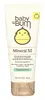
Sun Bum Baby Bum Mineral SPF 50 Sunscreen Lotion-Fragrance Free Versus Sun Bum Original SPF 50 Clear Lotion
This hybrid sunscreen covers the full UV range and blocks ~98% of UVB at SPF 50.
This chemical sunscreen covers burning UVB and near UVA but not the deep UVA that drives aging.

What's inside
What's inside
 Key Ingredients
Benefits
Concerns
Ingredients Side-by-side
Zinc Oxide 20%
Cosmetic Colorant


Water
Skin ConditioningCocos Nucifera Oil
Masking








Butyloctyl Salicylate
Skin Conditioning
Diheptyl Succinate
EmollientMethyl Dihydroabietate
Butyrospermum Parkii Butter
Skin Conditioning
Capryloyl Glycerin/Sebacic Acid Copolymer
Skin ConditioningSodium Stearoyl Glutamate
CleansingCetearyl Alcohol
Emollient
Theobroma Cacao Seed Butter
Emollient
Sodium Hyaluronate
Humectant


Bisabolol
Antioxidant


Tocopherol
Antioxidant


Coco-Glucoside
Cleansing
Microcrystalline Cellulose
AbsorbentCellulose Gum
Emulsion StabilisingCetyl Alcohol
Emollient
Arachidyl Alcohol
Emollient
Behenyl Alcohol
Emollient
Arachidyl Glucoside
EmulsifyingPolyhydroxystearic Acid
Emulsifying
Sodium Gluconate
ChelatingPhenoxyethanol
Preservative
Ethylhexylglycerin
Skin ConditioningCitric Acid
Buffering
Zinc Oxide 20%, Water, Cocos Nucifera Oil, Butyloctyl Salicylate, Diheptyl Succinate, Methyl Dihydroabietate, Butyrospermum Parkii Butter, Capryloyl Glycerin/Sebacic Acid Copolymer, Sodium Stearoyl Glutamate, Cetearyl Alcohol, Theobroma Cacao Seed Butter, Sodium Hyaluronate, Bisabolol, Tocopherol, Coco-Glucoside, Microcrystalline Cellulose, Cellulose Gum, Cetyl Alcohol, Arachidyl Alcohol, Behenyl Alcohol, Arachidyl Glucoside, Polyhydroxystearic Acid, Sodium Gluconate, Phenoxyethanol, Ethylhexylglycerin, Citric Acid
Homosalate 10%
Skin Conditioning
Ethylhexyl Salicylate 5%
UV Absorber
Octocrylene 10%
UV Absorber
Zinc 7%
Antioxidant

Water
Skin ConditioningC12-15 Alkyl Benzoate
AntimicrobialEthylhexyl Palmitate
Emollient
Ethylhexyl Stearate
Emollient
Cetyl PEG/PPG-10/1 Dimethicone
Emulsifying
Glycerin
Humectant
Hydrogenated Ethylhexyl Olivate
EmollientHydrogenated Olive Oil Unsaponifiables
Emollient
Isoamyl Cocoate

Hydrogenated Castor Oil
Emollient
Hydrated Silica
Abrasive
Polyethylene
Abrasive
Tocopheryl Acetate
Antioxidant
Theobroma Cacao Seed Butter
Emollient
Aloe Barbadensis Leaf Juice
Skin Conditioning
Beeswax
Emulsion Stabilising
Parfum
Masking
Sodium Chloride
MaskingTriethoxycaprylylsilane
Phenoxyethanol
Preservative
Ethylhexylglycerin
Skin ConditioningHomosalate 10%, Ethylhexyl Salicylate 5%, Octocrylene 10%, Zinc 7%, Water, C12-15 Alkyl Benzoate, Ethylhexyl Palmitate, Ethylhexyl Stearate, Cetyl PEG/PPG-10/1 Dimethicone, Glycerin, Hydrogenated Ethylhexyl Olivate, Hydrogenated Olive Oil Unsaponifiables, Isoamyl Cocoate, Hydrogenated Castor Oil, Hydrated Silica, Polyethylene, Tocopheryl Acetate, Theobroma Cacao Seed Butter, Aloe Barbadensis Leaf Juice, Beeswax, Parfum, Sodium Chloride, Triethoxycaprylylsilane, Phenoxyethanol, Ethylhexylglycerin
Reviews
Ingredients Explained
These ingredients are found in both products.
Ingredients higher up in an ingredient list are typically present in a larger amount.
Ethylhexylglycerin is created from glycerin. It is a multitasker ingredient that:
The CIR Expert Panel found minimal skin absorption or sensitization of any kind in a safety assessment. Though this ingredient is considered well-tolerated, a small number of cases of allergic dermatitis have been published since 2002. Just be sure to patch test if you are unsure.
Industry-reported use ranges from 8% in rinse-off products and 2% in leave-on formulations.
Learn more about EthylhexylglycerinPhenoxyethanol is one of the most widely used preservatives in skincare (and for good reason!).
It has a large spectrum of antimicrobial activity and especially effective bacteria, yeast, and mold while only having a weak effect on your skin's natural microbiome.
On a cellular level, it disrupts the cell membranes of microbes by poking holes that make the cell leak. This shuts down the chemical reactions the microbe needs to make energy so it can no longer survive.
Another perk of this ingredient is that it stays functional across a wide pH range (3-10).
You'll often see it paired with boosters like Ethylhexylglycerin; one study showed that a 1:9 ratio of Ethylhexylglycerin to Phenoxyethanol damages bacterial membranes as effectively as doubling the Phenoxyethanol concentration on its own.
Typical use concentrations range from 0.3-1% depending on the formula, and this ingredient is capped at 1% int the EU.
Safety-wise, the fear mongering does not hold up to the evidence. The EU's Scientific Committee on Consumer Safety and FDA consider it safe as a preservative at up to 1%, including for children of all ages.
Adverse systemic effects only showed up in animal studies at exposures roughly 200x higher than what people get from cosmetics. And despite its very widespread use, this ingredient is a rare sensitizer and allergic reactions are uncommon.
Learn more about PhenoxyethanolThis ingredient is also known as Cocoa butter; it's the fat pressed out of roasted cocoa beans.
Cocoa butter is solid at room temperature and melts right around body temperature, which is why it feels waxy in the jar and slippery on skin.
It has a very saturated profile (stearic acid ~34 to 36%, oleic acid ~30 to 40%, and palmitic acid ~24 to 29%) that makes it a strong occlusive: it sits on top and slows water escaping from skin.
Concentration data shows that it can show up anywhere from a few percent in lotions up to 100% in balms, and the FDA lists cocoa butter as an OTC skin protectant active at 50-100%.
The CIR has reviewed it and concluded it to be safe as used in cosmetics.
This is one of the ingredients with a comedogenic score of 4/5 from the rabbit ear test. Just know that a later human study did find that finished products containing high-comedogenic ingredients like cocoa butter did not increase microcomedone formation.
The fair call here is that this ingredient is most likely fine on body or low-percentage formulas, but can potentially be riskier as a heavy leave-on facial product if you break out easily.
Cocoa butter may not be fungal acne safe; it is a triglyceride of C16-18 fatty acids that the Malassezia yeast can metabolize.
Allergies to cocoa butter are rare and uncommon, but a few cases have been documented (mostly in cases where the person ate chocolate). So if you have a tree nut allergy, be sure to patch test or avoid.
Learn more about Theobroma Cacao Seed ButterWater. It's the most common cosmetic ingredient of all. You'll usually see it at the top of ingredient lists, meaning that it makes up the largest part of the product.
So why is it so popular? Water most often acts as a solvent - this means that it helps dissolve other ingredients into the formulation.
You'll also recognize water as that liquid we all need to stay alive. If you see this, drink a glass of water. Remember to stay hydrated!
Learn more about Water

