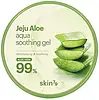
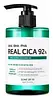
Skin79 Jeju Aloe Aqua Soothing Gel 99% Versus Some By Mi Aha Bha Pha Real Cica 92% Cool Calming Soothing Gel
This calming moisturizer is formulated around Aloe Barbadensis Leaf Juice and Allantoin to calm redness and hydrate skin.
This calming moisturizer is formulated around Centella Asiatica Extract and Niacinamide to calm redness and refine skin texture.

What's inside
What's inside
 Key Ingredients
Benefits
Concerns
Ingredients Side-by-side
Aloe Barbadensis Leaf Juice 4%
Skin Conditioning


Water
Skin ConditioningMethylpropanediol
SolventGlycerin
Humectant

Butylene Glycol
Humectant
Malva Sylvestris Extract
AstringentMentha Piperita Leaf Extract
Skin ConditioningPrimula Veris Extract
Skin ConditioningAlchemilla Vulgaris Extract
AstringentVeronica Officinalis Extract
Skin ConditioningMelissa Officinalis Leaf Extract
Skin ConditioningCitrus Aurantifolia Fruit Extract
Skin ConditioningHydrolyzed Collagen
Emollient
Allantoin
Skin Conditioning
Trehalose
Humectant
Sodium Hyaluronate
Humectant
Sodium Polyacrylate
Absorbent
Polysorbate 20
Emulsifying

Carbomer
Emulsion StabilisingTromethamine
BufferingPhenoxyethanol
Preservative
Ethylhexylglycerin
Skin ConditioningEthyl Hexanediol
Solvent1,2-Hexanediol
Skin Conditioning
Disodium EDTA
ChelatingParfum
Masking



Aloe Barbadensis Leaf Juice 4%, Water, Methylpropanediol, Glycerin, Butylene Glycol, Malva Sylvestris Extract, Mentha Piperita Leaf Extract, Primula Veris Extract, Alchemilla Vulgaris Extract, Veronica Officinalis Extract, Melissa Officinalis Leaf Extract, Citrus Aurantifolia Fruit Extract, Hydrolyzed Collagen, Allantoin, Trehalose, Sodium Hyaluronate, Sodium Polyacrylate, Polysorbate 20, Carbomer, Tromethamine, Phenoxyethanol, Ethylhexylglycerin, Ethyl Hexanediol, 1,2-Hexanediol, Disodium EDTA, Parfum
Centella Asiatica Extract 92%
Cleansing
Water
Skin ConditioningNiacinamide
Smoothing





Dipropylene Glycol
HumectantHydroxyethyl Urea
Humectant
Melaleuca Alternifolia Leaf Water
Antimicrobial
Artemisia Princeps Leaf Extract
Skin ConditioningMelia Azadirachta Leaf Extract
Skin ConditioningMelia Azadirachta Flower Extract
Skin ConditioningEclipta Prostrata Extract
Skin Conditioning
Ocimum Sanctum Leaf Extract
Skin ConditioningCorallina Officinalis Extract
Skin Conditioning
Helianthus Annuus Seed Oil
Emollient
Sodium Hyaluronate
Humectant
Hydrolyzed Hyaluronic Acid
Humectant
Sodium Acetylated Hyaluronate
Humectant
Madecassic Acid
Skin Conditioning
Asiaticoside
Antioxidant
Asiatic Acid
Skin Conditioning
Madecassoside
Antioxidant
Allantoin
Skin Conditioning
Arginine
Masking
Adenosine
Skin Conditioning
Salicylic Acid
Masking

Lactobionic Acid
Buffering
Citric Acid
Buffering
C12-13 Pareth-9
EmulsifyingCarbomer
Emulsion Stabilising1,2-Hexanediol
Skin Conditioning
Benzyl Glycol
SolventEthylhexylglycerin
Skin ConditioningRaspberry Ketone
Masking
Rosmarinus Officinalis Leaf Oil
Masking
Centella Asiatica Extract 92%, Water, Niacinamide, Dipropylene Glycol, Hydroxyethyl Urea, Melaleuca Alternifolia Leaf Water, Artemisia Princeps Leaf Extract, Melia Azadirachta Leaf Extract, Melia Azadirachta Flower Extract, Eclipta Prostrata Extract, Ocimum Sanctum Leaf Extract, Corallina Officinalis Extract, Helianthus Annuus Seed Oil, Sodium Hyaluronate, Hydrolyzed Hyaluronic Acid, Sodium Acetylated Hyaluronate, Madecassic Acid, Asiaticoside, Asiatic Acid, Madecassoside, Allantoin, Arginine, Adenosine, Salicylic Acid, Lactobionic Acid, Citric Acid, C12-13 Pareth-9, Carbomer, 1,2-Hexanediol, Benzyl Glycol, Ethylhexylglycerin, Raspberry Ketone, Rosmarinus Officinalis Leaf Oil
Ingredients Explained
These ingredients are found in both products.
Ingredients higher up in an ingredient list are typically present in a larger amount.
1,2-Hexanediol is a synthetic liquid and another multi-functional powerhouse.
It is a:
- Humectant, drawing moisture into the skin
- Emollient, helping to soften skin
- Solvent, dispersing and stabilizing formulas
- Preservative booster, enhancing the antimicrobial activity of other preservatives
Allantoin is a soothing ingredient known for its protective and moisturizing properties; it's basically a quiet workhorse ingredient you can find in a huge range of cosmetics.
Though it can be derived from the comfrey plant, allantoin is produced synthetically for cosmetic products to ensure purity.
Research shows it can encourage your skin cells to turn over and renew by stimulating keratinocyte and fibroblast proliferation.
It also has mild keratolytic properties to help loosen and shed dead skin cells without being harsh.
Studies also suggest allantoin can help calm inflammation by dialing down some of the chemical signals your skin sends out when it is irritated.
This ingredient is typically used in the 0.1-0.5% range, and the FDA recognizes it as a skin protectant in OTC products up to 2%.
Overall, allantoin is a wonderful addition to most routines; it is stable across a wide pH range (~4-8), works well with other ingredients, and is considered non-sensitizing/non-irritating.
Fun fact: Allantoin is naturally occurring in comfrey root, beets, chamomile, and wheat sprouts. Our bodies even produce it as a byproduct of uric acid metabolism.
Learn more about AllantoinCarbomer is a synthetic thickening and gelling agent. It's basically the ingredient that gives a lot of serums, gels, creams, and sunscreens their smooth, non-sticky texture.
Although legally permitted at very high levels, carbomers are normally used at concentrations below 1%.
It also needs to be neutralized to actually thicken, and because it is a large molecule, it doesn't really penetrate the skin barrier.
Allergy-wise, the risk is very low. Clinical studies show carbomers have low potential for skin irritation/sensitization even at concentrations up to 100%.
A 2024 UK study patch-tested 1,302 patients and found true allergy to the parent group of carbomer to be rare with no confirmed relevant reactions.
Learn more about CarbomerEthylhexylglycerin is created from glycerin. It is a multitasker ingredient that:
The CIR Expert Panel found minimal skin absorption or sensitization of any kind in a safety assessment. Though this ingredient is considered well-tolerated, a small number of cases of allergic dermatitis have been published since 2002. Just be sure to patch test if you are unsure.
Industry-reported use ranges from 8% in rinse-off products and 2% in leave-on formulations.
Learn more about EthylhexylglycerinSodium Hyaluronate is the salt form of hyaluronic acid. It is a long sugar chain that is naturally found in your skin, joints, and connective tissue that maintains hydration and elasticity.
In skincare, it works as a humectant. It pulls water from the environment and deeper layers of skin and binds it to the surface.
Interestingly, the size of the molecule affects its behavior:
Some clinical evidence links low molecular weight versions to improved wrinkle depth, elasticity, anti-inflammatory effects, and barrier repair.
Many serums use a blend of both weights so you can get surface hydration plus longer-lasting and deeper effects.
You'll typically see concentrations between 0.1-2% for this ingredient.
Learn more about Sodium HyaluronateWater. It's the most common cosmetic ingredient of all. You'll usually see it at the top of ingredient lists, meaning that it makes up the largest part of the product.
So why is it so popular? Water most often acts as a solvent - this means that it helps dissolve other ingredients into the formulation.
You'll also recognize water as that liquid we all need to stay alive. If you see this, drink a glass of water. Remember to stay hydrated!
Learn more about Water

