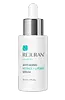
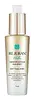
Rejuran Advanced Anti-Aging Retinol + C-PDRN Serum Versus Rejuran Healer Turnover Ampoule Dual Effect
This anti-aging serum is formulated around Retinol and Palmitoyl Tripeptide-38 to soften the look of wrinkles and refine skin texture.
This brightening ampoule is formulated around Glycyrrhiza Glabra Root Extract and Arbutin to fade the look of dark spots.

What's inside
What's inside
 Key Ingredients
Benefits
Concerns
Ingredients Side-by-side
Aloe Barbadensis Leaf Juice
Skin Conditioning


Rubus Villosus Fruit Extract
AstringentVaccinium Angustifolium Fruit Extract
Skin Protecting
Morus Nigra Leaf Extract
Skin ConditioningCucumis Sativus Fruit Extract
Emollient
Daucus Carota Sativa Root
Skin ConditioningCalendula Officinalis Flower
Skin Conditioning
Caprylic/Capric Triglyceride
Masking

Citrus Aurantium Dulcis Peel Extract
Emulsion Stabilising
Borago Officinalis Seed Oil
Emollient




Panthenol
Skin Conditioning
Glycerin
Humectant
Argania Spinosa Kernel Oil
Emollient

Sodium Ascorbyl Phosphate
Antioxidant





Allantoin
Skin Conditioning
Hydrolyzed DNA
Skin ConditioningAdenosine
Skin Conditioning
Retinol
Skin Conditioning


Palmitoyl Tripeptide-38
Skin Conditioning
Xanthan Gum
EmulsifyingHydroxyethylcellulose
Emulsion StabilisingCarbomer
Emulsion StabilisingDimethicone
Emollient
1,2-Hexanediol
Skin Conditioning
Ethylhexylglycerin
Skin ConditioningAloe Barbadensis Leaf Juice, Rubus Villosus Fruit Extract, Vaccinium Angustifolium Fruit Extract, Morus Nigra Leaf Extract, Cucumis Sativus Fruit Extract, Daucus Carota Sativa Root, Calendula Officinalis Flower, Caprylic/Capric Triglyceride, Citrus Aurantium Dulcis Peel Extract, Borago Officinalis Seed Oil, Panthenol, Glycerin, Argania Spinosa Kernel Oil, Sodium Ascorbyl Phosphate, Allantoin, Hydrolyzed DNA, Adenosine, Retinol, Palmitoyl Tripeptide-38, Xanthan Gum, Hydroxyethylcellulose, Carbomer, Dimethicone, 1,2-Hexanediol, Ethylhexylglycerin
Rubus Fruticosus Leaf Extract
MaskingGlycyrrhiza Glabra Root Extract
Bleaching
Calendula Officinalis Flower Extract
Masking
Aloe Barbadensis Leaf Juice
Skin Conditioning
Vaccinium Angustifolium Fruit Extract
Skin Protecting
Morus Nigra Fruit Extract
Skin ConditioningArbutin
Antioxidant
Butylene Glycol
Humectant
Glycerin
Humectant
Polysorbate 20
Emulsifying
Hydrolyzed DNA
Skin ConditioningGerotine/Hydrolyzed DNA
Antioxidant
Sodium Hyaluronate
Humectant
Carbomer
Emulsion StabilisingXanthan Gum
EmulsifyingAdenosine
Skin Conditioning
Tocopheryl Acetate
Antioxidant
Niacinamide
Smoothing
Bisabolol
Antioxidant
PEG-6
HumectantWater
Skin ConditioningCaprylyl Glycol
Emollient
Ethylhexylglycerin
Skin ConditioningHexylene Glycol
Emulsifying1,2-Hexanediol
Skin Conditioning
Dipropylene Glycol
HumectantSodium Chloride
MaskingTrehalose
Humectant
Urea
Buffering
Serine
Masking
Pentylene Glycol
Skin Conditioning
Glyceryl Polyacrylate
Algin
MaskingPullulan
Disodium Phosphate
BufferingPotassium Phosphate
BufferingSqualane
Emollient
Hydrogenated Lecithin
Emulsifying
Ceramide NP
Skin Conditioning
Oleic Acid
Emollient
Inulin Lauryl Carbamate
Emulsion StabilisingRubus Fruticosus Leaf Extract, Glycyrrhiza Glabra Root Extract, Calendula Officinalis Flower Extract, Aloe Barbadensis Leaf Juice, Vaccinium Angustifolium Fruit Extract, Morus Nigra Fruit Extract, Arbutin, Butylene Glycol, Glycerin, Polysorbate 20, Hydrolyzed DNA, Gerotine/Hydrolyzed DNA, Sodium Hyaluronate, Carbomer, Xanthan Gum, Adenosine, Tocopheryl Acetate, Niacinamide, Bisabolol, PEG-6, Water, Caprylyl Glycol, Ethylhexylglycerin, Hexylene Glycol, 1,2-Hexanediol, Dipropylene Glycol, Sodium Chloride, Trehalose, Urea, Serine, Pentylene Glycol, Glyceryl Polyacrylate, Algin, Pullulan, Disodium Phosphate, Potassium Phosphate, Squalane, Hydrogenated Lecithin, Ceramide NP, Oleic Acid, Inulin Lauryl Carbamate
Reviews
Ingredients Explained
These ingredients are found in both products.
Ingredients higher up in an ingredient list are typically present in a larger amount.
1,2-Hexanediol is a synthetic liquid and another multi-functional powerhouse.
It is a:
- Humectant, drawing moisture into the skin
- Emollient, helping to soften skin
- Solvent, dispersing and stabilizing formulas
- Preservative booster, enhancing the antimicrobial activity of other preservatives
Adenosine is a purine nucleoside that your body already makes in every cell. In skincare, it acts mainly as a skin conditioning and anti-aging agent.
The way it works is fairly well mapped out:
Your skin has cells called fibroblasts that build collagen (the stuff that keeps skin firm and smooth). Adenosine basically flips a switch on these cells that tells them to get to work making more collagen and other proteins. These cells slow down on their own as skin ages, so Adenosine helps give them a little nudge to keep going.
The clinical backing is pretty solid too.
A blind, randomized, placebo-controlled trial of 126 women aged 45-65 tested a 0.1% cream twice daily and found real improvements in crow's feet and frown lines using a precise 3D skin-mapping technique; these changes showed up by week 3 and held at 2 months.
A later study using Adenosine-loaded dissolving microneedle patches reported gains in wrinkle depth, dermal density, elasticity, and hydration.
On concentrations, South Korea's Ministry of Food and Drug Safety has set 0.04% as the approved functional anti-wrinkle level. You'll typically see this ingredient used somewhere in the 0.04-0.1% range since it works at low doses.
This ingredient has been found safe for cosmetics with the data showing no irritation or sensitization.
Overall, this is a great ingredient for any anti-aging routine and has no photosensitizing effect, so it suits both AM and PM use.
Learn more about AdenosineAloe Barbadensis Leaf Juice is the filtered, stabilized liquid pressed from the inner gel of the aloe vera leaf.
In cosmetics, it shows up as either soothing active or a water-replacement base. It is roughly 98-99% water and the last 1-2% is an interesting mix of polysaccharides, amino acids, vitamins, minerals, and enzymes.
The polysaccharides do most of the work: they bind water at the skin surface for a light, non-greasy hydration boost. And one of the polysaccharides, glycomannan, is linked to fibroblast stimulation + collagen synthesis. This is also why aloe has such a long track record in wound and burn healing.
This ingredient is also calming with anti-inflammatory and mild antimicrobial activity, making it a great pick for sensitive, irritated, or post-sun skin.
Realistic expectations matter though; the solid evidence is mostly limited to hydration, soothing, and wound support. Deeper claims about anti-aging or sun protection are not well backed, and science reviews note it does not prevent radiation-induced skin injury.
Because it plays well with almost everything, it's commonly used as a base alongside other actives like niacinamide or vitamin C.
Typical usage concentrations range from 0.5% (where hydration benefits already show up) all the way to 90%+ (where it replaces water as the main base).
The safety for this ingredient is well-establish as well. Overall, this is a great supporting ingredient for those who want a boost in hydration.
Learn more about Aloe Barbadensis Leaf JuiceCarbomer is a synthetic thickening and gelling agent. It's basically the ingredient that gives a lot of serums, gels, creams, and sunscreens their smooth, non-sticky texture.
Although legally permitted at very high levels, carbomers are normally used at concentrations below 1%.
It also needs to be neutralized to actually thicken, and because it is a large molecule, it doesn't really penetrate the skin barrier.
Allergy-wise, the risk is very low. Clinical studies show carbomers have low potential for skin irritation/sensitization even at concentrations up to 100%.
A 2024 UK study patch-tested 1,302 patients and found true allergy to the parent group of carbomer to be rare with no confirmed relevant reactions.
Learn more about CarbomerEthylhexylglycerin is created from glycerin. It is a multitasker ingredient that:
The CIR Expert Panel found minimal skin absorption or sensitization of any kind in a safety assessment. Though this ingredient is considered well-tolerated, a small number of cases of allergic dermatitis have been published since 2002. Just be sure to patch test if you are unsure.
Industry-reported use ranges from 8% in rinse-off products and 2% in leave-on formulations.
Learn more about EthylhexylglycerinGlycerin (or glycerol) is a compound naturally found in your skin. It's a powerhouse humectant that pulls water into the stratum corneum.
Topically, glycerin does several things at once:
Your skin makes glycerin on its own (mostly from sebaceous oil breakdown) and shuttles it to your outermost layer of skin, or your epidermis, via aquaporin-3.
Aquaporin-3 is a transporter that is essential for normal skin hydration, elasticity, and repair. Interestingly, mice lacking in AQP3 have dry and less elastic skin that can be fully corrected with glycerin.
This ingredient is non-irritating, plays well with almost every ingredient, and works across all skin types. Typical use is anywhere between 3-10% but can go up to 79% in some leave-on products.
Just know very high concentrations (>40%) can feel tacky in low humidity.
Glycerin is the name for this ingredient in American English. British English uses Glycerol/Glycerine.
Learn more about GlycerinWe don't have a description for Hydrolyzed Dna yet.
This extract comes from the blueberry native to North America. It has great antioxidant and skin soothing properties.
The antioxidant properties from blueberries come from its polyphenolic and vitamin C content. Polyphenols are a compound famous for their antioxidant properties and are commonly found in fruits.
A 2023 study found blueberries to protect skin from UV-B related inflammation. However, this ingredient should not replace your sunscreen.
Learn more about Vaccinium Angustifolium Fruit ExtractXanthan gum is used as a stabilizer and thickener within cosmetic products. It helps give products a sticky, thick feeling - preventing them from being too runny.
On the technical side of things, xanthan gum is a polysaccharide - a combination consisting of multiple sugar molecules bonded together.
Xanthan gum is a pretty common and great ingredient. It is a natural, non-toxic, non-irritating ingredient that is also commonly used in food products.
Learn more about Xanthan Gum

