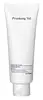
This mild cream cleanser is made to cleanse without leaving your skin tight or dry.

What's inside
What's inside
 Benefits
Concerns
Ingredients Side-by-side
Saposhnikovia Divaricata Root Extract
AntimicrobialGlycerin
Humectant


Myristic Acid
Cleansing



Lauric Acid
Cleansing
Potassium Hydroxide
BufferingWater
Skin ConditioningPalmitic Acid
Emollient
Stearic Acid
Cleansing
Glycol Distearate
Emollient
Glyceryl Stearate
Emollient
Glyceryl Stearate Se
Emulsifying
PEG-100 Stearate
Surfactant
Lauramide DEA
Foam Boosting1,2-Hexanediol
Skin Conditioning
Butylene Glycol
Humectant
Glyceryl Caprylate
EmollientOzokerite
Emulsion StabilisingHydrogenated Vegetable Oil
Emollient
Beeswax
Emulsion Stabilising
Sodium Chloride
MaskingStearyl Stearate
Emollient
Hydrogenated Palm Acid
Capric Acid
Cleansing

Oleic Acid
Emollient
Sodium Polyacrylate
Absorbent
Cocamidopropyl Betaine
Cleansing

Parfum
Masking
Linalool
Perfuming
Limonene
Perfuming
Saposhnikovia Divaricata Root Extract, Glycerin, Myristic Acid, Lauric Acid, Potassium Hydroxide, Water, Palmitic Acid, Stearic Acid, Glycol Distearate, Glyceryl Stearate, Glyceryl Stearate Se, PEG-100 Stearate, Lauramide DEA, 1,2-Hexanediol, Butylene Glycol, Glyceryl Caprylate, Ozokerite, Hydrogenated Vegetable Oil, Beeswax, Sodium Chloride, Stearyl Stearate, Hydrogenated Palm Acid, Capric Acid, Oleic Acid, Sodium Polyacrylate, Cocamidopropyl Betaine, Parfum, Linalool, Limonene
Water
Skin ConditioningGlycerin
Humectant
Sodium Cocoyl Isethionate
Cleansing
Stearyl Alcohol
Emollient
Glyceryl Stearate
Emollient
Glyceryl Stearate Se
Emulsifying
Sodium Cocoyl Glutamate
Cleansing
Sodium Methyl Cocoyl Taurate
Cleansing
Sea Water
HumectantCitrus Aurantium Bergamia Fruit Oil
Masking
Lavandula Hybrida Oil
Emollient
Rosmarinus Officinalis Leaf Oil
Masking
Quillaja Saponaria Bark Extract
CleansingSapindus Mukorossi Fruit Extract
Skin ConditioningMoringa Oleifera Seed Extract
Skin Conditioning
Rosa Multiflora Fruit Extract
MaskingHydroxypropyl Starch Phosphate
Coco-Glucoside
Cleansing
Caprylyl Glycol
Emollient
Glyceryl Caprylate
EmollientCitric Acid
Buffering

Butylene Glycol
Humectant
1,2-Hexanediol
Skin Conditioning
Pentylene Glycol
Skin Conditioning
Maltodextrin
Absorbent
Disodium EDTA
ChelatingLimonene
Perfuming
Linalool
Perfuming
Water, Glycerin, Sodium Cocoyl Isethionate, Stearyl Alcohol, Glyceryl Stearate, Glyceryl Stearate Se, Sodium Cocoyl Glutamate, Sodium Methyl Cocoyl Taurate, Sea Water, Citrus Aurantium Bergamia Fruit Oil, Lavandula Hybrida Oil, Rosmarinus Officinalis Leaf Oil, Quillaja Saponaria Bark Extract, Sapindus Mukorossi Fruit Extract, Moringa Oleifera Seed Extract, Rosa Multiflora Fruit Extract, Hydroxypropyl Starch Phosphate, Coco-Glucoside, Caprylyl Glycol, Glyceryl Caprylate, Citric Acid, Butylene Glycol, 1,2-Hexanediol, Pentylene Glycol, Maltodextrin, Disodium EDTA, Limonene, Linalool
Reviews
Ingredients Explained
These ingredients are found in both products.
Ingredients higher up in an ingredient list are typically present in a larger amount.
1,2-Hexanediol is a synthetic liquid and another multi-functional powerhouse.
It is a:
- Humectant, drawing moisture into the skin
- Emollient, helping to soften skin
- Solvent, dispersing and stabilizing formulas
- Preservative booster, enhancing the antimicrobial activity of other preservatives
Butylene Glycol (or BG) is used within cosmetic products for a few different reasons:
Overall, Butylene Glycol is a safe and well-rounded ingredient that works well with other ingredients.
Though this ingredient works well with most skin types, some people with sensitive skin may experience a reaction such as allergic rashes, closed comedones, or itchiness.
Learn more about Butylene GlycolGlycerin (or glycerol) is a compound naturally found in your skin. It's a powerhouse humectant that pulls water into the stratum corneum.
Topically, glycerin does several things at once:
Your skin makes glycerin on its own (mostly from sebaceous oil breakdown) and shuttles it to your outermost layer of skin, or your epidermis, via aquaporin-3.
Aquaporin-3 is a transporter that is essential for normal skin hydration, elasticity, and repair. Interestingly, mice lacking in AQP3 have dry and less elastic skin that can be fully corrected with glycerin.
This ingredient is non-irritating, plays well with almost every ingredient, and works across all skin types. Typical use is anywhere between 3-10% but can go up to 79% in some leave-on products.
Just know very high concentrations (>40%) can feel tacky in low humidity.
Glycerin is the name for this ingredient in American English. British English uses Glycerol/Glycerine.
Learn more about GlycerinGlyceryl Caprylate comes from glycerin and caprylic acid. It is an emollient, co-emulsifier, and preservative booster.
Its short C8 fatty acid chain makes it behave differently from its longer-chain emollient cousins like Glyceryl Stearate. It feels more lightweight, fast-absorbing, and silky instead of rich and waxy.
As a co-emulsifier, its "head" and "tail" sit at the oil-water interface. But overall, the short C8 tail and not being water soluble means it doesn't really have the muscle to emulsify a formula on its own. That's why you'll often see it paired with a primary emulsifier like Cetearyl Glucoside.
Interestingly, Glyceryl Caprylate acts as a preservative booster. This is because its fatty-acid backbone disrupts microbial lipid membranes. It shows excellent activity against bacteria and yeast but is weaker against mold.
Typical concentrations range from 0.5-1% and this ingredient is generally non-irritating.
Because this ingredient has a C8 fatty acid chain, it is outside the range that the Malassezia yeast metabolizes (making it fungal acne safe).
Learn more about Glyceryl CaprylateGlyceryl Stearate is made by reacting glycerin with stearic acid (typically sourced from plant oils like palm or coconut). It's an emulsifier, emollient, and mild occlusive.
Emulsifiers help ingredients like oil and water stay mixed so your formula stays nicely blended and uniform in texture.
This ingredient is typically used in concentrations between 1-10%. Studies have found it to be non-sensitizing, non-phototoxic, and non-photoallergenic.
A close cousin of this ingredient is Glyceryl Stearate SE ("self-emulsifying"). This just has a small amount of sodium or potassium stearate added so it can emulsify without a co-emulsifier.
Since this ingredient is an ester of a C18 fatty acid, it may not be fungal acne safe. The Malassezia yeast can potentially metabolize within the C11-C24 range.
Fun fact: The human body also creates Glyceryl Stearate naturally.
Learn more about Glyceryl StearateGlyceryl Stearate SE is a self-emulsifying (SE) form of Glyceryl Stearate. It comes with a small amount of soap (usually potassium or sodium stearate) that gives it the "SE" part.
That soap lets it pull oil and water together on its own which is why it shows up as an emulsifier, thickener, and emollient.
Industry survey data shows this ingredient is used around 1-5% but Glyceryl Stearate goes as high at 17% in a leave-on deodorant.
Safety-wise, it's pretty boring: it's been deemed safe for topical use in 1982 and again most recently in 2021 by the CIR. Human repeat insult patch tests come back non-irritating, non-sensitizing, non-phototoxic, and non-photoallergenic.
This ingredient does carry a comedogenic rating of 3 from the old rabbit-ear assay. Just remember testing finished products in humans showed that formulas built with "comedogenic" ingredients are not necessarily comedogenic themselves. It's worth patch testing if you're breakout prone, and always listen to your skin.
The Malassezia yeast can potentially metabolize the stearic acid in this ingredient, so it may not be fungal acne safe.
Allergy is rare: a 310-patient patch test study of common emulsifiers found this ingredient was not a meaningful reactor. Isolated case reports do exist so a true contact allergy is possible but uncommon.
Learn more about Glyceryl Stearate SeLimonene is the compound that gives citrus peel its smell.
In skincare, it shows up as a standalone fragrance ingredient or as a natural compound of citrus and other essential oils.
You'll typically see this ingredient used in very small amounts; anything above 0.001% in a leave-on product or 0.01% in a rinse-off has to be named on the label in the EU. The citrus oils that carry it sit around 0.5-1% in a finished formula.
Fresh limonene is a weak allergen; the real issue is that it slowly reacts with air and then breaks down from oxidation to create hydroperoxides (which are strong sensitizers). This is why suppliers are required to keep the peroxide value below 20 mmol.
Positive reactions in people being investigated for eczema vary:
It's worth skipping if you have a known fragrance allergy or a compromised barrier, but the risk is low for most people.
Older or long-opened products are also more likely to bother you than fresh ones due to oxidation.
Learn more about LimoneneLinalool is a small, naturally occurring scent molecule found in plants like lavender, coriander, bergamot, and more.
It is one of the two most-used fragrance ingredients in cosmetics and added purely for smell. Since it's not used for a skin benefit, there's no "effective dose". Concentration depends on the fragrance load of the product.
The EU requires it to be named on the label above 0.001% in leave-on and 0.01% in rinse-off products.
Fresh linalool is a weak sensitizer but air exposure turns some of it into hydroperoxides, which are strong sensitizers. Those oxidation products are the actual allergy concern.
Patch-test clinics see positive reactions to linalool hydroperoxides in about 4% to 12% of dermatitis patients depending on country and test concentration.
Resassuringly, one analytical study found hydroperoxide levels in real fragranced products to be orders of magnitude below what induced sensitization in animal studies with no evidence of oxidation building up during normal storage.
The practical takeaway is that linalool is fine for most people but worth avoiding if you have a confirmed fragrance contact allergy or a badly compromised barrier.
Products stored a long time after opening are also the high-risk scenario since that is when oxidation happens.
The scent of linalool is described as floral, spicy tropical, and citrus-like.
Learn more about LinaloolWater. It's the most common cosmetic ingredient of all. You'll usually see it at the top of ingredient lists, meaning that it makes up the largest part of the product.
So why is it so popular? Water most often acts as a solvent - this means that it helps dissolve other ingredients into the formulation.
You'll also recognize water as that liquid we all need to stay alive. If you see this, drink a glass of water. Remember to stay hydrated!
Learn more about Water

