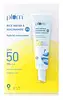
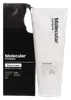
Plum Goodness 2% Niacinamide & Rice Water SPF 50 PA+++ Hybrid Sunscreen Versus Molecular Company Sunscreen SPF 50+
This hybrid sunscreen covers the full UV range and blocks ~98% of UVB at SPF 50.
This chemical sunscreen covers the full UV range and blocks ~98% of UVB at SPF 50.

What's inside
What's inside
 Key Ingredients
Benefits
Concerns
Ingredients Side-by-side
Water
Skin ConditioningEthylhexyl Methoxycinnamate
UV Absorber


Butyl Methoxydibenzoylmethane
UV Absorber
Benzophenone-3
UV Absorber
Phospholipids
Skin Conditioning

Butylene Glycol
Humectant
Propanediol
Solvent
Niacinamide
Smoothing










Glycerin
Humectant
Titanium Dioxide
Cosmetic Colorant
Rice Ferment Filtrate
Skin Conditioning
Oryza Sativa Extract
Absorbent
Aluminum Hydroxide
EmollientBenzyl Alcohol
Perfuming





Hydroxyacetophenone
Antioxidant
Stearic Acid
Cleansing

Caprylyl Glycol
Emollient
Ammonium Acryloyldimethyltaurate/Vp Copolymer
Sodium Polyacryloyldimethyl Taurate
Emulsion StabilisingSodium Benzoate
Masking
Potassium Sorbate
Preservative
Sodium Gluconate
ChelatingPanthenol
Skin Conditioning
Water, Ethylhexyl Methoxycinnamate, Butyl Methoxydibenzoylmethane, Benzophenone-3, Phospholipids, Butylene Glycol, Propanediol, Niacinamide, Glycerin, Titanium Dioxide, Rice Ferment Filtrate, Oryza Sativa Extract, Aluminum Hydroxide, Benzyl Alcohol, Hydroxyacetophenone, Stearic Acid, Caprylyl Glycol, Ammonium Acryloyldimethyltaurate/Vp Copolymer, Sodium Polyacryloyldimethyl Taurate, Sodium Benzoate, Potassium Sorbate, Sodium Gluconate, Panthenol
Water
Skin ConditioningButylene Glycol
Humectant
Ethylhexyl Methoxycinnamate
UV Absorber
Bis-Ethylhexyloxyphenol Methoxyphenyl Triazine
UV Absorber
Butyl Methoxydibenzoylmethane
UV Absorber
Phospholipids
Skin Conditioning
Phenoxyethanol
Preservative
Niacinamide
Smoothing
Glycyrrhiza Glabra Root Extract
Bleaching
Panthenol
Skin Conditioning
Capsicum Annuum Fruit Extract
Antimicrobial
Betula Alba Bark Extract
Masking
Sodium Benzoate
Masking
Potassium Sorbate
Preservative
Acrylates/C10-30 Alkyl Acrylate Crosspolymer
Emulsion StabilisingSodium Gluconate
ChelatingWater, Butylene Glycol, Ethylhexyl Methoxycinnamate, Bis-Ethylhexyloxyphenol Methoxyphenyl Triazine, Butyl Methoxydibenzoylmethane, Phospholipids, Phenoxyethanol, Niacinamide, Glycyrrhiza Glabra Root Extract, Panthenol, Capsicum Annuum Fruit Extract, Betula Alba Bark Extract, Sodium Benzoate, Potassium Sorbate, Acrylates/C10-30 Alkyl Acrylate Crosspolymer, Sodium Gluconate
Reviews
Ingredients Explained
These ingredients are found in both products.
Ingredients higher up in an ingredient list are typically present in a larger amount.
Also known as Avobenzone, this ingredient is an oil-soluble used to absorb the full spectrum of UVA rays (peak 357 nm).
It's one of the most effective UVA filters available but has a major caveat of photostability: avobenzone is susceptible to photodegradation.
This means it can lose efficacy when exposed to sunlight without the help of a stabilizing agent.
Studies show antioxidants (like vitamin E or vitamin C) and some UV filters (like octocrylene and Tinosorb S) can meaningfully improve its stability in a formulation.
The maximum allowable concentration according to regulation is 3% in the US + Canada, and 5% in the EU, Australia, China, Korea, and ASEAN countries.
It has a well-support safety profile: a comprehensive 2025 review found minimal toxicity with no evidence of carcinogenicity.
Overall, avobenzone is a safe and regulated ingredient used in sunscreen for over 40 years.
Learn more about Butyl MethoxydibenzoylmethaneButylene Glycol (or BG) is used within cosmetic products for a few different reasons:
Overall, Butylene Glycol is a safe and well-rounded ingredient that works well with other ingredients.
Though this ingredient works well with most skin types, some people with sensitive skin may experience a reaction such as allergic rashes, closed comedones, or itchiness.
Learn more about Butylene GlycolThis ingredient is also known as Octinoxate and is one of the oldest and most widely used chemical UV filters in skincare.
It has a simple job: soap up UVB radiation (290-320 nm), the wavelengths responsible for sunburn and a big chunk of long-term sun damage.
In formulas, it's always paired with a separate UVA filter because octinoxate solely protects skin from UVB.
Because it's an oil-soluble liquid, it's easy to blend into the oil phase of lotions/creams and gives a cosmetically elegant feel.
The one quirk about formulating this ingredient is photostability; the molecule slowly changes shape into a less effective version when sunlight hits it. So the longer you're in the sun, the weaker its protection gets. The drop can be more than 30% in some formulas.
It also doesn't play nice with Avobenzone (the common UVA filter) since avobenzone destabilizes octinoxate and the two degrade each other. But don't worry: brands have solved this issue by adding photostabilizers like Tinosorb S to prevent degradation and keep SPF stable under heavy UV exposure.
The maximum allowed level is 10% in the EU and Australia, 7.5% in the US and Canada, and 20% in Japan.
The Cosmetic Ingredient Review Panel has concluded this ingredient to be safe in cosmetics up to 10%.
One last thing worth knowing for context:
Octinoxate has been the subject of ongoing review in Europe where the Scientific Committee on Consumer Safety's (SCCS) 2025 final opinion is that this ingredient is an endocrine-active substance.
Lab and animal studies suggest it can act a bit like a hormone in the body (mildly mimicking estrogen and slightly blocking male hormones). It's important to know this hasn't really been shown to happen in everyday human use.
This ingredient is also banned in Hawaii over coral reef concerns.
Learn more about Ethylhexyl MethoxycinnamateNiacinamide is a multitasking form of vitamin B3 that strengthens the skin barrier, reduces pores and dark spots, regulates oil, and improves signs of aging.
And the best part? It's gentle and well-tolerated by most skin types, including sensitive and reactive skin.
You might have heard of "niacin flush", or the reddening of skin that causes itchiness. Niacinamide has not been found to cause this.
In very rare cases, some individuals may not be able to tolerate niacinamide at all or experience an allergic reaction to it.
If you are experiencing flaking, irritation, and dryness with this ingredient, be sure to double check all your products as this ingredient can be found in all categories of skincare.
When incorporating niacinamide into your routine, look out for concentration amounts. Typically, 5% niacinamide provides benefits such as fading dark spots. However, if you have sensitive skin, it is better to begin with a smaller concentration.
When you apply niacinamide to your skin, your body converts it into nicotinamide adenine dinucleotide (NAD). NAD is an essential coenzyme that is already found in your cells as "fuel" and powers countless biological processes.
In your skin, NAD helps repair cell damage, produce new healthy cells, support collagen production, strengthen the skin barrier, and fight environmental stressors (like UV and pollution).
Our natural NAD levels start to decline with age, leading to slower skin repair, visible aging, and a weaker skin barrier. By providing your skin niacinamide, you're recharging your skin's NAD levels. This leads to stronger, healthier, and younger looking skin.
Another name for vitamin B3 is nicotinamide. This vitamin is water-soluble and our bodies don't store it. We obtain Vitamin B3 from either food or skincare. Meat, fish, wheat, yeast, and leafy greens contain vitamin B3.
The type of niacinamide used in skincare is synthetically created.
Learn more about NiacinamidePanthenol is a common ingredient that helps hydrate and soothe the skin. It is found naturally in our skin and hair.
There are two forms of panthenol: D and L.
D-panthenol is also known as dexpanthenol. Most cosmetics use dexpanthenol or a mixture of D and L-panthenol.
Panthenol is famous due to its ability to go deeper into the skin's layers. Using this ingredient has numerous pros (and no cons):
Like hyaluronic acid, panthenol is a humectant. Humectants are able to bind and hold large amounts of water to keep skin hydrated.
This ingredient works well for wound healing. It works by increasing tissue in the wound and helps close open wounds.
Once oxidized, panthenol converts to pantothenic acid. Panthothenic acid is found in all living cells.
This ingredient is also referred to as pro-vitamin B5.
Learn more about PanthenolPhospholipids are a family of skin-identical lipids that makeup the structural backbone of every cell membrane in your body.
In cosmetics, they function as skin conditioning agents with emulsifier and surfactant properties. They're typically sourced from soybean or sunflower lecithin (or sometimes egg yolk or marine sources).
Because they mirror the lipids naturally found in the deeper layers of your skin, topical phospholipids help reinforce the lipid matrix, reduce transepidermal water loss, and leave skin feeling conditioned.
They're also used to form liposomes, or tiny self-assembling vesible used to stabilize actives like vitamin c or retinol. This helps these ingredients integrate into the upper layers of skin more easily.
Phospholipids are compatible with everything and the CIR Expert Panel has concluded them to be safe at current use levels.
Some types of phospholipids include:
Learn more about PhospholipidsPotassium Sorbate is a preservative used to prevent yeast and mold in products. It is commonly found in both cosmetic and food products.
This ingredient comes from potassium salt derived from sorbic acid. Sorbic acid is a natural antibiotic and effective against fungus.
Both potassium sorbate and sorbic acid can be found in baked goods, cheeses, dried meats, dried fruit, ice cream, pickles, wine, yogurt, and more.
You'll often find this ingredient used with other preservatives.
Learn more about Potassium SorbateSodium Benzoate is a preservative. It's used in both cosmetic and food products to inhibit the growth of mold and bacteria. It is typically produced synthetically.
Both the US FDA and EU Health Committee have approved the use of sodium benzoate. In the US, levels of 0.1% (of the total product) are allowed.
Sodium benzoate works as a preservative by inhibiting the growth of bacteria inside of cells. It prevents the cell from fermenting a type of sugar using an enzyme called phosphofructokinase.
It is the salt of benzoic acid. Foods containing sodium benzoate include soda, salad dressings, condiments, fruit juices, wines, and snack foods.
Studies for using ascorbic acid and sodium benzoate in cosmetics are lacking, especially in skincare routines with multiple steps.
We always recommend speaking with a professional, such as a dermatologist, if you have any concerns.
Learn more about Sodium BenzoateSodium Gluconate is the sodium salt of gluconic acid. In skincare, its main job is as a chelator.
Chelators grab onto stray metal ions like iron and copper that sneak in through water, raw materials, or manufacturing equipment. This stops them from triggering reactions that cause oils to go rancid, formulas to change color, and actives like vitamin C to fall apart.
This ingredient is often chosen as a biodegradable, gentler-sounding alternative to EDTA. It also pulls double duty as a mild humectant and pH buffer.
Typical use levels sit around 0.1-1% and supplier documents list up to 10% as an acceptable ceiling. Industry data found this ingredient family is mostly used well below 1% in leave on products.
Allergy risk is very low; animal testing has found it to be non-irritating to skin and eyes, mutagenicity assays came back negative, and there are no published reports of allergic contact dermatitis to it.
Learn more about Sodium GluconateWater. It's the most common cosmetic ingredient of all. You'll usually see it at the top of ingredient lists, meaning that it makes up the largest part of the product.
So why is it so popular? Water most often acts as a solvent - this means that it helps dissolve other ingredients into the formulation.
You'll also recognize water as that liquid we all need to stay alive. If you see this, drink a glass of water. Remember to stay hydrated!
Learn more about Water

