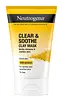
This wash off mask is formulated around Salicylic Acid to clear breakouts and unclog pores.
This wash off mask is formulated around Salicylic Acid to clear breakouts and unclog pores.


What's inside
What's inside
 Key Ingredients
Benefits
Concerns
Ingredients Side-by-side
Water
Skin ConditioningGlycerin
Humectant


Kaolin
Abrasive



Bentonite
Absorbent
Sodium Methyl Cocoyl Taurate
Cleansing
CI 77891
Cosmetic ColorantTrideceth-9
EmulsifyingSalicylic Acid
Masking







C12-15 Alkyl Lactate
EmollientCurcuma Longa Root Extract
Antioxidant

Cocamidopropyl Pg-Dimonium Chloride Phosphate
Menthol
Masking
Cetyl Lactate
EmollientCetyl Alcohol
Emollient

PEG-5 Ethylhexanoate
EmulsifyingSodium C14-16 Olefin Sulfonate
Cleansing
Sodium Chloride
MaskingXanthan Gum
EmulsifyingDisodium EDTA
ChelatingCitric Acid
Buffering
Sodium Citrate
BufferingSodium Hydroxide
BufferingPhenoxyethanol
Preservative
Chlorphenesin
Antimicrobial
Benzalkonium Chloride
Antimicrobial
Parfum
Masking
CI 77492
Cosmetic ColorantWater, Glycerin, Kaolin, Bentonite, Sodium Methyl Cocoyl Taurate, CI 77891, Trideceth-9, Salicylic Acid, C12-15 Alkyl Lactate, Curcuma Longa Root Extract, Cocamidopropyl Pg-Dimonium Chloride Phosphate, Menthol, Cetyl Lactate, Cetyl Alcohol, PEG-5 Ethylhexanoate, Sodium C14-16 Olefin Sulfonate, Sodium Chloride, Xanthan Gum, Disodium EDTA, Citric Acid, Sodium Citrate, Sodium Hydroxide, Phenoxyethanol, Chlorphenesin, Benzalkonium Chloride, Parfum, CI 77492
Water
Skin ConditioningKaolin
Abrasive
Butylene Glycol
Humectant
Glycerin
Humectant
Artemisia Vulgaris Extract
Skin Conditioning
Diglycerin
Humectant
Mica
Cosmetic ColorantPEG-32
HumectantSodium Palmitate
CleansingGlyceryl Polymethacrylate
Pvm/Ma Copolymer
Emulsion StabilisingCeramide EOP
Skin Conditioning

Ceramide AP
Skin Conditioning
Ceramide Ns
Skin Conditioning
Ceramide Ng
Skin Conditioning
Ceramide As
Skin Conditioning
Ceramide NP
Skin Conditioning
CI 77289
Cosmetic ColorantPhenoxyethanol
Preservative
PEG-40 Hydrogenated Castor Oil
Emulsifying
CI 77492
Cosmetic ColorantMenthyl Lactate
Masking
Beta-Glucan
Skin Conditioning
Curcuma Longa Root Extract
Antioxidant
Verbascum Thapsus Extract
Skin ConditioningNiacinamide
Smoothing

Centella Asiatica Extract
Cleansing
Salicylic Acid
Masking
Pinus Densiflora Leaf Extract
Antimicrobial
Lactobacillus Ferment Lysate
Skin Conditioning
Saccharide Isomerate
Humectant
Hydroxypropyl Cyclodextrin
MaskingDipropylene Glycol
HumectantRhamnose
Humectant1,2-Hexanediol
Skin Conditioning
Water, Kaolin, Butylene Glycol, Glycerin, Artemisia Vulgaris Extract, Diglycerin, Mica, PEG-32, Sodium Palmitate, Glyceryl Polymethacrylate, Pvm/Ma Copolymer, Ceramide EOP, Ceramide AP, Ceramide Ns, Ceramide Ng, Ceramide As, Ceramide NP, CI 77289, Phenoxyethanol, PEG-40 Hydrogenated Castor Oil, CI 77492, Menthyl Lactate, Beta-Glucan, Curcuma Longa Root Extract, Verbascum Thapsus Extract, Niacinamide, Centella Asiatica Extract, Salicylic Acid, Pinus Densiflora Leaf Extract, Lactobacillus Ferment Lysate, Saccharide Isomerate, Hydroxypropyl Cyclodextrin, Dipropylene Glycol, Rhamnose, 1,2-Hexanediol
Reviews
Ingredients Explained
These ingredients are found in both products.
Ingredients higher up in an ingredient list are typically present in a larger amount.
CI 77492 is also hydrated iron III oxide. It's sole purpose is to give a yellow hue to products.
Iron III oxides are classified as inorganic chemicals for coloring.
Synthetically created CI 77492 is considered safer than those naturally found. This is because the synthetically created version may contain less impurities. Iron oxides are generally non-toxic and non-allergenic.
Learn more about CI 77492Curcuma Longa Root Extract comes from the rhizome (underground stem) of the turmeric plant.
While the official EU Cosing Database lists this ingredient as a fragrance, it actually does more than give products a scent.
This ingredient contains a group of yellow pigments called curcuminoids (mostly curcumin) that give it genuine antioxidant and anti-inflammatory activity in skin.
Reviews of topical clinical studies have found turmeric/curcumin to be generally well-tolerated and useful across conditions like eczema and mild inflammation.
One thing working in its favor is that curcumin barely penetrates; in lab skin-permeation testing, the curcuminoids mostly stayed in the outermost layer of skin. This is a good thing because its soothing and antioxidant activity is a surface-level job anyway.
At this time, industry data shows there's no single "correct" cosmetic percentage. It's used across a wide range depending on the product and varies from tiny fractions of a percent up to a few percent.
Allergy-wise, curcumin is a documented (but uncommon) contact allergen. It can also cross react with related plants, so anyone with a turmeric/ginger/cinnamon allergy or reactive skin should patch test first.
Learn more about Curcuma Longa Root ExtractGlycerin (or glycerol) is a compound naturally found in your skin. It's a powerhouse humectant that pulls water into the stratum corneum.
Topically, glycerin does several things at once:
Your skin makes glycerin on its own (mostly from sebaceous oil breakdown) and shuttles it to your outermost layer of skin, or your epidermis, via aquaporin-3.
Aquaporin-3 is a transporter that is essential for normal skin hydration, elasticity, and repair. Interestingly, mice lacking in AQP3 have dry and less elastic skin that can be fully corrected with glycerin.
This ingredient is non-irritating, plays well with almost every ingredient, and works across all skin types. Typical use is anywhere between 3-10% but can go up to 79% in some leave-on products.
Just know very high concentrations (>40%) can feel tacky in low humidity.
Glycerin is the name for this ingredient in American English. British English uses Glycerol/Glycerine.
Learn more about GlycerinKaolin is a clay. It is used for oil control and to help minimize pores. Like other clays, kaolin has the ability to absorb excess sebum or oil. This can help clean out pores and mattify the skin.
Some types of kaolin may have exfoliating properties. When water is added to kaolin, it becomes a paste with small abrasive particles.
Most kaolin is a white color, but may be pink/orange/red depending on where it comes from.
The name 'kaolin' comes from a Chinese village named 'Gaoling'. Kaolin clay comes from rocks rich in kaolinite. Kaolinite, the mineral, has a silicate layered structure. Kaolinite is formed from chemical weathering of aluminum siilicate minerals.
Besides skincare, kaolin is commonly used to make glossy paper, in ceramics, toothpaste, and as medicine to soothe stomach issues.
Learn more about KaolinPhenoxyethanol is one of the most widely used preservatives in skincare (and for good reason!).
It has a large spectrum of antimicrobial activity and especially effective bacteria, yeast, and mold while only having a weak effect on your skin's natural microbiome.
On a cellular level, it disrupts the cell membranes of microbes by poking holes that make the cell leak. This shuts down the chemical reactions the microbe needs to make energy so it can no longer survive.
Another perk of this ingredient is that it stays functional across a wide pH range (3-10).
You'll often see it paired with boosters like Ethylhexylglycerin; one study showed that a 1:9 ratio of Ethylhexylglycerin to Phenoxyethanol damages bacterial membranes as effectively as doubling the Phenoxyethanol concentration on its own.
Typical use concentrations range from 0.3-1% depending on the formula, and this ingredient is capped at 1% int the EU.
Safety-wise, the fear mongering does not hold up to the evidence. The EU's Scientific Committee on Consumer Safety and FDA consider it safe as a preservative at up to 1%, including for children of all ages.
Adverse systemic effects only showed up in animal studies at exposures roughly 200x higher than what people get from cosmetics. And despite its very widespread use, this ingredient is a rare sensitizer and allergic reactions are uncommon.
Learn more about PhenoxyethanolSalicylic Acid (also known as beta hydroxy acid or BHA) is a well-known ingredient for treating skin that struggles with acne and clogged pores. It exfoliates both the skin's surface and deep within the pores to help clear out buildup, control oil, and reduce inflammation.
Unlike AHAs (alpha hydroxy acids), salicylic acid is oil-soluble. This allows it to penetrate into pores which makes it especially effective for treating blackheads and preventing future breakouts.
Salicylic acid is also known for its soothing properties. It has a similar structure to aspirin and can calm inflamed or irritated skin, making it a good option for acne-prone skin that is also sensitive.
Concentrations of 0.5-2% are recognized by the U.S. FDA as an over-the-counter topical acne product.
It can cause irritation and/or dryness if one's skin already has a compromised moisture barrier, so it's best to focus on repairing that before introducing this ingredient into your routine.
While salicylic acid does not increase sun sensitivity, it’s still important to wear sunscreen daily to protect your skin.
If you are looking for the ingredient called BHA or Butylated Hydroxyanisole, click here.
Learn more about Salicylic AcidWater. It's the most common cosmetic ingredient of all. You'll usually see it at the top of ingredient lists, meaning that it makes up the largest part of the product.
So why is it so popular? Water most often acts as a solvent - this means that it helps dissolve other ingredients into the formulation.
You'll also recognize water as that liquid we all need to stay alive. If you see this, drink a glass of water. Remember to stay hydrated!
Learn more about Water

