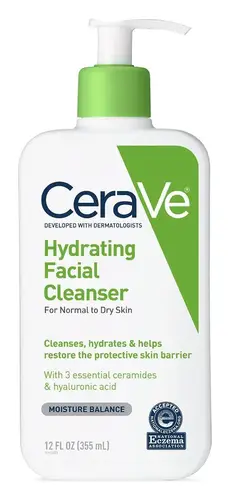
This mild cream cleanser is made to cleanse without leaving your skin tight or dry.


What's inside
What's inside
 Key Ingredients
No key ingredients
Benefits
Concerns
Ingredients Side-by-side
Water
Skin ConditioningVp/Va Copolymer
Cyclomethicone
Emollient
Sodium PCA
Humectant


Cetearyl Alcohol
Emollient






Cera Alba
Emollient
Propylene Glycol
Humectant
PPG-3 Benzyl Ether Myristate
EmollientPEG-20 Stearate
Emulsifying
C13-14 Isoparaffin
Emollient
Laureth-7
EmulsifyingPolyacrylamide
Hydroxyethylcellulose
Emulsion StabilisingCyclopentasiloxane
Emollient
Tea-Dodecylbenzenesulfonate
CleansingParfum
Masking


DMDM Hydantoin
Preservative
Methylparaben
Preservative

Propylparaben
Preservative
Benzophenone-3
UV Absorber
Disodium EDTA
ChelatingPvp
Emulsion StabilisingCitronellol
Perfuming
Hexyl Cinnamal
Perfuming
Limonene
Perfuming
Linalool
Perfuming
Geraniol
Perfuming
Water, Vp/Va Copolymer, Cyclomethicone, Sodium PCA, Cetearyl Alcohol, Cera Alba, Propylene Glycol, PPG-3 Benzyl Ether Myristate, PEG-20 Stearate, C13-14 Isoparaffin, Laureth-7, Polyacrylamide, Hydroxyethylcellulose, Cyclopentasiloxane, Tea-Dodecylbenzenesulfonate, Parfum, DMDM Hydantoin, Methylparaben, Propylparaben, Benzophenone-3, Disodium EDTA, Pvp, Citronellol, Hexyl Cinnamal, Limonene, Linalool, Geraniol
Water
Skin ConditioningGlycerin
Humectant
Cetearyl Alcohol
Emollient
PEG-40 Stearate
Emulsifying
Stearyl Alcohol
Emollient
Potassium Phosphate
BufferingCeramide NP
Skin Conditioning


Ceramide AP
Skin Conditioning
Ceramide EOP
Skin Conditioning
Carbomer
Emulsion StabilisingGlyceryl Stearate
Emollient
Behentrimonium Methosulfate
SurfactantSodium Lauroyl Lactylate
EmulsifyingSodium Hyaluronate
Humectant
Cholesterol
Emollient
Phenoxyethanol
Preservative
Disodium EDTA
ChelatingDipotassium Phosphate
BufferingTocopherol
Antioxidant



Phytosphingosine
Skin Conditioning
Xanthan Gum
EmulsifyingCetyl Alcohol
Emollient
Polysorbate 20
Emulsifying
Ethylhexylglycerin
Skin ConditioningWater, Glycerin, Cetearyl Alcohol, PEG-40 Stearate, Stearyl Alcohol, Potassium Phosphate, Ceramide NP, Ceramide AP, Ceramide EOP, Carbomer, Glyceryl Stearate, Behentrimonium Methosulfate, Sodium Lauroyl Lactylate, Sodium Hyaluronate, Cholesterol, Phenoxyethanol, Disodium EDTA, Dipotassium Phosphate, Tocopherol, Phytosphingosine, Xanthan Gum, Cetyl Alcohol, Polysorbate 20, Ethylhexylglycerin
Reviews
Ingredients Explained
These ingredients are found in both products.
Ingredients higher up in an ingredient list are typically present in a larger amount.
Cetearyl alcohol is a waxy mixture of two fatty alcohols: cetyl alcohol and stearyl alcohol. It is an emollient and emulsifier.
Despite having "alcohol" in its name, it has nothing to do with drying solvent alcohols; the FDA also allows "alcohol-free" products to contain fatty alcohols like this ingredient.
It plays several roles in a formula:
Typical use levels for this ingredient sit around 1-10% and the Cosmetic Ingredient Review Expert Panel has affirmed safety at concentrations up to 25% in leave-on products.
Multiple assessments have found it to be non-irritating and non-sensitizing to most people.
However, there have been some cases of allergic contact dermatitis in patients with chronically compromised skin barriers.
Cetearyl alcohol has a comedogenic rating of 2 and irritancy rating of 1. Both of these numbers come from the 1989 study that used rabbit ears; a "2" means mildly comedogenic and a "1" means low irritancy.
Here's the catch: rabbit skin is more sensitive than human skin and throws a lot of false positives. A 1996 reappraisal found that ingredients rated 1-2 in the rabbit ear tests are generally safe for humans.
Remember comedogenic ratings are unable to assess the entire formula of a product or how it will react on your skin. Just be sure to patch test if you are unsure about certain ingredients.
This ingredient is not fungal acne safe. Cetearyl alcohol is a fatty alcohol with chain lengths that fall within the range that Malassezia can metabolize.
A 2019 study has also observed Malassezia growth in the presence of this ingredient, confirming it to be not-fungal acne safe.
Learn more about Cetearyl AlcoholDisodium EDTA is a chelating agent. It grabs onto and deactivates metal ions that sneak into your products from water, packaging, or air.
This ingredient mainly works behind the scenes and helps with:
On top of that, this ingredient can counteract the effects of hard water by binding to the minerals in it.
One thing worth knowing is that Disodium EDTA has been shown to be a mild penetration enhancer. It can help other ingredients absorb into skin more effectively which can be a double-edged sword (great for actives, but can also make the active too strong if you have sensitive skin).
Clinical patch testing showed no significant skin irritation at typical use concentrations and minimal dermal absorption.
You'll most likely see this ingredient near the end of an ingredient list. It's typically found in concentrations less than 1%.
Learn more about Disodium EDTAWater. It's the most common cosmetic ingredient of all. You'll usually see it at the top of ingredient lists, meaning that it makes up the largest part of the product.
So why is it so popular? Water most often acts as a solvent - this means that it helps dissolve other ingredients into the formulation.
You'll also recognize water as that liquid we all need to stay alive. If you see this, drink a glass of water. Remember to stay hydrated!
Learn more about Water

