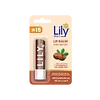
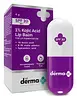
Lily Lip Balm SPF 15 Versus The Derma Co 1% Kojic Acid Lip Balm With Alpha Arbutin & Hyaluronic Acid
This barrier-repair lip moisturizer is formulated around Bis-Diglyceryl Polyacyladipate-2 and Simmondsia Chinensis Seed Oil to strengthen the lip barrier and hydrate lips.
This brightening lip moisturizer is formulated around Sodium Hyaluronate and Alpha-Arbutin to fade the look of dark spots and brighten dull-looking skin.


What's inside
What's inside
 Key Ingredients
Benefits
Concerns
Ingredients Side-by-side
Octyldodecanol
Emollient
Pentaerythrityl Tetraisostearate
Emollient

Hydrogenated Polyisobutene
EmollientBis-Diglyceryl Polyacyladipate-2
Emollient
Ceresin
Emulsion StabilisingEthylhexyl Methoxycinnamate
UV Absorber


Beeswax
Emulsion Stabilising


Polyethylene
Abrasive
Microcrystalline Wax
Emulsion StabilisingDipentaerythrityl Hexahydroxystearate/Hexastearate/Hexarosinate
Skin ConditioningButyl Methoxydibenzoylmethane
UV Absorber
Tocopheryl Acetate
Antioxidant


Ricinus Communis Seed Oil
Masking

Parfum
Masking
Simmondsia Chinensis Seed Oil
Emollient

Isopropyl Titanium Triisostearate
Emollient
Octyldodecanol, Pentaerythrityl Tetraisostearate, Hydrogenated Polyisobutene, Bis-Diglyceryl Polyacyladipate-2, Ceresin, Ethylhexyl Methoxycinnamate, Beeswax, Polyethylene, Microcrystalline Wax, Dipentaerythrityl Hexahydroxystearate/Hexastearate/Hexarosinate, Butyl Methoxydibenzoylmethane, Tocopheryl Acetate, Ricinus Communis Seed Oil, Parfum, Simmondsia Chinensis Seed Oil, Isopropyl Titanium Triisostearate
Beeswax
Emulsion Stabilising
Cocos Nucifera Oil
Masking
Butyrospermum Parkii Butter
Skin Conditioning
Ricinus Communis Seed Oil
Masking
Ethylhexyl Methoxycinnamate
UV Absorber
Euphorbia Cerifera Cera
Astringent
Theobroma Cacao Seed Butter
Emollient
Prunus Amygdalus Dulcis Oil
Skin Conditioning
Rubus Idaeus Seed Oil
Emollient
Simmondsia Chinensis Seed Oil
Emollient
Olea Europaea Fruit Oil
Masking
Calendula Officinalis Flower Oil
Masking


Copernicia Cerifera Wax
Persea Gratissima Oil
Skin Conditioning
Dicaprylyl Carbonate
EmollientCetearyl Olivate
Sorbitan Olivate
Emulsifying
Zinc Oxide
Cosmetic Colorant
Titanium Dioxide
Cosmetic Colorant
Kojic Dipalmitate
Emollient
Sodium Hyaluronate
Humectant

Alpha-Arbutin
Antioxidant

Caprylyl Methicone
Skin Conditioning
Tocopherol
Antioxidant
Helianthus Annuus Seed Oil
Emollient
Zea Mays Oil
Emulsifying
Macadamia Integrifolia Seed Oil
Skin Conditioning
Beeswax, Cocos Nucifera Oil, Butyrospermum Parkii Butter, Ricinus Communis Seed Oil, Ethylhexyl Methoxycinnamate, Euphorbia Cerifera Cera, Theobroma Cacao Seed Butter, Prunus Amygdalus Dulcis Oil, Rubus Idaeus Seed Oil, Simmondsia Chinensis Seed Oil, Olea Europaea Fruit Oil, Calendula Officinalis Flower Oil, Copernicia Cerifera Wax, Persea Gratissima Oil, Dicaprylyl Carbonate, Cetearyl Olivate, Sorbitan Olivate, Zinc Oxide, Titanium Dioxide, Kojic Dipalmitate, Sodium Hyaluronate, Alpha-Arbutin, Caprylyl Methicone, Tocopherol, Helianthus Annuus Seed Oil, Zea Mays Oil, Macadamia Integrifolia Seed Oil
Ingredients Explained
These ingredients are found in both products.
Ingredients higher up in an ingredient list are typically present in a larger amount.
Beeswax is natural wax produced by honey bees to build their honeycomb.
Because it forms a protective layer on your skin, it can help lock in moisture and reduce water loss. It is also widely used as a thickener and emulsifier in lip balms and lotions. Research suggests beeswax containing moisturizers can support skin barrier integrity.
In comedogenic testing, Beeswax scored a 0-2, which is on the low end. Whether or not a product clogs your pores really comes down to the formula as a whole (not any single ingredient on its own) and your skin.
Cera Alba is the white, bleached form of this ingredient.
Just so you know, beeswax is not vegan since it is animal-derived. It cannot be removed with water, but can be taken off with an oil cleanser.
People with a known Propolis allergy also report to have reactions from beeswax.
Beeswax's wax esters are derived primarily from palmitic and oleic acid (C16 and C18:1). Both of these fall within the C11-C24 feeding window.
The Malassezia yeast can potentially cleave these esters and release usable fatty acids, so this ingredient may not be fungal acne safe. However, not everyone will react to this ingredient.
Learn more about BeeswaxThis ingredient is also known as Octinoxate and is one of the oldest and most widely used chemical UV filters in skincare.
It has a simple job: soap up UVB radiation (290-320 nm), the wavelengths responsible for sunburn and a big chunk of long-term sun damage.
In formulas, it's always paired with a separate UVA filter because octinoxate solely protects skin from UVB.
Because it's an oil-soluble liquid, it's easy to blend into the oil phase of lotions/creams and gives a cosmetically elegant feel.
The one quirk about formulating this ingredient is photostability; the molecule slowly changes shape into a less effective version when sunlight hits it. So the longer you're in the sun, the weaker its protection gets. The drop can be more than 30% in some formulas.
It also doesn't play nice with Avobenzone (the common UVA filter) since avobenzone destabilizes octinoxate and the two degrade each other. But don't worry: brands have solved this issue by adding photostabilizers like Tinosorb S to prevent degradation and keep SPF stable under heavy UV exposure.
The maximum allowed level is 10% in the EU and Australia, 7.5% in the US and Canada, and 20% in Japan.
The Cosmetic Ingredient Review Panel has concluded this ingredient to be safe in cosmetics up to 10%.
One last thing worth knowing for context:
Octinoxate has been the subject of ongoing review in Europe where the Scientific Committee on Consumer Safety's (SCCS) 2025 final opinion is that this ingredient is an endocrine-active substance.
Lab and animal studies suggest it can act a bit like a hormone in the body (mildly mimicking estrogen and slightly blocking male hormones). It's important to know this hasn't really been shown to happen in everyday human use.
This ingredient is also banned in Hawaii over coral reef concerns.
Learn more about Ethylhexyl MethoxycinnamateThis ingredient is also known as castor oil. It is a skin conditioning ingredient.
The star component of castor oil is ricinoleic acid, an unusual fatty acid that makes up ~80-92% of its composition.
In skincare, it is an emollient that dries down to a solid film with water-binding properties. This helps keep skin hydrated and helps reduce transepidermal water loss (TEWL).
A 2026 dermatology review pulls together its broader uses:
Human clinical testing found this ingredient to be non-irritating and non-sensitizing.
Because castor oil contains fatty acids in the C11-24 range, this ingredient may not be fungal acne safe.
At this time, the literature does not support castor oil in regrowing hair. A 2022 systematic review found no strong evidence that it supports hair growth and only weak evidence that it improves hair shine.
Castor oil itself carries "perfuming" and "masking" function tags according to the official CosIng database. This is because of its mild odor and odor-dampening properties.
Learn more about Ricinus Communis Seed OilJojoba oil is one of the most well-studied plant-derived ingredients in cosmetics. It is an emollient with a special structure.
Because it is made up of 97-98% wax esters, it closely mirrors the linear monoesters found in human sebum. This makes it skin compatible, non-greasy, and lightweight.
Unlike other plant oils, jojoba wax doesn't easily penetrate skin. It mostly works in the uppermost layers as an emollient. This just means it forms a light barrier on the skin to help retain moisture.
Formulations with jojoba esters up to 90% reduced transepidermal water loss (TEWL) and increased barrier recovery by 81% (outperforming bisabolol at 47%).
Besides barrier support, the science also suggests jojoba to have anti-inflammatory effects and potential applications for skin infections, aging, and wound healing.
Fun fact: Indigenous cultures have used jojoba as a moisturizer and to help treat burns for centuries.
Fungal acne: The Malassezia yeast is known to metabolize fatty acids in the C11-24 range and jojoba's dominant fatty acid components fall into this range. This ingredient may not be fungal acne safe.
Learn more about Simmondsia Chinensis Seed Oil

