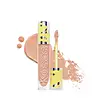
Kosas Revealer Extra Bright Serum-Powered Color Correctors Versus Rare Beauty Positive Light Under Eye Brightener

What's inside
What's inside
 Key Ingredients
Benefits
Concerns
Ingredients Side-by-side
Water
Skin ConditioningCaprylic/Capric Triglyceride
Masking


Octyldodecanol
Emollient
Polyglyceryl-2 Dipolyhydroxystearate
Skin Conditioning

Ethylhexyl Olivate
Skin Conditioning
Glycerin
Humectant
Undecane
EmollientPolyhydroxystearic Acid
Emulsifying
Mica
Cosmetic ColorantPolyglyceryl-3 Diisostearate
Emulsifying


Silica
Abrasive


Galactoarabinan

Propanediol
Solvent
Helianthus Annuus Seed Wax
Skin Conditioning
Tridecane
Perfuming

Lecithin
Emollient
Caffeine
Skin Conditioning

Panthenol
Skin Conditioning
Acetyl Tetrapeptide-5
Humectant
Dipeptide-2
Skin Conditioning
Sodium Hyaluronate
Humectant
Squalane
Emollient
Glyceryl Oleate
Emollient
Pentylene Glycol
Skin Conditioning
Tocopherol
Antioxidant



Sodium Gluconate
ChelatingHelianthus Annuus Seed Oil
Emollient
Ascorbyl Palmitate
Antioxidant
Hydrogenated Palm Glycerides Citrate
Emollient
Phenethyl Alcohol
MaskingCI 77891
Cosmetic ColorantCI 77491
Cosmetic ColorantCI 77492
Cosmetic ColorantCI 77499
Cosmetic ColorantCI 77742
Cosmetic ColorantWater, Caprylic/Capric Triglyceride, Octyldodecanol, Polyglyceryl-2 Dipolyhydroxystearate, Ethylhexyl Olivate, Glycerin, Undecane, Polyhydroxystearic Acid, Mica, Polyglyceryl-3 Diisostearate, Silica, Galactoarabinan, Propanediol, Helianthus Annuus Seed Wax, Tridecane, Lecithin, Caffeine, Panthenol, Acetyl Tetrapeptide-5, Dipeptide-2, Sodium Hyaluronate, Squalane, Glyceryl Oleate, Pentylene Glycol, Tocopherol, Sodium Gluconate, Helianthus Annuus Seed Oil, Ascorbyl Palmitate, Hydrogenated Palm Glycerides Citrate, Phenethyl Alcohol, CI 77891, CI 77491, CI 77492, CI 77499, CI 77742
Water
Skin ConditioningDipropylheptyl Carbonate
EmollientHydrogenated Didecene
Skin ConditioningGlycerin
Humectant
Phenyl Trimethicone
Skin Conditioning
Cetyl PEG/PPG-10/1 Dimethicone
Emulsifying
Pvp
Emulsion StabilisingLauryl PEG-9 Polydimethylsiloxyethyl Dimethicone
Skin Conditioning
Butylene Glycol
Humectant
Sodium Chloride
MaskingGlyceryl Behenate
Emollient
Silica
Abrasive
Disteardimonium Hectorite
StabilisingHydroxyacetophenone
Antioxidant
Helianthus Annuus Seed Oil
Emollient
Methicone
Emollient
1,2-Hexanediol
Skin Conditioning
Caprylyl Glycol
Emollient
Tocopheryl Acetate
Antioxidant
Dimethicone/Vinyl Dimethicone Crosspolymer
Skin Conditioning
Trisodium Ethylenediamine Disuccinate
ChelatingPaeonia Lactiflora Root Extract
Skin ConditioningTocopherol
Antioxidant
Talc
Abrasive
Gardenia Florida Fruit Extract
Skin ConditioningNelumbo Nucifera Flower Extract
Skin ConditioningNymphaea Odorata Root Extract
RefreshingVitex Agnus Castus Extract
AstringentIron Oxides
CI 77163
Cosmetic Colorant
CI 77891
Cosmetic ColorantWater, Dipropylheptyl Carbonate, Hydrogenated Didecene, Glycerin, Phenyl Trimethicone, Cetyl PEG/PPG-10/1 Dimethicone, Pvp, Lauryl PEG-9 Polydimethylsiloxyethyl Dimethicone, Butylene Glycol, Sodium Chloride, Glyceryl Behenate, Silica, Disteardimonium Hectorite, Hydroxyacetophenone, Helianthus Annuus Seed Oil, Methicone, 1,2-Hexanediol, Caprylyl Glycol, Tocopheryl Acetate, Dimethicone/Vinyl Dimethicone Crosspolymer, Trisodium Ethylenediamine Disuccinate, Paeonia Lactiflora Root Extract, Tocopherol, Talc, Gardenia Florida Fruit Extract, Nelumbo Nucifera Flower Extract, Nymphaea Odorata Root Extract, Vitex Agnus Castus Extract, Iron Oxides, CI 77163, CI 77891
Reviews
Ingredients Explained
These ingredients are found in both products.
Ingredients higher up in an ingredient list are typically present in a larger amount.
Ci 77891 is a white pigment from Titanium dioxide. It is naturally found in minerals such as rutile and ilmenite.
It's main function is to add a white color to cosmetics. It can also be mixed with other colors to create different shades.
Ci 77891 is commonly found in sunscreens due to its ability to block UV rays.
Learn more about CI 77891Glycerin (or glycerol) is a compound naturally found in your skin. It's a powerhouse humectant that pulls water into the stratum corneum.
Topically, glycerin does several things at once:
Your skin makes glycerin on its own (mostly from sebaceous oil breakdown) and shuttles it to your outermost layer of skin, or your epidermis, via aquaporin-3.
Aquaporin-3 is a transporter that is essential for normal skin hydration, elasticity, and repair. Interestingly, mice lacking in AQP3 have dry and less elastic skin that can be fully corrected with glycerin.
This ingredient is non-irritating, plays well with almost every ingredient, and works across all skin types. Typical use is anywhere between 3-10% but can go up to 79% in some leave-on products.
Just know very high concentrations (>40%) can feel tacky in low humidity.
Glycerin is the name for this ingredient in American English. British English uses Glycerol/Glycerine.
Learn more about GlycerinHelianthus Annuus Seed Oil is a plant oil derived from the seeds of a sunflower.
It is rich in fatty acids, primarily linoleic acid and oleic acid. This gives it emollient and skin conditioning properties.
The reason this ingredient is so effective is because it forms a thin film on the skin that reduces transepidermal water loss (TEWL) while supplying linoleic acid to the stratum corneum to improve barrier strength.
The high linoleic acid content is particularly noteworthy for acne-prone skin.
Research suggests that acne-prone skin tends to be deficient in linoleic acid in sebum. Topical application may help replenish this to support a healthier follicular environment and less comedone-promoting sebum.
One randomized study found sunflower seed oil preserved skin barrier integrity in adult volunteers with and without atopic dermatitis (outperforming olive oil).
This ingredient is well-studied, gentle, and an effective emollient suitable for most skin types.
On fungal acne: This ingredient may not be Fungal acne (Malassezia folliculitis) safe. This is because it contains fatty acids with carbon chain lengths in the C11-C24 range.
Learn more about Helianthus Annuus Seed OilSilica, also known as silicon dioxide, is a naturally occurring mineral. It is used as a fine, spherical, and porous powder in cosmetics.
Though it has exfoliant properties, the function of silica varies depending on the product.
The unique structure of silica enhances the spreadability and adds smoothness, making it a great texture enhancer.
It is also used as an active carrier, emulsifier, and mattifier due to its ability to absorb excess oil.
In some products, tiny microneedles called spicules are made from silica or hydrolyzed sponge. When you rub them in, they lightly polish away dead skin layers and enhance the penetration of active ingredients.
Learn more about SilicaTocopherol is a fat-soluble antioxidant known as Vitamin E.
You'll find this ingredient in the vast majority of skincare (for good reason). It works to neutralize free radicals, or unstable molecules generated by UV exposure, pollution, and other environmental stressors, before they can cause oxidative damage to your skin cells.
Topically applied tocopherol has been shown to protect against UV damage by ramping up the skin's own natural defense enzymes.
It also acts as a skin conditioning agent; some studies show that regular topical use can improve the skin's water-binding capacity over 2-4 weeks.
This ingredient is especially loved for being a team player. When combined with Vitamin C, the photoprotective effect of both ingredients roughly doubles and the combo also helps reduce UV-induced DNA damage.
This ingredient has some brightening potential but it's more of a prevention ingredient than spot-fader. Cell studies show it can slow down melanin production but it's worth noting that it's not the most powerful brightener out there.
In formulations, it also serves as a stabilizer that helps protect other oxidation-prone ingredients from degrading.
Concentrations usually range from 0.1-1% in most leave-on products.
Learn more about TocopherolWater. It's the most common cosmetic ingredient of all. You'll usually see it at the top of ingredient lists, meaning that it makes up the largest part of the product.
So why is it so popular? Water most often acts as a solvent - this means that it helps dissolve other ingredients into the formulation.
You'll also recognize water as that liquid we all need to stay alive. If you see this, drink a glass of water. Remember to stay hydrated!
Learn more about Water

