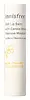
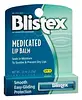
innisfree Soft Lip Balm Intensive Moisture with Canola Honey Versus Blistex Medicated SPF 15 Lip Balm
This barrier-repair lip moisturizer is formulated around Petrolatum and Simmondsia Chinensis Seed Oil to strengthen the lip barrier and hydrate lips.
This lip moisturizer is formulated around Dimethicone and Petrolatum to hydrate lips.


What's inside
What's inside
 Key Ingredients
Benefits
Concerns
Ingredients Side-by-side
Petrolatum
Emollient



Polyglyceryl-2 Triisostearate
Emulsifying

Diisostearyl Malate
EmollientParaffinum Liquidum
Emollient
Jojoba Esters
Emollient
Hydrogenated Polyisobutene
EmollientPolyethylene
Abrasive

Meadowfoam Delta-Lactone
Skin ConditioningCholesteryl Hydroxystearate
EmollientHydrogenated Coco-Glycerides
Emollient
Euphorbia Cerifera Wax
Microcrystalline Wax
Emulsion StabilisingMangifera Indica Seed Butter
Skin Conditioning
Ceresin
Emulsion StabilisingPrunus Amygdalus Dulcis Oil
Skin Conditioning
Trihydroxystearin
Skin Conditioning
Phenoxyethanol
Preservative
Caprylyl Glycol
Emollient
Tocopheryl Acetate
Antioxidant


Camellia Japonica Seed Oil
Emollient
Simmondsia Chinensis Seed Oil
Emollient

Glyceryl Caprylate
EmollientParfum
Masking

Tocopherol
Antioxidant


Tbhq
Antioxidant
Water
Skin ConditioningCymbopogon Schoenanthus Oil
Masking
Glycerin
Humectant
Butylene Glycol
Humectant
Camellia Sinensis Leaf Extract
Antimicrobial


Citrus Unshiu Peel Extract
MaskingOpuntia Coccinellifera Fruit Extract
Skin ConditioningOrchid Extract
Skin ConditioningCamellia Japonica Leaf Extract
Skin ConditioningHoney Extract
Humectant
Ethylhexylglycerin
Skin ConditioningPetrolatum, Polyglyceryl-2 Triisostearate, Diisostearyl Malate, Paraffinum Liquidum, Jojoba Esters, Hydrogenated Polyisobutene, Polyethylene, Meadowfoam Delta-Lactone, Cholesteryl Hydroxystearate, Hydrogenated Coco-Glycerides, Euphorbia Cerifera Wax, Microcrystalline Wax, Mangifera Indica Seed Butter, Ceresin, Prunus Amygdalus Dulcis Oil, Trihydroxystearin, Phenoxyethanol, Caprylyl Glycol, Tocopheryl Acetate, Camellia Japonica Seed Oil, Simmondsia Chinensis Seed Oil, Glyceryl Caprylate, Parfum, Tocopherol, Tbhq, Water, Cymbopogon Schoenanthus Oil, Glycerin, Butylene Glycol, Camellia Sinensis Leaf Extract, Citrus Unshiu Peel Extract, Opuntia Coccinellifera Fruit Extract, Orchid Extract, Camellia Japonica Leaf Extract, Honey Extract, Ethylhexylglycerin
Dimethicone 2%
Emollient
Ethylhexyl Methoxycinnamate 6.6%
UV Absorber

Ethylhexyl Salicylate 4.4%
UV Absorber
Beeswax
Emulsion Stabilising
Camphor
Masking
Cetyl Alcohol
Emollient
Cetyl Palmitate
Emollient
Euphorbia Cerifera Wax
Aroma
Isopropyl Myristate
Emollient
Lanolin
Emollient
Lanolin Oil
Emollient
Menthol
Masking
Methyl Salicylate
Perfuming
Paraffinum Liquidum
Emollient
Ozokerite
Emulsion StabilisingParaffin
Skin Conditioning
Petrolatum
Emollient
Phenoxyethanol
Preservative
Polybutene
CI 15850
Cosmetic ColorantTheobroma Cacao Seed Butter
Emollient
Titanium Dioxide
Cosmetic Colorant
Dimethicone 2%, Ethylhexyl Methoxycinnamate 6.6%, Ethylhexyl Salicylate 4.4%, Beeswax, Camphor, Cetyl Alcohol, Cetyl Palmitate, Euphorbia Cerifera Wax, Aroma, Isopropyl Myristate, Lanolin, Lanolin Oil, Menthol, Methyl Salicylate, Paraffinum Liquidum, Ozokerite, Paraffin, Petrolatum, Phenoxyethanol, Polybutene, CI 15850, Theobroma Cacao Seed Butter, Titanium Dioxide
Reviews
Ingredients Explained
These ingredients are found in both products.
Ingredients higher up in an ingredient list are typically present in a larger amount.
Paraffinum Liquidum is a highly-refined cosmetic-grade mineral oil. It is also known as liquid paraffin.
Despite its controversial reputation, the science is pretty clear: it's one of the most well-studied and effective moisturizing ingredients out there.
As an occlusive, it forms a protective layer on the skin that locks in moisture and prevents transepidermal water loss (TEWL). This makes it especially great for compromised skin barriers.
The "it clogs your pores" myth has been around for decades; a study found that industrial-grade mineral oil may be comedogenic but cosmetic-grade mineral oil is not (these two are very, very different).
A 2017 review concluded that cosmetic use of mineral oils and waxes does not present a risk to consumers due to absorption.
Mineral oil got a bad rap from the old rabbit ear studies. When tested on actual human skin, cosmetic-grade mineral oil showed no comedogenic activity. The rating of 0 is a correction of outdated science.
Mineral oil is an inert substance with no fatty acids so there's nothing to feed Malassezia. This ingredient is fungal acne safe.
Learn more about Paraffinum LiquidumPetrolatum is more commonly known as petroleum jelly. It is created by mixing waxes and mineral oils.
This ingredient is effective at reducing water loss by 99%. This is because it is an occlusive. Occlusives create a hydrophobic barrier on the skin to prevent evaporation. This property makes it great for hydrating dry skin.
Pro tip: Use occlusives, such as this ingredient, on damp skin for the best results.
The quality or origin of petrolatum is only known when disclosed by the brand. Most cosmetic petrolatum has gone through several purification stages.
Another benefit of occlusives is it protects your skin against infection or allergies.
Petrolatum is fungal acne safe. It is a hydrocarbon with no fatty acid structure, so Malassezia cannot metabolize it. In-vitro studies support negligible growth stimulation as well.
It's also worth noting that petrolatum has a comedogenic rating of 0. In updated rabbit ear testing (and in human testing), petrolatum was found to be not comedogenic. This means it didn’t promote comedone formation in standard models.
Learn more about PetrolatumPhenoxyethanol is one of the most widely used preservatives in skincare (and for good reason!).
It has a large spectrum of antimicrobial activity and especially effective bacteria, yeast, and mold while only having a weak effect on your skin's natural microbiome.
On a cellular level, it disrupts the cell membranes of microbes by poking holes that make the cell leak. This shuts down the chemical reactions the microbe needs to make energy so it can no longer survive.
Another perk of this ingredient is that it stays functional across a wide pH range (3-10).
You'll often see it paired with boosters like Ethylhexylglycerin; one study showed that a 1:9 ratio of Ethylhexylglycerin to Phenoxyethanol damages bacterial membranes as effectively as doubling the Phenoxyethanol concentration on its own.
Typical use concentrations range from 0.3-1% depending on the formula, and this ingredient is capped at 1% int the EU.
Safety-wise, the fear mongering does not hold up to the evidence. The EU's Scientific Committee on Consumer Safety and FDA consider it safe as a preservative at up to 1%, including for children of all ages.
Adverse systemic effects only showed up in animal studies at exposures roughly 200x higher than what people get from cosmetics. And despite its very widespread use, this ingredient is a rare sensitizer and allergic reactions are uncommon.
Learn more about PhenoxyethanolEuphorbia Cerifera Wax (aka candelilla wax) is a vegan stand-in for beeswax. It is a plant-derived wax that functions as an astringent, emulsion stabilizer, film-former, and skin conditioner.
On skin, it forms a protective barrier that helps lock in moisture while it enhances product stability, prevents separation, and helps color last longer in makeup.
This ingredient is generally safe for use in cosmetics with one nuance: some grades of candelilla wax can naturally contain benzyl alcohol at concentrations high enough to require declaration under EU labeling rules. This isn't a concern for most people but relevant for those with fragrance sensitivities.
Candelilla wax contains fatty acids (mainly C31) and wax esters that can be used by the Malassezia yeast, so this ingredient may not be fungal acne safe.
You might see Euphorbia Cerifera "Cera" instead of "wax". This is because some brands, databases, or labels use it interchangeably; they're the same ingredient.
Learn more about Euphorbia Cerifera Wax

