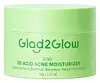
This acne moisturizer is formulated around Salicylic Acid and Mandelic Acid to clear breakouts and refine skin texture.
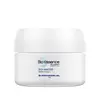
This barrier-repair moisturizer is formulated around Biosaccharide Gum-1 and Panax Ginseng Root Extract to strengthen the skin barrier and hydrate skin.

What's inside
What's inside
 Key Ingredients
Benefits
Concerns
Ingredients Side-by-side
Water
Skin ConditioningButylene Glycol
Humectant

Cyclopentasiloxane
Emollient
Cyclohexasiloxane
Emollient
1,2-Hexanediol
Skin Conditioning
Hydroxyacetophenone
Antioxidant
Salicylic Acid
Masking










Carbomer
Emulsion StabilisingSuccinic Acid
BufferingGlycerin
Humectant
Mandelic Acid
Antimicrobial


Ammonium Acryloyldimethyltaurate/Vp Copolymer
Actinidia Deliciosa Fruit Extract
Skin ConditioningOpuntia Ficus-Indica Stem Extract
Skin Conditioning
Sophora Angustifolia Root Extract
Skin ConditioningOphiopogon Japonicus Root Extract
Skin ConditioningPentylene Glycol
Skin Conditioning
Dimethicone/Vinyl Dimethicone Crosspolymer
Skin Conditioning
Sodium Hydroxide
BufferingTrehalose
Humectant
Portulaca Oleracea Extract
Skin Conditioning
PPG-26-Buteth-26
Skin ConditioningDisodium EDTA
ChelatingPEG-40 Hydrogenated Castor Oil
Emulsifying

Menthyl Lactate
Masking
Aroma


Dipropylene Glycol
HumectantCI 19140
Cosmetic ColorantEthylhexylglycerin
Skin ConditioningCI 42090
Cosmetic ColorantWater, Butylene Glycol, Cyclopentasiloxane, Cyclohexasiloxane, 1,2-Hexanediol, Hydroxyacetophenone, Salicylic Acid, Carbomer, Succinic Acid, Glycerin, Mandelic Acid, Ammonium Acryloyldimethyltaurate/Vp Copolymer, Actinidia Deliciosa Fruit Extract, Opuntia Ficus-Indica Stem Extract, Sophora Angustifolia Root Extract, Ophiopogon Japonicus Root Extract, Pentylene Glycol, Dimethicone/Vinyl Dimethicone Crosspolymer, Sodium Hydroxide, Trehalose, Portulaca Oleracea Extract, PPG-26-Buteth-26, Disodium EDTA, PEG-40 Hydrogenated Castor Oil, Menthyl Lactate, Aroma, Dipropylene Glycol, CI 19140, Ethylhexylglycerin, CI 42090
Water
Skin ConditioningButylene Glycol
Humectant
Cyclopentasiloxane
Emollient
Glycerin
Humectant
Dimethicone/Vinyl Dimethicone Crosspolymer
Skin Conditioning
Biosaccharide Gum-1
Humectant
Dimethicone
Emollient
Dimethiconol
Emollient
Limonia Acidissima Extract
Skin ConditioningPanax Ginseng Root Extract
Emollient
Ammonium Polyacrylate
StabilisingMenthyl Lactate
Masking
PEG-40 Hydrogenated Castor Oil
Emulsifying
Vaccinium Macrocarpon Seed Oil
Skin Conditioning
Olive Oil PEG-7 Esters
Emollient
Sodium Chloride
Masking1,2-Hexanediol
Skin Conditioning
Betaine
Humectant
Methylpropanediol
SolventAllantoin
Skin Conditioning
Sodium Hyaluronate
Humectant
Hyaluronic Acid
Humectant
Biosaccharide Gum-4
Skin Conditioning
Niacinamide
Smoothing
Euglena Gracilis Extract
Skin ConditioningPotassium Sorbate
Preservative
Tocopherol
Antioxidant
Parfum
Masking
Pentylene Glycol
Skin Conditioning
Caprylyl Glycol
Emollient
Phenoxyethanol
Preservative
Chlorphenesin
Antimicrobial
Hexamidine Diisethionate
Emollient
Tetrasodium EDTA
ChelatingWater, Butylene Glycol, Cyclopentasiloxane, Glycerin, Dimethicone/Vinyl Dimethicone Crosspolymer, Biosaccharide Gum-1, Dimethicone, Dimethiconol, Limonia Acidissima Extract, Panax Ginseng Root Extract, Ammonium Polyacrylate, Menthyl Lactate, PEG-40 Hydrogenated Castor Oil, Vaccinium Macrocarpon Seed Oil, Olive Oil PEG-7 Esters, Sodium Chloride, 1,2-Hexanediol, Betaine, Methylpropanediol, Allantoin, Sodium Hyaluronate, Hyaluronic Acid, Biosaccharide Gum-4, Niacinamide, Euglena Gracilis Extract, Potassium Sorbate, Tocopherol, Parfum, Pentylene Glycol, Caprylyl Glycol, Phenoxyethanol, Chlorphenesin, Hexamidine Diisethionate, Tetrasodium EDTA
Reviews
Ingredients Explained
These ingredients are found in both products.
Ingredients higher up in an ingredient list are typically present in a larger amount.
1,2-Hexanediol is a synthetic liquid and another multi-functional powerhouse.
It is a:
- Humectant, drawing moisture into the skin
- Emollient, helping to soften skin
- Solvent, dispersing and stabilizing formulas
- Preservative booster, enhancing the antimicrobial activity of other preservatives
Butylene Glycol (or BG) is used within cosmetic products for a few different reasons:
Overall, Butylene Glycol is a safe and well-rounded ingredient that works well with other ingredients.
Though this ingredient works well with most skin types, some people with sensitive skin may experience a reaction such as allergic rashes, closed comedones, or itchiness.
Learn more about Butylene GlycolCyclopentasiloxane (D5) is a lightweight silicone that mostly acts as an emollient and solvent in cosmetics. Its the reason your products feel silky, fast-spreading, and non-greasy.
Since D5 is volatile, it does its thing and then evaporates off the skin quickly.
The safety profile of this ingredient is reassuring; the US CIR Expert Panel concluded D5 is safe as used in cosmetics and Health Canada concluded that D5 is not harmful to human health or the environment as currently used in cosmetics
There's a study that people mention about D5 in a rat study showing tumors. This study is related to long-term inhalation of high D5 levels.
Regulatory bodies have judged this study to be not applicable in topical skincare since skin absorption of D5 is very low and we're not really inhaling huge amounts of D5.
The only restriction for this ingredient is environmental. The European Chemicals Agency (ECHA) restricted D5 in wash-off cosmetics at or above 0.1% due to their persistence in water.
Learn more about CyclopentasiloxaneThis ingredient is a silicone elastomer that works as a texture enhancer, adds a silky slip, and also helps absorb excess oil.
Because it's a large macromolecule that's insoluble in water and chemically inert, it's not expected to penetrate or be absorbed into skin.
Human patch tests with a facial lotion containing 1% of this ingredient found no sensitization.
Learn more about Dimethicone/Vinyl Dimethicone CrosspolymerGlycerin (or glycerol) is a compound naturally found in your skin. It's a powerhouse humectant that pulls water into the stratum corneum.
Topically, glycerin does several things at once:
Your skin makes glycerin on its own (mostly from sebaceous oil breakdown) and shuttles it to your outermost layer of skin, or your epidermis, via aquaporin-3.
Aquaporin-3 is a transporter that is essential for normal skin hydration, elasticity, and repair. Interestingly, mice lacking in AQP3 have dry and less elastic skin that can be fully corrected with glycerin.
This ingredient is non-irritating, plays well with almost every ingredient, and works across all skin types. Typical use is anywhere between 3-10% but can go up to 79% in some leave-on products.
Just know very high concentrations (>40%) can feel tacky in low humidity.
Glycerin is the name for this ingredient in American English. British English uses Glycerol/Glycerine.
Learn more about GlycerinMenthyl lactate is an ester of menthol and lactic acid. It is often used as a cooling agent and fragrance.
When applied topically, this ingredient leaves a refreshing sensation like menthol, but is less irritating.
PEG-40 Hydrogenated Castor Oil is an emulsifier derived from castor oil.
As an emulsifying agent, it helps other ingredients like fragrances and fat-soluble vitamins dissolve cohesively.
Due to its large molecule size, it doesn't penetrate beyond the skin's surface.
This ingredient has a solid regulatory track record; the CIR Expert Panel first concluded it was safe for use in cosmetics at concentrations up to 100% in 1997. A 2012 reassessment reaffirmed that finding. Safety studies have also found no irritation or evidence of toxicity.
A 2019 study did find this ingredient to grow Malassezia, so this ingredient may not be fungal acne safe.
Learn more about PEG-40 Hydrogenated Castor OilPentylene Glycol (1,2-pentanediol) is a multitasking little diol with three main roles in a formula:
Research on alkanediols (the family pentylene glycol belongs to) show they work by disrupting microbial cell membranes. This disruption helps the primary preservative system in a product work more effectively at lower doses.
On the safety side, the Cosmetic Ingredient Review Expert Panel has concluded this ingredient to be safe as used in current cosmetic practices + concentrations.
Typical use levels in a formula run about 1-5%.
Learn more about Pentylene GlycolWater. It's the most common cosmetic ingredient of all. You'll usually see it at the top of ingredient lists, meaning that it makes up the largest part of the product.
So why is it so popular? Water most often acts as a solvent - this means that it helps dissolve other ingredients into the formulation.
You'll also recognize water as that liquid we all need to stay alive. If you see this, drink a glass of water. Remember to stay hydrated!
Learn more about Water

