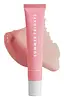
This barrier-repair lip moisturizer is formulated around Butyrospermum Parkii Butter and Sodium Hyaluronate to strengthen the lip barrier and hydrate lips.


What's inside
What's inside
 Key Ingredients
Benefits
Concerns
Ingredients Side-by-side
Polyglyceryl-2 Isostearate/Dimer Dilinoleate Copolymer
EmollientDilinoleic Acid/Propanediol Copolymer
EmollientVitis Vinifera Seed Oil
Emollient




Carthamus Tinctorius Seed Oil
Masking
Mel
EmollientSimmondsia Chinensis Seed Oil
Emollient

Helianthus Annuus Seed Oil
Emollient
Limnanthes Alba Seed Oil
Skin Conditioning
Aroma


Calendula Officinalis Flower Extract
Masking
Oenothera Biennis Oil
Emollient

Rosa Canina Fruit Oil
Emollient
Hydrogenated Castor Oil/Sebacic Acid Copolymer
Emollient
Propolis Cera
AntiseborrhoeicTocopheryl Acetate
Antioxidant


Tocopherol
Antioxidant

Sodium Hyaluronate
Humectant
Citrus Aurantium Bergamia Fruit Extract
Skin ConditioningDaucus Carota Sativa Root Extract
Skin Conditioning
Mauritia Flexuosa Fruit Oil
Skin Conditioning
Vaccinium Myrtillus Seed Oil
Skin Conditioning
Glucomannan
Skin ConditioningEthylhexyl Palmitate
Emollient
Trihydroxystearin
Skin Conditioning
Citral
Perfuming

Linalool
Perfuming
Limonene
Perfuming
CI 15985
Cosmetic ColorantCI 45410
Cosmetic ColorantPolyglyceryl-2 Isostearate/Dimer Dilinoleate Copolymer, Dilinoleic Acid/Propanediol Copolymer, Vitis Vinifera Seed Oil, Carthamus Tinctorius Seed Oil, Mel, Simmondsia Chinensis Seed Oil, Helianthus Annuus Seed Oil, Limnanthes Alba Seed Oil, Aroma, Calendula Officinalis Flower Extract, Oenothera Biennis Oil, Rosa Canina Fruit Oil, Hydrogenated Castor Oil/Sebacic Acid Copolymer, Propolis Cera, Tocopheryl Acetate, Tocopherol, Sodium Hyaluronate, Citrus Aurantium Bergamia Fruit Extract, Daucus Carota Sativa Root Extract, Mauritia Flexuosa Fruit Oil, Vaccinium Myrtillus Seed Oil, Glucomannan, Ethylhexyl Palmitate, Trihydroxystearin, Citral, Linalool, Limonene, CI 15985, CI 45410
Phytosteryl/Isostearyl/Cetyl/Stearyl/Behenyl Dimer Dilinoleate
Skin Conditioning
Diisostearyl Malate
EmollientHydrogenated Polyisobutene
EmollientPolybutene
Hydrogenated Poly(C6-14 Olefin)
EmollientButyrospermum Parkii Butter
Skin Conditioning
Cera Microcristallina
Emulsion StabilisingOctyldodecanol
Emollient
Synthetic Wax
Abrasive
Disteardimonium Hectorite
StabilisingAstrocaryum Murumuru Seed Butter
Emollient
Sodium Hyaluronate
Humectant
Tocopherol
Antioxidant
Propylene Carbonate
SolventPolyglyceryl-2 Diisostearate
Emulsifying
Aluminum Hydroxide
EmollientParfum
Masking
Mica
Cosmetic ColorantBHT
Antioxidant
Benzyl Alcohol
Perfuming

Benzyl Benzoate
Antimicrobial
CI 15850
Cosmetic ColorantCI 45410
Cosmetic ColorantCI 77891
Cosmetic ColorantPhytosteryl/Isostearyl/Cetyl/Stearyl/Behenyl Dimer Dilinoleate, Diisostearyl Malate, Hydrogenated Polyisobutene, Polybutene, Hydrogenated Poly(C6-14 Olefin), Butyrospermum Parkii Butter, Cera Microcristallina, Octyldodecanol, Synthetic Wax, Disteardimonium Hectorite, Astrocaryum Murumuru Seed Butter, Sodium Hyaluronate, Tocopherol, Propylene Carbonate, Polyglyceryl-2 Diisostearate, Aluminum Hydroxide, Parfum, Mica, BHT, Benzyl Alcohol, Benzyl Benzoate, CI 15850, CI 45410, CI 77891
Reviews
Alternatives
Ingredients Explained
These ingredients are found in both products.
Ingredients higher up in an ingredient list are typically present in a larger amount.
CI 45410 is a synthetic red-pigment and dye.
It often goes by both Red 28 or Red 27; manufacturers label both ingredients as CI 45410.
This dye is commonly found in makeup because it imparts a vivid color. Some types of this dye change color based on pH level and interaction with moisture:
Your skin has a natural pH of around 4.5 - 5.5.
According to the FDA, CI 45410 is not permitted for use in eye products.
Red 27 is a flourescein dye and commonly used as a fluorescent tracer in medicine.
Learn more about CI 45410Sodium Hyaluronate is the salt form of hyaluronic acid. It is a long sugar chain that is naturally found in your skin, joints, and connective tissue that maintains hydration and elasticity.
In skincare, it works as a humectant. It pulls water from the environment and deeper layers of skin and binds it to the surface.
Interestingly, the size of the molecule affects its behavior:
Some clinical evidence links low molecular weight versions to improved wrinkle depth, elasticity, anti-inflammatory effects, and barrier repair.
Many serums use a blend of both weights so you can get surface hydration plus longer-lasting and deeper effects.
You'll typically see concentrations between 0.1-2% for this ingredient.
Learn more about Sodium HyaluronateTocopherol is a fat-soluble antioxidant known as Vitamin E.
You'll find this ingredient in the vast majority of skincare (for good reason). It works to neutralize free radicals, or unstable molecules generated by UV exposure, pollution, and other environmental stressors, before they can cause oxidative damage to your skin cells.
Topically applied tocopherol has been shown to protect against UV damage by ramping up the skin's own natural defense enzymes.
It also acts as a skin conditioning agent; some studies show that regular topical use can improve the skin's water-binding capacity over 2-4 weeks.
This ingredient is especially loved for being a team player. When combined with Vitamin C, the photoprotective effect of both ingredients roughly doubles and the combo also helps reduce UV-induced DNA damage.
This ingredient has some brightening potential but it's more of a prevention ingredient than spot-fader. Cell studies show it can slow down melanin production but it's worth noting that it's not the most powerful brightener out there.
In formulations, it also serves as a stabilizer that helps protect other oxidation-prone ingredients from degrading.
Concentrations usually range from 0.1-1% in most leave-on products.
Learn more about Tocopherol

