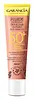
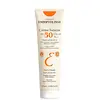
Garancia Fluide Incroyable Douceur Invisible Sun Protect SPF 50+ Versus Embryolisse Sun Cream SPF 50
This chemical sunscreen covers most of the UV range, lighter on the deep UVA that drives aging.
This chemical sunscreen covers the full UV range and blocks ~98% of UVB at SPF 50.

What's inside
What's inside
 Key Ingredients
Benefits
Concerns
Ingredients Side-by-side
Water
Skin ConditioningCoco-Caprylate/Caprate
Emollient
Diethylamino Hydroxybenzoyl Hexyl Benzoate
UV Filter
Diethylhexyl Butamido Triazone
UV Absorber
Oryza Sativa Starch
AbsorbentEthylhexyl Triazone
UV Absorber
Disodium Phenyl Dibenzimidazole Tetrasulfonate
UV Absorber
Pongamia Glabra Seed Oil
Skin Conditioning


Capryloyl Glycerin/Sebacic Acid Copolymer
Skin ConditioningPentylene Glycol
Skin Conditioning
Cetearyl Alcohol
Emollient



Jojoba Esters
Emollient
Glyceryl Stearate
Emollient
Behenyl Alcohol
Emollient
1,2-Hexanediol
Skin Conditioning
Sodium Hyaluronate
Humectant


Dunaliella Salina Extract
Skin ConditioningHaematococcus Pluvialis Extract
Antioxidant
Helianthus Annuus Seed Wax
Skin Conditioning
Phytic Acid
Chelating

Helianthus Annuus Seed
Skin Conditioning
Xanthan Gum
EmulsifyingSodium Stearoyl Glutamate
CleansingCI 75120
Cosmetic ColorantPolyglycerin-3
Humectant
Caprylyl Glycol
Emollient
Citric Acid
Buffering
Sodium Hydroxide
BufferingWater, Coco-Caprylate/Caprate, Diethylamino Hydroxybenzoyl Hexyl Benzoate, Diethylhexyl Butamido Triazone, Oryza Sativa Starch, Ethylhexyl Triazone, Disodium Phenyl Dibenzimidazole Tetrasulfonate, Pongamia Glabra Seed Oil, Capryloyl Glycerin/Sebacic Acid Copolymer, Pentylene Glycol, Cetearyl Alcohol, Jojoba Esters, Glyceryl Stearate, Behenyl Alcohol, 1,2-Hexanediol, Sodium Hyaluronate, Dunaliella Salina Extract, Haematococcus Pluvialis Extract, Helianthus Annuus Seed Wax, Phytic Acid, Helianthus Annuus Seed, Xanthan Gum, Sodium Stearoyl Glutamate, CI 75120, Polyglycerin-3, Caprylyl Glycol, Citric Acid, Sodium Hydroxide
Water
Skin ConditioningDicaprylyl Carbonate
EmollientC15-19 Alkane
SolventDiethylamino Hydroxybenzoyl Hexyl Benzoate
UV Filter
Bis-Ethylhexyloxyphenol Methoxyphenyl Triazine
UV Absorber
Ethylhexyl Triazone
UV Absorber
Caprylic/Capric Triglyceride
Masking
Glycerin
Humectant
Butyrospermum Parkii Butter
Skin Conditioning
Glyceryl Stearate
Emollient
Tapioca Starch
Creatine
Skin ConditioningTocopheryl Acetate
Antioxidant
Microcrystalline Cellulose
AbsorbentCaprylyl Glycol
Emollient
Parfum
Masking


Sodium Stearoyl Glutamate
CleansingHydroxyethyl Acrylate/Sodium Acryloyldimethyl Taurate Copolymer
Emulsion StabilisingIsohexadecane
EmollientXanthan Gum
EmulsifyingCaprylhydroxamic Acid
ChelatingCellulose Gum
Emulsion StabilisingO-Cymen-5-Ol
Antimicrobial
Polysorbate 60
Emulsifying
Bixa Orellana Seed Extract
MaskingSorbitan Isostearate
Emulsifying
Tocopherol
Antioxidant
Water, Dicaprylyl Carbonate, C15-19 Alkane, Diethylamino Hydroxybenzoyl Hexyl Benzoate, Bis-Ethylhexyloxyphenol Methoxyphenyl Triazine, Ethylhexyl Triazone, Caprylic/Capric Triglyceride, Glycerin, Butyrospermum Parkii Butter, Glyceryl Stearate, Tapioca Starch, Creatine, Tocopheryl Acetate, Microcrystalline Cellulose, Caprylyl Glycol, Parfum, Sodium Stearoyl Glutamate, Hydroxyethyl Acrylate/Sodium Acryloyldimethyl Taurate Copolymer, Isohexadecane, Xanthan Gum, Caprylhydroxamic Acid, Cellulose Gum, O-Cymen-5-Ol, Polysorbate 60, Bixa Orellana Seed Extract, Sorbitan Isostearate, Tocopherol
Reviews
Ingredients Explained
These ingredients are found in both products.
Ingredients higher up in an ingredient list are typically present in a larger amount.
Caprylyl Glycol is a humectant, skin conditioner, emollient, and preservative booster derived from either caprylic acid or synthetically created.
Typical use levels vary from 0.3-1% as a preservative booster and go up to 2% to condition skin.
Because it is not a free-fatty acid, this ingredient is fungal acne safe (there's nothing for Malassezia to feed on).
Learn more about Caprylyl GlycolDiethylamino Hydroxybenzoyl Hexyl Benzoate (DHHB) is a chemical UV-A absorber. It is formulated for high UVA protection (320-400 nm).
DHHB is well-liked for:
DHHB has been approved by the EU, Japan, Taiwan, and South America for use up to 10%. Unfortunately, it has not been approved for use in the US or Canada due to slow regulatory processes.
This ingredient is soluble in oils, fats, and lipids.
Learn more about Diethylamino Hydroxybenzoyl Hexyl BenzoateEthylhexyl Triazone (aka Octyl Triazone) is an oil-soluble organic UVB filter. It has peak absorption around 314 nm, right in the middle of the UVB range.
This ingredient is described as one of the most effective UVB filters available and small concentrations are enough to deliver a high SPF thanks to its strong UV absorbing power.
Formulators love it for its stability; its ability to filter UV stays practically unchanged even under intense radiation and it can also help boost the photostability of less stable filters like avobenzone.
It's also a great pick for water resistant products because it's insoluble in water and has a good affinity for keratin.
Because it's a big, heavy molecule, the European Scientific Committee has found to to have very low dermal penetration and negative results for allergenicity.
In vitro testing also showed a low absorption rate and clean results on irritation.
Typical use levels are 1-5% with 5% being the maximum in the EU, Japan, and other markets that allow it. However, this ingredient is not approved yet in the US or Canada.
Learn more about Ethylhexyl TriazoneGlyceryl Stearate is made by reacting glycerin with stearic acid (typically sourced from plant oils like palm or coconut). It's an emulsifier, emollient, and mild occlusive.
Emulsifiers help ingredients like oil and water stay mixed so your formula stays nicely blended and uniform in texture.
This ingredient is typically used in concentrations between 1-10%. Studies have found it to be non-sensitizing, non-phototoxic, and non-photoallergenic.
A close cousin of this ingredient is Glyceryl Stearate SE ("self-emulsifying"). This just has a small amount of sodium or potassium stearate added so it can emulsify without a co-emulsifier.
Since this ingredient is an ester of a C18 fatty acid, it may not be fungal acne safe. The Malassezia yeast can potentially metabolize within the C11-C24 range.
Fun fact: The human body also creates Glyceryl Stearate naturally.
Learn more about Glyceryl StearateSodium Stearoyl Glutamate is an amino-acid based emulsifier. It is made by combining stearic acid with L-glutamic acid and neutralizing it to a sodium salt.
As an emulsifier, it works mainly as an oil-in-water one and helps keep the oil and water in your formulas blended. It also contributes to a smooth, non-greasy skin feel.
This ingredient is biodegradable and commonly available in natural/COSMOS-certified grades.
Learn more about Sodium Stearoyl GlutamateWater. It's the most common cosmetic ingredient of all. You'll usually see it at the top of ingredient lists, meaning that it makes up the largest part of the product.
So why is it so popular? Water most often acts as a solvent - this means that it helps dissolve other ingredients into the formulation.
You'll also recognize water as that liquid we all need to stay alive. If you see this, drink a glass of water. Remember to stay hydrated!
Learn more about WaterXanthan gum is used as a stabilizer and thickener within cosmetic products. It helps give products a sticky, thick feeling - preventing them from being too runny.
On the technical side of things, xanthan gum is a polysaccharide - a combination consisting of multiple sugar molecules bonded together.
Xanthan gum is a pretty common and great ingredient. It is a natural, non-toxic, non-irritating ingredient that is also commonly used in food products.
Learn more about Xanthan Gum

