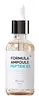
This anti-aging ampoule is formulated around Niacinamide and Panthenol to soften the look of wrinkles and strengthen the skin barrier.
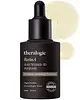
This anti-aging ampoule is formulated around Retinyl Palmitate and Adenosine to soften the look of wrinkles and refine skin texture.

What's inside
What's inside
 Key Ingredients
Benefits
Concerns
No concerns
Ingredients Side-by-side
Water
Skin ConditioningButylene Glycol
Humectant

Niacinamide
Smoothing










Dipropylene Glycol
HumectantPolyglyceryl-4 Caprate
EmulsifyingHydroxyacetophenone
Antioxidant
Tromethamine
BufferingCarbomer
Emulsion StabilisingCaprylyl Glycol
Emollient
Titanium Dioxide
Cosmetic Colorant

Mica
Cosmetic ColorantPanthenol
Skin Conditioning
Allantoin
Skin Conditioning
Adenosine
Skin Conditioning
Lactobacillus Ferment
Skin Conditioning
CI 77491
Cosmetic ColorantBrassica Campestris Sterols
EmollientWater
Skin ConditioningGlycerin
Humectant
Butylene Glycol
Humectant
1,2-Hexanediol
Skin Conditioning
Methyl Gluceth-20
Humectant
Betaine
Humectant
Panthenol
Skin Conditioning
C12-14 Alketh-12
EmulsifyingTrehalose
Humectant
Retinyl Palmitate
Skin Conditioning


Carbomer
Emulsion StabilisingTromethamine
BufferingPhaseolus Radiatus Seed Extract
Skin ConditioningEthylhexylglycerin
Skin ConditioningXanthan Gum
EmulsifyingHydrogenated Lecithin
Emulsifying
Malt Extract
Skin ProtectingAdenosine
Skin Conditioning
Caprylic/Capric Triglyceride
Masking
Cholesterol
Emollient
Polysorbate 20
Emulsifying
Lecithin
Emollient
Retinol
Skin Conditioning
Polycaprolactone
StabilisingOenothera Biennis Flower Extract
AstringentUlmus Davidiana Root Extract
Skin Conditioning
Pinus Palustris Leaf Extract
TonicPueraria Lobata Root Extract
HumectantCeramide NP
Skin Conditioning
Sodium Magnesium Silicate
BHT
Antioxidant
Avena Sativa Meal Extract
SoothingUbiquinone
Antioxidant
Sodium Hyaluronate
Humectant
Lactobacillus Ferment
Skin Conditioning
Daucus Carota Sativa Root Extract
Skin Conditioning
Oryza Sativa Extract
Absorbent
Glycine Max Seed Extract
Skin ConditioningChenopodium Quinoa Seed Extract
Skin Conditioning
Panax Ginseng Root Extract
Emollient
Parfum
Masking


Water, Glycerin, Butylene Glycol, 1,2-Hexanediol, Methyl Gluceth-20, Betaine, Panthenol, C12-14 Alketh-12, Trehalose, Retinyl Palmitate, Carbomer, Tromethamine, Phaseolus Radiatus Seed Extract, Ethylhexylglycerin, Xanthan Gum, Hydrogenated Lecithin, Malt Extract, Adenosine, Caprylic/Capric Triglyceride, Cholesterol, Polysorbate 20, Lecithin, Retinol, Polycaprolactone, Oenothera Biennis Flower Extract, Ulmus Davidiana Root Extract, Pinus Palustris Leaf Extract, Pueraria Lobata Root Extract, Ceramide NP, Sodium Magnesium Silicate, BHT, Avena Sativa Meal Extract, Ubiquinone, Sodium Hyaluronate, Lactobacillus Ferment, Daucus Carota Sativa Root Extract, Oryza Sativa Extract, Glycine Max Seed Extract, Chenopodium Quinoa Seed Extract, Panax Ginseng Root Extract, Parfum
Ingredients Explained
These ingredients are found in both products.
Ingredients higher up in an ingredient list are typically present in a larger amount.
Adenosine is a purine nucleoside that your body already makes in every cell. In skincare, it acts mainly as a skin conditioning and anti-aging agent.
The way it works is fairly well mapped out:
Your skin has cells called fibroblasts that build collagen (the stuff that keeps skin firm and smooth). Adenosine basically flips a switch on these cells that tells them to get to work making more collagen and other proteins. These cells slow down on their own as skin ages, so Adenosine helps give them a little nudge to keep going.
The clinical backing is pretty solid too.
A blind, randomized, placebo-controlled trial of 126 women aged 45-65 tested a 0.1% cream twice daily and found real improvements in crow's feet and frown lines using a precise 3D skin-mapping technique; these changes showed up by week 3 and held at 2 months.
A later study using Adenosine-loaded dissolving microneedle patches reported gains in wrinkle depth, dermal density, elasticity, and hydration.
On concentrations, South Korea's Ministry of Food and Drug Safety has set 0.04% as the approved functional anti-wrinkle level. You'll typically see this ingredient used somewhere in the 0.04-0.1% range since it works at low doses.
This ingredient has been found safe for cosmetics with the data showing no irritation or sensitization.
Overall, this is a great ingredient for any anti-aging routine and has no photosensitizing effect, so it suits both AM and PM use.
Learn more about AdenosineButylene Glycol (or BG) is used within cosmetic products for a few different reasons:
Overall, Butylene Glycol is a safe and well-rounded ingredient that works well with other ingredients.
Though this ingredient works well with most skin types, some people with sensitive skin may experience a reaction such as allergic rashes, closed comedones, or itchiness.
Learn more about Butylene GlycolCarbomer is a synthetic thickening and gelling agent. It's basically the ingredient that gives a lot of serums, gels, creams, and sunscreens their smooth, non-sticky texture.
Although legally permitted at very high levels, carbomers are normally used at concentrations below 1%.
It also needs to be neutralized to actually thicken, and because it is a large molecule, it doesn't really penetrate the skin barrier.
Allergy-wise, the risk is very low. Clinical studies show carbomers have low potential for skin irritation/sensitization even at concentrations up to 100%.
A 2024 UK study patch-tested 1,302 patients and found true allergy to the parent group of carbomer to be rare with no confirmed relevant reactions.
Learn more about CarbomerThis ingredient is made when the Lactobacillus bacteria (the same kind that makes yogurt and kimchi) are allowed to ferment a nutrient medium.
As it ferments, it collects lactic acid, peptides, enzymes, and other bioactive metabolites to provide:
A 2023 review noted that probiotic fermentation ingredients like this one can enhance antioxidant capacity, reduce UV-induced oxidative damage, and support barrier function.
One clinical study from the same year showed a Lactobacillus ferment lysate significantly reduced transepidermal water loss and improved skin hydration.
Another review highlighted that topical Lactobacillus-based preparations can improve ceramide levels in the stratum corneum, support barrier integrity, and even help reduce S. aureus colonization in atopic dermatitis.
Why is this so cool?
Basically, your skin's outer layer works as a brick wall; skin cells are bricks and ceramides are the mortar holding it together. Moisture escapes, irritants get in, and your skin gets dry and reactive when ceramide levels drop. On top of that, "bad" skin bacteria S. aureus loves to move in when your barrier is weak to make inflammation and irritation worse.
So Lactobacillus ferment is basically patching the wall and evicting the troublemaker when it boosts ceramide production and help keep S. aureus in check.
On top of all this, it also acts as a mild antimicrobial preservative booster.
Just so you know, most studies focus on specific strains or the lysate form rather than this generic "Lactobacillus Ferment", so results can vary.
Though it's a promising ingredient, it doesn't have decades of robust clinical data behind it just yet.
Lactobacillus Ferment is generally considered safe for fungal-acne prone skin. The key thing to understand is that it comes from bacteria, not yeast or fungus.
Yeast-derived ferments (like galactomyces) have been shown to activate a protein that's linked to Malassezia-related skin issues whereas lactobacillus doesn't have that problem.
Its byproducts also don't contain the types of fatty acids (C11-24 chain lengths) that Malassezia feeds on.
Learn more about Lactobacillus FermentPanthenol is a common ingredient that helps hydrate and soothe the skin. It is found naturally in our skin and hair.
There are two forms of panthenol: D and L.
D-panthenol is also known as dexpanthenol. Most cosmetics use dexpanthenol or a mixture of D and L-panthenol.
Panthenol is famous due to its ability to go deeper into the skin's layers. Using this ingredient has numerous pros (and no cons):
Like hyaluronic acid, panthenol is a humectant. Humectants are able to bind and hold large amounts of water to keep skin hydrated.
This ingredient works well for wound healing. It works by increasing tissue in the wound and helps close open wounds.
Once oxidized, panthenol converts to pantothenic acid. Panthothenic acid is found in all living cells.
This ingredient is also referred to as pro-vitamin B5.
Learn more about PanthenolTromethamine (aka THAM) is a synthetic amino acid that shows up in skincare as a helper ingredient.
It functions as a pH adjuster to help neutralize acidic ingredients and set a formula's pH to the right spot.
This matters a lot because a lot of actives (like vitamin C) needs a specific pH to work well and feel comfortable on skin.
Concentration use ranges from 0.1-1.0% depending on the formula.
Learn more about TromethamineWater. It's the most common cosmetic ingredient of all. You'll usually see it at the top of ingredient lists, meaning that it makes up the largest part of the product.
So why is it so popular? Water most often acts as a solvent - this means that it helps dissolve other ingredients into the formulation.
You'll also recognize water as that liquid we all need to stay alive. If you see this, drink a glass of water. Remember to stay hydrated!
Learn more about Water

