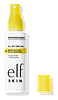
This chemical sunscreen covers most of the UV range, lighter on the deep UVA that drives aging.
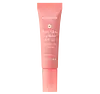
This barrier-repair lip moisturizer is formulated around Butyrospermum Parkii Butter and Squalane to strengthen the lip barrier and hydrate lips.

What's inside
What's inside
 Key Ingredients
Benefits
Concerns
Ingredients Side-by-side
Butyl Methoxydibenzoylmethane 2.9%
UV Absorber
Ethylhexyl Salicylate 4.9%
UV Absorber
Octocrylene 9.5%
UV Absorber

Alcohol Denat.
Antimicrobial


Butyloctyl Salicylate
Skin Conditioning
Isododecane
EmollientDiisooctyl Succinate
Emollient
Diheptyl Succinate
EmollientSilica Caprylyl Silylate
Dicaprylyl Carbonate
EmollientHelianthus Annuus Seed Oil
Emollient


Citrullus Lanatus Fruit Extract
Skin Conditioning
Opuntia Ficus-Indica Seed Oil
Emollient
Bisabolol
Antioxidant



Pvp
Emulsion StabilisingCapryloyl Glycerin/Sebacic Acid Copolymer
Skin ConditioningEthyl Ferulate
Antioxidant
Tocopherol
Antioxidant



Beta-Sitosterol
Emulsion Stabilising
Squalene
Emollient
Nylon-12

Lauroyl Lysine
Skin Conditioning
Butyl Methoxydibenzoylmethane 2.9%, Ethylhexyl Salicylate 4.9%, Octocrylene 9.5%, Alcohol Denat., Butyloctyl Salicylate, Isododecane, Diisooctyl Succinate, Diheptyl Succinate, Silica Caprylyl Silylate, Dicaprylyl Carbonate, Helianthus Annuus Seed Oil, Citrullus Lanatus Fruit Extract, Opuntia Ficus-Indica Seed Oil, Bisabolol, Pvp, Capryloyl Glycerin/Sebacic Acid Copolymer, Ethyl Ferulate, Tocopherol, Beta-Sitosterol, Squalene, Nylon-12, Lauroyl Lysine
Butyl Methoxydibenzoylmethane 3%
UV Absorber
Homosalate 3%
Skin Conditioning
Ethylhexyl Salicylate 5%
UV Absorber
Phytosteryl/Isostearyl/Cetyl/Stearyl/Behenyl Dimer Dilinoleate
Skin Conditioning
Diisostearyl Malate
EmollientPolybutene
Hydrogenated Polyisobutene
EmollientAroma


Polyglyceryl-2 Diisostearate
Emulsifying
Butyrospermum Parkii Butter
Skin Conditioning
Cera Microcristallina
Emulsion StabilisingC12-15 Alkyl Benzoate
AntimicrobialEthylhexyl Methoxycrylene
Skin Conditioning
Synthetic Wax
Abrasive
Mica
Cosmetic ColorantSqualane
Emollient
Theobroma Grandiflorum Seed Butter
Skin Conditioning
Siraitia Grosvenorii Fruit Extract
Skin ConditioningIsopropyl Titanium Triisostearate
Emollient
Ricinus Communis Seed Oil
Masking
Tocopherol
Antioxidant
Citric Acid
Buffering
BHT
Antioxidant
Carvone
Masking
Cinnamal
Perfuming
Eugenol
Perfuming
Limonene
Perfuming
Menthol
Masking
Methyl Salicylate
Perfuming
Vanillin
Masking
CI 42090
Cosmetic ColorantCI 15850
Cosmetic ColorantCI 19140
Cosmetic ColorantCI 77891
Cosmetic ColorantCI 77491
Cosmetic ColorantCI 77499
Cosmetic ColorantButyl Methoxydibenzoylmethane 3%, Homosalate 3%, Ethylhexyl Salicylate 5%, Phytosteryl/Isostearyl/Cetyl/Stearyl/Behenyl Dimer Dilinoleate, Diisostearyl Malate, Polybutene, Hydrogenated Polyisobutene, Aroma, Polyglyceryl-2 Diisostearate, Butyrospermum Parkii Butter, Cera Microcristallina, C12-15 Alkyl Benzoate, Ethylhexyl Methoxycrylene, Synthetic Wax, Mica, Squalane, Theobroma Grandiflorum Seed Butter, Siraitia Grosvenorii Fruit Extract, Isopropyl Titanium Triisostearate, Ricinus Communis Seed Oil, Tocopherol, Citric Acid, BHT, Carvone, Cinnamal, Eugenol, Limonene, Menthol, Methyl Salicylate, Vanillin, CI 42090, CI 15850, CI 19140, CI 77891, CI 77491, CI 77499
Reviews
Ingredients Explained
These ingredients are found in both products.
Ingredients higher up in an ingredient list are typically present in a larger amount.
Also known as Avobenzone, this ingredient is an oil-soluble used to absorb the full spectrum of UVA rays (peak 357 nm).
It's one of the most effective UVA filters available but has a major caveat of photostability: avobenzone is susceptible to photodegradation.
This means it can lose efficacy when exposed to sunlight without the help of a stabilizing agent.
Studies show antioxidants (like vitamin E or vitamin C) and some UV filters (like octocrylene and Tinosorb S) can meaningfully improve its stability in a formulation.
The maximum allowable concentration according to regulation is 3% in the US + Canada, and 5% in the EU, Australia, China, Korea, and ASEAN countries.
It has a well-support safety profile: a comprehensive 2025 review found minimal toxicity with no evidence of carcinogenicity.
Overall, avobenzone is a safe and regulated ingredient used in sunscreen for over 40 years.
Learn more about Butyl MethoxydibenzoylmethaneEthylhexyl Salicylate (also called Octisalate or Octyl Salicylate) is an oil-soluble organic UV filter that's been used in sunscreen since the 1950's.
It absorbs UVB light in the 280-320 nm range with a peak absorbance around 306 nm.
You'll often see it paired with other UV filters to boost overall SPF because octisalate is a fairly week filter on its own.
The reason you'll see it so often is because it can help solubilize and stabilize the trickier filters like oxybenzone and avobenzone.
Unlike these filters, octisalate has pretty good photostability and doesn't create skin-damaging free radicals when exposed to sunlight.
The fatty-alcohol part of the molecule also gives it a light, emollient feel so it doubles as a nice texture enhancer.
Usage levels vary around the world:
Safety-wise, this ingredient has a pretty reassuring track record. The EU's Scientific Committee on Consumer Products (SCCP) found very low skin penetration in human skin tests and negative results for irritation, phototoxicity, and photoallergy.
The real-world allergy risk is pretty low too; a 2012 European study of 1,031 people recorded only 2 reactions to it (a rate of 0.19%).
You might have seen scary headlines about sunscreen getting into your blood.
In 2019, the FDA found that several chemical filters can absorb through the skin and show up in the bloodstream at small but measurable levels.
Here's the important part: these tiny levels are just a cutoff the FDA uses to decide which ingredients need more testing and doesn't mean anything harmful was found.
The researchers were clear that the results are no reason to stop wearing sunscreen.
Learn more about Ethylhexyl SalicylateTocopherol is a fat-soluble antioxidant known as Vitamin E.
You'll find this ingredient in the vast majority of skincare (for good reason). It works to neutralize free radicals, or unstable molecules generated by UV exposure, pollution, and other environmental stressors, before they can cause oxidative damage to your skin cells.
Topically applied tocopherol has been shown to protect against UV damage by ramping up the skin's own natural defense enzymes.
It also acts as a skin conditioning agent; some studies show that regular topical use can improve the skin's water-binding capacity over 2-4 weeks.
This ingredient is especially loved for being a team player. When combined with Vitamin C, the photoprotective effect of both ingredients roughly doubles and the combo also helps reduce UV-induced DNA damage.
This ingredient has some brightening potential but it's more of a prevention ingredient than spot-fader. Cell studies show it can slow down melanin production but it's worth noting that it's not the most powerful brightener out there.
In formulations, it also serves as a stabilizer that helps protect other oxidation-prone ingredients from degrading.
Concentrations usually range from 0.1-1% in most leave-on products.
Learn more about Tocopherol

