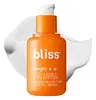
This brightening serum is formulated around 3-O-Ethyl Ascorbic Acid and Palmitoyl Tripeptide-5 to brighten dull-looking skin and soften the look of wrinkles.
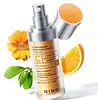
This brightening essence is formulated around Niacinamide and 3-O-Ethyl Ascorbic Acid to brighten dull-looking skin and fade the look of dark spots.


What's inside
What's inside
 Key Ingredients
Benefits
Concerns
No concerns
Ingredients Side-by-side
Water
Skin ConditioningGlycerin
Humectant


3-O-Ethyl Ascorbic Acid
Skin Conditioning




Propanediol
Solvent
Palmitoyl Tripeptide-5
Skin Conditioning

Sodium Hyaluronate
Humectant
Tocopherol
Antioxidant


Glycyrrhiza Glabra Root Extract
Bleaching
Pseudozyma Epicola/Camellia Japonica Seed Oil Ferment Extract Filtrate
Emulsion Stabilising


Camellia Sinensis Seed Oil
Humectant
Glucose
Humectant
Bisabolol
Antioxidant
Squalane
Emollient
Hydrogenated Farnesene
EmollientHydroxyethyl Acrylate/Sodium Acryloyldimethyl Taurate Copolymer
Emulsion StabilisingC14-22 Alcohols
Emulsion Stabilising
Polyacrylate Crosspolymer-6
Emulsion StabilisingSodium Citrate
BufferingC12-20 Alkyl Glucoside
EmulsifyingXanthan Gum
EmulsifyingCitric Acid
Buffering
Dimethyl Isosorbide
SolventEthoxydiglycol
HumectantGlyceryl Stearate
Emollient
Hydroxyacetophenone
Antioxidant
Tetrasodium Glutamate Diacetate
ChelatingCaprylyl Glycol
Emollient
Polyglyceryl-4 Laurate/Succinate
Ethylhexylglycerin
Skin ConditioningAcacia Senegal Gum
MaskingLecithin
Emollient
Sclerotium Gum
Emulsion StabilisingPullulan
Hexylene Glycol
EmulsifyingPhenoxyethanol
Preservative
Parfum
Masking



Limonene
Perfuming
Water, Glycerin, 3-O-Ethyl Ascorbic Acid, Propanediol, Palmitoyl Tripeptide-5, Sodium Hyaluronate, Tocopherol, Glycyrrhiza Glabra Root Extract, Pseudozyma Epicola/Camellia Japonica Seed Oil Ferment Extract Filtrate, Camellia Sinensis Seed Oil, Glucose, Bisabolol, Squalane, Hydrogenated Farnesene, Hydroxyethyl Acrylate/Sodium Acryloyldimethyl Taurate Copolymer, C14-22 Alcohols, Polyacrylate Crosspolymer-6, Sodium Citrate, C12-20 Alkyl Glucoside, Xanthan Gum, Citric Acid, Dimethyl Isosorbide, Ethoxydiglycol, Glyceryl Stearate, Hydroxyacetophenone, Tetrasodium Glutamate Diacetate, Caprylyl Glycol, Polyglyceryl-4 Laurate/Succinate, Ethylhexylglycerin, Acacia Senegal Gum, Lecithin, Sclerotium Gum, Pullulan, Hexylene Glycol, Phenoxyethanol, Parfum, Limonene
Water
Skin ConditioningButylene Glycol
Humectant
Niacinamide
Smoothing


Glycerin
Humectant
Panthenol
Skin Conditioning
3-O-Ethyl Ascorbic Acid
Skin Conditioning
Ascorbic Acid
Antioxidant
Ferulic Acid
Antimicrobial
Sodium Hyaluronate
Humectant
Hydroxyacetophenone
Antioxidant
1,2-Hexanediol
Skin Conditioning
Polyacrylate Crosspolymer-6
Emulsion StabilisingXanthan Gum
EmulsifyingAstragalus Membranaceus Root Extract
Emollient
Saposhnikovia Divaricata Root Extract
AntimicrobialCalendula Officinalis Flower Extract
Masking
Albizia Julibrissin Flower Extract
Skin ConditioningErgothioneine
Antioxidant
Paeonia Suffruticosa Root Extract
Skin ProtectingCamellia Sinensis Leaf Extract
Antimicrobial
Zanthoxylum Bungeanum Fruit Extract
Skin ConditioningWater, Butylene Glycol, Niacinamide, Glycerin, Panthenol, 3-O-Ethyl Ascorbic Acid, Ascorbic Acid, Ferulic Acid, Sodium Hyaluronate, Hydroxyacetophenone, 1,2-Hexanediol, Polyacrylate Crosspolymer-6, Xanthan Gum, Astragalus Membranaceus Root Extract, Saposhnikovia Divaricata Root Extract, Calendula Officinalis Flower Extract, Albizia Julibrissin Flower Extract, Ergothioneine, Paeonia Suffruticosa Root Extract, Camellia Sinensis Leaf Extract, Zanthoxylum Bungeanum Fruit Extract
Ingredients Explained
These ingredients are found in both products.
Ingredients higher up in an ingredient list are typically present in a larger amount.
3-O-Ethyl Ascorbic Acid is one of the most popular "stable" vitamin C derivatives in skincare.
Plain ascorbic acid is fantastic but notoriously fragile; it browns, oxidizes, and loses potency fast. So attaching an ethyl group to the third carbon of the molecule gives it some cool perks:
In a formula, it does the 3 classic vitamin C jobs: it acts as an antioxidant, helps brighten skin tone by inhibiting tyrosinase, and supports collagen.
The evidence is reasonably solid for a cosmetic ingredient; Liao and colleagues (2018) showed it's significantly more stable than ascorbic acid while still being effective.
A 2021 study by Zerbinati and colleagues tested a serum with 30% 3-O-ethyl-l-ascorbic acid and 1% lactic acid significantly increased collagen production, reduced UVB-induced DNA damage, and decreased melanin on a reconstructed pigmented skin model.
Typical real world usage sits around 0.5-5% (and 1-2% is common for daily serums).
Amounts up to 30% have been shown to be non-irritating on human skin samples, but two isolated cases reported allergic contact dermatitis so a patch test is sensible if you have reactive skin.
Learn more about 3-O-Ethyl Ascorbic AcidGlycerin (or glycerol) is a compound naturally found in your skin. It's a powerhouse humectant that pulls water into the stratum corneum.
Topically, glycerin does several things at once:
Your skin makes glycerin on its own (mostly from sebaceous oil breakdown) and shuttles it to your outermost layer of skin, or your epidermis, via aquaporin-3.
Aquaporin-3 is a transporter that is essential for normal skin hydration, elasticity, and repair. Interestingly, mice lacking in AQP3 have dry and less elastic skin that can be fully corrected with glycerin.
This ingredient is non-irritating, plays well with almost every ingredient, and works across all skin types. Typical use is anywhere between 3-10% but can go up to 79% in some leave-on products.
Just know very high concentrations (>40%) can feel tacky in low humidity.
Glycerin is the name for this ingredient in American English. British English uses Glycerol/Glycerine.
Learn more about GlycerinHydroxyacetophenone is a small phenolic molecule that earns its place in a formulas as an antioxidant and preservative booster.
As a phenol, it is able to neutralize free radicals to protect both the product and the skin from oxidative stress.
Though it can't kill microbes on its own, it works as a good supporting agent when combined with other preservatives like Phenoxyethanol or 1,2-Hexanediol.
This ingredient naturally occurs as piceol in Norwegian spruce needles (~0.4-1.1% dry weight and in cloudberries). Though the cosmetic-grade material is synthesized for purity and consistency.
You'll usually see it used at low levels and suppliers recommend up to 1% added to a water phase.
Safety testing was done at concentrations like 0.05% in SPF products and 0.5% in a Human Repeated Insult Patch Test. The safety evidence is assuring; this ingredient is safe for cosmetics in current use and also holds safety status as a food flavoring as well.
An honest caveat: the "soothing" and "anti-inflammatory" claims come mostly from supplier marketing rather than published clinical trials. The Cosmetic Ingredient Review's own literature search found no useful efficacy studies on this ingredient.
So the antioxidant and preservative-boosting roles are the well supported ones while the calming benefit is plausible but thinly evidenced.
Overall, this is a well-tolerated, low-irritation multitasker that quietly helps a formula stay fresh and stable.
Learn more about HydroxyacetophenonePolyacrylate Crosspolymer-6 is a texture enhancer and pH adjuster.
It is be used to thicken water-based products and create a gel-texture with a velvet feel.
One manufacturer claims this ingredient to have a pH range of 2-8 and to be biodegradable.
This ingredient is also known as Sepimax Zen.
Learn more about Polyacrylate Crosspolymer-6Sodium Hyaluronate is the salt form of hyaluronic acid. It is a long sugar chain that is naturally found in your skin, joints, and connective tissue that maintains hydration and elasticity.
In skincare, it works as a humectant. It pulls water from the environment and deeper layers of skin and binds it to the surface.
Interestingly, the size of the molecule affects its behavior:
Some clinical evidence links low molecular weight versions to improved wrinkle depth, elasticity, anti-inflammatory effects, and barrier repair.
Many serums use a blend of both weights so you can get surface hydration plus longer-lasting and deeper effects.
You'll typically see concentrations between 0.1-2% for this ingredient.
Learn more about Sodium HyaluronateWater. It's the most common cosmetic ingredient of all. You'll usually see it at the top of ingredient lists, meaning that it makes up the largest part of the product.
So why is it so popular? Water most often acts as a solvent - this means that it helps dissolve other ingredients into the formulation.
You'll also recognize water as that liquid we all need to stay alive. If you see this, drink a glass of water. Remember to stay hydrated!
Learn more about WaterXanthan gum is used as a stabilizer and thickener within cosmetic products. It helps give products a sticky, thick feeling - preventing them from being too runny.
On the technical side of things, xanthan gum is a polysaccharide - a combination consisting of multiple sugar molecules bonded together.
Xanthan gum is a pretty common and great ingredient. It is a natural, non-toxic, non-irritating ingredient that is also commonly used in food products.
Learn more about Xanthan Gum

